Some bits refuse to choose, some links span the universe, some particles walk through walls. Here are nine genuinely strange phenomena, and what each one buys the machines built on them.
The weird science of quantum computing is not a marketing flourish but a plain description of how the machines work. Every quantum processor in existence runs on effects that violate everyday intuition, from bits that hold two values at once to errors that must be fixed without ever being looked at. The engineers who build these systems did not tame the strangeness out of the hardware. They built the hardware out of the strangeness.
That distinction matters, because the weirdness is often presented as decoration, a spooky preamble before the sensible business of processors and roadmaps. The truth runs the other way. Remove superposition and a quantum computer is an expensive fridge, remove entanglement and it is a room full of coins, remove tunnelling and the leading chips will not function at all. Each strange effect on this list is load-bearing.
What follows is a tour of nine phenomena, each stated at its strangest and then traced to the concrete job it does inside a working machine. None of it requires mathematics to appreciate, only a tolerance for the fact that nature, at its smallest scales, keeps rules very different from ours. By the end, the weird science of quantum computing should look less like magic and more like an unusual but honest engineering discipline.
This tour also comes illustrated, because some of these ideas resist plain sentences. Alongside the prose you will find original diagrams of the Bloch sphere, of waves cancelling, of the temperature ladder inside a dilution refrigerator, and of an error check that never touches the data. None of them requires an equation to read. Together they make the case that the weird science of quantum computing can be seen as well as said.
- A bit that refuses to choose
- Looking changes the answer
- The spooky link Einstein hated
- Computing with waves that cancel
- Information that cannot be copied
- Walking through walls for a living
- Colder than deep space
- The universe fights back
- Fixing errors you are forbidden to see
- Five machines, one strangeness
- Where the weirdness stops
- A century of trusting the weirdness
A bit that refuses to choose
A qubit can occupy a blend of 0 and 1 at the same time, a state described by two numbers called amplitudes. It only commits to a definite value at the moment it is measured.
Sixty qubits in superposition are described by more amplitudes than any supercomputer’s memory can hold. That exponential headroom is the raw material of every quantum algorithm.
A classical bit is a switch, and a switch is either on or off. A qubit is something else entirely, a physical system prepared in a superposition that genuinely carries both values at once, weighted by amplitudes that behave more like the heights of waves than like probabilities. The state is not a secret coin flip waiting to be revealed. Decades of experiments rule out the idea that the qubit was quietly one thing all along.
The payoff shows up when qubits are combined. Describing the joint state of n qubits takes 2 to the power n amplitudes, so sixty of them already outrun the memory of any classical machine ever built. A quantum computer does not store all those numbers anywhere you could point to, but its physics evolves as if it did. Learning to exploit that hidden bookkeeping without being able to read it directly is, in one sentence, the entire discipline of quantum programming.
The sphere that holds every qubit
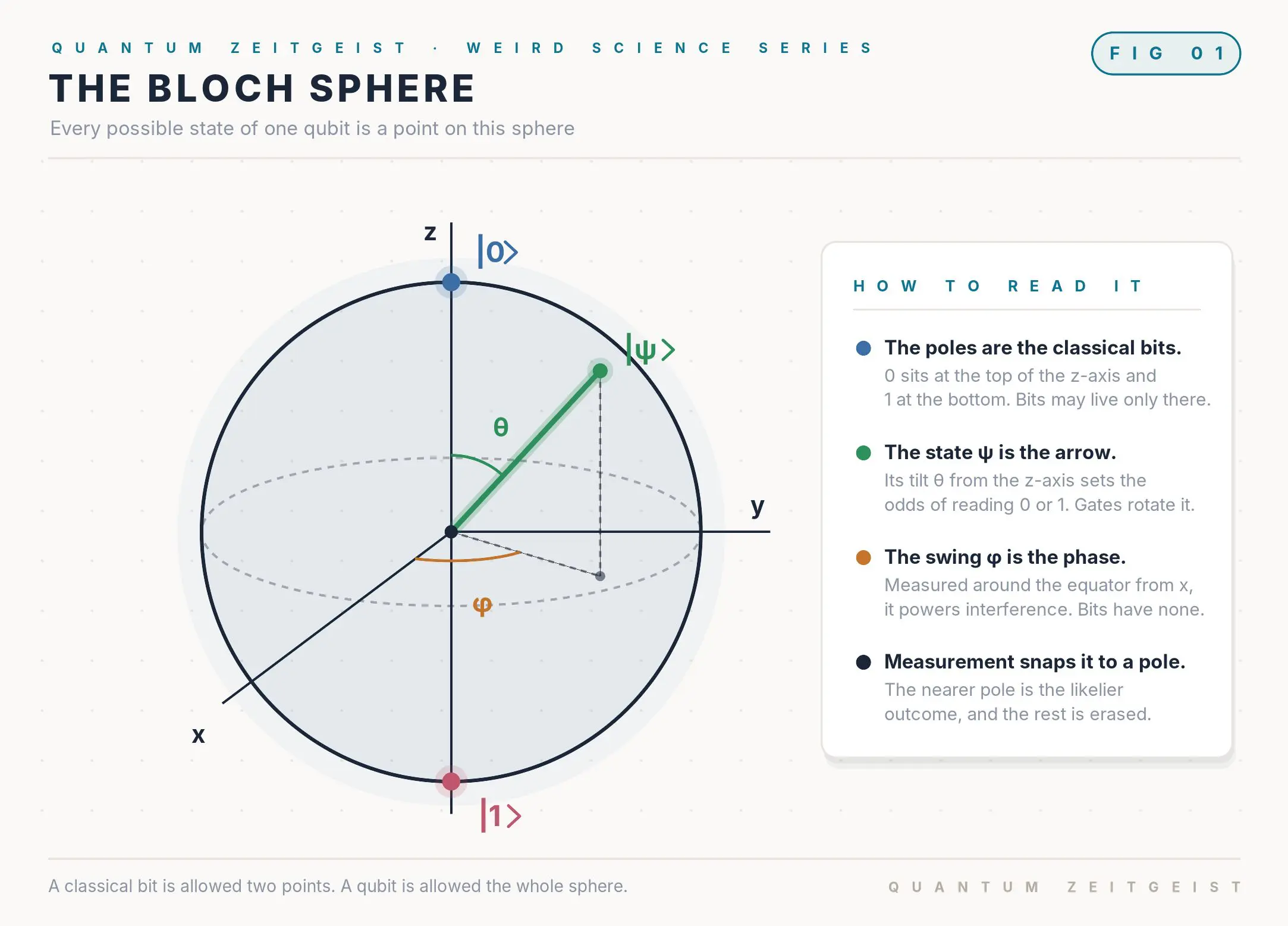
Physicists picture a single qubit as an arrow inside a globe, a drawing called the Bloch sphere after the physicist Felix Bloch. The north pole is 0 and the south pole is 1, while every other point on the surface is a distinct superposition, the arrow’s latitude setting how much of each value the state contains and its longitude recording a subtler quantity called phase. A classical bit is permitted exactly two points on this globe. A qubit is permitted all of them.
The picture earns its keep by turning algebra into geometry. Every single-qubit logic gate is a rotation of the arrow, measurement snaps the arrow to one of the poles with odds set by the latitude, and decoherence appears as the arrow shrivelling toward the centre of the ball. The one thing the Bloch sphere cannot show is two qubits at once, because entanglement has no picture this simple. That failure of the diagram is an early warning of how fast the mathematics outgrows human intuition.
Phase, the longitude on the globe, deserves a sentence of respect, because it is the part of the state with no classical counterpart at all. Two qubits can be identically balanced between 0 and 1 yet point in opposite directions around the equator, and the interference effects described a little later in the tour live entirely in that difference. Ignore latitude and you lose the odds; ignore longitude and you lose quantum computing.
Looking changes the answer
Measuring a qubit forces it to settle on a single outcome at random, with odds set by its amplitudes. Everything else the state carried is destroyed in the act of reading it.
Algorithms must finish their work before anyone peeks, then make the useful answer the overwhelmingly likely one. Readout is a one-shot lottery that good designs rig in advance.
In ordinary computing, reading memory is free, and you can inspect a register as often as you like. In quantum mechanics, measurement is an intervention, a physical interaction that forces the system to produce one definite outcome and discards the rest of the superposition. The odds of each outcome are fixed by the state itself, not by anything the measurer chooses. No consciousness is required, and a stray photon collapses a state as effectively as a physicist does.
This turns algorithm design into a strange art. You cannot watch a quantum computation in progress, because watching it would wreck it, so the entire calculation must run blind and end with the answer concentrated into the outcome you are likely to read. It is less like following a recipe and more like firing an arrow in the dark, having spent all your effort aiming before release. That constraint shapes everything else that follows.
The Born rule in practice
The rule connecting amplitudes to outcomes has a name, the Born rule, after Max Born’s 1926 insight that the squared magnitude of an amplitude gives a probability. It is the only place where chance enters the theory, and it enters ineradicably. Before the measurement, the state evolves smoothly and deterministically; at the measurement, nature rolls dice that a century of experiments has never caught being loaded.
In the lab, this is why quantum computers answer in statistics rather than certainties. A program is run hundreds or thousands of times, each run is measured once, and the results pile up into a histogram whose tallest bar is, in a well-designed algorithm, the solution. Readout is itself imperfect, with even good hardware misreading a qubit roughly once in a hundred attempts, so the statistics must clear that noise floor as well. A quantum computer is less an oracle than a very strange survey, and the craft lies in making the survey unanimous.
The spooky link Einstein hated
Two entangled qubits behave as a single object however far apart they sit, with measurement results correlated more tightly than any classical mechanism can explain. Einstein dismissed the idea as spooky action at a distance.
Entangled qubits occupy joint states that no list of individual descriptions can capture. Entanglement is the resource that separates a quantum processor from a tray of independent coins.
Prepare two qubits in the right joint state and they lose their separate identities, becoming a single object that happens to live in two places. Measure one and the other’s behaviour is instantly constrained, whether it sits on the same chip or in another galaxy. Einstein found this so distasteful that he treated it as evidence the theory was incomplete, but the experiments went the other way. Tests of entanglement based on John Bell’s 1964 theorem have repeatedly confirmed correlations beyond anything classical physics permits, work honoured with the 2022 Nobel Prize in Physics for Alain Aspect, John Clauser and Anton Zeilinger.
Two clarifications keep the weirdness honest. Nothing usable travels between the entangled partners, since each measurement alone yields randomness, and the correlation only becomes visible when results are compared over an ordinary channel. And inside a processor, entanglement is not an exotic garnish but the whole point, because without it the machine’s state would factor into independent pieces a laptop could simulate. The entangling two-qubit gates in a quantum circuit exist to weave this fabric.
From embarrassment to Nobel physics
Entanglement began life in 1935 as an argument against quantum mechanics, when Einstein, Podolsky and Rosen used it to claim the theory must be incomplete, and Erwin Schrödinger coined the word itself in the aftermath. For three decades the dispute stayed philosophical, because no experiment could tell the rival views apart. John Bell, prompted in part by David Bohm‘s heterodox reworking of the theory, changed that in 1964 with a theorem that found a measurable difference, a numerical limit that any theory of pre-set local answers must obey and that quantum mechanics predicts is broken.
Then the experiments arrived, and they kept siding with the weirdness. John Clauser’s team ran the first Bell test in 1972, Alain Aspect tackled the locality loophole in 1982, and in 2015 groups in Delft, Vienna and Colorado performed loophole-free tests that settled the matter, the work later crowned by the 2022 Nobel Prize. What began as quantum mechanics’ most embarrassing feature is now its most celebrated one. The correlations Einstein distrusted are the working capital of every quantum processor now running.

I think I can safely say that nobody understands quantum mechanics.Richard Feynman, The Character of Physical Law
Computing with waves that cancel
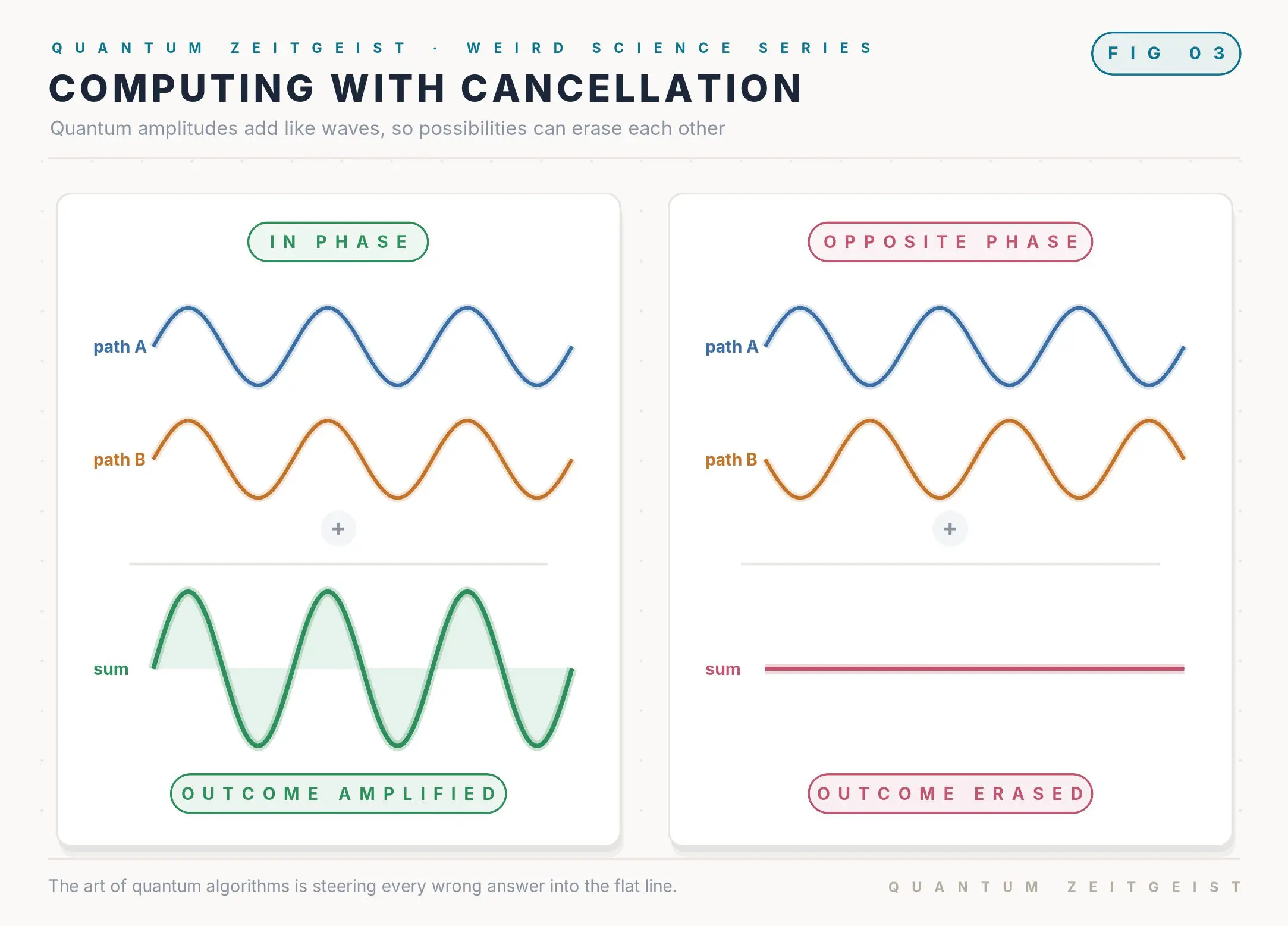
Quantum amplitudes can be negative, so possibilities do not just add up, they can wipe each other out. Chance in this regime behaves like overlapping waves, not like counts in a ledger.
Every quantum algorithm is choreography for cancellation, arranging the paths to wrong answers so they interfere away. Whatever survives the cancellation is the result.
Ordinary probability only accumulates, since adding another way for something to happen can never make it less likely. Quantum amplitudes ignore that rule. They can be negative or complex, so two routes to the same outcome can cancel like colliding wave crests and troughs, leaving that outcome impossible. This is interference, the same physics that paints stripes in the double-slit experiment, running inside a processor instead of on a screen.
Interference is where the popular image of a machine that tries every answer at once falls apart, a misconception the computer scientist Scott Aaronson has spent much of his career correcting. A qubit register in superposition does explore many possibilities, but a naive readout would return one of them at random, which is no better than guessing. The famous algorithms, from factoring to search, earn their speedups by steering wrong answers into destructive interference so that measurement finds the right one. The weirdness supplies the parallelism, and the cancellation makes it usable.
Choreographing the cancellation
The two most famous quantum algorithms are, at heart, exercises in this choreography. Grover’s search algorithm nudges amplitude away from wrong entries and toward the target on every pass, finding one marked item among a million in roughly a thousand steps where classical checking would average half a million. Shor’s factoring algorithm uses a quantum Fourier transform, in essence a giant engineered interference pattern, to make the hidden period of a number stand out the way a musical pitch stands out from noise.
The craft is brutally unforgiving, which is the honest reason quantum software is hard. The cancellations only occur if the machine’s phases are controlled precisely through every gate, and a stray phase error quietly turns destructive interference into constructive noise. Most of the engineering in the rest of this article, the cold, the shielding, the error correction, exists to protect these fragile patterns of cancellation for long enough to finish the computation.
The pedigree of the idea is as old as quantum mechanics itself. The double-slit experiment, in which single particles build up a striped pattern one dot at a time, is interference in its rawest form, and Feynman liked to say that the whole mystery of the subject was contained in it. A quantum processor is, in a fair sense, a double-slit experiment fitted with a steering wheel, the same physics redirected from making stripes to making answers.
Information that cannot be copied
An unknown quantum state cannot be duplicated, a law called the no-cloning theorem. Nature enforces the ban, not engineering, and no future technology can lift it.
No copying means no simple backups, which reshapes how quantum machines are designed. It also makes quantum links tamper-evident, the foundation of quantum cryptography.
Classical information exists to be copied, which is why backups, caches and forwarding are trivial. Quantum information refuses. A short proof published by William Wootters and Wojciech Zurek in 1982 shows that no physical process can take an arbitrary unknown state and produce two copies of it, because the linearity of quantum mechanics itself forbids the operation. The rule has no exceptions and no workarounds.
The consequences cut both ways. Inside a quantum computer there is no copy-and-paste, no duplicating a register for safekeeping, which makes protecting a computation far harder than protecting a file. Even quantum teleportation respects the ban, moving a state to a new location only by destroying the original. Yet the same law is a gift to security, since an eavesdropper who cannot copy a quantum signal must disturb it to read it, and the disturbance gives the intrusion away. Quantum key distribution is that theorem turned into a product.
What the ban costs and buys
The costs land first on the engineers. Classical machines survive their own noise by keeping copies and taking majority votes, and the no-cloning theorem removes that option outright, which is why quantum error correction had to be invented as something far cleverer than backup. The repeaters that refresh optical signals along undersea cables also work by copying, so a future quantum internet needs a fundamentally different device, and a trustworthy quantum repeater remains one of the field’s open engineering problems.
The purchases are just as concrete. In 1984, Charles Bennett and Gilles Brassard turned the ban into the BB84 protocol, the founding scheme of quantum key distribution, in which an eavesdropper unavoidably marks the very signal they tried to read. In 1993, Bennett and colleagues showed how to move an unknown state rather than copy it, consuming a shared entangled pair and two ordinary bits to rebuild the state elsewhere while the original is destroyed. A rule that looks like pure inconvenience turns out to be a security guarantee written into physics.
The theorem also has one of the better origin stories in physics. In 1981, the maverick physicist Nick Herbert circulated a scheme called FLASH that combined entanglement with copying to send signals faster than light, and the referees who sank the paper realised the flaw it exploited had never been formally proved. The no-cloning theorem was written down the following year precisely to close Herbert’s loophole. Relativity, it turns out, is guarded by a ban on quantum photocopying, a glimpse of how tightly the strange rules interlock.
Walking through walls for a living
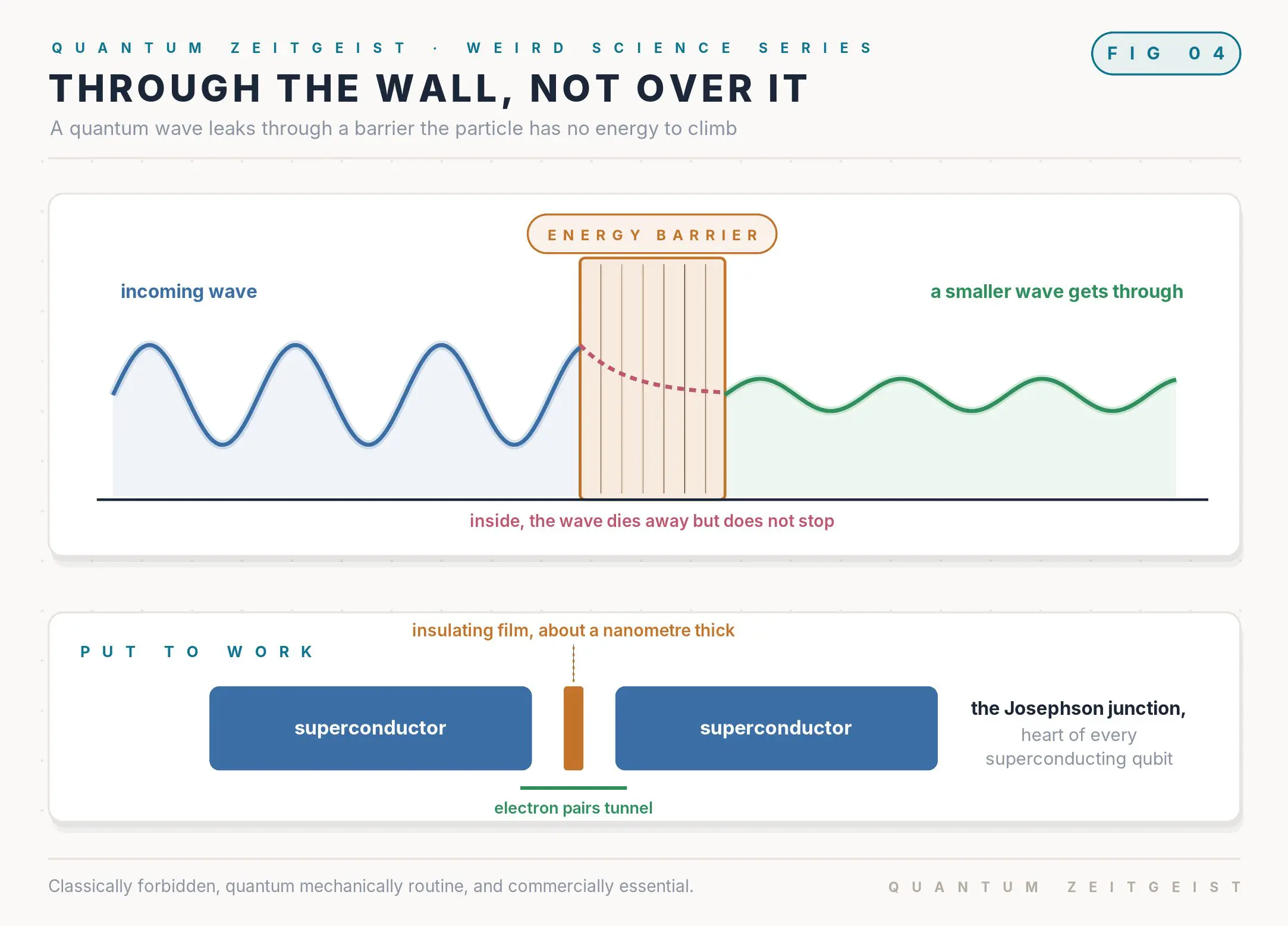
A quantum particle can cross a barrier it lacks the energy to climb, fading through the obstacle and appearing on the far side. At small scales the effect is entirely routine.
Superconducting qubits are built around Josephson junctions, which only work because paired electrons tunnel through an insulating wall. The leading chips depend on the weirdness for their basic operation.
Roll a ball at a hill too slowly and it rolls back, every time, without exception. Send an electron at a thin energy barrier and sometimes it simply appears on the other side, having tunnelled through a region it was classically forbidden to enter. Tunnelling follows directly from the wave nature of matter, and it is common enough to be an engineering material rather than a curiosity. The flash memory in your phone stores data by pushing electrons through an insulating layer in exactly this way.
Quantum computing leans on the effect harder still. The workhorse component of superconducting processors, the kind built by Google, IBM and others, is the Josephson junction, a sandwich of two superconductors separated by an insulating film that electron pairs cross only by tunnelling. That junction gives the circuit the controllable, atom-like energy levels a qubit needs. Quantum annealers make tunnelling do a different job, letting a system slip through energy barriers toward better solutions rather than climbing over them. In both cases, a particle walking through a wall is doing production work inside the machine.
The junction that launched an industry
The component at the centre of the superconducting approach was predicted in 1962 by Brian Josephson, then a 22-year-old graduate student at Cambridge, who calculated that paired electrons would tunnel between two superconductors through a thin insulating film even with no voltage applied. The prediction was strange enough that eminent physicists disputed it, and it earned Josephson a share of the 1973 Nobel Prize. Six decades later, his junction is manufactured by the thousand on silicon chips.
The junction matters because it is the only practical circuit element that is both lossless and nonlinear, the exact combination a qubit needs. Superconducting loops and capacitors alone make oscillators whose energy levels are evenly spaced, so no single transition can be addressed as 0 and 1, and the junction’s nonlinearity spreads the levels apart until the bottom two can serve as a qubit. The transmon, a junction-based design published by Yale physicists in 2007, sits at the heart of most superconducting machines running today.
Colder than deep space
The base of a dilution refrigerator sits near ten thousandths of a degree above absolute zero, hundreds of times colder than the space between the galaxies. The coldest known places in the universe are inside quantum computing labs.
Extreme cold silences the thermal noise that would otherwise swamp fragile quantum states. The golden chandelier in every photograph is a working machine, not a prop.
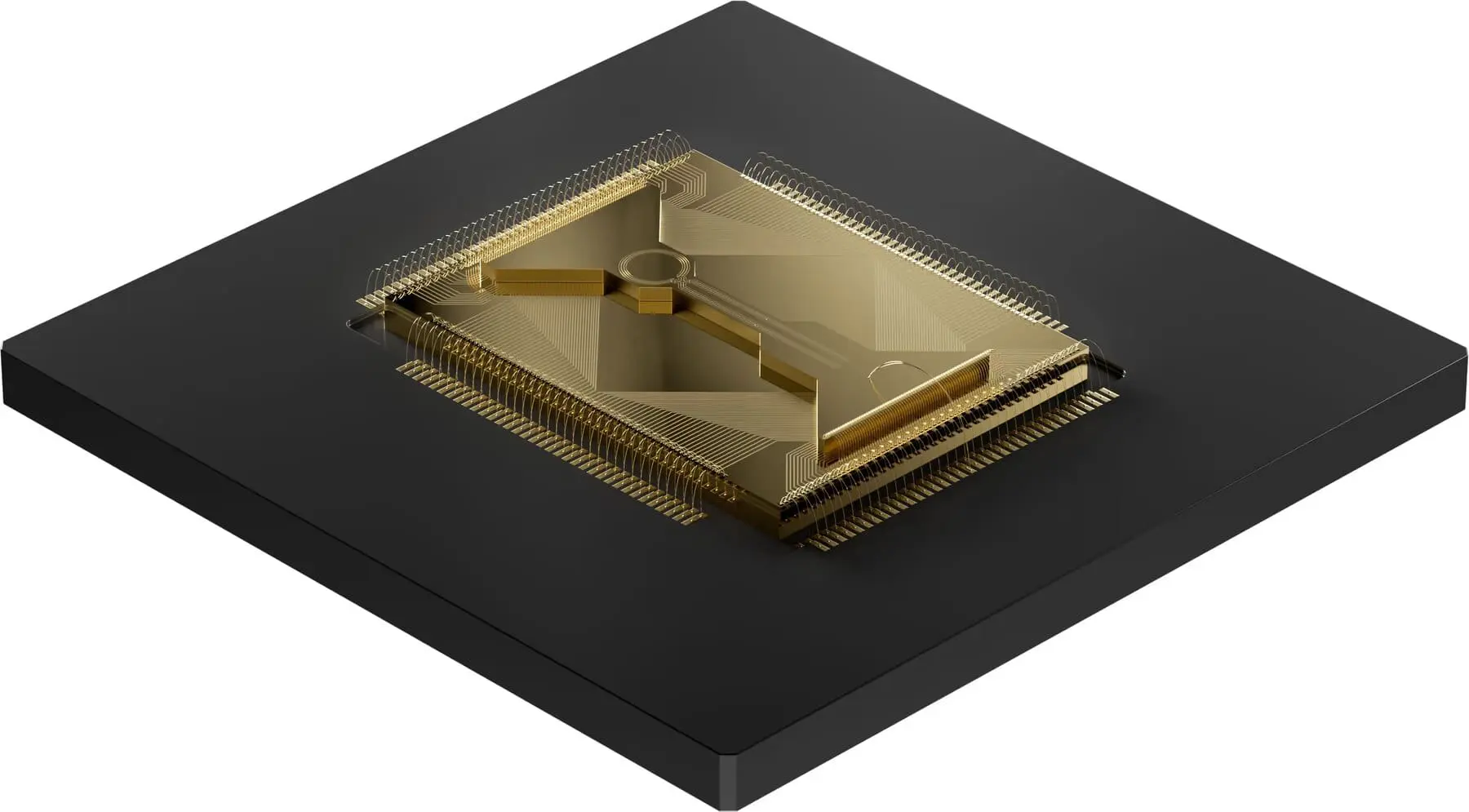
Quantum states are so delicate that ordinary warmth destroys them, because heat is motion and motion is noise. Superconducting processors therefore live at the bottom of dilution refrigerators cooled to around ten millikelvin, a temperature far below the 2.7 kelvin background of deep space. The interior of one of these machines is colder than anywhere nature has ever produced on its own, and there are now hundreds of such places humming away in labs and data centres.
The engineering is as striking as the physics. The familiar gold-plated chandelier is the fridge itself, a stack of ever-colder platforms with the chip at the bottom, threaded by hundreds of control lines that must carry signals in without carrying heat. Not every platform needs the deep freeze, since trapped ions and neutral atoms are instead held in vacuum chambers and stilled with lasers, exchanging one heroic isolation strategy for another. The history of quantum computing is, in large part, a history of learning to keep the universe out.
A ladder built from helium
The machine that reaches these temperatures is a dilution refrigerator, and its lowest stage runs on a piece of quantum strangeness of its own. Below about 0.87 kelvin, a mixture of the two isotopes of helium separates into two liquid phases, and helium-3 atoms crossing the boundary between them absorb heat, much as evaporating sweat cools skin. That single trick, worked out in the 1960s, carries the chip through the final descent from a few kelvin to ten millikelvin.
Every rung of the ladder earns its place, and the cold is only half the job. Each qubit needs control lines running from room-temperature electronics down to the chip, every line is a copper highway for heat, and the art of cryogenic engineering is admitting the signals while excluding the warmth. This wiring bottleneck, more than the refrigeration itself, is one reason million-qubit superconducting machines remain a roadmap item rather than a product.
The machines themselves have grown from lab benches into infrastructure. A modern dilution refrigerator stands taller than a person, its useful cooling power at the coldest stage is measured in millionths of a watt, and manufacturers now ship them by the hundred to labs and cloud providers. It is a strange industrial datum that one of the fastest-growing categories of scientific equipment exists to maintain, in bulk, the coldest temperatures in the known universe.

The universe fights back
Any stray interaction, a vibration, a warm photon, even a cosmic ray striking the chip, leaks quantum information into the environment. On many platforms a superposition survives for microseconds.
Decoherence sets the clock that every quantum computation races against. Holding it at bay is the central engineering problem of the entire field.
The same sensitivity that makes a qubit powerful makes it porous. Whenever a qubit interacts with anything, its quantum information begins leaking into the environment, and the delicate superposition degrades into an ordinary, definite state. This is decoherence, and it is also the honest answer to why the everyday world looks classical, since a large warm object is never, even for an instant, hidden from its surroundings. A quantum computer is an attempt to build a bubble where that constant measurement stops.
The bubble is always imperfect. Superconducting qubits typically hold their states for microseconds to fractions of a millisecond, trapped ions manage seconds and beyond, and everything must be done within the time available. The threats are concrete, from vibrations and stray magnetic fields to cosmic rays, which Google researchers showed in 2021 can strike a chip and knock out swathes of qubits at once. Every quantum program is a race between the algorithm and the universe, and the universe never stops running.
Racing the clock on every platform
The race is easier to feel with the numbers side by side. A superconducting qubit typically completes a logic gate in tens of nanoseconds and holds its state for something like a hundred microseconds, so a few thousand operations fit inside the window. A trapped ion runs its gates thousands of times more slowly but keeps its state for seconds, arriving at a comparable budget of operations by the opposite route.
That budget, the number of operations that fit inside one coherence window, is the truest measure of a noisy machine’s reach. It explains why vendors quote gate speed and coherence time together, why rival platforms can honestly claim different advantages, and why every roadmap pushes both numbers at once. It also explains the field’s fixation on error correction, which is, in effect, a way of extending the window indefinitely.
Error rates translate the same fight into a scoreboard. The best two-qubit gates today go wrong roughly once in a thousand operations, with the leading labs now doing somewhat better, which sounds impressive until it is multiplied across the millions of operations a full algorithm needs. That arithmetic explains at a glance why unprotected machines cannot run deep programs. Every additional decimal place of fidelity is bought with years of materials science, filtering and shielding, and decoherence concedes nothing for free.
Every qubit is a bet that, for a few microseconds, the universe can be kept from looking.Quantum Zeitgeist
Fixing errors you are forbidden to see
Quantum error correction deserves a word of introduction before its weirdness, because it is the project on which the whole industry now converges. Every roadmap that promises useful machines runs through it, our complete guide to quantum error correction covers the discipline in depth, and the quantum error correction companies guide tracks the firms that build nothing else. What earns it a place in this tour is that the obvious way to do it is physically forbidden.
Correcting a qubit’s errors by reading it would destroy the very state being protected, and the no-cloning theorem rules out backup copies. Repairs must happen without anyone looking at the data.
Syndrome measurements reveal what went wrong while saying nothing about the encoded information. Done well, the repairs outpace the damage, and the protected qubit improves as the code grows.
Put the last few sections together and error correction looks impossible. Errors arrive constantly through decoherence, the state cannot be copied for backup, and measuring it to check for damage would collapse it. The escape is one of the cleverest ideas in modern science. Spread one logical qubit across many physical ones, then measure carefully chosen collective properties, called syndromes, that report where an error struck while revealing nothing about the protected information. The surface code arranges this trick on a simple grid, and it currently anchors most roadmaps to large-scale machines.
For decades the open question was whether the repairs could outpace the damage, since correction machinery adds qubits that themselves make errors. The theory said yes, below a threshold error rate, and in December 2024 Google’s Willow processor demonstrated it in practice, with encoded qubits that got better each time the protecting patch grew larger. Error rates halving as the code scales is precisely the behaviour a fault-tolerant future requires. The strangest constraint in computing, thou shalt not look at thy data, turns out to have a working solution.
From patches to logical machines
The protected unit that error correction builds is called a logical qubit, and its quality is graded by a number called the code distance, in effect the size of the patch of physical qubits doing the protecting. Google’s Willow experiment used patches of roughly a hundred physical qubits to make one logical qubit whose lifetime beat the best single qubit on the chip. That crossover, the encoded thing outliving its own ingredients, is the moment the whole scheme starts paying rent.
The sobering part is the exchange rate. Estimates for commercially decisive computations call for hundreds or thousands of physical qubits behind every logical one, which turns a useful machine of a thousand logical qubits into a facility housing a million physical ones. Tracking who genuinely holds how many logical qubits has become a discipline in itself, which is why we maintain a logical qubit leaderboard alongside the raw hardware numbers.

Five machines built on the same strangeness
Nothing demonstrates the weird science of quantum computing more plainly than the zoo of hardware built on it. The same handful of phenomena can be embodied in superconducting circuits, in single charged atoms, in neutral atoms or in particles of light, and each embodiment turns the shared physics into a completely different machine. The rivalry between these camps has become one of the most expensive experiments in the history of engineering.
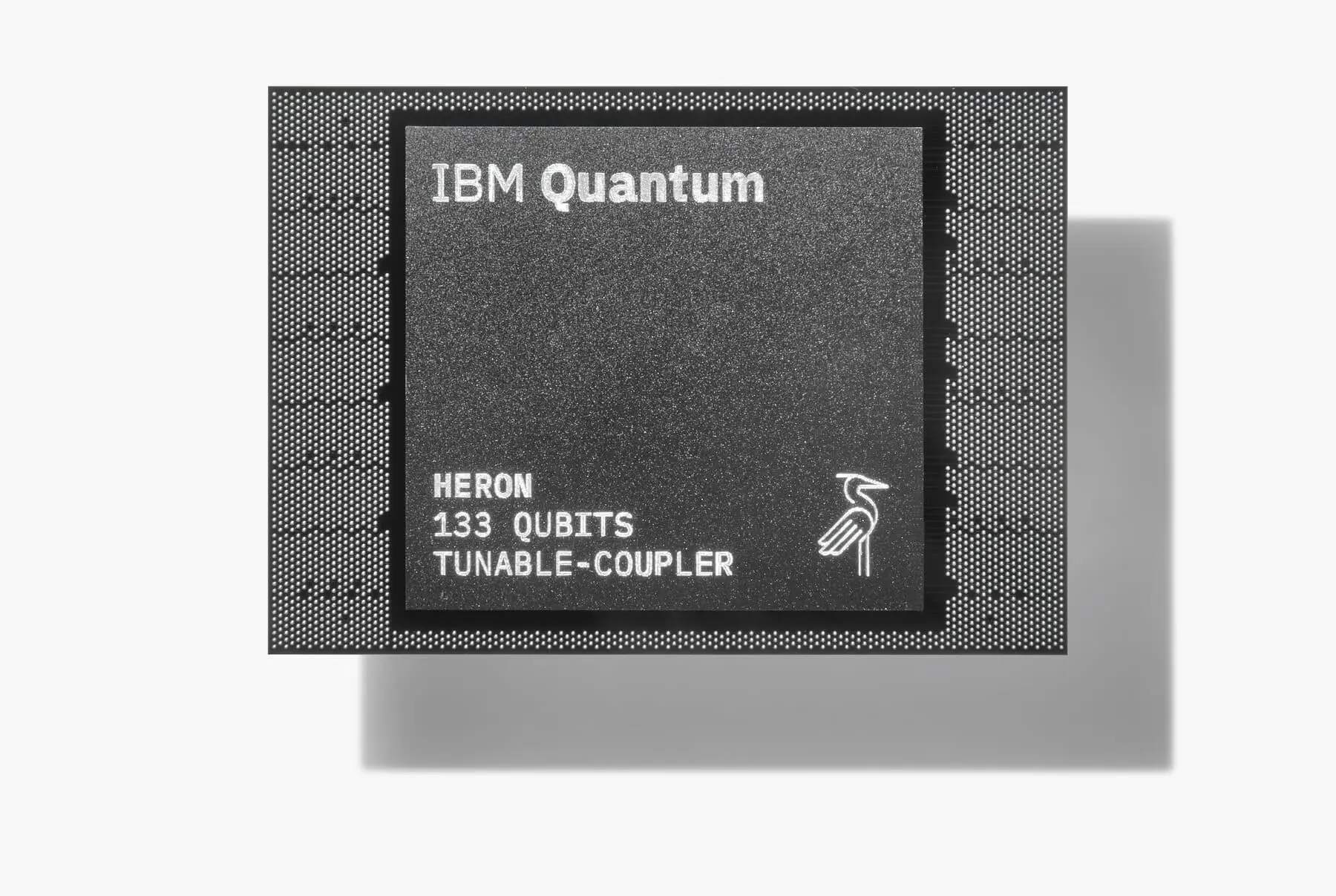
Superconducting processors, the approach behind Google’s Willow, IBM’s fleet and the machines of Rigetti Computing, founded by the former IBM physicist Chad Rigetti, print artificial atoms onto chips and buy speed at the price of deep cryogenics; our guide to the top superconducting quantum computing companies maps that camp in detail. Trapped-ion machines from Quantinuum, the company Ilyas Khan built out of Cambridge Quantum, and from IonQ swing the trade the other way, computing with nature’s own perfectly identical atoms held in electric fields and driven by lasers, slower but with some of the highest gate fidelities ever recorded. The trapped-ion companies guide covers those contenders.

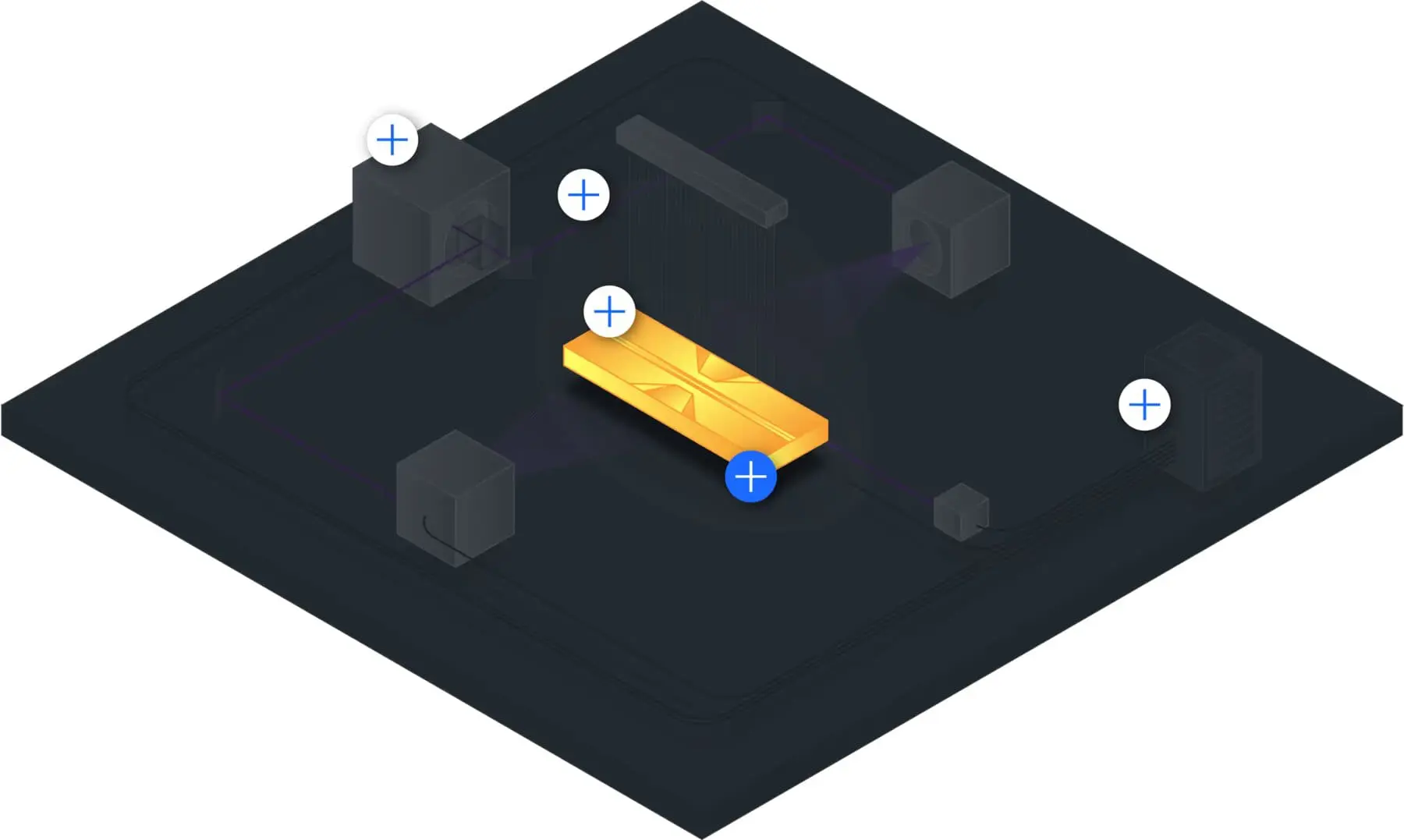
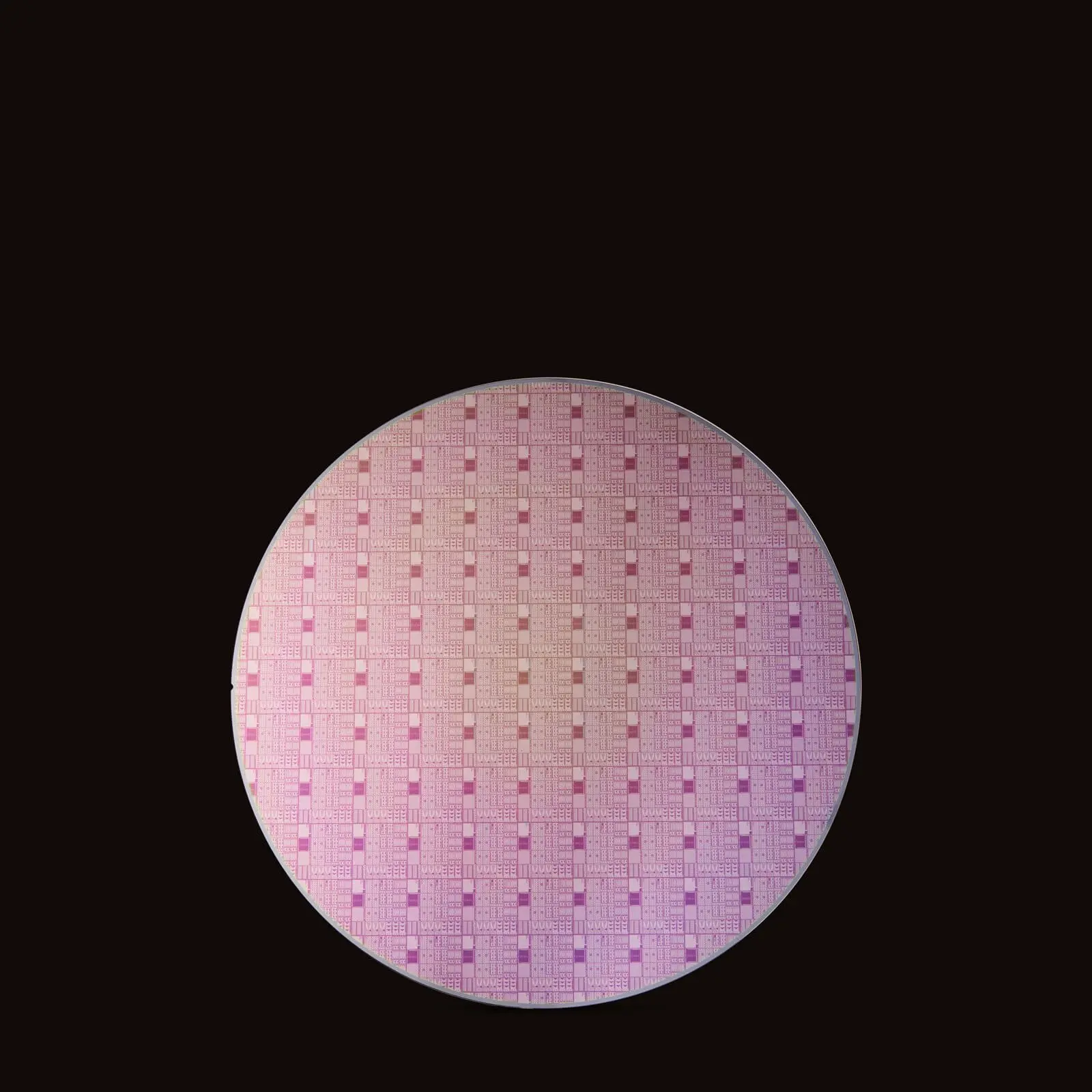
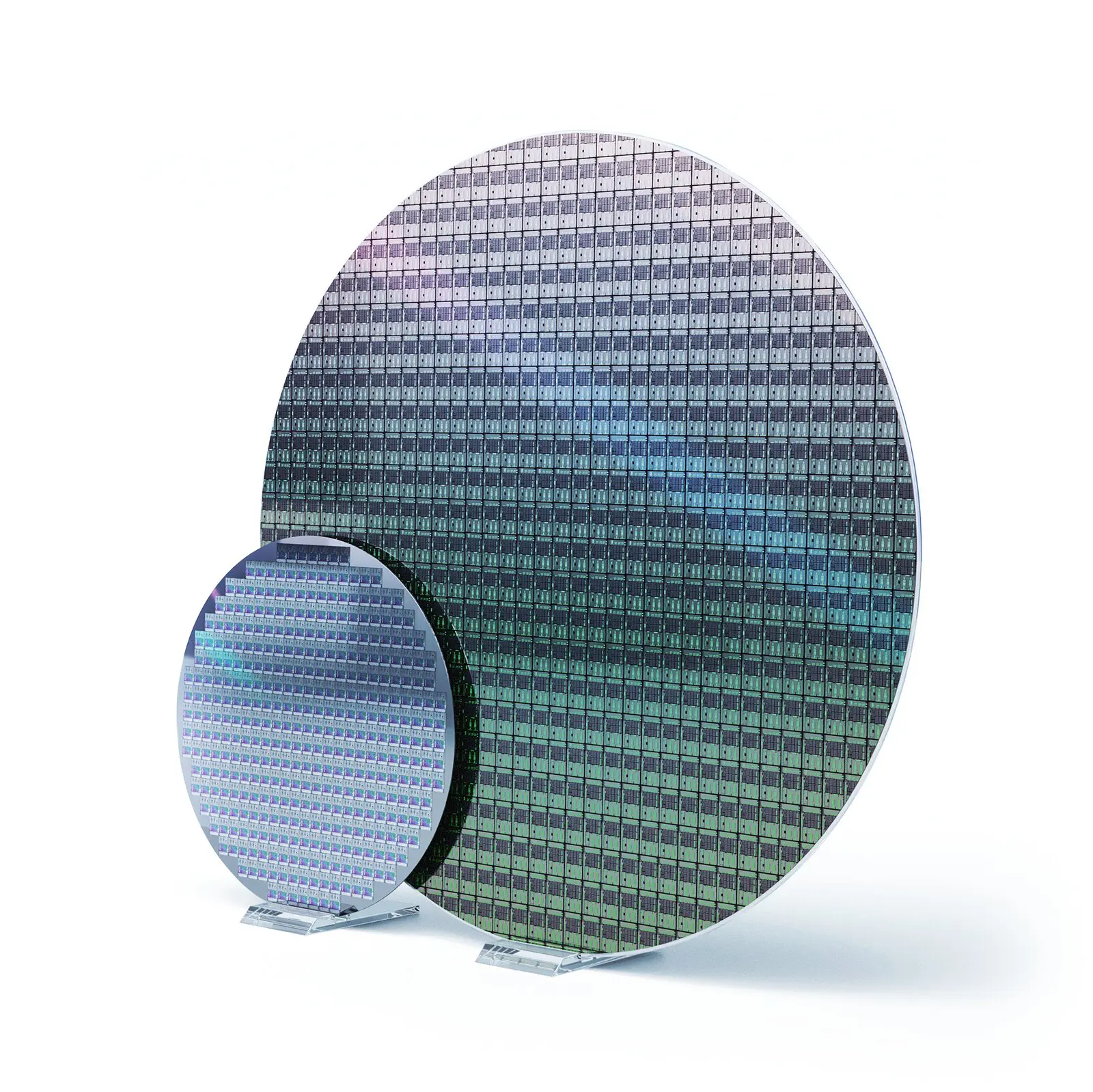
Neutral-atom machines from QuEra, Pasqal and Atom Computing hold arrays of uncharged atoms in webs of laser light and puff them up into giant Rydberg states to entangle them, a route that already scales to thousands of atoms in a single vacuum cell; see our neutral atom survey. Photonic designs from PsiQuantum and Xanadu encode qubits in light itself, which never decoheres in flight and asks no dilution refrigerator of the photons, though the detectors still demand cryogenics. The photonic quantum computing companies guide tracks that race. And silicon spin qubits, championed by Diraq, Intel and others, shrink the qubit into a transistor-like device so the chip industry’s fabrication playbook can be reused wholesale; our silicon spin survey covers that camp.
There is even an attempt to build the weirdness into matter itself, Microsoft’s topological programme, which hunts for quasiparticles that store quantum information non-locally and would resist decoherence by construction. Those claims have proved contentious enough to earn close scrutiny. Five bodies and a wildcard, one set of rules, and whichever camp wins, the strangeness is compulsory.
For all their differences, the camps share a delivery mechanism, because almost nobody will ever own one of these machines. Each is reachable today over the cloud and programmed from an ordinary laptop, so the strangest hardware in the world already ships through the most conventional of channels. Picking the eventual winner has become a spectator sport with billions staked on it, and the honest answer is that different problems may simply suit different bodies.
Where the weirdness stops
Erwin Schrödinger‘s famous cat was never a proposal, only a protest, a way of asking why the strangeness of atoms does not infect the furniture. Decoherence supplies most of the modern answer. A cat, or any warm object, is measured by its environment billions of times a second, by every photon and air molecule that touches it, so its superpositions die long before anyone could notice them. The boundary between quantum and classical is not a line in space but a measure of how well a system is hidden from the rest of the universe.
That is why so much of the story above has been about isolation, and it is also why the weird effects, for all their power inside the machine, will never put your coffee mug in two places. Laboratories keep pushing the boundary outward, from interference experiments with large molecules to microwave cat states held inside superconducting cavities, and the border retreats as isolation improves. But it retreats predictably, exactly as the theory says it should, which is itself one of the strongest confirmations that the theory is right.
The cat that lives in a cavity
Schrödinger’s cat has, in a modest way, come to life inside the machines it was invented to mock. Researchers routinely prepare microwave fields inside superconducting cavities in superpositions of two opposite states, wryly called cat states, and molecule interferometers have demonstrated wave behaviour in objects of many thousands of atoms. These are not cats, but they sit far beyond anything the theory’s founders expected to catch behaving quantum mechanically.
The cats have even been put to work. The French company Alice and Bob builds its qubits out of exactly these cat states, because the two components of a cat state are so distinct that random noise struggles to flip one into the other, suppressing a whole class of errors in the hardware itself. A thought experiment devised in 1935 to embarrass quantum mechanics is now a component strategy with venture funding behind it, which may be the strangest sentence in this article.
A century of learning to trust the weirdness
It took physics the better part of a century to go from being scandalised by these effects to billing them as product features. Max Planck introduced the quantum reluctantly in 1900, Werner Heisenberg and Schrödinger wrote its working mathematics in the mid-1920s, and Paul Dirac had married it to relativity before the decade was out. Einstein then spent the 1930s trying to prove entanglement absurd, and as late as the 1980s the study of quantum foundations was widely considered a career risk. The weird science of quantum computing is unusual among technologies in that several of its foundations were laid by people trying to prove them impossible.
The turn came when the strangeness was reframed as a resource. David Deutsch described a universal quantum computer in 1985, and Peter Shor’s 1994 factoring algorithm converted the whole subject from curiosity to strategic priority in a single stroke. Grover’s search algorithm followed in 1996, the first small demonstration machines appeared within a few years, and the story has run through laboratories, stock markets and national budgets ever since.
Read as a whole, the century is a lesson in taking a theory seriously. Every attempt to catch quantum mechanics cheating, from Einstein’s thought experiments to the loophole-free Bell tests, ended by confirming it with greater precision, and today’s machines are the compound interest on that intellectual honesty. The strangeness survived every audit. Building with it was the only move left.
Why the weirdness is the whole point
It is tempting to treat all of this as obstacles heroically overcome, but that gets the story backwards. Richard Feynman‘s founding observation in 1981 was that nature is quantum mechanical, that simulating it classically is exponentially expensive, and that only a computer built from the same strange rules could keep up. Far from being a tax on the technology, the weirdness is the source of its value, the reason a quantum supremacy experiment, in John Preskill‘s coinage, can outrun the biggest classical machines on tailored tasks, and the reason chemistry and materials problems are expected to yield first.
There is a satisfying symmetry in where the field has arrived. Superposition and entanglement supply the power, measurement and decoherence supply the discipline, and tunnelling, extreme cold and blind error correction supply the machinery that holds the two in balance. Anyone wanting the practical picture can start with our complete guide to quantum computing, or survey the public quantum computing companies racing to scale these ideas. For the academic backdrop to the weird science of quantum computing, Caltech’s explainer library is an excellent companion.
Feynman’s line about nobody understanding quantum mechanics is sometimes read as despair, but he meant it as an invitation. You do not need to find the rules intuitive to learn them, test them and build with them, and the machines now running in labs on three continents are the proof. The weird science of quantum computing is weird all the way down. That is exactly why it works.
Frequently asked questions
What is the weird science of quantum computing?
The weird science of quantum computing is the set of counterintuitive physical effects that quantum processors are built on, including superposition, entanglement, interference, tunnelling and the no-cloning theorem. These are the working principles of the hardware, not incidental side effects. Each one does a specific job inside a real machine.
Why is quantum computing weird?
Because its components obey quantum mechanics, whose rules contradict everyday experience. A qubit holds a blend of values until it is read, entangled qubits behave as one object across any distance, and possibilities can cancel each other out like colliding waves. Engineers did not remove this strangeness from the machines; they built the machines out of it, which is exactly why the technology can do things classical computers cannot.
Why do quantum computers need to be so cold?
Heat is motion, and motion is noise that destroys fragile quantum states. Superconducting processors run near ten millikelvin, hundreds of times colder than deep space, so that thermal disturbances are too weak to disrupt the qubits. Other platforms, such as trapped ions, replace the deep freeze with vacuum chambers and laser cooling.
Is a qubit really 0 and 1 at the same time?
A qubit in superposition holds both values simultaneously, each weighted by an amplitude, rather than secretly being one value that has not yet been revealed. Interference experiments rule out that hidden pre-set answer, since a value fixed in advance could not produce the wave-like cancellation quantum systems show. Measurement then forces a single random outcome, with odds fixed by those amplitudes.
What did Einstein mean by spooky action at a distance?
Einstein used the phrase to mock entanglement, in which two particles show correlations that persist over any separation. He suspected the theory was incomplete, but Bell-test experiments confirmed the correlations are real and stronger than classical physics allows. No usable signal travels between the particles, so relativity survives intact.
Why can quantum information not be copied?
The no-cloning theorem, proved in 1982, shows the linear structure of quantum mechanics forbids duplicating an arbitrary unknown state. This means quantum computers cannot back up their registers the way classical machines back up files. The same law makes quantum communication tamper-evident, since an eavesdropper must disturb what they cannot copy.
What is quantum tunnelling used for in quantum computers?
The workhorse of superconducting hardware is the Josephson junction, in which paired electrons tunnel through a thin insulating barrier, giving the circuit the discrete energy levels a qubit requires. Quantum annealers also use tunnelling to slip through energy barriers toward better solutions. Without tunnelling, the most widely deployed quantum hardware would not function.
What is decoherence and why does it matter?
Decoherence is the leakage of quantum information into the environment whenever a qubit interacts with anything, from a vibration to a cosmic ray. It converts fragile superpositions into ordinary definite states, typically within microseconds on superconducting hardware. Every quantum computation is a race to finish before decoherence erases the work.
How can errors be fixed without reading the data?
Quantum error correction spreads one logical qubit across many physical qubits and then measures collective properties called syndromes. A syndrome reveals which error occurred and where, while saying nothing about the encoded information itself, so the state survives the check. Google’s Willow chip showed in December 2024 that this can improve as the code grows.
Is quantum weirdness actually proven?
Yes, the effects described here are among the most thoroughly tested results in science. Bell-test experiments have closed their major loopholes, tunnelling is used in everyday electronics such as flash memory, and superposition is manipulated routinely in processors from multiple vendors. The interpretation of the weirdness is still debated, but the phenomena themselves are settled.
What is the Bloch sphere in simple terms?
The Bloch sphere is a globe-shaped map of every state a single qubit can occupy. The north and south poles are the classical values 0 and 1, every other point on the surface is a superposition, and logic gates rotate the state around the sphere the way you might turn a globe. Measurement snaps the state to one of the poles, with odds set by how close it already sat.
What did the 2022 Nobel Prize in Physics reward?
It went to Alain Aspect, John Clauser and Anton Zeilinger for pioneering experiments with entangled photons, the measurements that turned Bell’s theorem from mathematics into laboratory fact. Beyond settling a foundational dispute, their techniques for creating and controlling entangled pairs became working tools. Descendants of those methods now run inside quantum processors, quantum networks and satellite links.
How many physical qubits does a useful quantum computer need?
Estimates vary by application, but error-corrected machines are expected to need hundreds or thousands of physical qubits for every logical qubit, putting commercially decisive tasks in the range of hundreds of thousands to millions of physical qubits. Today’s largest processors hold a few hundred to a few thousand. Closing that gap is the substance of every serious vendor roadmap.
Why does measuring a qubit destroy its superposition?
Measurement is a physical interaction that forces the qubit to produce one definite outcome, and the interaction ties the qubit to the measuring device so thoroughly that the other components of the superposition become unrecoverable. No consciousness is involved, and a stray photon does the same damage as a physicist. This is why quantum algorithms must finish all their work before the final readout.
Is quantum tunnelling used in everyday electronics?
Yes. The flash memory in phones and laptops writes data by pushing electrons through an insulating barrier they could not classically cross, and scanning tunnelling microscopes image individual atoms with the same effect. Quantum computers push the principle further by building their central circuit element, the Josephson junction, around it.
Can I run a program on a real quantum computer today?
Yes. Several vendors expose their processors over the cloud, some with free tiers, so a program written on an ordinary laptop can be queued onto real hardware within minutes. Results come back as statistics over many repeated runs. Cloud access, rather than ownership, is how almost everyone will touch this hardware for the foreseeable future.


See today’s quantum computing news on Quantum Zeitgeist for the latest breakthroughs in qubits, hardware, algorithms, and industry deals.