The QZ Library · Reviewed September 2026
The Quantum Computing Books Worth Your Shelf Space in 2026
Eight titles published since 2024 and ten that have earned their place permanently. Every one was read cover to cover before it went on this list, so pick by what you want to do rather than by what an algorithm ranks.
This is the master list of quantum books on Quantum Zeitgeist, and it comes in two halves. The first half covers the quantum computing books published since 2024, because a reading list dated 2026 should tell you what is actually new. The second half covers the ten older titles that have earned a permanent place, and none of them is going to be displaced by a recent release.
Every book here was read and worked through before it was recommended, and none of these quantum books is on the list because it ranks well on Amazon. Each entry gives you the publisher, the publication date, the level and the prerequisites, so you can tell at a glance how current a title is and whether it is pitched at you.
Disclosure: some book links go to Amazon and we may earn a small commission if you buy through them. This page was last reviewed in September 2026.
The newest quantum computing books, 2024 to 2026
This is the part of the list that moves. Eight quantum computing books published since 2024 have earned a place here, and each one is listed with its publisher, its date and its page count so you can judge for yourself how current it is.
A warning is worth giving before the list, because searching by year is a poor way to choose quantum books. Most of what has appeared under this subject since 2024 is edited academic volumes priced for university libraries, or thin titles from print-on-demand imprints that look convincing in a set of search results and fall apart on the first chapter. The eight below are what a couple of years of real publishing in this field actually looks like.
Quantum Computing: Foundations and Practice by Steven Herbert
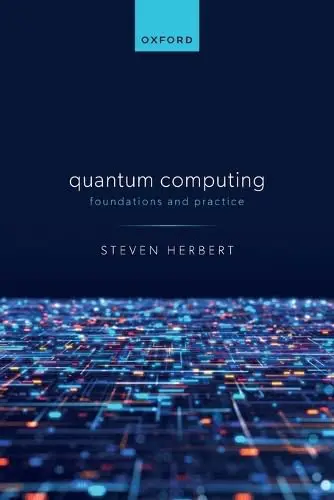
Level: Advanced undergraduate to early graduate, with maths. Published: Oxford University Press, January 2026, 338 pages.
Steven Herbert is an affiliated lecturer at Cambridge in computer science and Head of Quantum Algorithms at Quantinuum, the full-stack company that emerged from Cambridge Quantum Computing’s merger with Honeywell’s quantum division. That dual perspective shows in this Oxford University Press textbook, published in January 2026. Complexity theory runs through the whole book rather than being parked in one chapter, and every standard algorithm, Grover, Shor and HHL, gets worked examples and end-of-chapter problems with answers. The adiabatic-optimisation chapter is one of the better treatments of near-term quantum that we have read.
If you want a serious, current, working textbook that you can read at multiple levels of mathematical depth, this is the strongest of the recent textbooks. References feel current, the error-correction chapter is well done, and you can actually use the book to test yourself against the material.
Read our full review of Quantum Computing: Foundations and Practice.
Quantum 2.0 by Paul Davies
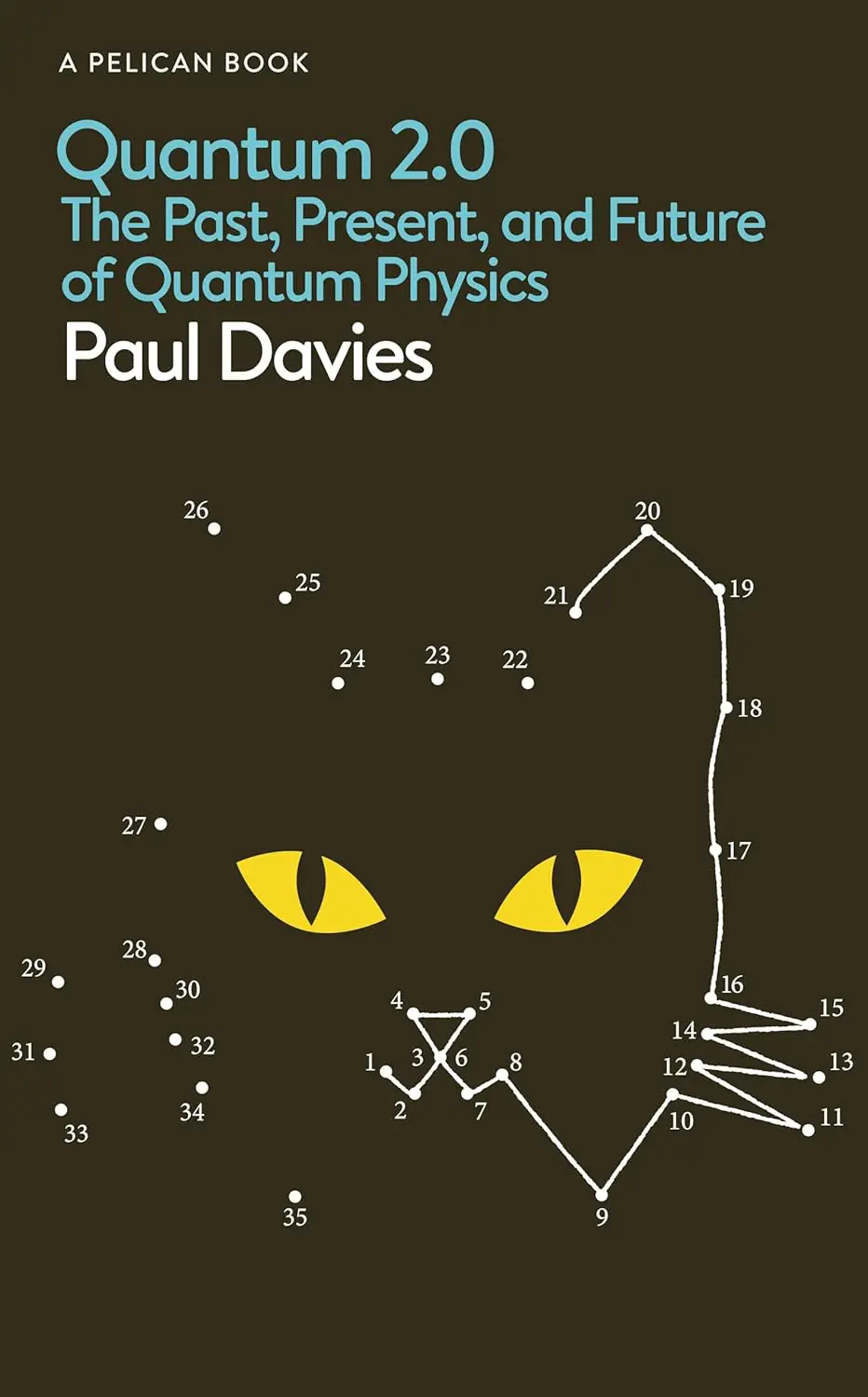
Level: General reader, no maths required. Published: Pelican (Penguin), November 2025, 320 pages.
Paul Davies is one of the best science writers of the last forty years. Quantum 2.0 is his attempt to explain what is genuinely new about the second quantum revolution, the move from quantum mechanics as a description of nature to quantum mechanics as something engineers build with. He covers entanglement, decoherence, quantum information, and the move into quantum computing without losing the lay reader and without empty hand-waving.
If you want a single, well-written non-mathematical book to make sense of why quantum is suddenly everywhere, this is it. It complements Bernhardt at the technical end and Aaronson at the philosophical end, sitting comfortably between them as the popular-science onboarding for the field.
Read our full review of Quantum 2.0.
Quantum Computing: From Concepts to Code by Andrew Glassner
Level: Beginner to intermediate, code-first, light maths. Published: No Starch Press, July 2025, 424 pages.
Andrew Glassner spent his career in computer graphics, where he wrote several of the standard references, and he has brought that teaching habit with him. The book builds the fundamentals in order, superposition, quantum gates, interference, entanglement and measurement, and only then moves on to writing and running real quantum programs.
Simon’s, Grover’s and Shor’s algorithms all get worked through in code rather than being left as equations on the page. No Starch publishes the teleportation chapter as a free sample, which is an unusually honest way to let you test the explanatory style before you spend anything.
Sample chapter and contents at No Starch Press.
Introduction to Quantum Computing for Business by Koen Groenland
Level: No maths required, written for decision makers. Published: Amsterdam University Press, 2025, 174 pages.
Almost every other book on this page is written for people who want to build the machines or program them. Koen Groenland wrote this one for the people who have to decide what their organisation should do about them, and that gap has been open for years.
The chapters work through what problems quantum computers will plausibly solve, how long useful hardware is realistically expected to take, and there is a chapter given over to four myths about the technology. At 174 pages it is the shortest serious book on this list, and it is the one to hand a manager who needs to follow the argument without a physics degree.
Quantum Computing Strategy: Foundations and Applicability by Elena Yndurain
Level: Business and technical strategy, light maths. Published: Chapman & Hall/CRC, 2025, 236 pages.
Elena Yndurain writes from inside the industry rather than from a university department, and the book is shaped by that. It covers the foundations briskly and then spends most of its length on where quantum computing can and cannot be applied, with 153 illustrations carrying a good deal of the argument.
It pairs naturally with Groenland rather than competing with it. Groenland explains the technology to a business reader, while Yndurain is more interested in how an organisation should plan around it.
Dancing with Qubits, second edition by Robert S. Sutor
Level: Beginner to intermediate, maths built from the ground up. Published: Packt, 2024, 684 pages.
The second edition is a genuine revision rather than a reprint with a new cover. At 684 pages it teaches the mathematics you need instead of assuming you already have it, which is why it works for readers who bounced off the standard textbooks.
Robert Sutor spent years at IBM Research, and the book carries the tone of someone who has watched the field’s claims be made and then tested. This is the volume for a reader who wants one book that starts at complex numbers and finishes at quantum algorithms, and it rewards being worked through slowly.
Quantum Algorithms: A Survey of Applications and End-to-end Complexities by Alexander M. Dalzell and colleagues at the AWS Center for Quantum Computing
Level: Advanced reference, free and open access. Published: Cambridge University Press, April 2025, open access.
This is the book to reach for when you want to know whether a quantum algorithm actually helps with a given problem. Thirteen authors, most of them at the AWS Center for Quantum Computing, work through the major algorithm families and cost them out end to end rather than quoting the headline asymptotic speed-up.
The end-to-end part is what makes it valuable and what most other treatments skip. Cambridge published it open access, so the full text is free, and the earlier preprint remains on arXiv.
Free to read at Cambridge Core.
Understanding Quantum Technologies 2025 by Olivier Ezratty
Level: Reference, all levels, free PDF. Published: Self-published, September 2025, eighth edition, 1,524 pages.
This is the most current single document about quantum technology in existence and it costs nothing. The 2025 edition is the eighth, it runs to 1,524 pages, and it was last updated in May 2026, a cadence no conventionally published book can match.
Ezratty covers hardware modalities, algorithms, vendors, funding and national programmes, and he shows his sourcing throughout. Treat it as the reference you search rather than a book you read end to end; there is also a 36-page short version for people who want the shape of the field without the detail.
Free download from the author’s site.
Pick your quantum books by what you want to do
| Your goal | Start with | Why |
|---|---|---|
| Understand quantum computing without maths | Bernhardt, Quantum Computing for Everyone | Most genuinely accessible book in the field. |
| Build intuition with some maths | Susskind & Friedman, The Theoretical Minimum | A working physicist’s intuition, taught patiently. |
| Learn properly as an undergraduate | Rieffel & Polak, A Gentle Introduction | Mathematically honest, well-paced, the CS-department standard. |
| Reach research level | Nielsen & Chuang, Quantum Computation and Quantum Information | The “bible” of the field. Twenty years on, still the standard reference. |
| Specialise in quantum information theory | Wilde, Quantum Information Theory | The most rigorous modern treatment. Free PDF on the author’s site. |
| Cross over from machine learning | Wittek, Quantum Machine Learning | The book that opened the QC↔ML bridge. Still the right starting point. |
| Read for intellectual fun | Aaronson, Quantum Computing since Democritus | One of the sharpest minds in the field, in his own voice. |
| Engage with the philosophy | Deutsch, The Fabric of Reality | The multiverse case from the inventor of universal quantum computation. |
| Read about quantum mechanics 2.0 | Davies, Quantum 2.0 | Veteran science writer on the next quantum revolution. |
| Use a current textbook with worked examples | Herbert, Quantum Computing: Foundations and Practice | OUP, 2025. Cambridge and Quantinuum author, full of solved problems. |
| Learn by writing code | Glassner, From Concepts to Code | No Starch, 2025. Builds up to real programs, free sample chapter. |
| Brief a business team | Groenland, Quantum Computing for Business | 174 pages, no maths, written for decision makers. |
| Plan an organisation around it | Yndurain, Quantum Computing Strategy | Where the technology does and does not apply, from an industry insider. |
| Build the maths from scratch | Sutor, Dancing with Qubits (2nd ed) | 684 pages that assume nothing, revised in 2024. |
| Cost out a quantum algorithm | Dalzell et al., Quantum Algorithms | Open access from Cambridge, end-to-end complexities not headline speed-ups. |
| Look something up for free | Ezratty, Understanding Quantum Technologies | 1,524-page free reference, updated more often than any book. |
The ten essential quantum books, reviewed
These ten quantum books all predate 2024 and none of them has been displaced by anything in the section above. A book earns its way into this half of the list by still being the best answer to a question several years after publication, which is a harder test than being new.
Quantum Computing for Everyone by Chris Bernhardt
Level: Beginner, no math required
The most genuinely accessible book on this list. Bernhardt, a maths professor with a real gift for plain-English explanation, assumes nothing and builds quantum computing up from scratch using nothing more than vectors, dot products, and matrices. By the end of the book you have actually learned how a Bell state, a CNOT, and Shor’s algorithm work, without ever feeling lost.
If you have read pop-science books on quantum computing and felt that they kept stopping just before the interesting bit, this is the book that does not stop. It is the right starting point for anyone who is technically inclined but does not want to wade through a physics textbook first.
Quantum Mechanics: The Theoretical Minimum by Leonard Susskind & Art Friedman
Level: Curious reader with some maths
Susskind is one of the founders of string theory and one of the great living lecturers in physics. Here he and Friedman walk you through quantum mechanics itself, not quantum computing, at the level a working physicist actually thinks at, but with all the workings shown. State vectors, Hermitian operators, eigenvalues, and entanglement are all introduced cleanly and intuitively.
Pair this with one of the quantum-computing-specific books below and you will have the strongest foundation possible: real intuition for the underlying physics, then the algorithmic layer on top. Required reading if you want to actually understand quantum computing rather than just describe it.
Quantum Computing: A Gentle Introduction by Eleanor Rieffel & Wolfgang Polak
Level: Undergraduate / mathematically literate
The textbook most computer-science departments use as a first formal introduction to quantum computing. Rieffel and Polak are computer scientists by training, and the book reflects that, quantum mechanics is introduced as the minimal mathematical machinery needed, then the focus shifts straight to circuits, algorithms, and complexity classes.
It is mathematically honest without being intimidating, and the treatment of quantum complexity theory and quantum algorithms is the clearest you will find at this level. The right next book once Bernhardt or Susskind has set you up.
Quantum Computation and Quantum Information by Michael A. Nielsen & Isaac L. Chuang
Level: Graduate / serious researcher
The “Mike and Ike”, the textbook every serious quantum computing researcher cites and most have on their desk. Two decades after publication it is still the standard reference for everything from quantum algorithms and information theory to error correction and physical implementations.
It is dense, rigorous, and not a casual read. But if you intend to do graduate work, contribute to research, or build an honest mental model of why quantum computing works the way it does, this is the book you need to own. The chapters on quantum error correction and stabiliser codes have aged especially well.
Quantum Information Theory by Mark M. Wilde
Level: Specialist, quantum information theory
The most rigorous modern treatment of quantum information theory available, and freely downloadable as a PDF from the author’s website if you want to try before you buy. Wilde covers classical and quantum Shannon theory side by side, then builds up to the full apparatus of channel capacities, entanglement-assisted communication, and quantum coding theorems.
This is specialist material and it is not a first book. It is the canonical reference if your work touches quantum communication, quantum networks, or the information-theoretic side of quantum computing.
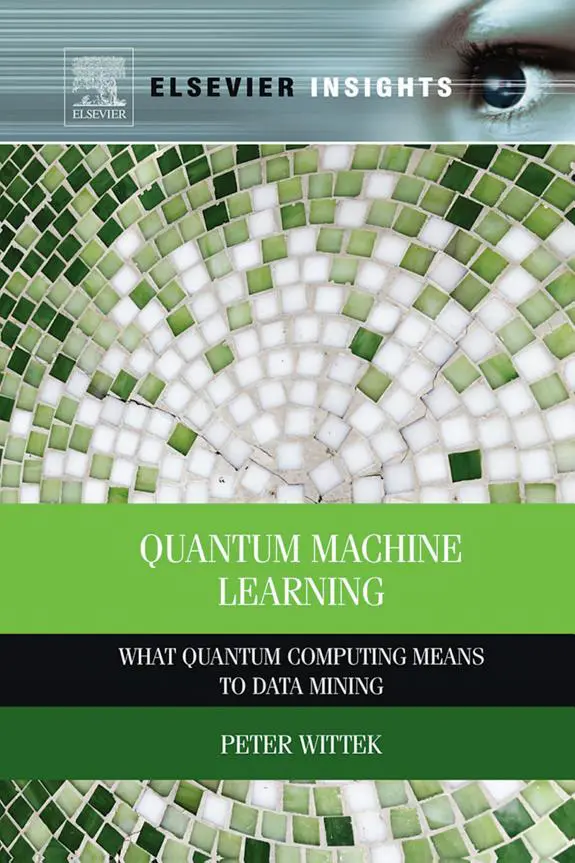
Quantum Machine Learning by Peter Wittek
Level: Specialist, ML / data science crossover
The book that opened the bridge between quantum computing and machine learning, written by the late Peter Wittek before his disappearance in 2019. Wittek covers quantum-enhanced versions of classical ML algorithms, quantum support vector machines, quantum neural networks, quantum k-means, alongside the underlying quantum subroutines (HHL, amplitude amplification, quantum random walks) that make them work.
The field has moved on since 2014 and modern quantum-ML research is far more cautious about claimed speed-ups. Wittek’s book is still where to start, because it gives you the mathematical machinery to read the current literature critically.
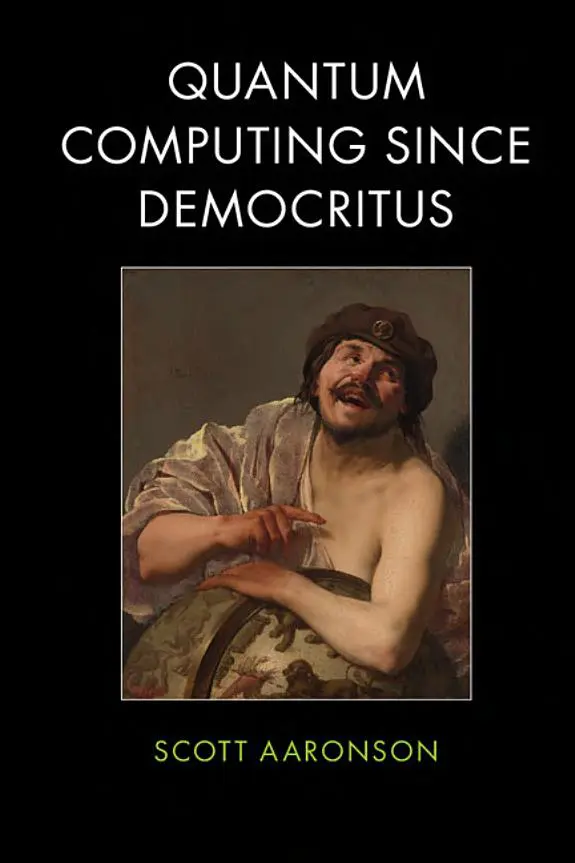
Quantum Computing since Democritus by Scott Aaronson
Level: Reading for fun / intellectual context
Scott Aaronson’s lecture notes turned into a book, funny, opinionated, technically serious, and unlike anything else on this list. It is a tour of computational complexity, the foundations of quantum mechanics, the simulation argument, free will, and almost everything else Aaronson finds interesting, all in a voice that is unmistakably his.
Read it for context and intellectual fun rather than as a textbook. Aaronson is one of the sharpest people working in quantum complexity theory, and seeing the field through his eyes is genuinely valuable. It is the only book on this list that you might read straight through for pleasure.
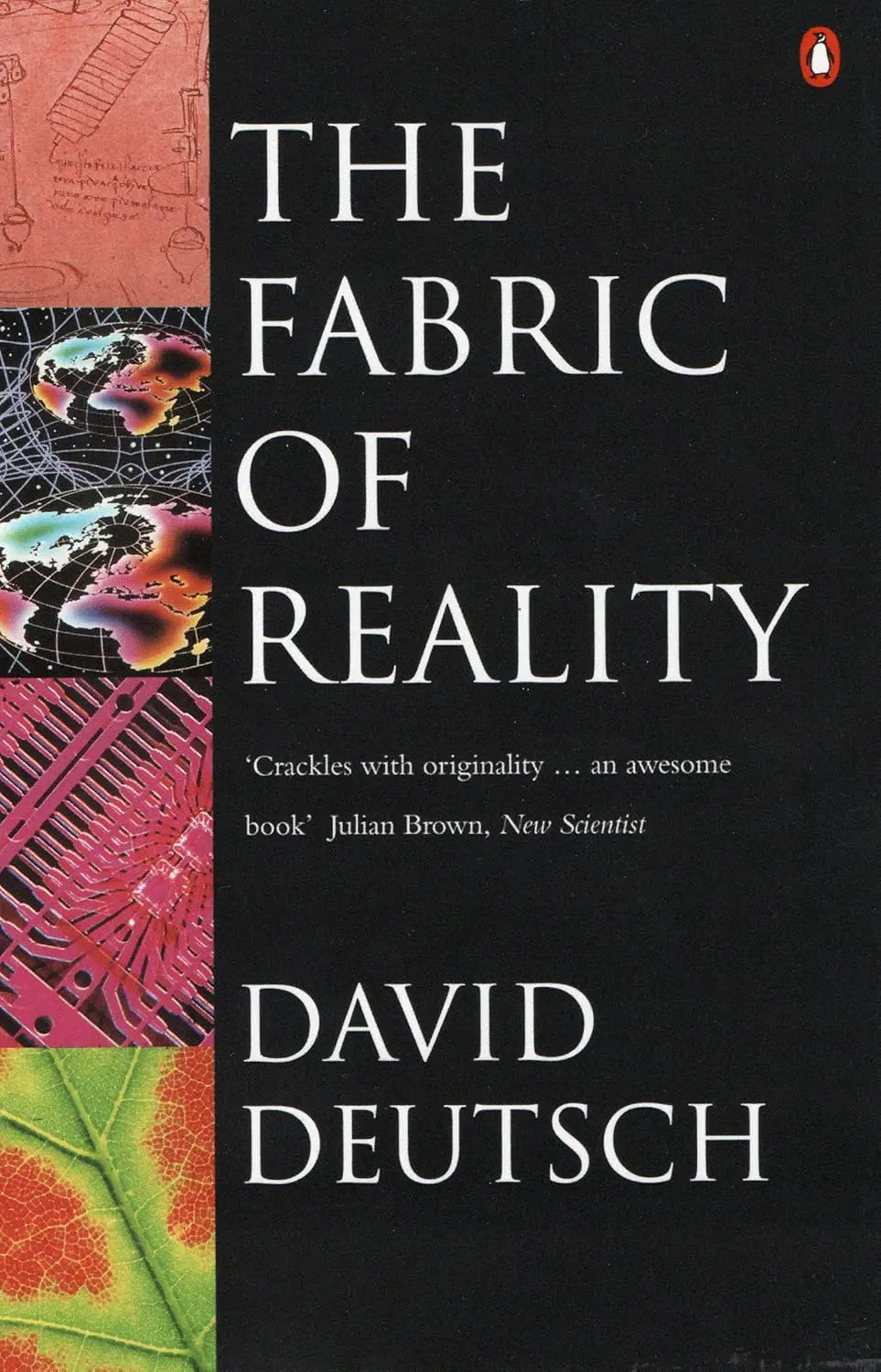
The Fabric of Reality by David Deutsch
Level: Reading for the philosophical case
Written by the inventor of the universal quantum computer himself, this is the book where Deutsch makes his full case for the many-worlds interpretation of quantum mechanics, and argues that quantum computing actually demonstrates the existence of the multiverse. Even readers who reject that conclusion will find the argument worth engaging with.
It is also the clearest statement of why Deutsch built the quantum-Turing-machine framework in the first place. Pair it with our simulation theory guide for the broader conversation about computation, reality, and quantum mechanics.
Quantum Computing for the Quantum Curious by Ciaran Hughes, Joshua Isaacson, Anastasia Perry, Ranbel F. Sun & Jessica C. Turner
Level: High-school / very early undergraduate
An open-access book co-developed by Fermilab physicists and physics teachers, designed specifically to bring quantum computing to high-school students. The treatment is unusually careful: every concept is explained twice, once intuitively and once mathematically, with worked exercises throughout.
If you are an educator looking for material to teach quantum computing in a classroom, this is the right starting point. It is also a good gift for a mathematically able teenager who wants to know what the fuss is about.
Quantum Computer Science: An Introduction by N. David Mermin
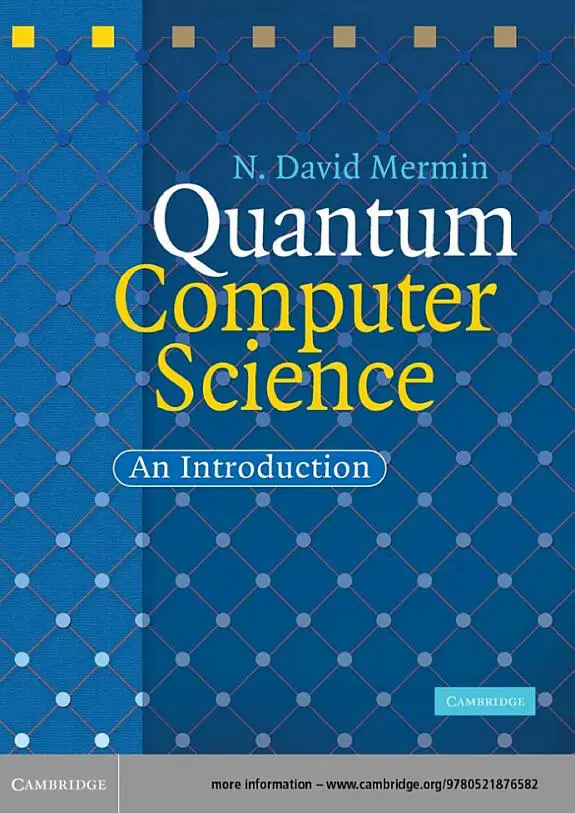
Level: Computer-science background, no physics
Mermin, a respected condensed-matter physicist, wrote this specifically for computer scientists who do not want to learn quantum mechanics first. The book strips away the physics that you do not need and presents the linear algebra and gate model with elegant clarity.
Shorter and tighter than Nielsen and Chuang, and the right introduction if your background is firmly in computer science rather than physics. Mermin’s writing is crisp throughout, every paragraph earns its place.
Deep dives, full lists by topic
Some quantum books deserve more space than a hub entry, so each list below is a full page of its own. Start here when you want depth on one shelf rather than a tour of the whole library.
- 17 Best Quantum Computing Books, the long, illustrated list. Beginner to PhD, every book reviewed with cover and verdict.
- The Ultimate Quantum Booklist, the exhaustive catalogue. 96 titles across 13 categories, from popular science to graduate textbooks.
- Five Books to Master Quantum Computing, the tighter five-book curriculum, with a “by background” matrix.
- Five Books on Simulation Theory, Bostrom, Chalmers, Hoffman, Virk, and Vopson on whether reality is computation.
Programming glossaries, the working vocabulary
Quantum books teach you the theory, and these glossaries give you the working vocabulary for the code. Read them alongside the quantum books above whenever a chapter hands you an algorithm and you want to run it the same afternoon. Our guide to quantum programming languages pairs the same three SDKs with four more tools worth knowing.
If you are reading these books and writing real code, the following 20-term reference cards are designed to live next to your editor:
- Top 20 Qiskit Terms, IBM’s Python quantum SDK.
- Top 20 Cirq Terms, Google Quantum AI’s Python framework.
- Top 20 Q# (Q Sharp) Terms, Microsoft’s quantum programming language.
Companion long-form guides for our quantum books
- What Is Quantum Computing? The Complete Guide, the plain-English long-form explainer.
- Quantum Computing With Equations, the same ground covered with the maths visible.
Support Independent Reviews
Get the Quantum Zeitgeist Newsletter
These quantum books are reviewed by readers, not by an affiliate algorithm. Subscribing to the newsletter is the best way to back that kind of coverage, and it brings the industry's stories straight to your inbox.
Free to join, and you can unsubscribe at any time. Emails are handled by Substack; see our privacy policy.
Quantum books FAQ, answered from experience
What are the newest quantum computing books?
Eight titles published between 2024 and 2026 are worth your money. Steven Herbert’s Quantum Computing: Foundations and Practice (Oxford University Press, 2025) is the strongest recent textbook. Andrew Glassner’s Quantum Computing: From Concepts to Code (No Starch, July 2025) is the best recent code-first introduction, and Robert Sutor’s second edition of Dancing with Qubits (Packt, 2024) builds the mathematics from nothing. For the business side, Koen Groenland’s Introduction to Quantum Computing for Business (Amsterdam University Press, 2025) and Elena Yndurain’s Quantum Computing Strategy (Chapman and Hall/CRC, 2025) cover the ground no textbook does. Olivier Ezratty’s Understanding Quantum Technologies 2025 is free, runs to 1,524 pages and is updated more often than any printed book.
Which quantum computing book should I buy in 2026?
It depends entirely on what you want to do, which is why this page of quantum books is organised by goal rather than by rank. If you want to understand the subject without maths, buy Bernhardt. If you want to write code, buy Glassner. If you need to brief a business team, buy Groenland. If you are studying it properly, buy Herbert or Rieffel and Polak, and keep Nielsen and Chuang on the desk as the reference. Before buying anything, download Ezratty’s free reference, because it will tell you whether the topic you care about is even covered well yet.
What is the best quantum computing book for beginners?
For someone who wants to understand quantum computing without learning physics first, the strongest single recommendation is Quantum Computing for Everyone by Chris Bernhardt, it builds the entire subject from scratch using only basic linear algebra. If you are willing to invest some time in the underlying physics, pair Bernhardt with Quantum Mechanics: The Theoretical Minimum by Leonard Susskind and Art Friedman. Together they will take you from zero to genuinely understanding what a qubit, a Bell state, and Shor’s algorithm are.
Do I need a physics background to learn quantum computing?
No. Quantum computing can be approached from a computer-science angle without ever taking a physics course. Quantum Computer Science by N. David Mermin and Quantum Computing for Computer Scientists by Yanofsky and Mannucci are both written specifically for that path. You will need comfort with linear algebra (vectors, matrices, eigenvalues, complex numbers), but not quantum mechanics in the textbook-physics sense.
What is the best quantum computing book for graduate students?
Quantum Computation and Quantum Information by Nielsen and Chuang is the standard graduate-level reference. It has been the canonical textbook for over twenty years and still is. For specialised graduate work in quantum information theory specifically, Quantum Information Theory by Mark Wilde is the most rigorous modern treatment available, and it is free as a PDF on the author’s website.
Is Nielsen and Chuang still relevant in 2026?
Yes. The fundamentals, qubits, gates, circuits, complexity classes, error-correcting codes, and the basic algorithms, have not changed since 2000. Where Nielsen and Chuang shows its age is in the practical sections on physical implementations (NMR-heavy) and on what hardware exists today. For the modern hardware story, supplement with our Complete Guide to Quantum Computing. But for the conceptual core, Nielsen and Chuang remains the standard reference.
What books cover quantum machine learning?
Quantum Machine Learning by the late Peter Wittek is the foundational text and still the right place to start. It covers quantum versions of classical ML algorithms, quantum support vector machines, quantum neural networks, quantum k-means, together with the underlying quantum subroutines (HHL, amplitude amplification) that power them. Modern research has become more cautious about claimed speed-ups, but Wittek gives you the mathematical machinery to read the recent literature critically.
Are there free quantum computing textbooks?
Yes, several. Mark Wilde’s Quantum Information Theory is freely downloadable as a PDF from the author’s site. The IBM Qiskit textbook is an excellent free online resource for learning quantum computing through code. Quantum Computing for the Quantum Curious by Hughes and colleagues is open-access and designed for high-school and early-undergraduate readers. Scott Aaronson’s lecture notes that became Quantum Computing since Democritus are also still freely available online.
Should I read a book or just use tutorials?
Both. Tutorials and notebook-based courses are excellent for getting code running and seeing quantum algorithms in action. Books give you the structure and the mental model that lets you actually understand what you are doing. Our recommendation: start with one of the introductory books (Bernhardt or Susskind), work through the IBM Qiskit textbook in parallel, and keep Nielsen and Chuang on the desk as a reference.
Outside this list: for community recommendations beyond what we cover here, see Goodreads’ community-voted shelf of the best quantum computing books, and the Amazon search results for the best quantum books for current pricing and availability.
A note on how we choose these quantum books
This page is reviewed on a fixed cadence rather than when a title happens to catch our eye. The date at the top is the date of the last review, not the date the page was first written. When a new book displaces one of the ten below, the older title comes off rather than the list quietly growing.
Quantum books fall into three buckets: pop-science (often beautifully written but mathematically empty), textbooks (mathematically honest but often too dense to read for pleasure), and the rare middle tier that takes the maths seriously without losing the reader. We weight that middle tier heavily here. We do not include books that we find under-edited, hype-driven, or AI-assembled, however well they happen to rank on Amazon. If you think we have missed one, tell us, we read every recommendation.
You may prefer to ground your reading in the history first. Our long-form history of quantum computing covers the Feynman and Manin origins, the algorithm decade, the rise of NISQ, and the current logical-qubit race. It also tells you which of these quantum books map onto which era.


See today’s quantum computing news on Quantum Zeitgeist for the latest breakthroughs in qubits, hardware, algorithms, and industry deals.