Welcome to this week’s digest of the most impactful quantum technology news! We’re tracking the rapid evolution of this exciting field, bringing you the key developments shaping the quantum landscape. This week showcases a remarkable breadth of activity, from fundamental theoretical challenges to significant commercial milestones and crucial steps towards practical quantum-resistant security.
Notably, this week highlights a clear momentum towards building – building startups (Harvard’s success), building hardware (IBM’s expansion and IQM’s program & deal), and building solutions for the future (post-quantum cryptography and scalable qubit development from Diraq). Alongside this practical focus, however, researchers are rigorously questioning core assumptions within established quantum approaches (Deutsch’s work, and the error correction findings from IQC), demonstrating a healthy and vital pursuit of deeper understanding.
From accelerating error correction techniques to the first enterprise quantum computer deal in Japan, this week demonstrates that quantum technology is rapidly moving beyond the theoretical and into the realm of tangible progress and real-world application. It’s a truly dynamic period for the field, and we’re excited to share these developments with you.
1. Harvard Quantum Startups Accelerate Progress, Surpassing Expectations

A team from Harvard University has spurred surprisingly rapid commercialization in quantum computing through the development of three startups – LightsynQ (acquired by IonQ), QuEra, and CavilinQ. QuEra has already delivered its second commercial quantum computer, while CavilinQ recently secured significant seed funding for quantum networking advancements, indicating a pace of innovation exceeding predictions from 2018. Driven by breakthroughs in fault tolerance led by Mikhail Lukin’s lab and a supportive entrepreneurial environment, these ventures suggest functional quantum computers may arrive five to ten years earlier than previously anticipated, potentially by the end of this decade.
2. IQM’s Resonance Program: Real Quantum Hardware Access & €10,000 Prize

IQM Quantum Computers is launching rounds 3 & 4 of its “Resonance” program, offering researchers direct access to their quantum hardware to test and validate solutions, a departure from solely theoretical submissions. The program uniquely requires a publicly accessible code repository demonstrating reproducible results, prioritizing practical implementation in areas like quantum error correction and optimization. This initiative aims to accelerate the development of functional quantum computers by moving beyond simulation and fostering tangible progress through real-world testing on IQM’s systems, with a €10,000 prize awarded to successful proposals.
3. Beyond Random Noise: Ternary Transitions Reveal Flaws in Quantum Error Correction

A team from the Institute for Quantum Computing, led by Selina Stenberg, has demonstrated that standard quantum error correction methods can increase errors on specific IBM Eagle r3 processors. Their analysis of 756 error correction runs revealed that some detected ‘errors’ are actually structured ‘ternary transitions’ – valid quantum states misidentified as faults. By developing a ‘regime classifier’ decoder to distinguish these transitions from true binary errors and selectively avoiding correction, they achieved a 7-19% reduction in logical error rates, highlighting a crucial limitation of conventional error correction when applied to hardware with cooperative error structures.
4. IBM Doubles Down on Quantum: Poughkeepsie Expansion to Create 200 Jobs
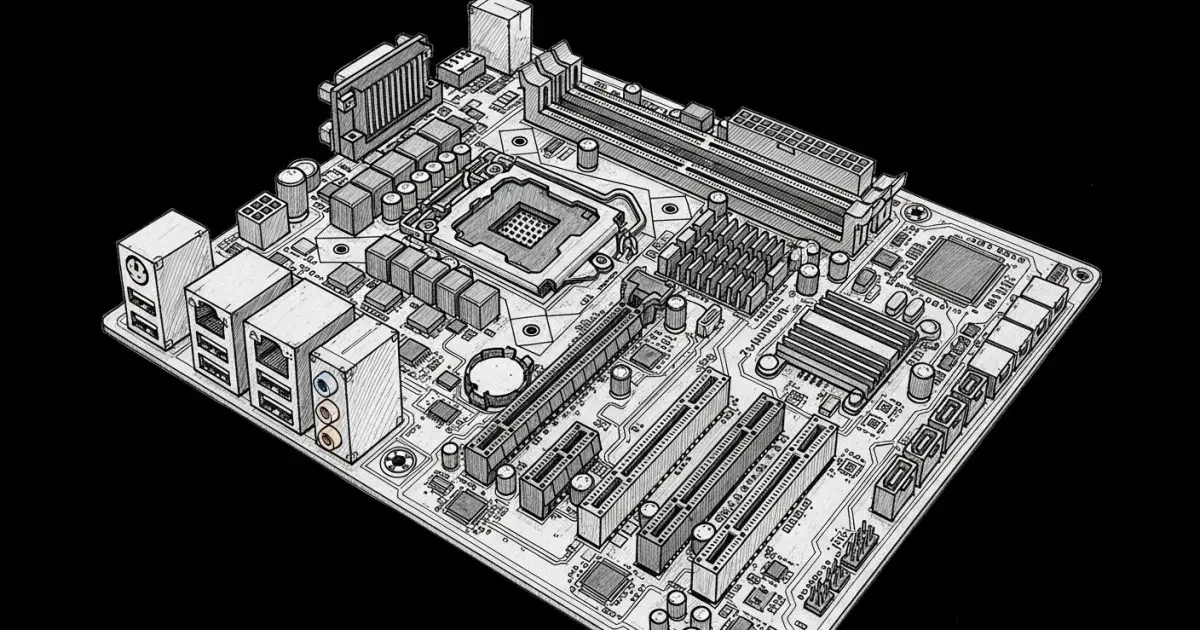
IBM has announced a significant $500 billion investment in its Poughkeepsie, New York campus, dedicating 511,000 square feet to the assembly and manufacturing of its Starling quantum systems. This expansion, the largest in over 40 years at the site, will create approximately 200 jobs and solidify Poughkeepsie as a critical hub for IBM’s quantum computing efforts. The project involves demolishing older buildings to prioritize quantum manufacturing and raises questions regarding long-term power grid capacity, prompting environmental reviews and infrastructure assessments. This move signals IBM’s commitment to scaling quantum technology and building a robust domestic supply chain.
5. Beyond Qubits: Ivan Deutsch Questions Neutral Atom Quantum Computing’s Core Assumption

Ivan Deutsch, a foundational theorist whose work underpins neutral-atom quantum computing companies like QuEra and Pasqal, is questioning the long-held practice of using only two energy levels of an atom to represent qubits. Deutsch suggests the field may have prematurely settled on this two-level approach, potentially overlooking significant computational advantages offered by utilizing an atom’s multiple energy levels – known as qudits. Recent research from LANL/CQuIC demonstrating 99.92% fidelity with ten-level qudits in strontium-87 supports this idea, opening pathways for more efficient error correction and fault tolerance strategies by encoding information within a single atom.
6. Bicycle Codes: 330x Faster Quantum Error Correction Through Innovative Decoding

Anton Pakhunov has developed a new analytical theory and deferred greedy decoder for bivariate bicycle (BB) codes, achieving a remarkable 330-fold reduction in decoding latency compared to belief propagation while maintaining equivalent logical error rates at a bit error probability of 10⁻³. This speedup stems from a derived “collision resolution factor” – determined through XOR syndrome analysis – that accurately predicts decoding success and enables a highly efficient two-shot streaming process. Validated through both hardware experiments on the IBM Kingston processor and simulations, this work represents a significant step toward practical and scalable quantum error correction, though further research is needed to assess its applicability to broader code families.
7. IQM Lands Japan’s First Enterprise Quantum Computer Deal
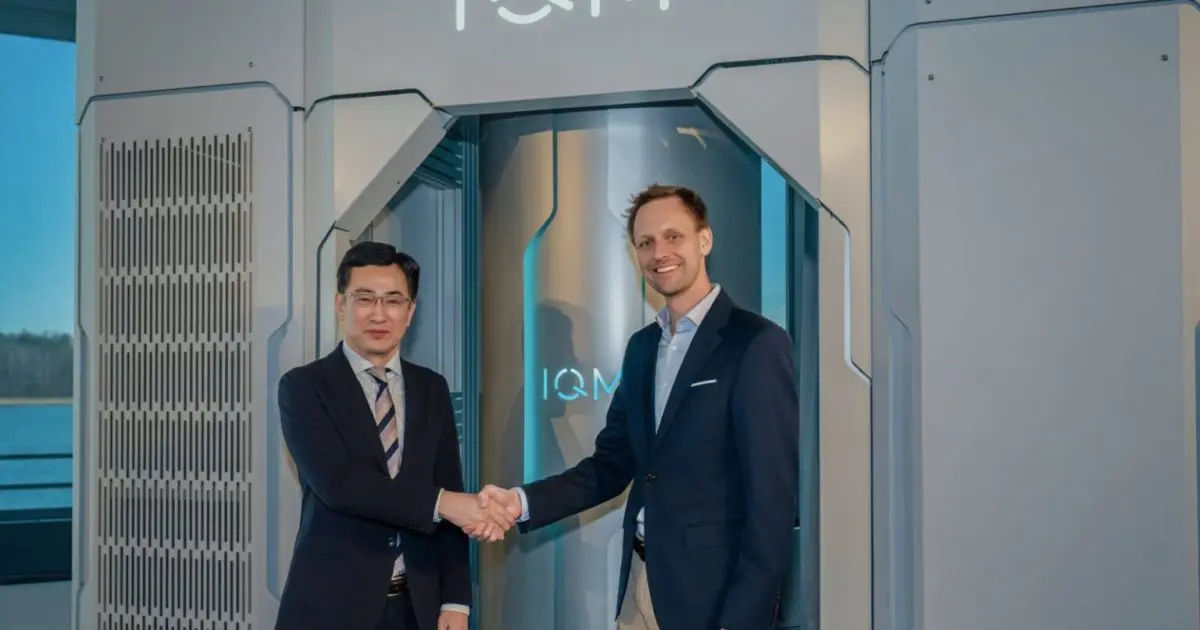
IQM Quantum Computers will deliver a 20-qubit “Radiance” system to TOYO Corporation by the end of 2026, marking Japan’s first purchase of a quantum computer by an enterprise. This deployment expands IQM’s presence in the Asia-Pacific region and directly supports Japan’s national goal of achieving 50 trillion yen in quantum-generated production value by 2030. TOYO Corporation plans to integrate the system with existing high-performance computing infrastructure and cultivate a quantum-focused workforce, signaling a shift towards practical quantum applications within Japanese manufacturing and beyond. The deal underscores a growing trend of companies investing in quantum infrastructure to drive innovation and secure a leading role in the emerging quantum landscape.
8. Intel CEO Joins PsiQuantum Board: Scaling Quantum with Semiconductor Expertise

PsiQuantum announced the appointment of Intel Corporation CEO Lip-Bu Tan to its Board of Directors, signaling a major commitment to scaling quantum computing technology. This move, considered unusual given Tan’s position at Intel, leverages his decades of experience in successfully scaling complex semiconductor technologies, a crucial step for PsiQuantum’s silicon photonics approach to building fault-tolerant quantum computers. Concurrent with this appointment, PsiQuantum has undergone internal leadership shifts with Co-Founder Jeremy O’Brien becoming Executive Chairman and Victor Peng assuming the role of Interim CEO, positioning the company for a new growth phase focused on practical application and deployment. The company intends to utilize existing semiconductor infrastructure for its modular, scalable quantum systems, a strategy fully supported by Tan’s expertise.
9. IBM & Entrust Unite to Future-Proof Crypto Against Quantum Threats

IBM Consulting and Entrust are collaborating to offer a unified platform, built around Entrust’s Cryptographic Security Platform, designed to help organizations actively transition to post-quantum cryptography. This solution addresses the critical issue of “cryptographic sprawl” by providing continuous visibility, automated lifecycle management, and consistent policy enforcement across diverse IT environments. By combining IBM Consulting’s quantum-safe transformation services with Entrust’s cryptographic expertise, the partnership moves beyond risk assessment to deliver a structured program for planning, governing, and executing a quantum-resistant cryptographic strategy. The goal is to minimize complexity and accelerate cryptographic maturity as the threat from quantum computing intensifies and regulations evolve.
10. Diraq’s CMOS Approach Targets Millions of Scalable Quantum Qubits

Diraq, founded by Andrew Dzurak, is focusing on achieving millions of scalable qubits, driven by the need for tens to hundreds of thousands of logical qubits for commercially valuable applications. Dzurak predicted over 20 years ago that existing quantum technologies would not be commercially viable due to scalability limitations, leading him to prioritize leveraging existing CMOS manufacturing processes. The industry is shifting its focus from improving qubit quality to achieving the sheer quantity necessary for quantum computation. Recent results published in Nature in September 2025, using imec’s 300mm pilot line, demonstrated over 99% fidelity across four randomly selected devices, validating Diraq’s belief that utilizing existing semiconductor tooling for quantum qubit fabrication minimizes disruption to existing manufacturing infrastructure. This approach allows for the fabrication of qubits and classical control electronics together on the same chip using standard semiconductor tooling.




See today’s quantum computing news on Quantum Zeitgeist for the latest breakthroughs in qubits, hardware, algorithms, and industry deals.