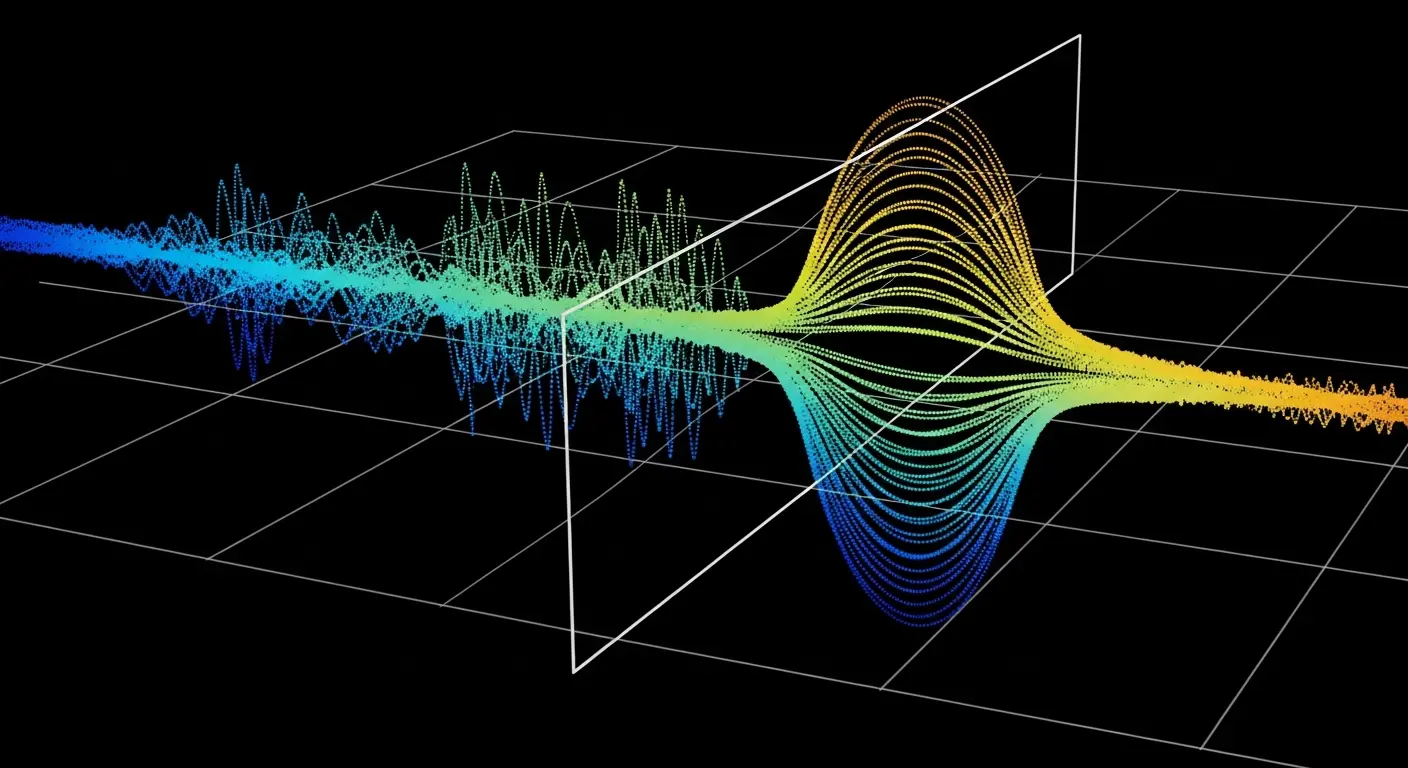
IBM and Dallara are collaborating to accelerate vehicle design by using artificial intelligence and exploring quantum computing. A specific aerodynamic tweak, adjusting a race car’s rear diffuser angle from -2 to +4 degrees, was recently simulated in minutes using a new IBM AI model, a process that previously required hours using traditional Computational Fluid Dynamics (CFD). This speed improvement stems from an AI foundation model trained on 50 years of Dallara’s aerodynamic data, gathered from designing vehicles for series averaging 230 mph. The companies are now investigating how quantum computing can further enhance simulation fidelity for complex aerodynamic challenges, potentially unlocking designs previously difficult to evaluate.
Dallara & IBM Collaborate on Physics-Based AI Models
Traditionally, a computational fluid dynamics (CFD) analysis would consume hours of processing time, demonstrating the acceleration achieved through physics-based AI foundation models. This extensive, real-world engineering expertise forms the basis of the AI’s predictive capabilities, allowing for rapid exploration of design possibilities. The partnership focuses not only on speed but also on investigating the potential of quantum computing to further refine simulation fidelity for particularly complex aerodynamic challenges. While conventional CFD relies on approximations, integrating quantum approaches promises to unlock simulations previously intractable with classical computing resources. IBM has developed domain-specific foundation models in close coordination with Dallara, leveraging both high-fidelity aerodynamic simulation data and the company’s technical expertise. The teams also aim to incorporate validated measurements from wind tunnels and track testing, and the initial results achieved with simulation data alone are already compelling.
Engineers routinely use CFD to predict aerodynamic forces and optimize vehicle performance, but these simulations are computationally intensive; even narrow analyses can take hours, and full race car development workflows can stretch for weeks or months. Andrea Pontremoli, Dallara CEO, said, “Racing has taught Dallara that there are two possible outcomes: you either win or are forced to learn,” emphasizing the company’s commitment to innovation.
In a recent test case involving an LMP2-like race car, the IBM AI model completed evaluations in approximately 10 seconds, the same tasks taking hours with traditional CFD, while maintaining comparable accuracy. Alessandro Curioni, IBM Fellow and VP, Algorithms and Applications, IBM Research, said, “Some of the hardest engineering challenges come down to accurately simulating the physical world.” He continued, “With Dallara, IBM is applying AI to speed up aerodynamic design today while advancing quantum computing in parallel to push simulation farther.” Fabrizio Arbucci, Dallara CIO, added that “High-performance vehicles are an ideal proving ground for neural surrogate models, but the potential impact goes well beyond the racetrack,” suggesting broader applications in transport and other industries.
LMP2 Rear Diffuser: AI Achieves 10-Second Simulations
The pursuit of aerodynamic efficiency in motorsport and aerospace has long relied on computational fluid dynamics, a process demanding substantial computing power and time. Recent advancements, however, are altering this landscape, with artificial intelligence now capable of simulating complex aerodynamic scenarios in a fraction of the time previously required. IBM and the Dallara Group are developing an AI model that can analyze vehicle aerodynamics with unprecedented speed, opening new avenues for design exploration. A striking demonstration of this capability involved simulating adjustments to the rear diffuser of a Le Mans Prototype 2-like race car. Where traditional computational fluid dynamics methods consumed hours to evaluate multiple configurations, the new IBM physics-based AI model completed the same evaluations in approximately 10 seconds.
This speedup isn’t incremental; it represents a potential reduction of days to minutes when analyzing hundreds of geometry configurations, allowing engineers to focus computational resources on more detailed optimization. The foundation of this AI’s performance lies in a unique dataset: 50 years of aerodynamic data accumulated by Dallara while designing vehicles for series averaging over 230 mph. This real-world engineering expertise, combined with IBM’s advancements in AI for physics, has resulted in a model capable of accurately predicting aerodynamic behavior directly from geometric inputs. The collaboration extends to exploring the potential of quantum computing.
Fabrizio Arbucci, Dallara CIO, noted that “Even a one to two percent reduction in drag across passenger vehicles could add up to meaningful fuel-efficiency gains at scale.” Initial findings from this collaboration were detailed in a preprint study published on arXiv on April 20, 2026, and presented at the International Conference on Learning Representations in Rio de Janeiro on April 26, 2026, signaling a significant step towards a new era of AI-powered vehicle design.
With Dallara, IBM is applying AI to speed up aerodynamic design today while advancing quantum computing in parallel to push simulation farther.
Alessandro Curioni, IBM Fellow and VP, Algorithms and Applications, IBM Research
CFD Validation & Early Aerodynamic Performance Results
Dallara, the Italian firm renowned for designing race car chassis for series including IndyCar and Formula 2, is leveraging artificial intelligence to accelerate its aerodynamic design processes. This partnership isn’t simply about faster simulations; it’s about unlocking design possibilities previously constrained by computational limitations. Early testing revealed a substantial speed increase in aerodynamic analysis. Traditionally, such a calculation would have consumed hours using conventional computational fluid dynamics (CFD) techniques. This efficiency gain allows Dallara engineers to explore a far wider range of design configurations in the critical early stages of development, focusing expensive, high-fidelity simulations on the most promising options. The AI model demonstrated remarkable consistency, identifying the same optimal design as traditional CFD with comparable error margins.
Racing has taught Dallara that there are two possible outcomes: you either win or are forced to learn.
Andrea Pontremoli, Dallara CEO
GIST Model & Quantum Computing for Vehicle Design
The pursuit of aerodynamic efficiency in high-performance vehicles is entering a new era, driven by artificial intelligence and the potential of quantum computing. This speed isn’t simply about faster turnaround; it’s about unlocking design spaces previously inaccessible due to computational limitations. This proprietary dataset, gathered from designing vehicles for series like IndyCar, where average speeds exceed 230 mph (370 km/h), provides a uniquely robust foundation for the AI’s predictive capabilities. The models aren’t intended to replace physics-based simulations entirely, but rather to accelerate the initial design phases, allowing engineers to focus expensive computational resources on refining optimal configurations. While conventional CFD relies on approximations, quantum approaches promise to model physical phenomena with greater accuracy, potentially revealing subtle performance gains previously undetectable.
Even a one to two percent reduction in drag across passenger vehicles could add up to meaningful fuel-efficiency gains at scale.
Fabrizio Arbucci, Dallara CIO



See today’s quantum computing news on Quantum Zeitgeist for the latest breakthroughs in qubits, hardware, algorithms, and industry deals.