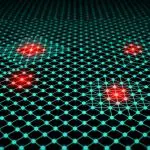
The leading top quantum error correction companies in 2026 build the software, hardware, and algorithmic primitives that turn noisy NISQ-era quantum processors into the fault-tolerant logical-qubit machines every modality roadmap targets for utility-scale computation. The top quantum error correction companies span eight commercial vendors across three architectural layers: real-time QEC decode-and-feedback hardware (Riverlane, Quantum Machines), software-level error suppression and mitigation (Q-CTRL, Qedma, Algorithmiq), and code-architecture and enabling-technology specialists (Iceberg Quantum on qLDPC, Photonic Inc on T-centre interconnect, Entropica Labs on compilers). Each vendor in this guide ships production software or hardware against the 2025-2026 logical-qubit demonstrations from Google Willow, QuEra 96 LQ, Quantinuum Helios 48 LQ, and Atom Computing 24 LQ.
Why quantum error correction is the 2026 industry inflection point
Quantum error correction crossed the empirical threshold from research demonstration to commercial deployment in 2025. Google’s December 2024 Willow result proved surface-code logical errors fall exponentially as the code distance grows, the architectural primitive that every other modality has since reproduced; QuEra in January 2026 demonstrated 96 logical qubits using the [[16,6,4]] qLDPC code on 448 physical atoms; Quantinuum Helios reached 48 logical qubits on the trapped-ion side in November 2025; Atom Computing shipped 24 logical qubits through Microsoft Azure on neutral-atom hardware; and Riverlane’s April 2026 Deltaflow milestone hit 6.5-microsecond real-time decode-and-feedback latency, roughly an order of magnitude below Google’s 63-microsecond surface-code decoder. The top quantum error correction companies are the vendors that ship the software, hardware, and architectural primitives that make these results practical.
The 2026 industry shape is now defined by three layers of the QEC stack. The bottom layer is the real-time decode-and-feedback hardware that runs the syndrome extraction and the classical-control loop fast enough to keep up with the qubit decoherence timescale (Riverlane Deltaflow, Quantum Machines OPX1000 + NVIDIA DGX Quantum). The middle layer is the algorithmic error-suppression and error-mitigation software that lets NISQ-era hardware run useful workloads without full QEC overhead (Q-CTRL Fire Opal, Qedma QESEM, Algorithmiq error mitigation). The top layer is the code-architecture and enabling-technology specialists who design the QEC codes and the physical-resource primitives those codes consume (Iceberg Quantum qLDPC, Photonic Inc T-centre interconnect, Entropica Labs compilers).
How quantum error correction works
A quantum error correction code encodes a logical qubit into many physical qubits in a way that lets the system detect and correct decoherence errors without measuring the logical qubit itself. The mathematical primitive is the stabiliser formalism: each code defines a set of commuting Pauli operators (the stabilisers) whose joint eigenspace is the code space, and the syndrome extraction circuit measures these stabilisers to detect errors without disturbing the encoded logical information.
The dominant code families in 2026 commercial deployment are the surface code (Google Willow, IBM through 2025, originally proposed by Kitaev in 1997), high-rate quantum LDPC codes (IBM 2026 Kookaburra roadmap, QuEra Jan 2026 96 LQ demonstration, Iceberg Quantum Pinnacle architecture), bosonic codes (Alice & Bob cat qubits, Xanadu GKP states), and the dual-rail and concatenated-code variants used on photonic and trapped-ion platforms. Each code has a distance d that determines how many simultaneous physical-qubit errors it can correct (roughly d/2), and the threshold theorem says that any code with physical-qubit error rate below the code-specific threshold can be scaled to suppress logical-error rates arbitrarily.
The top quantum error correction companies
Eight commercial vendors define the top quantum error correction companies in 2026. Three are real-time-decode and control-layer specialists (Riverlane Deltaflow, Quantum Machines OPX1000, Q-CTRL Fire Opal); three are error-mitigation software vendors (Qedma QESEM, Algorithmiq, Entropica Labs); and two are code-architecture and enabling-technology pure-plays (Iceberg Quantum on qLDPC, Photonic Inc on T-centre fault-tolerant interconnect). The QED-C industry consortium tracks the top quantum error correction companies alongside the broader quantum-hardware ecosystem with quarterly updates on logical-qubit demonstrations and deployments.







What the lineup reveals
Three patterns stand out. First, the QEC vendor landscape is concentrated by geography in a way that no other quantum-computing sub-industry is: two of the eight vendors are based in Israel (Quantum Machines, Qedma) and Photonic Inc anchors Canada from Coquitlam, British Columbia, three are headquartered in Sydney Australia or have Australian roots (Q-CTRL, Iceberg Quantum, plus QED-C-tracked CQC2T affiliates), Riverlane anchors the UK position, and Algorithmiq plus Entropica Labs round out the Nordic-and-Singapore footprint. The deep Israeli concentration mirrors the broader Israeli quantum-software cluster.
The vendor consolidation has not happened yet
Second, the QEC industry has not yet seen the consolidation wave that hit superconducting (Google plus Atlantic Quantum, D-Wave plus Quantum Circuits Inc). The vendor list above is still expanding rather than consolidating, and the cross-modality nature of QEC software (Q-CTRL works on IBM, Amazon, IonQ, Google; Riverlane works on Rigetti, OQC, IQM, Qblox; Quantum Machines works on every modality) suggests the consolidation pattern when it arrives will look different from the hardware-vendor pattern.
The funding pace has accelerated
Third, the funding pace through 2025-2026 has accelerated faster than any other QC sub-industry. Riverlane closed a $75M Series C in October 2024, Q-CTRL expanded its Series B to $113M in 2024 with a $24.4M DARPA grant in August 2025, Quantum Machines closed a $170M Series C in February 2025, Algorithmiq secured EUR 18M in May 2026, and Iceberg Quantum closed its $6M seed in February 2026. The cumulative QEC-sector capital raised in the past 18 months exceeds $400M+ across the eight vendors, which positions the top quantum error correction companies as the next likely wave of public-market entries after the superconducting SPAC cohort.
Decode hardware, error mitigation, and code-architecture: the three QEC layers
The QEC industry splits naturally into three architectural layers. The decode-hardware layer (Riverlane Deltaflow, Quantum Machines OPX1000) builds the real-time classical-control electronics that run the QEC syndrome extraction and the decoding circuit fast enough to apply corrective gates before the next decoherence event. The 6.5-microsecond Riverlane Deltaflow latency and the OPX1000 nanosecond-scale qubit control are the architectural primitives that make production-speed fault-tolerant operation possible.
The error-mitigation software layer (Q-CTRL Fire Opal, Qedma QESEM, Algorithmiq) operates above the qubit gate level and extracts cleaner results from noisy NISQ-era hardware without requiring the multi-qubit logical-encoding overhead of full QEC. The architectural primitive is hardware-agnostic post-processing and pulse-level error suppression, which lets a 100-qubit superconducting machine run useful chemistry or finance workloads today without waiting for a fault-tolerant 10,000-physical-qubit logical-qubit machine to ship.
The code-architecture and enabling-technology layer (Iceberg Quantum qLDPC, Photonic Inc T-centre interconnect, Entropica Labs compilers) designs the new QEC code families themselves and the physical-resource primitives those codes consume. Iceberg’s Pinnacle qLDPC architecture targets a 10x overhead reduction versus the surface code, Photonic Inc’s silicon T-centre memory enables modular fault-tolerant interconnect across multiple QPUs, and Entropica’s compilers translate logical algorithms into physical-qubit operations on QEC-enabled hardware.
2025-2026 QEC milestones across the industry
The 2025-2026 QEC milestone list crossed every major modality. On the superconducting side Google Willow demonstrated exponential surface-code error suppression with one verified logical qubit (December 2024), IBM published the Kookaburra qLDPC + Logical Processing Unit roadmap for 2026 with 7,500 gates on up to 360 qubits, and Riverlane Deltaflow hit 6.5 microsecond decode latency (April 2026). On the trapped-ion side Quantinuum Helios reached 48 logical qubits (November 2025). On the neutral-atom side QuEra demonstrated 96 logical qubits using the [[16,6,4]] qLDPC code on 448 physical atoms (January 2026), Atom Computing shipped 24 logical qubits via Microsoft Azure (Bacon-Shor code), and Pasqal published the dual-rail-qubit roadmap for 2026.
The cross-modality view is captured in our quantum logical-qubit leaderboard, which tracks every published logical-qubit demonstration with code distance, fidelity, and modality. The empirical pattern is clear: every major modality crossed the surface-code threshold in 2025 (SQC silicon spin at 99.99% two-qubit fidelity, IBM Heron R2 superconducting at 99.5%, IonQ trapped-ion at 99.99%, QuEra neutral atom past threshold for the [[16,6,4]] code), which is why the QEC vendor list expanded faster than the underlying hardware vendor list through 2025-2026.
When QEC matters for your industry
Fault-tolerant cryptanalysis and post-quantum migration
The dominant near-term use case for production QEC is cryptanalytically-relevant quantum computing, the architectural threshold at which a quantum computer can run Shor’s factoring algorithm on RSA-2048 keys with enough logical qubits to complete in operationally meaningful time. The Iceberg Quantum Pinnacle qLDPC architecture targets sub-100,000-physical-qubit RSA-2048 factoring, and the broader Riverlane plus Q-CTRL plus Quantum Machines stack runs the real-time decode-and-feedback that makes the logical-qubit overhead practical. The 2030-2033 horizon for cryptanalytic quantum is the deepest enterprise driver of QEC vendor revenue today.
Pharmaceutical and chemistry simulation
The error-mitigation software layer (Q-CTRL, Qedma, Algorithmiq) anchors the production pharma-and-chemistry pipeline today, extracting useful variational-chemistry results from noisy IBM Heron and IQM Radiance hardware without waiting for full fault-tolerance. The November 2025 Algorithmiq Quantum Advantage Tracker with IBM produced the first verified quantum simulation outperforming classical methods on a real-world molecular system, the empirical anchor for the thesis that incremental quantum advantage through error mitigation is the practical near-term path forward.
Defence and sovereign computing
The defence-and-sovereign QEC procurement footprint is concentrated in DARPA programmes (the Quantum Benchmarking Initiative Stage B selected Diraq, Quantum Motion, SQC, Photonic Inc and counts Riverlane and Q-CTRL as broader DARPA contractors), the UK NSSIF (Riverlane), and the Israeli and Singaporean national programmes (Quantum Machines, Qedma, Entropica). Q-CTRL’s Ironstone Opal quantum-navigation product launched February 2026 with a 100x GPS-denied accuracy improvement is the canonical defence-adjacent QEC application, and the broader DARPA QBI Stage B funding cycle is the deepest enterprise lever in the QEC-vendor cap-table-funded-by-government story.
Frequently asked questions
Who are the leading top quantum error correction companies in 2026?
Eight commercial vendors define the modality. Riverlane (Cambridge UK, Deltaflow real-time QEC at 6.5 microsecond latency, $195M+) is the canonical QEC-hardware pure-play. Q-CTRL (Sydney + LA + Berlin, Fire Opal up to 10,000x error suppression, $190M+) is the deepest cross-modality error-suppression specialist. Quantum Machines (Tel Aviv, OPX1000 + DGX Quantum, $280M+) powers over 50% of operational quantum-computing programmes. Qedma (Tel Aviv, QESEM error mitigation, IBM Ventures backed) is the leading dedicated error-mitigation vendor. Algorithmiq (Helsinki, Quantum Advantage Tracker with IBM) anchors pharma-chemistry use cases. Iceberg Quantum (Sydney, Pinnacle qLDPC architecture) targets 10x overhead reduction versus surface code. Photonic Inc. (Coquitlam BC, silicon T-centre fault-tolerant interconnect, $380M+ CAD) anchors distributed QEC architectures. Entropica Labs (Singapore) covers QEC compilers and tooling.
What is quantum error correction and why does it matter?
Quantum error correction encodes a logical qubit into many physical qubits in a way that lets the system detect and correct decoherence errors without measuring the logical qubit. The architectural primitive is the stabiliser formalism: each QEC code defines a set of commuting Pauli operators whose joint eigenspace is the code space, and the syndrome-extraction circuit measures these stabilisers to detect errors without disturbing the encoded logical information. QEC matters because every useful long-running quantum algorithm (Shor factoring, fault-tolerant chemistry, quantum machine learning at scale) requires logical-qubit operation, and the threshold theorem says any code with physical-qubit error rate below the code-specific threshold can be scaled arbitrarily. See our what is quantum error correction guide for the deeper picture.
How does Riverlane Deltaflow work?
Deltaflow is Riverlane’s real-time quantum error correction decode-and-feedback stack, the hardware and software layer that runs the syndrome extraction and the decoding circuit fast enough to apply corrective gates before the next decoherence event. The April 2026 Deltaflow milestone delivered 6.5-microsecond decode-and-feedback latency, beating Google’s 63-microsecond surface-code decoder by close to an order of magnitude. The architectural primitive is hardware-agnostic real-time decoding that works across multiple physical-qubit modalities. The Deltaflow 2 deployment at Oak Ridge National Laboratory in September 2025 and the July 2025 UK first commercial QEC deployment at CentreSquare with OQC hardware are the deepest production references for the modality, and the partnership stack already covers Rigetti, OQC, IQM, Qblox, Google Quantum AI, and NVIDIA.
What is the difference between error correction and error mitigation?
Quantum error correction encodes a logical qubit into many physical qubits and uses real-time syndrome measurement to detect and correct errors as they happen, the architecture that scales to arbitrarily long algorithms but requires the multi-qubit logical-encoding overhead. Error mitigation extracts more accurate results from noisy quantum hardware using post-processing and pulse-level techniques without encoding the qubits in a logical-qubit code, the architecture that runs on NISQ-era hardware today but does not scale to arbitrarily long algorithms. Qedma QESEM, Q-CTRL Fire Opal, and Algorithmiq operate at the error-mitigation layer; Riverlane Deltaflow, Quantum Machines OPX1000, and Iceberg Quantum Pinnacle operate at the error-correction layer. Both are essential parts of the QEC industry stack.
What is a logical qubit?
A logical qubit is a protected quantum bit encoded into many physical qubits through a quantum error correction code. Today’s logical qubit overhead spans an order of magnitude: the QuEra January 2026 96-logical-qubit demonstration used 448 physical atoms (roughly 5 physical qubits per logical qubit for the [[16,6,4]] qLDPC code), the IBM 2026 Kookaburra roadmap targets 360 physical qubits supporting up to 7,500 gates with qLDPC, the Google Willow December 2024 verified logical qubit used 105 physical qubits, and the standard surface code at distance 5 needs roughly 50 physical qubits per logical qubit. The Iceberg Quantum Pinnacle architecture targets sub-100,000-physical-qubit logical-qubit deployments for cryptanalytically-relevant quantum computing, the deepest enterprise driver of QEC vendor revenue today.
How much funding has the QEC vendor industry raised?
The cumulative capital raised by the top quantum error correction companies through 2025-2026 exceeds $1B across the eight vendors covered here. Riverlane has raised $195M+ (including a $75M Series C in October 2024 led by Planet First Partners). Quantum Machines has raised $280M+ (including a $170M Series C in February 2025 led by PSG Equity, Intel Capital, and Red Dot Capital). Q-CTRL has raised $190M+ (Series B expanded to $113M in 2024 plus $24.4M DARPA grant August 2025). Photonic Inc. has raised approximately $380M CAD across two 2026 rounds ($200M USD / $275M CAD May 2026 plus $180M CAD January 2026), valuing the company at $2 billion USD. Algorithmiq has raised $20M+ ($15M Series A 2023, $4M seed 2023, EUR 18M May 2026). Iceberg Quantum closed a $6M seed in February 2026, Qedma is institutional-investor-funded, and Entropica Labs is part of the Singapore quantum-software cluster.
Which QEC code families are commercially deployed in 2026?
Four QEC code families ship in production 2026 quantum hardware. The surface code (Google Willow, IBM through 2025) is the historical baseline and the deepest-studied family, originally introduced by Alexei Kitaev in 1997. Quantum-LDPC codes (IBM 2026 Kookaburra, QuEra January 2026 [[16,6,4]] demonstration, Iceberg Quantum Pinnacle) deliver an order-of-magnitude lower physical-qubit overhead per logical qubit and are the architectural primitive that lets fault-tolerant computing reach utility-scale on plausible 2030-2033 physical-qubit counts. Bosonic codes (Alice & Bob cat qubits, Xanadu GKP states) encode logical qubits in continuous-variable photonic or microwave modes and provide hardware-level error protection. Concatenated codes and dual-rail variants are used on photonic and certain trapped-ion platforms.
What is the relationship between QEC and fault-tolerant quantum computing?
Quantum error correction is the primary architectural primitive that enables fault-tolerant quantum computing. The threshold theorem says that any QEC code with physical-qubit error rate below the code-specific threshold can be scaled to suppress logical-error rates arbitrarily, the empirical foundation that lets the industry promise fault-tolerant utility-scale operation. The fidelity numbers crossed the threshold for surface-code error correction across every major modality in 2025 (SQC silicon spin 99.99% two-qubit fidelity, IBM Heron R2 99.5%, IonQ trapped-ion 99.99%, QuEra neutral atom past the [[16,6,4]] threshold), and the top quantum error correction companies are the vendors that ship the software, hardware, and architectural primitives that translate raw threshold-crossing fidelity into production logical-qubit operation. See our logical-qubit leaderboard for current numbers.


See today’s quantum computing news on Quantum Zeitgeist for the latest breakthroughs in qubits, hardware, algorithms, and industry deals.