The leading top neutral atom quantum computing companies in 2026 build their qubits out of single atoms, held still in tweezers made of laser light and made to interact through the Rydberg blockade. The scale-up has been fast. This modality went from 256 qubits to more than 1,200 fully-connected qubits in roughly 18 months. Five commercial QPU vendors make up the top neutral atom quantum computing companies, namely QuEra, Pasqal, Atom Computing, Infleqtion and planqc. Behind them sits a laser supply chain whose UK anchor, M Squared Lasers of Glasgow, has been in administration since August 2025. No other modality has kept pace with superconducting and trapped-ion on qubit count and produced meaningful logical-qubit demonstrations at the same time. It manages that by picking the atoms up and moving them while the circuit runs.
Why neutral atoms scaled fastest
Until roughly 2022 this was a laboratory curiosity. Since then it has had the steepest qubit-count growth curve in the industry. QuEra brought a 256-atom Aquila system online in 2022, Pasqal demonstrated a 506-atom defect-free register in 2024, and Atom Computing crossed 1,000 qubits with the HiPARS atom-rearrangement system. The 1,200-plus-qubit AC1000 followed in 2025, and Pasqal’s 1,000-qubit roadmap was pulled forward. Only one other line of hardware is running four-digit qubit counts in commercial deployments, and that is IBM’s superconducting transmons.
Three structural advantages
Three structural advantages drive that scaling. The first is cost. An atom trap is a laser pulse and a glass cell, a few thousand dollars apiece, where superconducting fabrication runs into the tens of millions per chip. The second is sameness. Atoms are identical by physics, so the device-variability problem that plagues superconducting and silicon-spin qubits does not arise at all. The third advantage is the one that matters most. Neutral-atom hardware can be reconfigured during a circuit, which means connectivity is set by software rather than by the lithography of the chip. That is why logical-qubit demonstrations have come faster from neutral atoms than from any other platform.
The academic pipeline still leads the commercial one. Harvard’s atom-array spinout pipeline (QuEra and adjacent startups) is the clearest way in to why this modality scales as it does. The Harvard first-ever continuously-operating quantum computer runs on the same atom-tweezer platform that QuEra commercialised. What the labs show tends to reach production hardware 18 to 24 months later, which is how the academic groups keep setting the pace for the industry.
How Rydberg-blockade quantum computing works
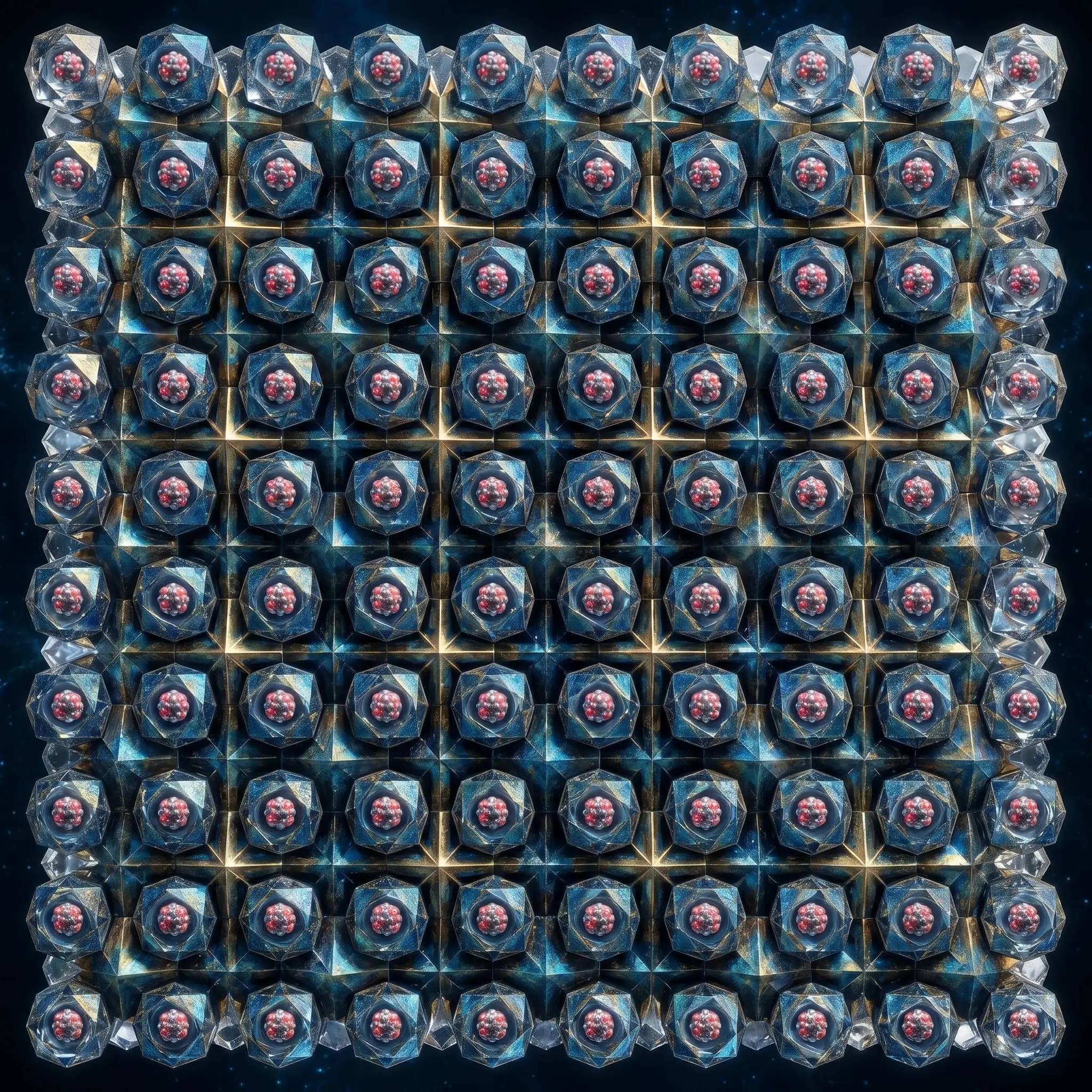
A neutral-atom QPU holds single atoms in optical tweezers, which are laser beams focused so tightly that an atom sits in the bright spot and cannot easily leave. The atoms are typically rubidium-87, strontium-88 or strontium-87. Each one encodes a qubit in two long-lived ground or hyperfine states. Gates between two atoms are mediated by the Rydberg blockade. A laser pulse temporarily promotes the atoms into highly-excited Rydberg states, with principal quantum number n = 50 to 80. In that state the dipole-dipole interaction between neighbours is so strong that only one of the two atoms in a small radius can be excited at a time. That conditional behaviour is the gate. Rydberg-blockade stability is the core technical question for the modality, and the lifetime of atoms trapped in Rydberg arrays is the dominant fidelity limit at scale.
Single-qubit gates are the easier half. They use Raman or microwave transitions between the qubit ground states, and hardware in the field has shown fidelities above 99.9%. There are also cross-vendor benchmarks tracking neutral-atom processor performance at scale. Two-qubit gates through the Rydberg blockade now reach 99.5% on QuEra and Pasqal hardware with active error suppression. Very few machines can move their qubits about in the middle of a circuit, and that rearrangement of the atoms mid-circuit is what makes QuEra’s logical-qubit experiments tractable. Developers can try a workload before paying for QPU time, using QuEra’s open-sourced Bloqade simulator and the Harvard quantum-error-correction toolchain, and the software stack has matured faster as a result.
The top neutral atom quantum computing companies
Five commercial QPU vendors define the top neutral atom quantum computing companies in 2026. One more company anchors the laser supply chain they all draw on. The geography is unusually balanced for quantum hardware, with the United States, France, Germany and the United Kingdom each fielding at least one serious commercial player. The QED-C industry consortium tracks the top neutral atom quantum computing companies alongside the wider quantum-hardware industry, with quarterly status updates on QPU access and deployments.
Independent directories of the top neutral atom quantum computing companies list much the same shortlist of names. The profiles below take the leading firms one at a time.





What the lineup reveals
Three things stand out. The first is the business model. Only two survive here. There is the full-stack vendor, which is what QuEra, Pasqal, Atom Computing, Infleqtion and planqc all are, and there is the component supplier. The middle option that flourished in superconducting, where a company buys chips and integrates control electronics of its own, simply does not exist in neutral atom. The laser system is the dominant cost line, and only a handful of companies can build one.
The second is the map. The United States hosts three of the five QPU vendors. France and Germany both have credible national champions: Pasqal, founded around Antoine Browaeys’s atom-array group at Institut d’Optique, and planqc, with a federal mandate to build a 1,000-qubit machine. The UK end of the laser supply chain means the AUKUS Pillar 2 programme has a neutral-atom value chain inside the trilateral. Trapped-ion is US-dominated, and so is superconducting, with a Chinese second tier. Neutral atom looks less like a winner-take-all market and more like a strategic asset that several governments have deliberately spread out.
The third is how the money has arrived. IonQ rolled up two QKD specialists in 2025. No comparable rollup is visible in neutral atom. Atom Computing took the private path, with the Microsoft logical-qubit programme rather than a SPAC. Infleqtion went public on NYSE as INFQ in February 2026 through a SPAC business combination with Churchill Capital Corp X. QuEra and Pasqal each closed nine-figure private rounds with strategic investors, including Pasqal’s reported near-$2B post-money valuation, and planqc’s EUR 50M Series A funded the European pillar. Two of the five QPU vendors are now listed, Infleqtion on the NYSE and Pasqal on Nasdaq since August 2026. The modality is too capital-intensive for a small-cap consolidation pattern, and too important strategically for any one acquirer to absorb the leaders.
Analog versus gate-model neutral atom
The same vacuum chamber and laser stack support two quite different ways of programming the machine. Analog mode, also called Hamiltonian programming, sets the whole array evolving under a continuously-varying Hamiltonian and reads out at the end. Nothing is broken into gates. That suits combinatorial optimisation, quantum simulation of materials and adiabatic algorithms, and it scales to the full array immediately because the Hamiltonian acts globally rather than gate-by-gate. QuEra Aquila and Pasqal Iroise both run analog mode at full qubit count.
Gate-model mode, also called digital, is the other way. It applies discrete one and two-qubit gates, one at a time, and it is the standard programming model for fault-tolerant quantum computing. It is harder to engineer, because every gate has to address specific atoms with high fidelity. Only superconducting matches neutral atom for routine gate-model operation at hundreds of qubits in production. Pasqal, Atom Computing and Infleqtion publish gate-model benchmarks regularly. The QuEra Gemini-Class roadmap targets fault-tolerant gate-model operation through dynamical atom rearrangement. Plenty of real-world workflows in 2026 use both modes inside the same circuit, warming up in analog mode and then refining with gates, which is a common pattern in materials simulation.
Logical-qubit milestones from neutral atoms
Neutral-atom machines have won more than their share of the published logical-qubit milestones. The most recent is the Harvard-led Nature paper carried in the January 2026 issue. It held up to 96 logical qubits active at once in one demonstration of its 448-atom architecture, using high-rate [[16,6,4]] codes (DOI 10.1038/s41586-025-09848-5). That figure is the peak of a single cluster-state experiment built from 16 blocks of six logical qubits each. The paper summarises its own deep-circuit results as dozens of logical qubits, and its below-threshold result came from a separate surface-code test rather than from the 96-qubit run.
The earlier Harvard-QuEra paper that reached 48 logical qubits ran on a 280-atom research apparatus rather than on Aquila. Europe PMC counts 229 citations for it, more than any other result named here. Microsoft and Atom Computing then entangled 24 logical qubits in November 2024, encoding them into 48 ytterbium atoms with the [[4,2,2]] error-detecting code. Pasqal’s 2024 first-logical-qubit demonstration brought the same approach to French hardware. The Pasqal logical-qubit-solution paper remains the cleanest published case of an industry-relevant problem solved on logical qubits.
Every vendor does it the same way. The array is loaded without defects, ancilla atoms are measured and reset in the middle of the circuit, and the array is reconfigured between rounds of syndrome extraction. Defect-free atom-array preparation is the first thing that has to work. The second is image-denoising readout, because it determines how accurately a syndrome can be read. Through 2025 and 2026 the goal has moved from headline logical-qubit counts to sustained fault-tolerant operation, and Atom Computing’s NVQLink integration with NVIDIA shows how much classical-control infrastructure that takes.
When neutral atom matters for your industry
Pharmaceutical and chemistry
Chemistry plays to both modes. Analog mode prepares the variational trial state and gate-model mode refines it with VQE, which is what makes neutral-atom hardware so well suited to molecular simulation at small to mid-sized molecules. Pasqal’s chemistry customers, BASF and Boehringer Ingelheim among them, run these workloads through the Pasqal NVIDIA CUDA-Q integration for hybrid CASCI. The IBM-Pasqal quantum-centric supercomputing partnership extends the same workflow onto IBM’s HPC infrastructure.
QuEra’s own pharmacology customers, BASF and BCG-X, anchor the analog-mode use case. The Aramco-Pasqal Saudi Arabia 200-qubit deployment took industrial-scale neutral-atom chemistry into the energy sector. Size is the point here. The 506-atom Pasqal register and the 1,200-qubit Atom Computing system are both large enough to run the full active-space chemistry workloads that demand more qubits than superconducting machines currently expose.
Optimisation, finance, and operations research
Analog mode maps onto a family of hard problems. Maximum independent set, max-cut and graph colouring all turn up inside supply-chain, portfolio and logistics optimisation. BCG X and QuEra’s joint go-to-market targets exactly that customer profile, and the QuEra-Dell hybrid-solver integration shows how an analog-mode machine couples to enterprise IT infrastructure for at-scale workloads. Pasqal runs analog QAOA on similar problem classes for HSBC, BNP Paribas and Credit Agricole. On this class of problem the analog approach is competitive with D-Wave hybrid solvers, and it also gives the programmer a richer set of constraint-encoding primitives.
Government and defence
Infleqtion leads in defence. It holds a US Navy quantum-RF processing contract along with ARPA-E, AUKUS Pillar 2 and DoD APFIT contracts, with Mark Saffman’s neutral-atom group anchoring the Sqale technical roadmap. The Infleqtion Sqale full-stack platform and the Infleqtion quantum systems access programme for academic research together make the company the natural defence-procurement choice. The other vendors have their own national patrons: planqc serves the German BMBF and DLR programmes, Pasqal serves the French DGA and EuroHPC, and QuEra serves DARPA and US national-laboratory testbeds.
Frequently asked questions
Who are the leading top neutral atom quantum computing companies in 2026?
Five QPU vendors define the modality, and a sixth company supplies much of the laser hardware behind them. QuEra Computing (Boston, Aquila on AWS Braket, up to 96 logical qubits active at once in one Nature demonstration from the January 2026 issue, about $247M total raised) is the most-accessed neutral-atom QPU by external-customer hours. Pasqal (Massy, France) operates Fresnel 2, Orion Beta, and the upcoming Vela across IBM Qiskit, Google Cloud, Microsoft Azure, NVIDIA CUDA-Q, and HPE GreenLake. Atom Computing (Berkeley + Boulder) holds the 1,180-qubit Phoenix world record and partners with Microsoft on logical-qubit work; the Magne next-generation system targets 50 logical qubits in late 2026.
Infleqtion (Boulder, NYSE: INFQ since February 2026) ships the 1,600-qubit Sqale full-stack platform plus the Oqtant Quantum Matter Service. planqc (Garching, Germany) runs 256-qubit strontium optical-lattice systems with the MAQCS 1,000-qubit programme at Leibniz Supercomputing Centre. M Squared Lasers (Glasgow, UK) has been in administration since August 2025, and the case was extended in April 2026. The company supplies the SolsTiS laser platform and builds the Maxwell neutral-atom QPU.
What is the difference between neutral atom and trapped ion quantum computing?
Trapped-ion qubits are charged atoms held in radio-frequency Paul traps and entangled through laser-mediated motional modes; neutral-atom qubits are uncharged atoms held in optical tweezers and entangled through Rydberg-blockade interactions. Trapped-ion has historically delivered higher gate fidelities (above 99.99% in some demonstrations) but at much smaller qubit counts (tens to hundreds), and the all-to-all connectivity available in trapped-ion is degraded by the linear-chain geometry. Neutral-atom systems run at 256 to 1,200-plus qubits with high but lower gate fidelities, and the connectivity is reconfigurable in software. The two modalities currently complement rather than compete on most workloads.
How many qubits do the top neutral atom quantum computing companies operate?
As of 2026, Atom Computing’s Phoenix hosts 1,180 neutral-atom qubits in an optical tweezer array, the largest production neutral-atom system to date; the next-generation Magne targets 50 logical qubits from 1,225 physical qubits in late 2026. Pasqal runs 324 physical qubits at the high end across Fresnel 2 (100 qubits), Orion Beta, and the upcoming Vela (256+ qubits planned 2026), and demonstrated a 506-atom defect-free register in 2024.
QuEra’s Aquila on AWS Braket exposes 256 atoms, with the next-generation system at 448 physical qubits. The Nature paper in the January 2026 issue held up to 96 logical qubits active at once in one demonstration of that 448-atom architecture, using high-rate [[16,6,4]] codes. The same paper summarises its own deep-circuit results as dozens of logical qubits.
Infleqtion’s Sqale platform runs at 1,600 physical qubits with 12 logical qubits via post-selection (2025), targeting 30+ logical by 2026 and 100+ by 2028. planqc operates 256-qubit strontium optical-lattice systems with the MAQCS programme aiming at 1,000 qubits at Leibniz Supercomputing Centre.
What is Rydberg blockade and why does it matter?
The Rydberg blockade is the physical mechanism behind two-qubit gates in neutral-atom hardware. A laser pulse temporarily promotes atoms into highly-excited Rydberg states (principal quantum number around n = 50 to 80) where the dipole-dipole interaction between neighbouring atoms is strong enough that only one of the two atoms in a blockade radius (typically a few micrometres) can be excited simultaneously. This conditional dynamics is what gives the gate its conditional behaviour and lets two atoms entangle. The blockade is also the modality’s biggest fidelity challenge because Rydberg-state lifetimes are short (microseconds) and stray electric fields can reduce the blockade radius unpredictably.
Can I run circuits on these top neutral atom quantum computing companies through the cloud?
Yes, through several routes. QuEra Aquila is on Amazon Braket. Pasqal’s hardware is on Microsoft Azure Quantum, Google Cloud Marketplace, NVIDIA CUDA-Q, and Scaleway. Atom Computing access is provided through the Microsoft Azure Quantum partnership. Infleqtion exposes the Sqale platform through the Infleqtion quantum systems access programme and the Oqtant Quantum Matter Service. planqc hardware access is currently primarily through DLR, BMBF, and Munich Quantum Valley programmes rather than a public cloud. Strangeworks, qBraid, and Classiq each provide multi-vendor abstractions that include neutral-atom backends.
Are neutral atom companies publicly traded?
Infleqtion is publicly traded on the New York Stock Exchange under ticker INFQ following the February 2026 SPAC business combination with Churchill Capital Corp X. Pasqal raised EUR 340M+ in March 2026 at a $2B valuation (EUR 170M private round plus EUR 170M committed convertible financing) and has since listed. It completed a business combination with Bleichroeder Acquisition Corp. II on 27 August 2026 and trades on Nasdaq as PSQL. QuEra has raised about $247M across rounds and remains private.
Atom Computing has raised more than $300M and remains private. planqc has raised EUR 50M+ Series A plus EUR 29M DLR contract money and remains private. M Squared Lasers has been in administration since August 2025, which puts a widely used part of the cold-atom laser supply chain at risk. The modality is too capital-intensive for the small-cap public-market path that some quantum-stocks pure-plays have followed, and most neutral-atom IPOs are expected to come in 2026-2027 once revenue from logical-qubit-class hardware materialises.
Why are logical-qubit demonstrations easier on neutral atom hardware?
Two reasons. First, atom rearrangement during a circuit lets the hardware match physical-qubit connectivity to the syndrome-extraction circuit of any quantum error-correction code, which removes the connectivity-mismatch overhead that plagues logical-qubit demonstrations on superconducting machines. Second, mid-circuit measurement of ancilla atoms is non-destructive of the data atoms because they are physically separated, which is harder to achieve on shared-substrate platforms. The 2023 Harvard-QuEra 48-logical-qubit paper, the 2024 Microsoft-Atom Computing 24-logical-qubit demonstration, and the 2024 Pasqal first-logical-qubit-solution paper all exploit these two architectural advantages.
How does neutral atom relate to the broader quantum-technology stack?
Neutral-atom hardware sits in the quantum-computing layer alongside superconducting, trapped-ion, photonic, silicon-spin, and topological modalities. Neutral-atom platforms are accessed through the same quantum cloud providers as other modalities, programmed with the same quantum software stacks (Qiskit, Cirq, PennyLane, Q#, Classiq), and benchmarked on the same logical-qubit metrics as the rest of the field. The modality’s structural advantage is in scaling and reconfigurable connectivity, and that advantage is most visible in the logical-qubit experiments that dominate the academic literature. The neutral-atom story is also tightly coupled to the cold-atom quantum sensing and timing programmes that share most of the underlying laser and vacuum technology.
Disclaimer. This article is for informational purposes only and does not constitute investment, financial or professional advice. The quantum technology industry evolves rapidly and information may become outdated. Always conduct your own research and consult qualified advisers before making investment decisions. Investing in quantum computing companies involves significant risk, including the potential loss of your entire investment, and past performance is not indicative of future results.



See today’s quantum computing news on Quantum Zeitgeist for the latest breakthroughs in qubits, hardware, algorithms, and industry deals.