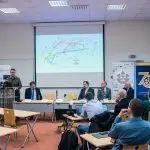
More than 150 attendees from over 10 countries convened in Paris for Pasqal’s “Pasqal Thoughts” event, signaling a shift in quantum computing from academic exploration toward practical deployment and attracting significant international investment. The neutral-atom quantum computing company detailed an accelerated roadmap to reach 1000 qubits, alongside demonstrations of stable logical qubits achieved in 2025, a key milestone in the pursuit of fault-tolerant systems. “The conversations at Pasqal Thoughts 2026 make one thing clear: quantum computing is becoming an operational tool for solving real business, industrial, and scientific challenges today,” said Wasiq Bokhari, CEO of Pasqal. This momentum was underscored by presentations from organizations like Crédit Agricole CIB, Thales, and EDF, illustrating active experiments and potential applications across finance, energy, and telecommunications.
Pasqal Thoughts 2026: Quantum Computing’s Shift to Deployment
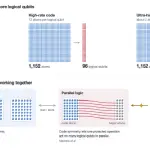
Neutral-atom quantum computing is rapidly transitioning from academic exploration to practical application, as evidenced by the scope and focus of Pasqal’s “Pasqal Thoughts 2026” event held in Paris. The gathering, which convened over 150 attendees from more than 10 countries, signaled a surge in international investment and interest in moving quantum technologies beyond theoretical research and into tangible deployments. This level of participation underscores a growing confidence in the field’s potential to deliver real-world value, rather than remaining solely within research institutions. Pasqal highlighted its progress towards a key scaling goal of 1000 qubits, with an “accelerated roadmap delivery” indicating a commitment to rapid advancement. A central theme of the event was the demonstration of logical qubits in 2025, a feat that surprised many in the industry because achieving stable logical qubits, essential for error correction, represents a major obstacle in building fault-tolerant quantum systems.
This achievement suggests that progress towards practical, reliable quantum computation is occurring at a faster rate than previously anticipated. The event showcased how Pasqal’s full-stack platform is already impacting various sectors. Financial institutions like Crédit Agricole CIB are actively exploring quantum approaches for portfolio optimization, derivatives pricing, and fraud detection; Pierre Dulon, Global Head of the Technology Sector at Crédit Agricole CIB, noted that “partnering with Pasqal has shown us that quantum computing is already relevant to concrete financial use cases, from credit-risk monitoring to portfolio optimization.” Collaborations with European HPC centers like GENCI and CINECA, through the HPCQS project, are integrating Pasqal’s systems into existing supercomputing infrastructures, paving the way for hybrid quantum-classical workflows and a quantum-centric supercomputing environment.
Neutral-Atom Processors Integrated with HPC Infrastructure
A key theme was the integration of Pasqal’s neutral-atom quantum processors into existing supercomputing infrastructures, a move driven by the need to address complex problems beyond the reach of classical computers alone. The European HPC centers GENCI and CINECA are actively working to incorporate Pasqal systems into classical HPC workflows through the High-Performance Computer and Quantum Simulator (HPCQS) hybrid project, a collaboration co-funded by the European HPC Joint Undertaking and Italy’s Ministry of University and Research. This integration isn’t simply about adding quantum power; it’s about orchestration.
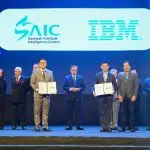
Paco Martin of IBM detailed progress on the Quantum Resource Management Interface (QRMI), designed to manage quantum resources from diverse architectures alongside classical clusters and AI accelerators within environments like SLURM, creating what the company terms a “quantum-centric supercomputing environment.” The event also highlighted the potential of combining quantum computing with artificial intelligence, with NVIDIA participating in discussions about emerging hybrid architectures capable of tackling previously intractable computational challenges. Leaders from Thales, EDF, and Links Foundation discussed ongoing experiments in areas like satellite constellation mission planning and energy systems optimization, illustrating the growing applicability of quantum computing to real-world problems. This collaborative spirit extended beyond individual companies, with organizations like P33 Chicago and Los Alamos National Laboratory emphasizing the importance of cross-border coordination between hardware developers, software providers, and domain experts.
Partnering with Pasqal has shown us that quantum computing is already relevant to concrete financial use cases, from credit-risk monitoring to portfolio optimization.
Pierre Dulon, Global Head of the Technology Sector at Crédit Agricole CIB
Crédit Agricole CIB & Industry Quantum Use Case Examples
Financial institutions were prominently represented, signaling a growing recognition of quantum computing’s potential to disrupt established industries. Crédit Agricole CIB, a major player in the financial sector, shared insights into how quantum approaches could revolutionize areas like portfolio optimization, derivatives pricing, and crucially, fraud detection. Beyond finance, the event highlighted experiments underway at Thales, EDF, and the Links Foundation, exploring quantum applications in satellite constellation mission planning, energy systems optimization, and telecommunications resource allocation, demonstrating a diverse range of potential deployments. Pasqal’s focus on integrating its neutral-atom quantum processors into existing supercomputing infrastructure further accelerates this transition.
Quantum-Classical Convergence: QRMI & Hybrid Architectures
The push to integrate quantum processors with existing high-performance computing (HPC) infrastructure gained considerable momentum as evidenced by Pasqal’s recent “Pasqal Thoughts” event, attended by over 150 delegates from more than ten countries; this level of participation signals a clear shift from purely academic exploration to practical implementation. The event also highlighted the importance of logical qubit demonstrations achieved in 2025, a significant step towards fault-tolerant quantum computing and a faster-than-anticipated milestone for the field. Organizations like P33 Chicago, Los Alamos National Laboratory, and Institut quantique at Université de Sherbrooke emphasized the need for cross-border collaboration to accelerate this integration and foster ecosystem development.
The conversations at Pasqal Thoughts 2026 make one thing unequivocally clear: quantum computing is no longer a technology of the distant future; it is becoming an operational tool for solving real business, industrial, and scientific challenges today.
Wasiq Bokhari, CEO of Pasqal
See today’s quantum computing news on Quantum Zeitgeist for the latest breakthroughs in qubits, hardware, algorithms, and industry deals.