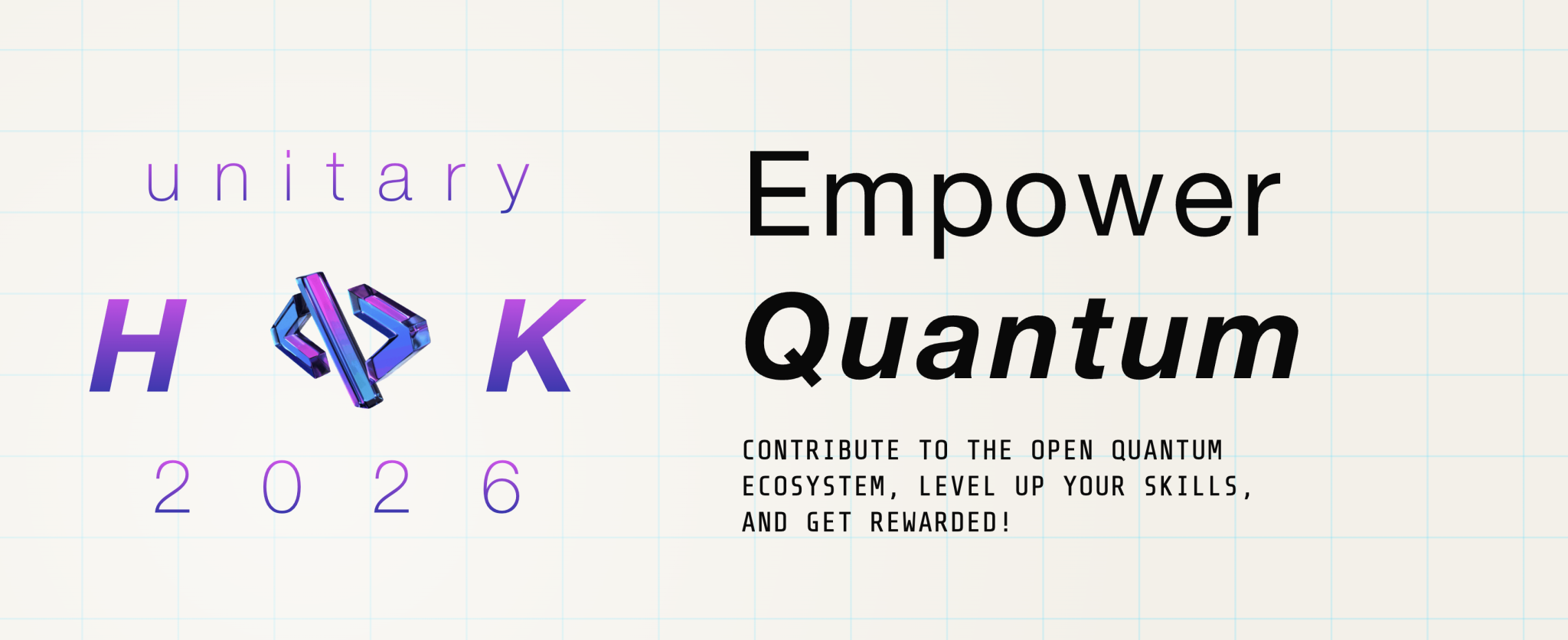
A two-week virtual hackathon beginning June 3rd will offer participants cash bounties for contributing to the open-source quantum ecosystem. Unitary Foundation is launching unitaryHACK 2026, a competition running through June 17th designed to accelerate development in the rapidly evolving field. The event has support from key industry players including IBM Quantum, DoraHacks, and OQD, signifying investment in open-source quantum initiatives. A series of localized kickoff events are also planned; for example, the University of Chicago will host a session for its students on Wednesday, June 3rd.
The concentrated timeframe of unitaryHACK 2026, running from June 3 to June 17, offers participants the chance to earn cash bounties for contributions to open-source quantum computing. This short period incentivizes rapid development and focused effort within the quantum ecosystem, potentially yielding significant rewards for successful participants. Core Members including IBM Quantum, DoraHacks, and OQD demonstrate investment from established industry leaders and hackathon organizers. Supporting Members such as AWS, Classiq, and Microsoft signal broad collaboration across the quantum landscape. Similar gatherings are scheduled at institutions including Michigan State University and Universidad Nacional Autónoma de México, fostering in-person networking and collaboration. The Unitary Foundation urges participants to register to be eligible to claim bounties, emphasizing the importance of participation for those seeking financial incentives.
The Unitary Foundation maintains this project and encourages error reporting via their GitHub repository, ensuring continuous improvement and community oversight. These efforts, combined with the support of numerous sponsors, aim to contribute to skill development within the rapidly evolving field.
Beyond the virtual competition, unitaryHACK 2026 relies on a network of organizations providing financial and technical support; the Alice and Bob Center for Quantum Networks, Moth Quantum, Project11, PsiQuantum, QuEra, Zapata Quantum, and the Unitary Foundation itself are event sponsors, demonstrating broad interest in fostering open-source quantum development. A tiered structure designates IBM Quantum, DoraHacks, and OQD as Core Members, signifying a deeper commitment to the hackathon’s success alongside NVIDIA’s involvement, while AWS, Classiq, Microsoft, Mozilla Foundation, OrangeQS, QC Ware, Quantum Machines, Riverlane, and Xanadu function as Supporting Members. This multi-level sponsorship model suggests a collaborative effort to accelerate progress within the quantum information science community. Localized kickoff events further expand the hackathon’s reach, with institutions like the Universidad Nacional Autónoma de México hosting gatherings on June 5th and Fordham University on June 8th; the University of Chicago’s event on June 3rd is exclusively for its students, indicating a targeted approach to engaging specific academic groups. These in-person components complement the two-week virtual timeframe of June 3-17, offering participants opportunities for networking and focused collaboration.
Source: https://unitaryhack.dev/



See today’s quantum computing news on Quantum Zeitgeist for the latest breakthroughs in qubits, hardware, algorithms, and industry deals.