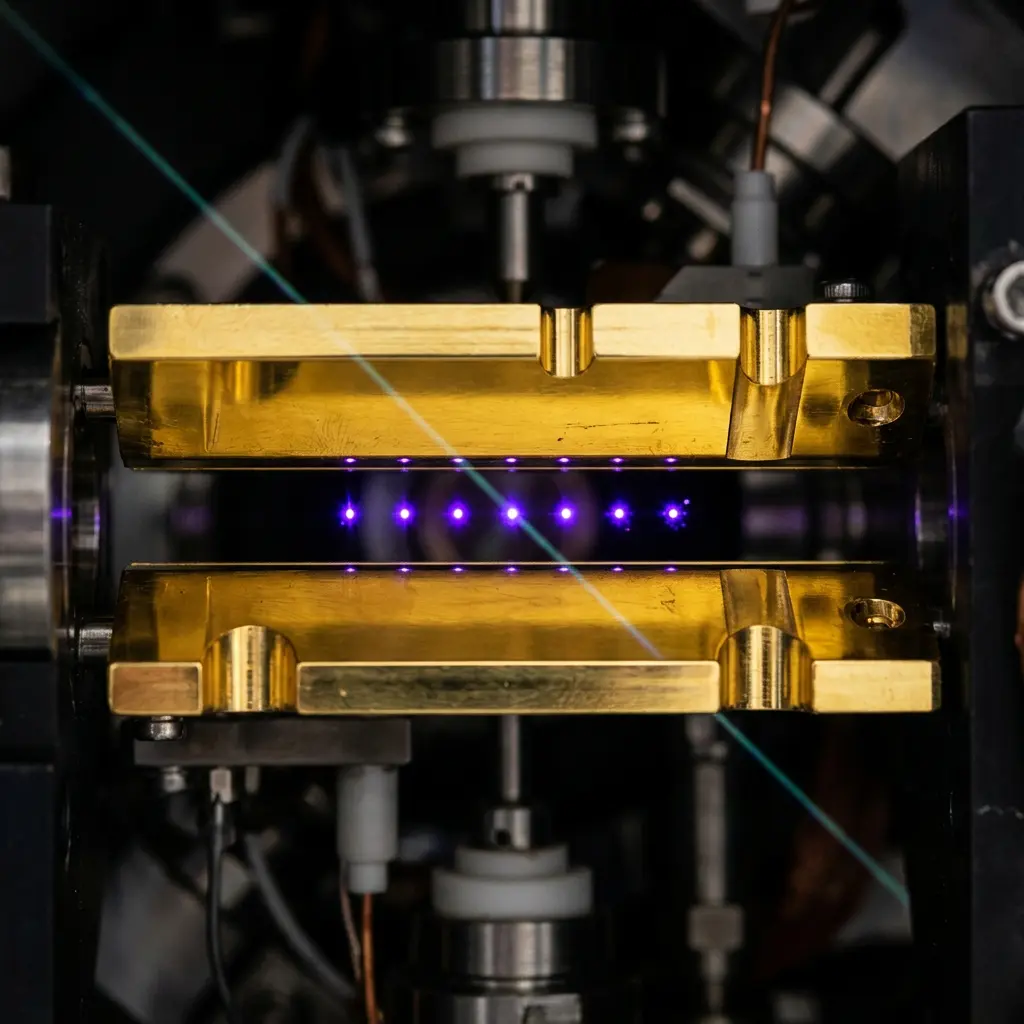
Quantinuum has demonstrated logical qubits that outperformed their physical counterparts by a factor of 800, a result published in Nature in June 2026 and signalling a substantial leap in the reliability of quantum computing hardware. This achievement, built on commercial Quantinuum hardware, distinguishes the company’s approach by prioritising practical application over hypothetical systems as the industry pursues fault-tolerance, the threshold for confidently solving complex, high-value problems. Quantinuum states that their progress is not only scientific but also commercial, emphasising a focus on reducing resource overhead for scalable quantum computers. Beyond this initial breakthrough, the company has advanced the core building blocks of fault-tolerant quantum computing, including logical-qubit teleportation and multiple error-correction milestones, supporting the development of customer-ready systems.
Logical Qubit Performance Surpasses Physical Qubits by 800x
This achievement wasn’t realised through hypothetical systems; the company’s commercial hardware was instrumental in reaching this milestone, distinguishing Quantinuum’s approach from research dependent on prototype setups and highlighting a clear trajectory toward practical applications. The significance extends beyond simply building more qubits; the focus is on creating scalable, reliable systems that minimise technical risks and accelerate the arrival of commercially viable quantum computing, a threshold the industry must overcome to tackle complex, high-value problems with confidence. A key demonstration involved teleporting a logical qubit with high fidelity, a result published in Science years ahead of schedule, and subsequent improvements to the fidelity of their System Model H2. Further progress included achieving results in a high-rate non-local code that surpassed the performance of physical qubits, and a first-ever demonstration of a single-shot error correcting code in four dimensions, significantly reducing resource demands.
Recently, Quantinuum performed one of the first meaningful computations using logical qubits, exploring questions related to materials science and magnetism with lower error rates than those observed in their physical counterparts. This computation also showcased successfully squeezing 48 logical qubits from just 98 physical qubits, emphasizing the architectural efficiency that supports large-scale fault tolerance without requiring excessive resources.
This result also includes a leading “encoding rate” squeezing 48 logical qubits out of just 98 physical qubits, emphasizing how our architecture helps to support large scale fault tolerance without enormous resource costs.
Quantinuum’s System Model H2 Achieves Error-Correction Milestones
Demonstrating increasingly tangible progress toward practical fault-tolerant quantum computing through results on commercially available hardware, moving beyond theoretical improvements, Quantinuum distinguishes its approach from many research efforts still reliant on prototype systems. This leap in reliability isn’t simply about increasing qubit count, but about building systems capable of tackling complex problems with greater confidence, addressing a critical hurdle for the entire quantum industry. All these advancements have been achieved on Quantinuum’s commercial hardware, signifying a capacity to deliver consistent performance to customers and partners. Recent achievements include demonstrating high-fidelity teleportation of a logical qubit, published in Science, and extending qubit lifetimes tenfold using a concatenated code, solidifying their position in error correction technology.
Last year, in partnership with Microsoft, we published a breakthrough in logical computing, demonstrating logical qubits that outperformed their physical counterparts by a factor of 800.



See today’s quantum computing news on Quantum Zeitgeist for the latest breakthroughs in qubits, hardware, algorithms, and industry deals.