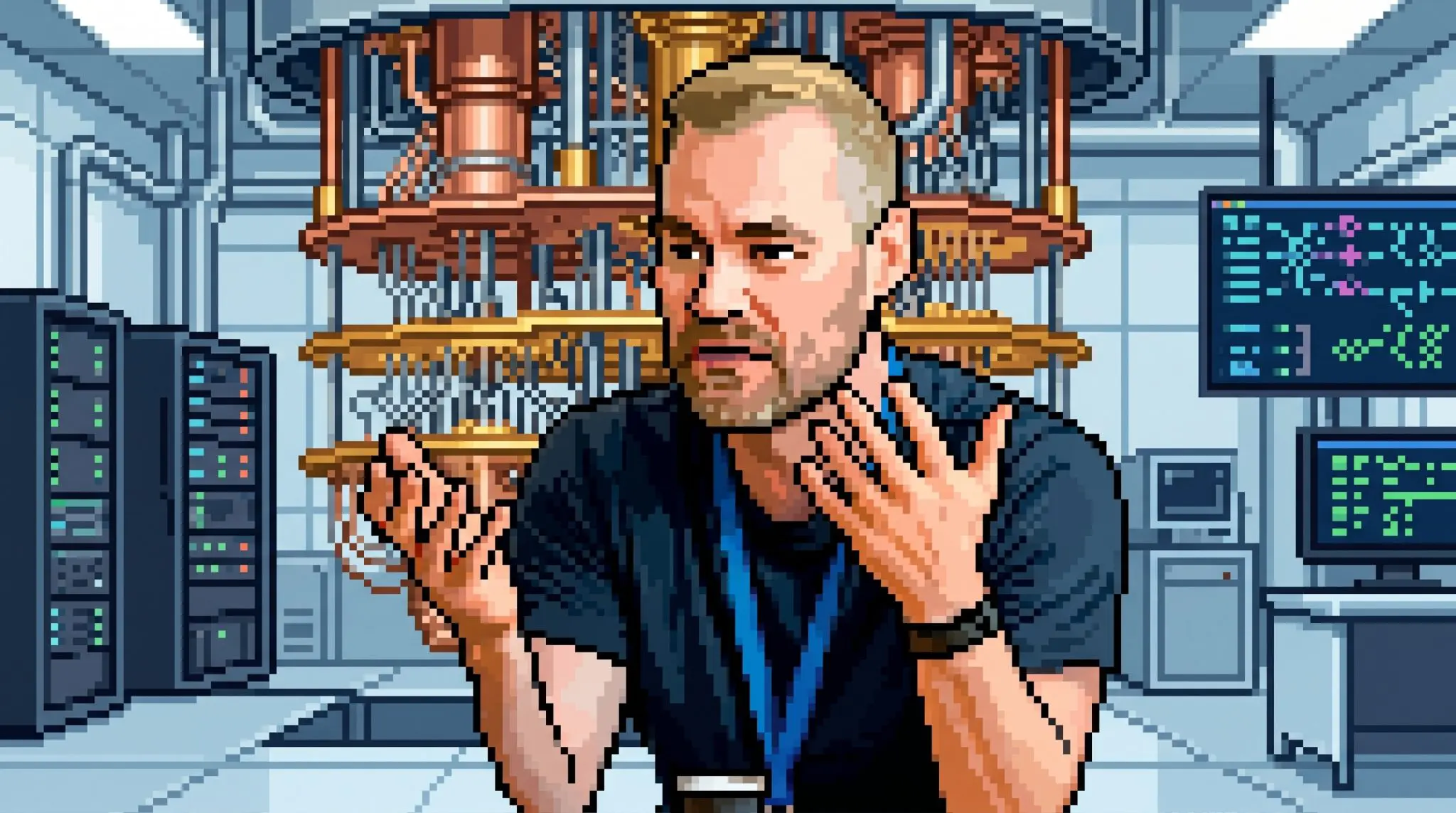
Founder of Rigetti Computing, builder of one of the first full-stack quantum computers, and now an investor in quantum’s next generation.
Chad Rigetti is the physicist and entrepreneur who founded Rigetti Computing, one of the first companies to build a complete quantum computer from the chip up. He turned a niche corner of physics into a publicly traded business and helped make superconducting qubits a serious contender in the race toward useful quantum machines.
More than a decade after starting that company, he has moved well beyond it. He now builds quantum hardware for artificial intelligence, backs young quantum startups as an investor, and advises a widening circle of companies across the field. This profile traces how he got there and why his work still shapes the industry.
From IBM and Yale to founding Rigetti Computing
He earned his doctorate at Yale University under the Nobel laureate Michel Devoret, where his research centered on superconducting qubits. These are the fragile superconducting circuits that store quantum information at temperatures colder than deep space, and they remain one of the leading approaches to building a quantum computer today. That training placed him at the frontier of a technology most of the world had barely heard of at the time.
He then joined IBM as a research scientist, working inside one of the few industrial labs taking quantum computing seriously in that era. The combination of academic depth and corporate research experience gave him a clear view of what a commercial quantum company would need to look like. In 2013 he left to build that company himself, giving it his own surname rather than an abstract brand.
Building one of the first full-stack quantum computers
Rigetti Computing set out to control every layer of the machine, from fabricating its own superconducting chips to writing the software that programmed them. That full-stack approach was unusual and expensive, but it let the company tune the hardware and the software together rather than depend on outside suppliers. Owning the fabrication line also meant the team could iterate on chip designs far faster than a company waiting on an external foundry.
He was also an early champion of hybrid quantum-classical computing, the idea that near-term quantum processors would do their best work paired with conventional computers rather than running alone. That thesis shaped a generation of quantum software, and it still guides how most companies deploy today’s noisy machines. The approach put his company among the recognized leaders in superconducting quantum hardware.
Forest, Quil, and the Fab-1 foundry
To make its processors usable, Rigetti Computing released Forest, a developer platform built around Quil, a quantum instruction language, and the pyQuil library for writing programs in Python. The company delivered these tools through Quantum Cloud Services, giving researchers remote access to its Aspen processors alongside the classical machines needed to run hybrid workloads. The aim was to let a developer write and execute a quantum program without ever owning a dilution refrigerator.
The most ambitious piece of the strategy was manufacturing. The company opened Fab-1, described at its launch as the first dedicated foundry for quantum integrated circuits, so it could design, fabricate, and revise its own superconducting chips in-house. Controlling that fabrication loop let engineers test new qubit layouts in weeks rather than waiting months on an outside supplier, a tempo the company treated as central to its plan for scaling.
Those chips advanced through the company’s Aspen line of processors, with each generation adding qubits and refining the couplings between them. Chad Rigetti consistently argued that raw qubit counts were only part of the story, and that gate fidelity, connectivity, and the surrounding software mattered just as much on the road to practical quantum advantage. That systems view, rather than any single specification, became the company’s calling card and set the template many rivals later followed.
What makes superconducting qubits different
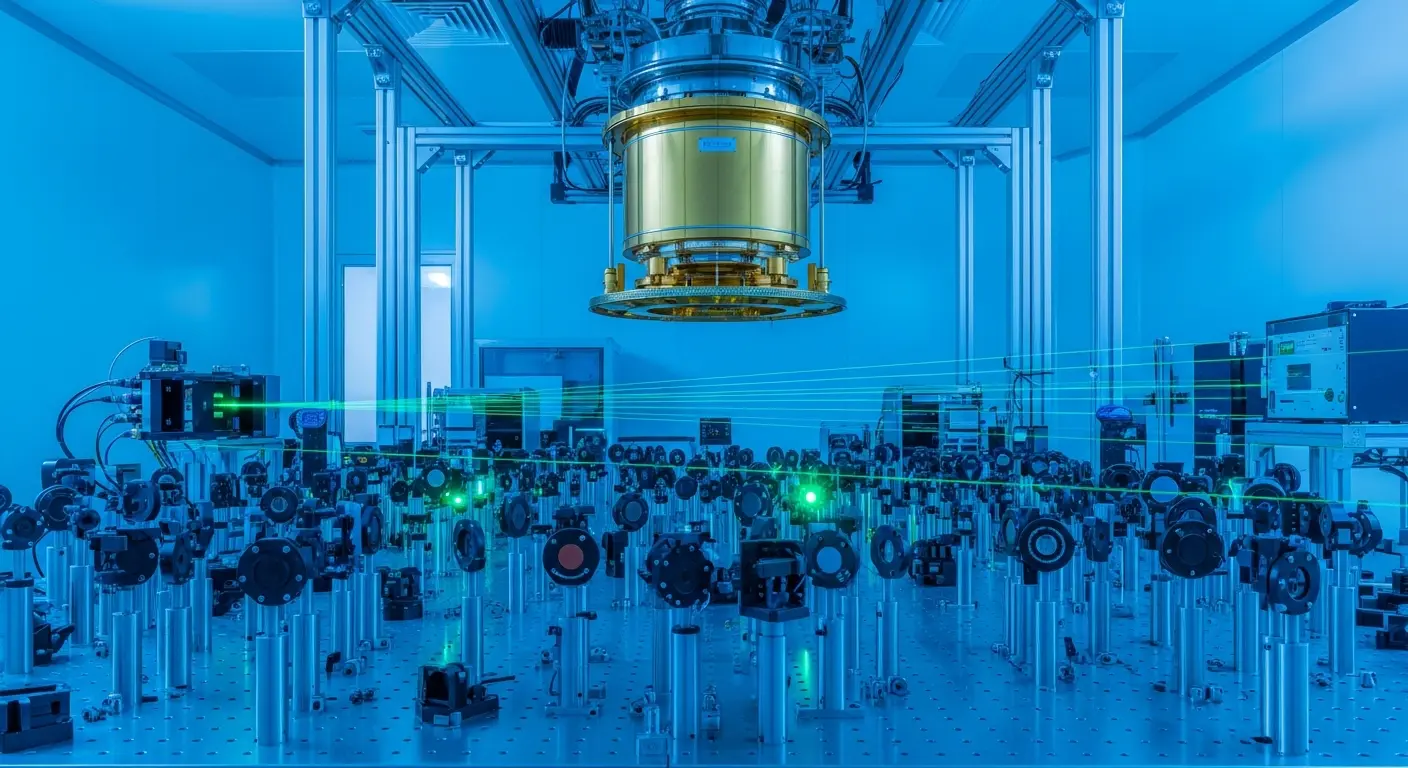
The processors at the centre of this effort rely on superconducting qubits, microscopic circuits cooled to within a fraction of a degree of absolute zero so that current flows without resistance. At those temperatures the circuits behave like artificial atoms with discrete energy levels, and engineers address them with carefully shaped microwave pulses. Because they are patterned with the same lithography used for ordinary chips, they can in principle be manufactured at scale.
That manufacturability was the core of the bet, and it came with a hard trade-off. These qubits hold their quantum state for only fractions of a millisecond before noise intrudes, which is exactly why the hybrid quantum-classical model and aggressive error mitigation became so central to the company’s roadmap. Much of the engineering culture Chad Rigetti built was organised around closing that gap between fragile physics and dependable machines.
Taking quantum computing onto public markets
Under his leadership, Rigetti Computing grew into one of the most recognizable names in the sector and eventually became one of the first pure-play quantum firms to trade on public markets. That step mattered for the whole industry, because it gave investors a way to buy into quantum hardware directly and forced a young field to report results on a public timetable. It also placed the company among the small group of publicly traded quantum computing businesses that analysts now track closely.
Going public also exposed the hard economics of quantum hardware. Building chips, cooling them near absolute zero, and selling access to a technology still years from broad commercial use is capital intensive, and the market scrutiny that comes with a public listing left little room to hide. Those pressures would eventually reshape his own role at the company.
Life after Rigetti Computing
Rigetti Computing said in October 2022 that he would move from chief executive into a product-focused role, but within days he instead resigned outright, leaving the company and its board on 15 December 2022. Subodh Kulkarni had started as president and chief executive three days earlier. Rather than leave the field, Chad Rigetti moved into the roles that shape its next wave of companies.
He joined the Dutch quantum fund QDNL Participations as a partner in 2023, and the firm rebranded as Ground State Ventures in April 2026 after closing a fund of 88 million dollars, comfortably above its 70 million dollar target, to back early-stage quantum startups. He has also taken board seats at the Singapore error-correction software company Entropica Labs and at the AI-native quantum software firm Quantum Elements, lending operating experience to founders following the path he once walked.
His most ambitious new chapter is Sygaldry Technologies, which he co-founded in 2024 with Idalia Friedson and where he serves as chief executive, building quantum computers aimed squarely at accelerating artificial intelligence workloads. Sygaldry raised 139 million dollars across seed and Series A funding, with Breakthrough Energy Ventures leading the larger round. The bet is that the same energy and efficiency limits now straining AI data centers create an opening for quantum hardware, and investors clearly still want him building it as much as backing it.
The ventures that define his career
The full-stack company that made his name, fabricating its own superconducting chips and selling cloud access to them. It became one of the first pure-play quantum firms on public markets.
See the superconducting leadersHis latest company builds quantum computers designed to ease the energy and efficiency limits facing artificial intelligence. It has raised 139 million dollars in total, including a 105 million dollar Series A led by Breakthrough Energy Ventures and a 34 million dollar seed led by Initialized Capital.
Read about the fundingFormerly QDNL Participations, the Amsterdam firm rebranded in April 2026 after closing a fund of 88 million dollars to back early-stage quantum startups across Europe and beyond.
Read about the fundWhy Chad Rigetti matters in quantum computing
Few people have shaped the commercial side of quantum computing as directly. He proved that a startup could fabricate its own quantum chips, take the company public, and stand alongside giants like IBM and Google in the superconducting race. The company he founded, Rigetti Computing, still carries that approach forward today.
His second act may prove just as influential. By funding new founders and building quantum hardware for artificial intelligence, he is helping decide which ideas in the field get the capital and the engineering to survive the long road to practical quantum advantage. His training at Yale University under a Nobel laureate gave him the physics, and nearly two decades of building quantum hardware gave him the judgment that founders now seek out.
Frequently asked questions
Is Chad Rigetti still the CEO of Rigetti Computing?
What is Chad Rigetti doing now?
What is Chad Rigetti’s educational background?
What is Chad Rigetti’s net worth?
What did Chad Rigetti contribute to quantum computing?
What was Rigetti’s Forest platform?
What were Rigetti’s Aspen processors?
What was Fab-1?
What are superconducting qubits?
What is hybrid quantum-classical computing?
Why does Chad Rigetti matter in quantum computing?




See today’s quantum computing news on Quantum Zeitgeist for the latest breakthroughs in qubits, hardware, algorithms, and industry deals.