Volker Karle of the Institute of Science and Technology Austria (ISTA) and colleagues, in collaboration with Villanova University, have shown that hybrid rotational-photonic cat states can be created using polar molecules within microwave cavities. Coupling an ensemble of molecules to a cavity enhances interactions, inducing a key Kerr nonlinearity and parity-locked cat structures. Collective molecular rotations offer a new pathway towards generating these complex hybrid light-matter states, potentially advancing quantum technologies.
Mapping quantum states via Wigner tomography and collective molecular enhancement
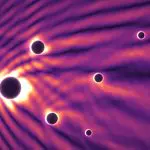
Wigner tomography, a phase-space reconstruction technique, proved key in validating the theoretical findings. It functions by performing a series of measurements on the quantum system from multiple angles, analogous to computed tomography scans used in medical imaging, but applied to quantum states. This allows for the reconstruction of the system’s density matrix, providing a complete description of its quantum state. In this instance, Wigner tomography was employed to map the quantum state of light within the microwave cavity, revealing the emergence of the predicted cat state structure. The technique effectively creates a detailed ‘picture’ of the quantum state, allowing researchers to verify the presence and characteristics of the cat state. Collective molecular rotations amplified interactions between the molecules and the cavity, achieving a boost proportional to the square root of the number of molecules involved. This enhancement is crucial, as it overcomes the typically weak interactions between light and matter, enabling the observation of quantum phenomena.
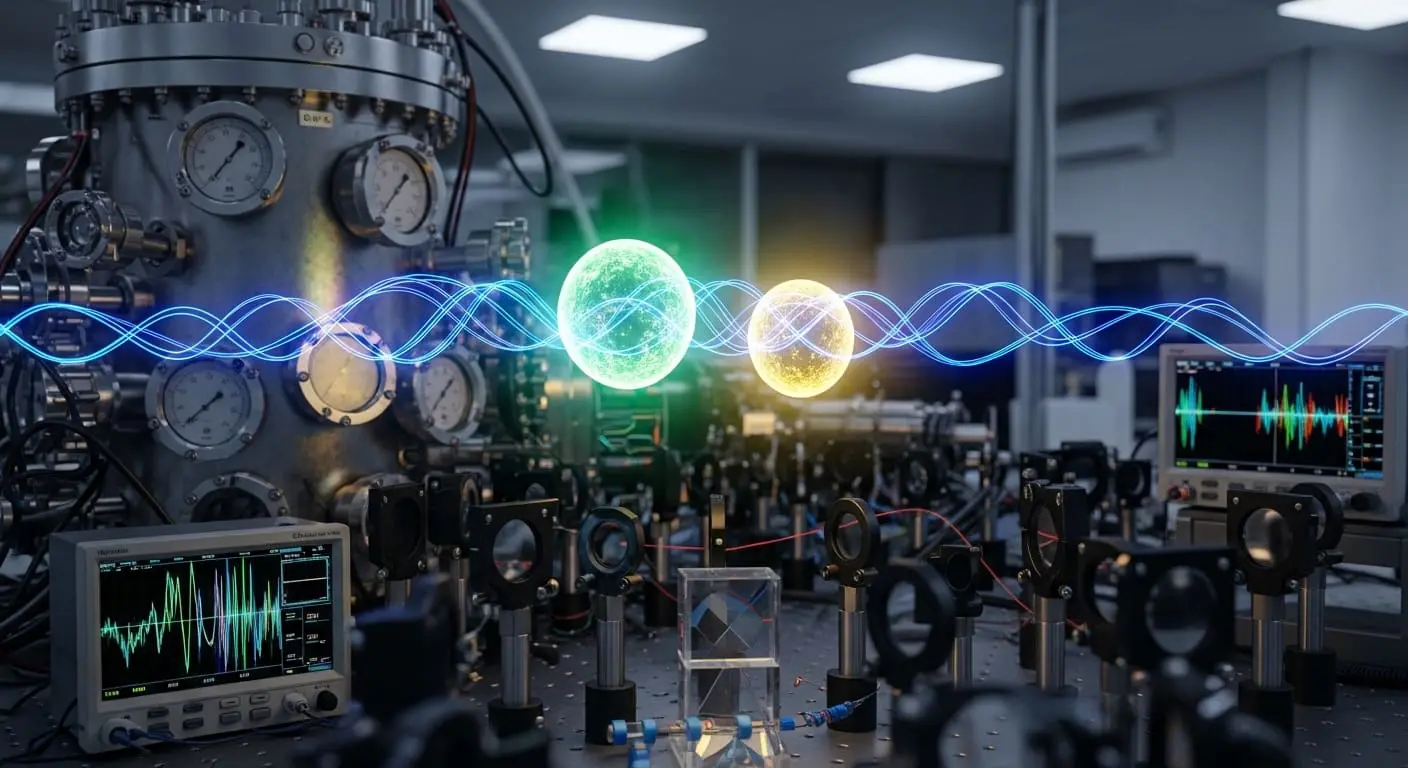
The system detailed employs ensembles of approximately 104 to 106 polar molecules coupled to a microwave cavity. The selection of polar molecules is significant, as their inherent dipole moments facilitate strong interactions with the electromagnetic field within the cavity. Single-molecule coupling strength ranged from 0.1 to 1MHz, representing the strength of the interaction between a single molecule and the cavity’s electromagnetic field. Achieving strong coupling, defined as a coupling strength exceeding one-tenth of the cavity frequency, necessitated collective enhancement. This is because the individual coupling strength of a single molecule is often insufficient to drive the system into the strong coupling regime. This approach was favoured over alternatives such as reducing cavity size, which presents significant fabrication challenges, or using parametric amplification, which introduces additional noise and complexity. The focus on collective enhancement enabled strong rotor-cavity interactions and the generation of hybrid light-matter states, offering a more practical route to quantum state manipulation.
Collective molecular rotations enable strong coupling and hybrid cat state generation
A collective enhancement of the coupling strength between molecules and a microwave cavity was achieved by a factor of √N, a substantial increase over previous methods. This enhancement arises from the coherent alignment of the molecular rotations, effectively amplifying the interaction with the cavity field. This overcomes a key threshold where second-order perturbation theory breaks down, as weak coupling previously prevented access to strongly correlated regimes essential for generating complex quantum states. Second-order perturbation theory is an approximation method used in quantum mechanics, and its failure indicates that the interactions are too strong to be treated as a small perturbation. Consequently, the creation of hybrid rotational-photonic cat states, parity-locked structures confirmed through Wigner tomography and Schrieffer-Wolff analysis, was demonstrated, opening new avenues for hybrid light-matter quantum systems. These cat states represent a superposition of two distinct quantum states, exhibiting macroscopic quantum behaviour.
These cat states demonstrate hybrid rotational-photonic behaviour, with their parity linked to the rotor parity due to virtual multilevel transitions inducing an effective Kerr nonlinearity. The Kerr nonlinearity is a crucial component, as it allows for the generation of non-classical states of light, such as cat states. It arises from the nonlinear response of the molecules to the cavity field. Analysis of the collective bright-rotor Hamiltonian revealed a transition into a strongly correlated regime, and Wigner functions indicated cat-like characteristics in both the cavity sector and angular-momentum conditioned cavity state. A variational approach accurately reproduced ground-state energy across the transition, supporting the interpretation of parity-paired low-energy states. This confirms the stability and robustness of the generated cat states. Spectral functions aligned with analytical predictions from a fourth-order Schrieffer-Wolff expansion, connecting theoretical predictions to experimental observables. The cavity couples to a symmetric rotor in a bright manifold of molecules, benefitting from a √N enhancement of coupling strength. The ‘bright’ manifold refers to the collective excitation of molecules that strongly interact with the cavity field.
Molecular rotations within microwave cavities enable simplified cat state generation
Researchers from Science and Technology Austria, collaborating with Villanova University, have theoretically demonstrated a new route to generating hybrid light-matter quantum states, known as cat states, utilising the collective behaviour of polar molecules within microwave cavities. This approach offers a potentially simpler alternative to existing methods that rely on engineered materials with specific nonlinear optical properties or complex circuitry for controlling quantum interactions. While offering a potential simplification over existing methods reliant on engineered materials or complex circuitry, the team acknowledges a key limitation in their model; the calculations depend heavily on a simplified description of molecular interactions. Specifically, the model assumes a homogeneous distribution of molecules and neglects certain intermolecular interactions. Despite this reliance, the theoretical advance is significant as it utilises the natural rotational properties of molecules, sidestepping the need for complex material engineering.
The team’s findings establish a pathway to generate hybrid rotational-photonic cat states, a complex form of quantum superposition, by using the collective rotational motion of polar molecules within microwave cavities. Coupling a substantial number of molecules enhanced interactions by a factor proportional to the square root of their count, inducing an effective nonlinearity crucial for forming the parity-locked cat structures. This circumvents the need for engineered nonlinear materials typically required for creating such states, offering a potentially simpler route to advanced quantum technologies. The ability to generate cat states using molecular rotations could have implications for various quantum technologies, including quantum computation, quantum communication, and quantum sensing. These states are particularly useful for encoding and manipulating quantum information, and their generation using readily available molecular systems could pave the way for more accessible and scalable quantum devices.
Researchers demonstrated the theoretical generation of hybrid light-matter quantum states, called cat states, using an ensemble of polar molecules within microwave cavities. This approach provides an alternative to methods requiring engineered materials with specific nonlinear properties, instead utilising the collective rotational motion of N molecules to achieve a root N enhancement of interactions. Wigner tomography and Schrieffer-Wolff analysis confirmed the resulting parity-locked cat structure in the cavity sectors. The authors note their calculations rely on a simplified description of molecular interactions, but this work establishes a new pathway for creating these complex quantum states.
👉 More information
🗞 Collective rotational cat states of molecules in microwave cavities
✍️ Volker Karle, Florian Kluibenschedl, Mikhail Lemeshko and Vasil Rokaj
🧠 ArXiv: https://arxiv.org/abs/2606.25815

See today’s quantum computing news on Quantum Zeitgeist for the latest breakthroughs in qubits, hardware, algorithms, and industry deals.