


This guide follows 32 talks on quantum policy, standards and business at IEEE Quantum Week 2026 in Toronto. The rules, the funding and the standards are being set well before the machines they govern exist.
On Sunday 13 September, Tracey Forrest asked a panel in Toronto whether quantum computing needs its own Asilomar. Forrest works at a Canadian think tank. The name points to a meeting in 1975 where biologists tried to limit their own field, and it became the founding story of scientists who rule on their own risky ideas. Forrest’s question assumed quantum policy is still at that early, self-governing stage. The talks that followed suggest the field left it some time ago.
The field around the machines has grown faster than the machines. Many governments now run national quantum plans, and the United States passed its National Quantum Initiative Act in 2018. Start-ups crowd the market. All of it rests on a promise nobody can yet date, a computer big and good enough to do useful work that ordinary ones cannot.
The 32 talks covered here point one way. The rules for quantum computing are already being written, years before the machines that would justify them, by governments, funders and standards committees. Countries without a seat in those rooms have little say, and the rules written there will decide who gets to take part in the field at all, as a builder, a buyer or a user.
The best case for writing rules early came from the same Sunday panel. Michele Mosca of the Institute for Quantum Computing at Waterloo said Mosca sees no code-breaking threat in the machines that exist now. Yet Mosca warned that a move to new ciphers that is 90 percent done in time still leaves a gap of 10 percent, and Mosca called a failed move of critical systems the real danger now. On that reading, early rules are plain prudence.
Industry speakers pushed the dates closer still. Daniela Becker of IonQ told Monday’s product panel that a machine that could threaten public-key encryption sits on IonQ’s roadmap for 2028, and Garfield Jones of QuSecure cited 2029 as the year some in the field give. Ghislain Lefebvre of Sherbrooke pointed to Canada’s 2035 deadline for its agencies to switch.
Governments have taken Mosca’s point. They now arrive as funders as well as rule makers, and on Thursday Hal Finkel of the US Department of Energy opened a competition with a pool of 100 million dollars for machines with at least 100 logical qubits. The standards workshop showed the same rush from another side. Bruce Kraemer counted about 60 quantum standards projects worldwide.
Yet the deepest split of the week concerned who can take part. A survey with the African Quantum Consortium, presented at Sunday’s panel, found 70 percent of those who answered naming location as their main barrier. Mosca said Western export controls arrived before any help for users or builders. On Friday Sonika Johri of Cascade Quantum put the cost of a team for one use case at about half a million dollars, before anyone pays for time on a machine. A Tuesday talk asked that Indigenous peoples give consent along the supply chain, from the mines onward.
Asilomar worked because the people doing the research were the people in the room. Quantum’s early rules are being set in rooms that much of the field cannot reach, and many of them decide who is kept out.
What it is. Quantum policy covers the public money, export controls, security deadlines and standards that shape who builds and uses quantum computers. Business advice on readiness and sales grew up around it at QCE26.
What changed at QCE26. The US Department of Energy opened a competition worth up to 215 million dollars, with 100 million for machines of at least 100 logical qubits. Standards bodies count about 60 active quantum projects.
The security clock. IonQ put a machine that could threaten public-key encryption on its roadmap for 2028, and Garfield Jones of QuSecure said some in the field give 2029. Canada’s agencies must switch to new ciphers by 2035.
The warning. A survey found 70 percent of respondents naming location as their main barrier. Export controls and the cost of a specialist team, which one speaker put at about half a million dollars, keep many out.
Quantum policy, and who writes the rules
Policy for a technology usually follows its use. Here it came first, and five talks asked what that means for who gets a say, from a panel on self-limits to a keynote on Canada.
The Asilomar panel finds the rules already written
Forrest, of the think tank CIGI, moderated. On the panel were Mosca, Sanskriti Deva of IBM, Michael Karanicolas of Dalhousie, Sabrina Chen of CIGI and Faizah Balogun, who spoke for the University of Toronto and the African Quantum Consortium. Chen set out ways to frame dual use. That means a tool that serves both civil and military ends.
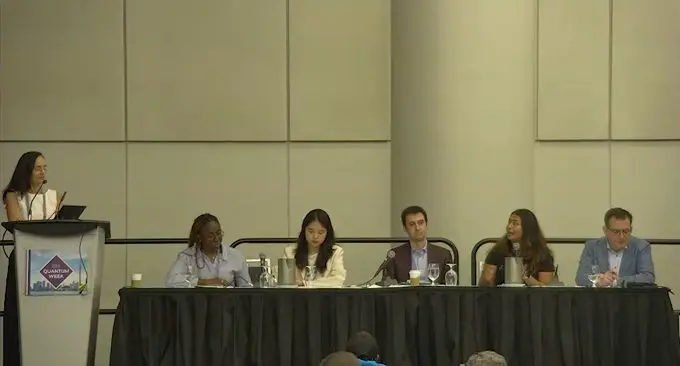
Controls on qubit counts came in about two years ago. In Mosca’s view they arrived before any help for the people who would use or build the machines, so allies lost time to paperwork while China, short of cooling gear, grew its own industry. Karanicolas asked who the we in such rules means, since Canadians have spent 18 months under pressure from the United States.
On ciphers, Mosca said the real danger now is a failed move of critical systems. Deva’s answer on access was free cloud credits and IBM’s Qiskit Fall Fest, which Deva said runs more than a thousand events. Nobody proposed a limit written by scientists alone. Forrest called the Wassenaar export pact largely finished, and said that small groups of states now set the rules the old pact once set for all its members.
One meeting in Cebu feeds Philippine policy
Dylan Josh Lopez teaches in the Philippines and flew in from Taiwan to present a paper with three co-authors. A national quantum plan from 2018 was redone last year. It went this February to the country’s council for new technology as one of eight national items, and staff at the Central Bank of the Philippines took a class this year.
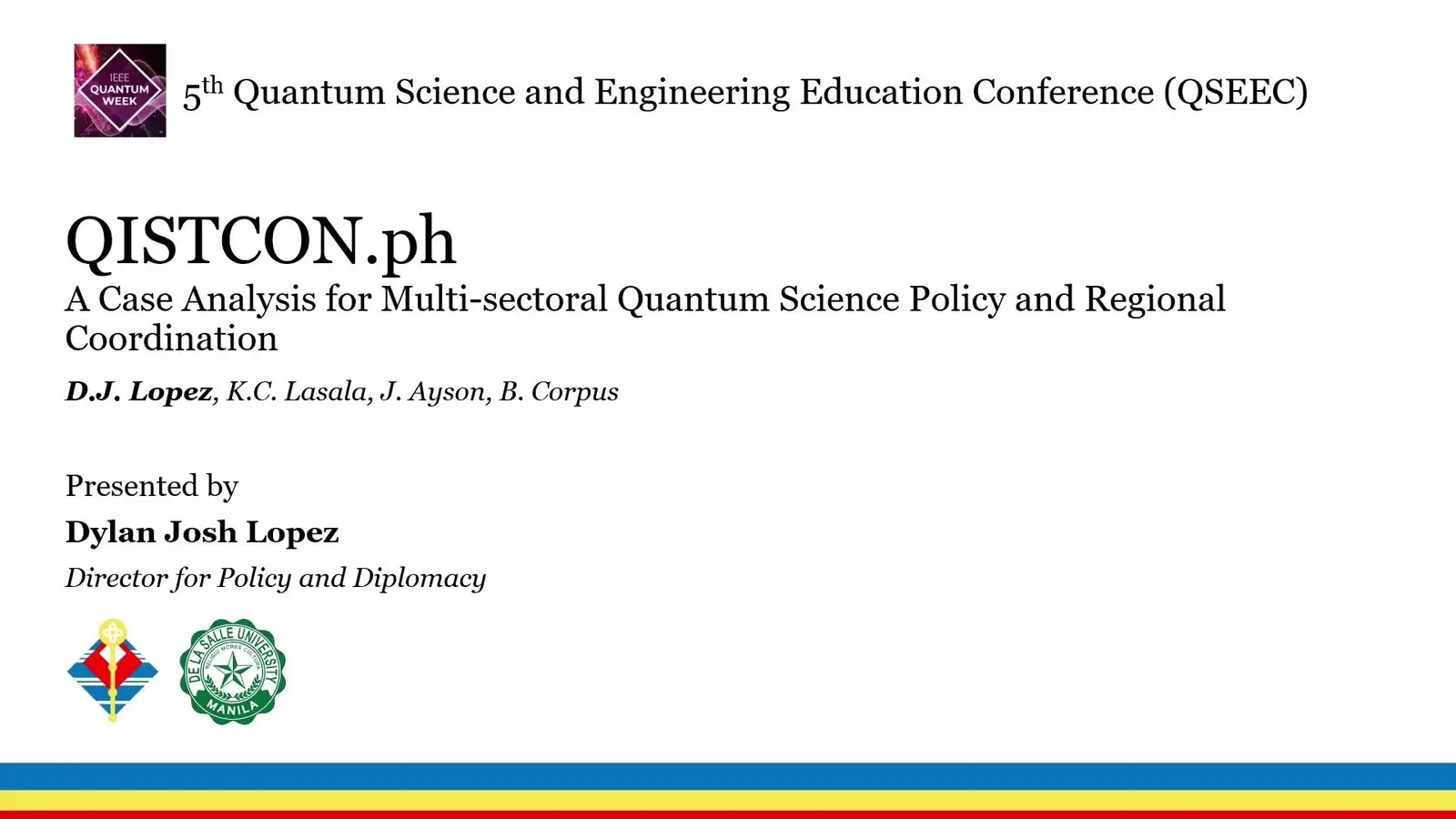
The meeting, QISTCon, ran in Lapu-Lapu on Mactan island from 30 July to 1 August 2025. Lopez chose Cebu so that people from across the country’s 7,107 islands could meet. In the year after, the work reached Congress and the higher-education commission, though Lopez said a meeting cannot make a law and the count of what people did afterwards is still thin.
Canada asks how a research lead becomes an economy
Lisa Lambert of IonQ used to run Quantum Industry Canada. Lambert opened a shared IonQ keynote on Tuesday and offered Canada, a country of about 40 million people, as a case to learn from. Early work compounds through people, partners and supply chains, Lambert said, but a research lead does not by itself become an economy.
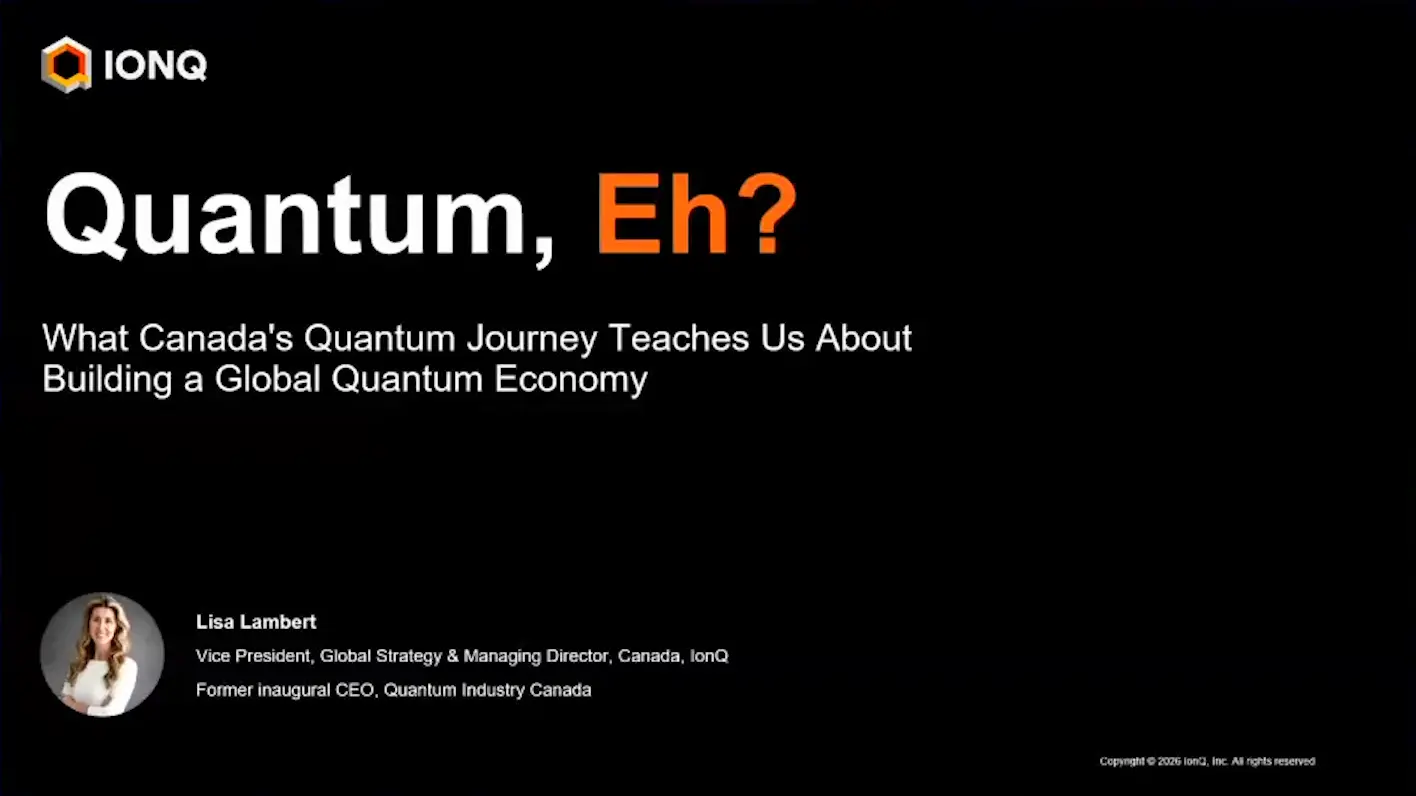
Their tests for a real economy were repeat customers, use in production, revenue, exports and a place in a supply chain. Lambert cited the Toronto economist Francesco Bova, who argues for a gain that comes from learning the tools now, and who holds that choosing not to learn them is no neutral choice. Canada scored well on research and talent. It is slower to adopt, Lambert said.
Kaye’s Magne panel says a small country can build an ecosystem
Kasra Nowrouzi, chief technology officer of QuNorth, said Magne will reach Copenhagen in early 2027 with more than 1,200 physical qubits that can all act on one another. It should run about 50 logical qubits. A Danish state fund and the Novo Nordisk Foundation back QuNorth, with Atom Computing on the hardware and Microsoft on the code. Serina Kaye of Microsoft chaired.
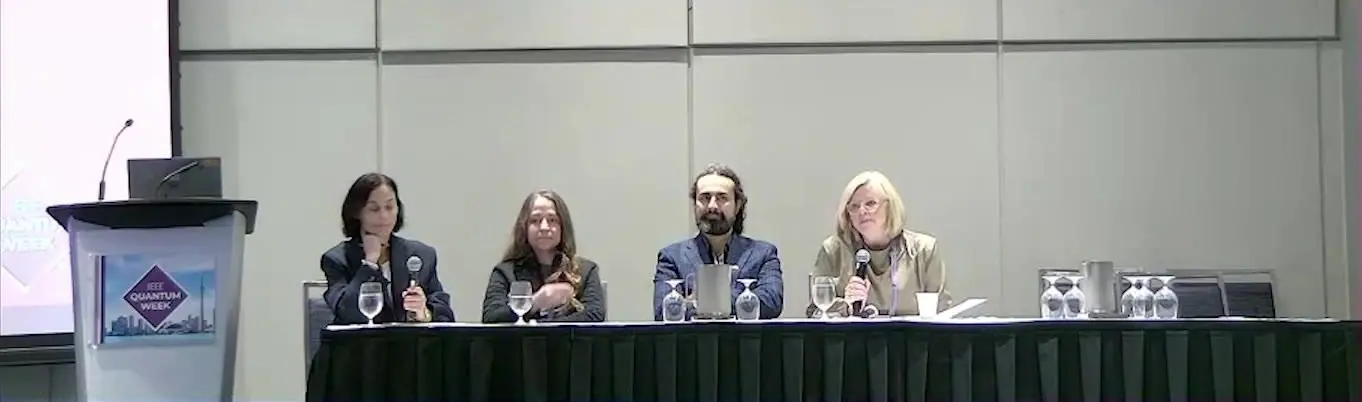
Ditte Bjerregaard of Quantum Denmark, a former diplomat, said the biggest myth is that the size of a country decides the outcome. Bjerregaard framed Magne as a Nordic and European project to make supply chains that can take a shock. Kristen Pudenz of Atom Computing named the belief that it is too early to engage, and expects quantum advantage on firm ground within five years. Nowrouzi had a worry. Money from industry, Nowrouzi warned, could dry up basic research.
Who can afford quantum AI
The last session of the week was a panel on who can afford quantum AI. Shohini Ghose of Wilfrid Laurier University grounded access in the Universal Declaration of Human Rights, which names a right to education and a right to share in science. A user who brings no profit still holds that right, Ghose said.

Kristen Csenkey of St Francis Xavier University described the technology race as one of restricted access, with states spending billions on programmes built to win. Johri, formerly of Intel and IonQ, priced a specialist team for one use case at about half a million dollars before any machine time, and one IonQ circuit of a thousand shots at 500 dollars. Some of their other figures did not add up to the same rate. A visitor cited counts of 1,500 people with quantum in a Canadian job title, 4,400 in the United States and 20,000 worldwide.
Public money and its limits
Governments buy milestones. Four talks showed what that looks like from the funder’s side, and what stops public customers using the machines once they exist.
The US prices 100 logical qubits at 100 million dollars
Hal Finkel, who leads advanced computing research at the US Department of Energy’s Office of Science, gave the keynote at Thursday’s energy workshop on the Genesis Mission. It is a push on AI for science under an executive order signed on 24 November 2025, and it aims for the first fault-tolerant quantum computers for science by 2028. The office funds five national quantum centres. Each costs about 25 million dollars a year.
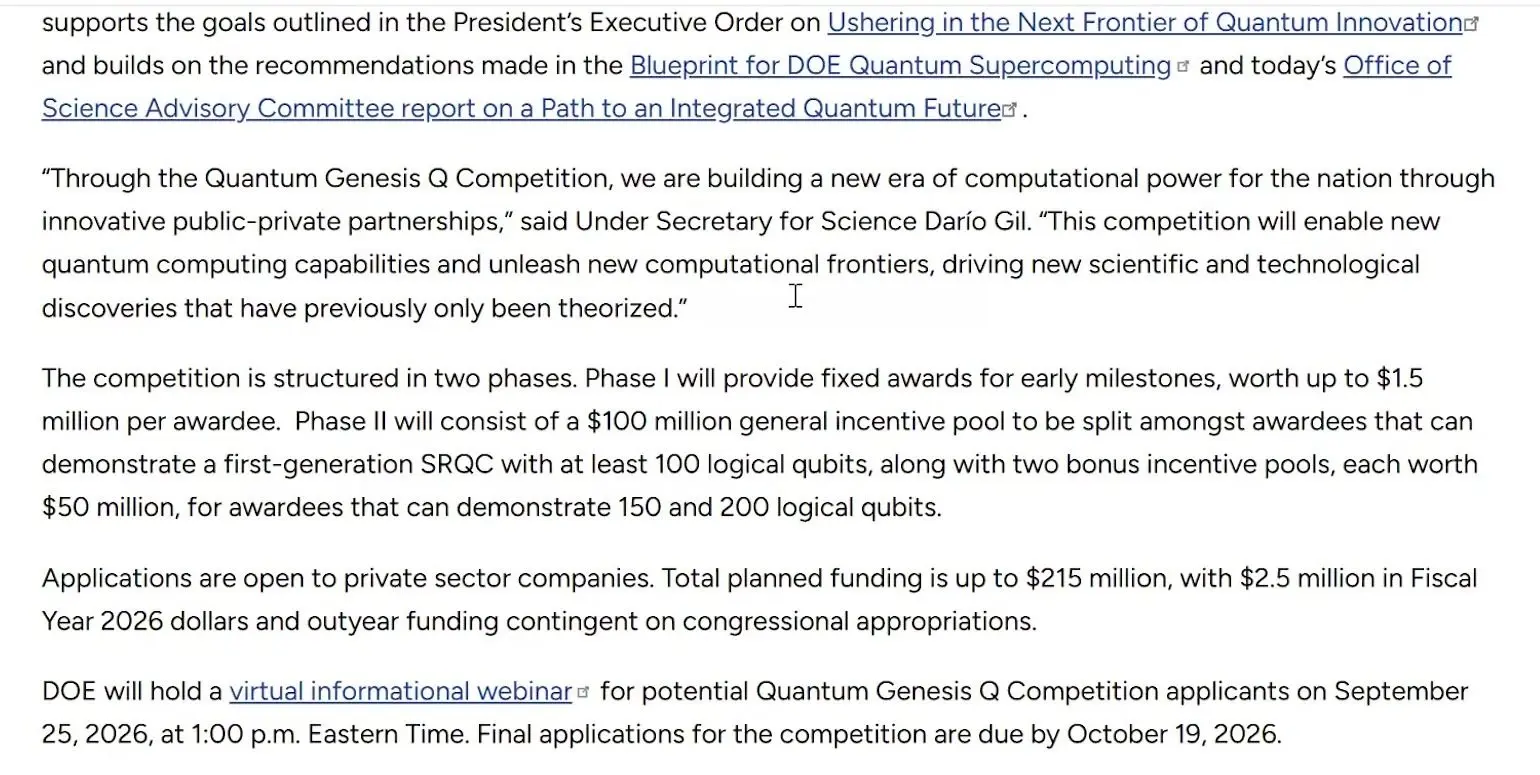
Then Finkel opened a web page that went live as Finkel spoke, launching the Quantum Genesis Q Competition. Phase I pays fixed awards of up to 1.5 million dollars per company for early milestones. Phase II holds a 100 million dollar pool for machines with at least 100 logical qubits, the reliable qubits built from many error-prone ones, with two bonus pools of 50 million dollars at 150 and 200.
Total planned funding is up to 215 million dollars. Only 2.5 million of it is 2026 money, and applications were due by 19 October, while the national laboratories will form a team to check that entrants built what they claim. Finkel said nobody has yet reached hundreds of logical qubits.
Mishra maps the NSF’s quantum money
Shivakant Mishra, who teaches computer science at the University of Colorado Boulder and now runs a programme at the National Science Foundation, said its goal is a machine of a few hundred to about 1,000 logical qubits. The funds from the 2018 law have lapsed. A bill to renew them through 2034 is still before Congress. For now, Mishra said, government is the only customer quantum computers have.
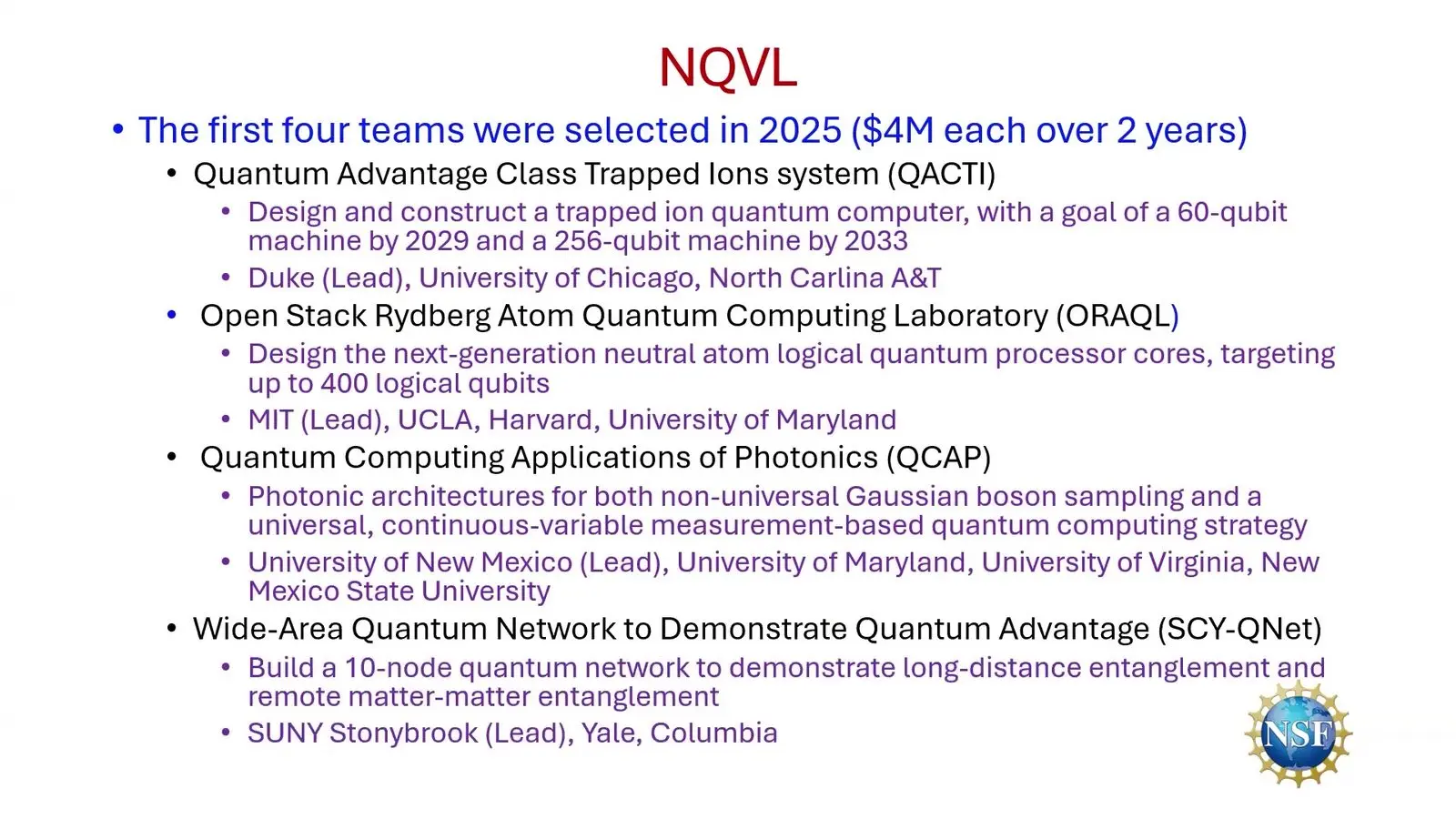
The National Quantum Virtual Laboratory picked four design teams in 2025 and five more in 2026, each at about 4 million dollars over two years. One, led by Duke, aims at a 60-qubit trapped-ion machine by 2029. The five Quantum Leap Challenge Institutes were all renewed in August 2026 and three new ones set up, at about 290 million dollars, Mishra said.
Talon’s panel of five DOE centres enters a second cycle
Suzanne Talon of Calcul Québec chaired the heads of the five Department of Energy quantum research centres, set up in 2020 and now in their second five-year cycle. Anna Grassellino of Fermilab said the SQMS Center has grown from 19 partners to 43. It aims at a 100-qubit machine built on superconducting cavities by 2030. Wibe de Jong of Lawrence Berkeley said work from the Quantum Systems Accelerator is already in machines at QuEra.

Travis Humble of Oak Ridge said the Quantum Science Center has moved its goal from quantum materials to large machines that can fix their own errors. Which side of a hybrid machine is harder? Humble named the bridge to the people who already use the Department’s supercomputers, since the vendors are already scaling up the hardware on their own. Charles Black of Brookhaven and Martin Holt of Argonne spoke on materials, linked modules and sensors.
Federal data rules keep quantum clouds out
Burns Healy of Quantum Sky, a US federal IT services firm, opened with a project from an earlier job. Their team built a problem from a client’s real data for a quantum annealer, then learned that data rules barred sending it to an outside provider. The work ended on a simulator.
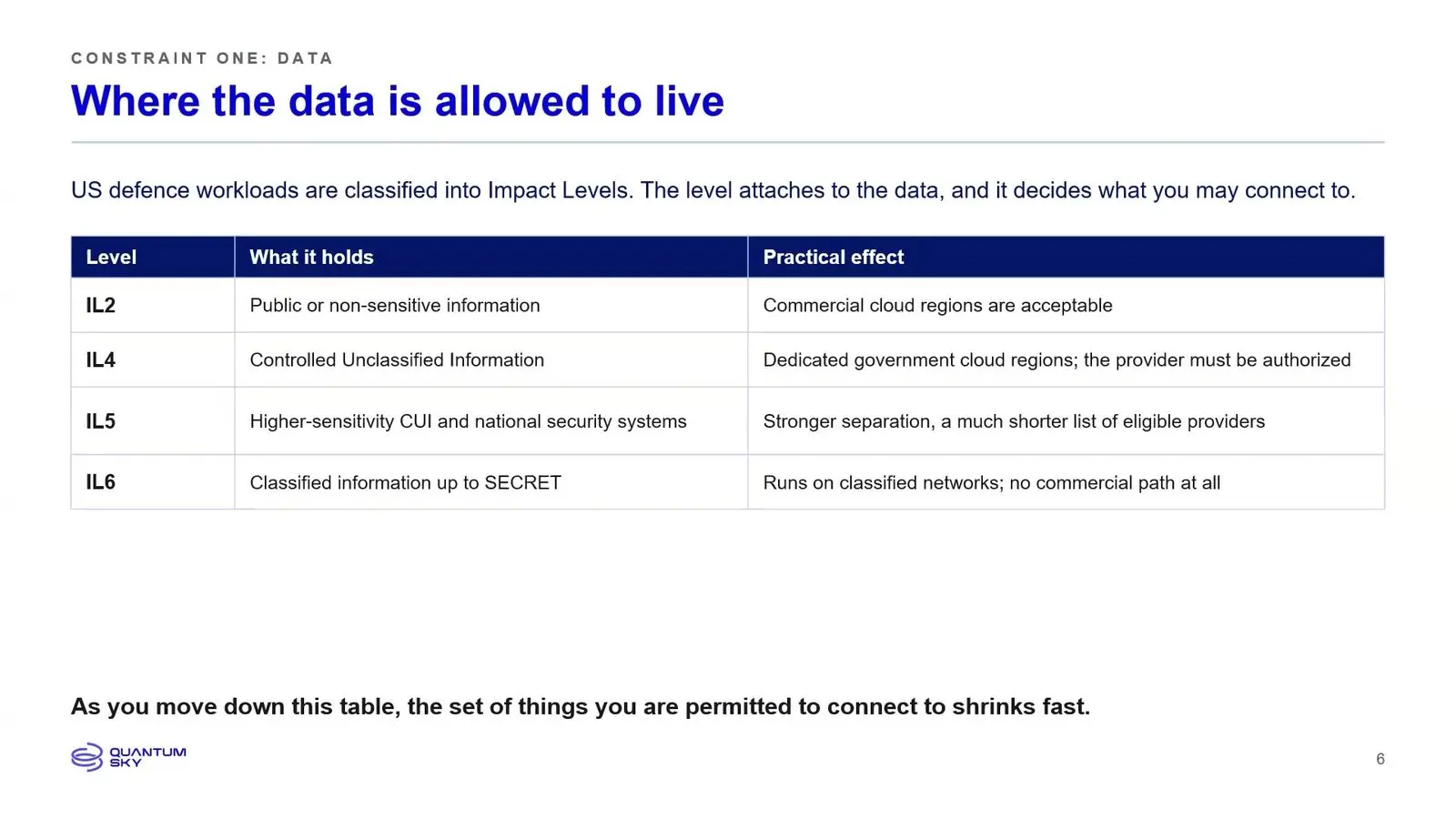
US defence data is sorted into Impact Levels. They run from IL2 for public information to IL6 for classified material, and Healy said a circuit built from controlled data inherits the same limit. By their reading of public sources, no quantum vendor yet holds a cloud offering above IL2. The easiest route, Healy said, is a quantum computer placed inside a site that is already cleared, at 20 to 40 million dollars.
Quantum standards try to keep pace
Before machines from different makers can be compared, bought or plugged together, the industry needs shared words, shared tests and shared plugs. The standards workshop on Thursday morning mapped who is writing them, in four talks.
About 60 standards projects and rival vocabularies
Bruce Kraemer opened the workshop with a count. About 60 quantum standards projects are under way worldwide. Kraemer sorted the bodies into four kinds, from groups set up by treaty that vote by country to groups for one region, bodies for one nation and clubs run by industry. One IEEE project on energy use began because a group in Europe worried that quantum computers might draw even more power than ordinary ones, and others cover security.
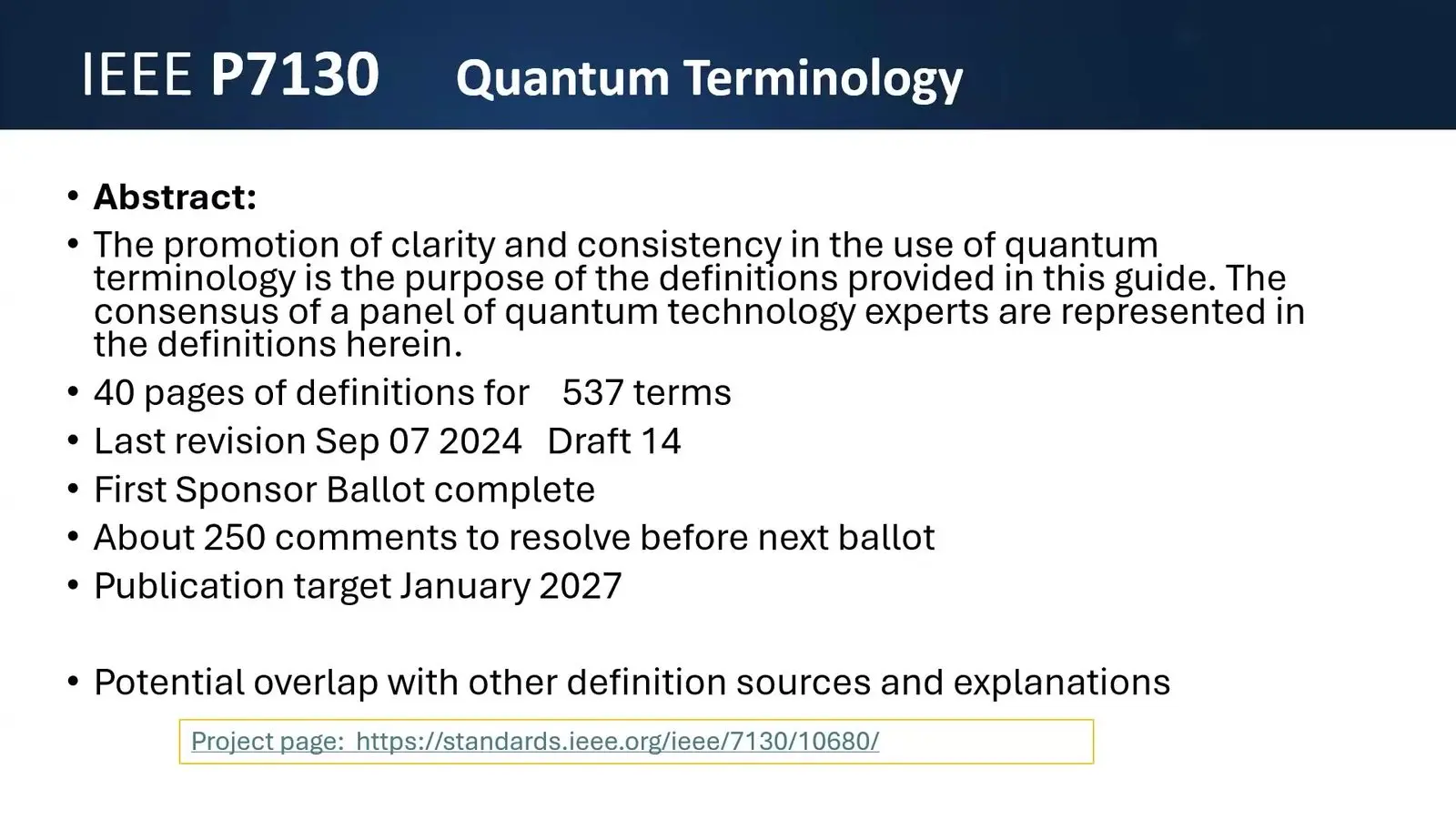
Kraemer chairs IEEE P7130, a guide to quantum terms. Draft 14 holds 537 terms on 40 pages, with about 250 ballot comments to clear before a target date of January 2027. Kraemer set it beside ISO/IEC 4879, a published list of about 100 terms. A JTC 3 group is drafting a third. Kraemer warned that parallel projects with the same goal split the industry, and said new terms appear faster than any dictionary can follow.
A security framework built in four parts
Keeper Sharkey of ODE chairs IEEE P1947, a framework for quantum cyber security, with Alain Chancé of MolKet as vice chair. The pair explained that the group became a standards project in 2024 after starting life as an IEEE industry activity.
The work is split across four subcommittees, on threats, on moving to new ciphers, on assurance and governance, and on defences. The threats group had its charter ratified in August 2026 and aims to send a draft to the full working group in June 2027. Another group is building a catalogue of security controls.
How the global quantum committee works
John Devaney of the UK National Physical Laboratory works on the UK’s Quantum Standards Network. Joining a standards project, Devaney said, takes two to four hours a month and carries no duty to share your own inventions with the rest of the room. Consensus means the room is broadly content. It needs neither a vote nor full agreement.
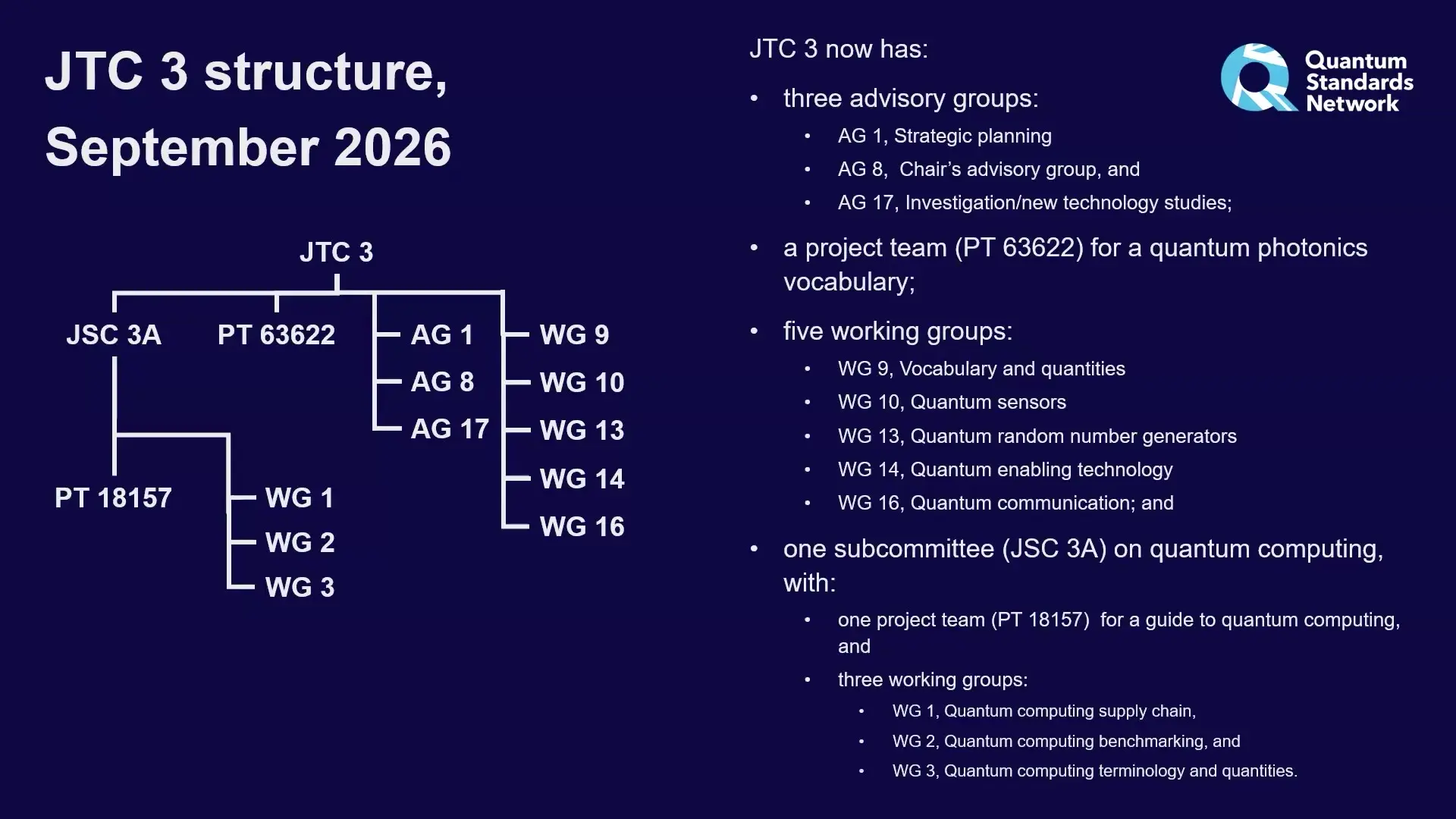
JTC 3, the joint committee of the IEC and ISO for quantum technologies, first met in May 2024 after a push for one global body. Its newest part is a subcommittee for quantum computing, with groups on supply chain, benchmarking and terms. Other groups cover sensors, random number generators and communication.
Japan wants a test for non-magnetic connectors
Masahiro Horibe of Japan’s national lab AIST leads the JTC 3 group on benchmarking. Horibe showed a test site with 12 dilution fridges. Connectors inside a qubit’s magnetic shield often use magnetic plating, Horibe said, and nobody yet has a way to measure how free of magnetism a part really is.
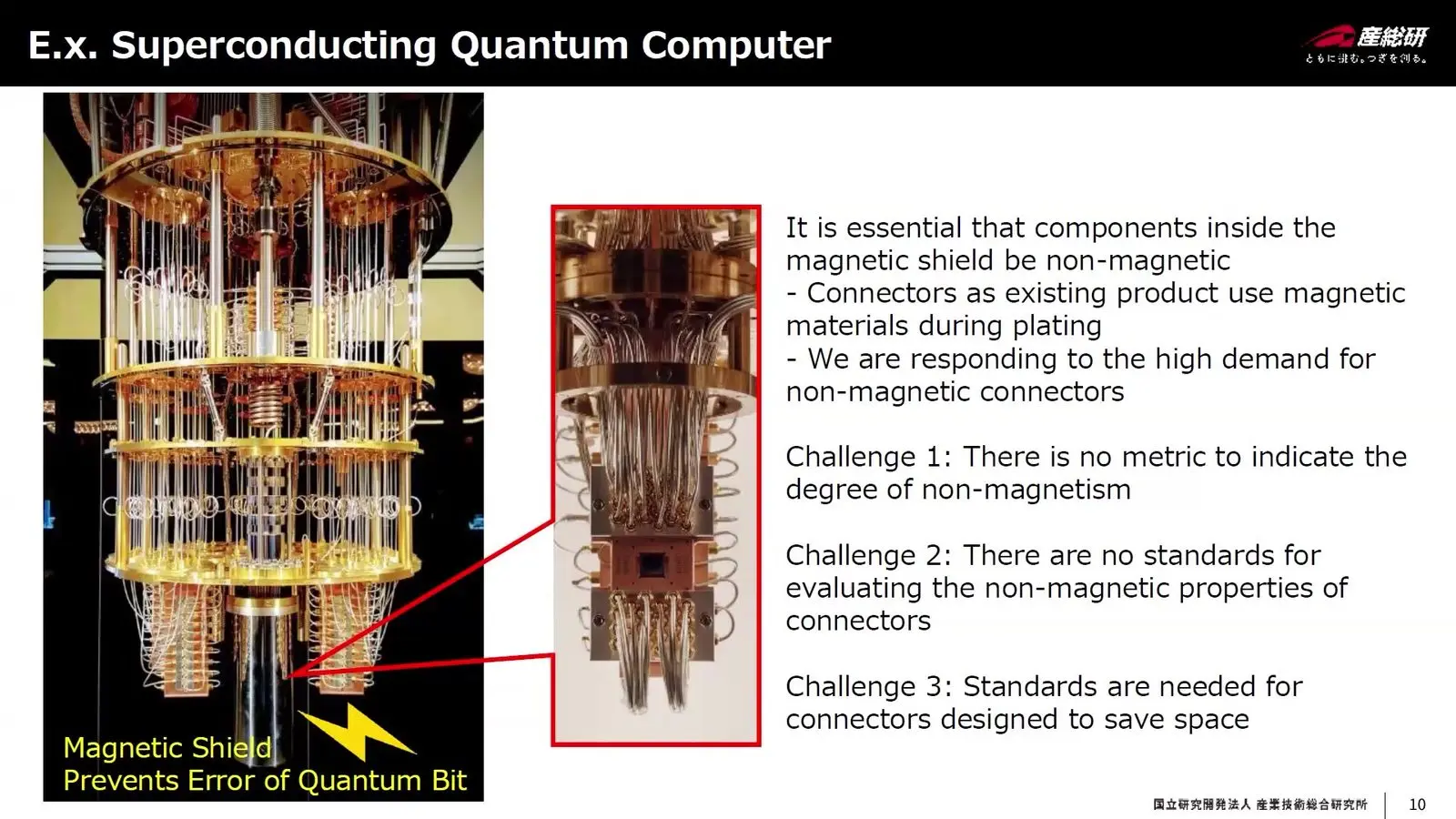
Japan has put forward a way to measure it. The method went to the IEC committee for cables and connectors, and Horibe’s second topic was the diamond sensor, a defect that glows red under green light and responds to magnetic fields. Their team has written a report on how to test such diamonds.
Selling quantum to the mainstream
The machines will need buyers. Five sessions dealt with products, sales and the industry’s shape, from a panel on mainstream users to a workshop that taught founders how to find a customer.
Few buyers in the room, and few who know what is on offer
James Guilmart of Q-CTRL chaired a panel on Monday with speakers from Classiq, qBraid, IonQ and the Catholic University of America. Buyers were scarce. A show of hands found few people from the industries that might buy quantum computing. Matan Vax of Classiq described a Comcast team that knew networks well but little quantum, and that had to hunt for a problem its own managers would recognise.
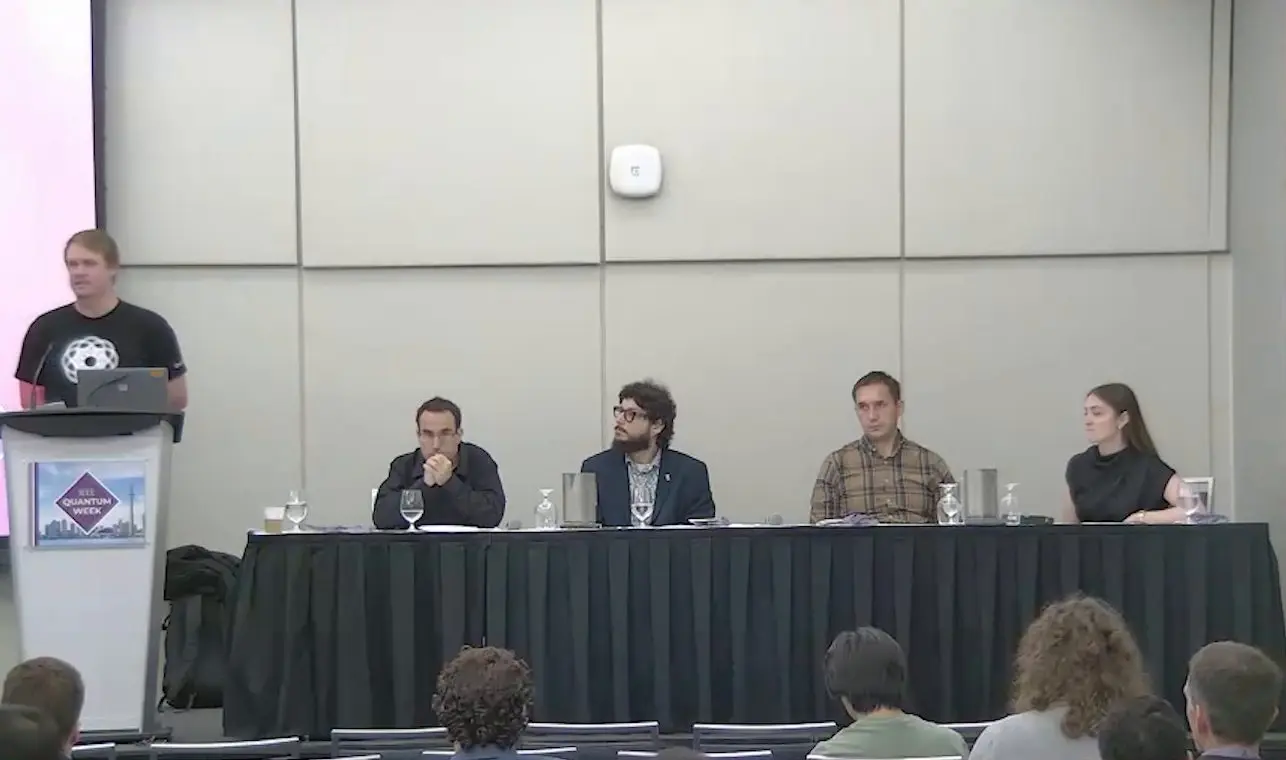
Becker moved to IonQ in February after six years on Amazon Braket. Becker said enterprise buyers now ask when Q-Day comes, the day a quantum computer breaks today’s public-key encryption, and put a machine that could threaten it on IonQ’s roadmap for 2028. Asked what buyers want, Becker said they do not know what is on offer.
Daniel Sierra wanted a common layer, like Java, that hides which vendor ran a job. Guilmart predicted twenty standards and nothing shared. Becker said the biggest total value sits in applications but is spread thin, while the value that is most concentrated sits in the machines that every application needs.
Three procedures for quantum software founders
Mehdi Bozzo-Rey of Quantum Advantage Partners and Denise Ruffner of Women in Quantum ran a Monday workshop on mapping science to market. They call their habit scientific sales. Each claim carries a source and a limit, and each meeting ends in a written decision.
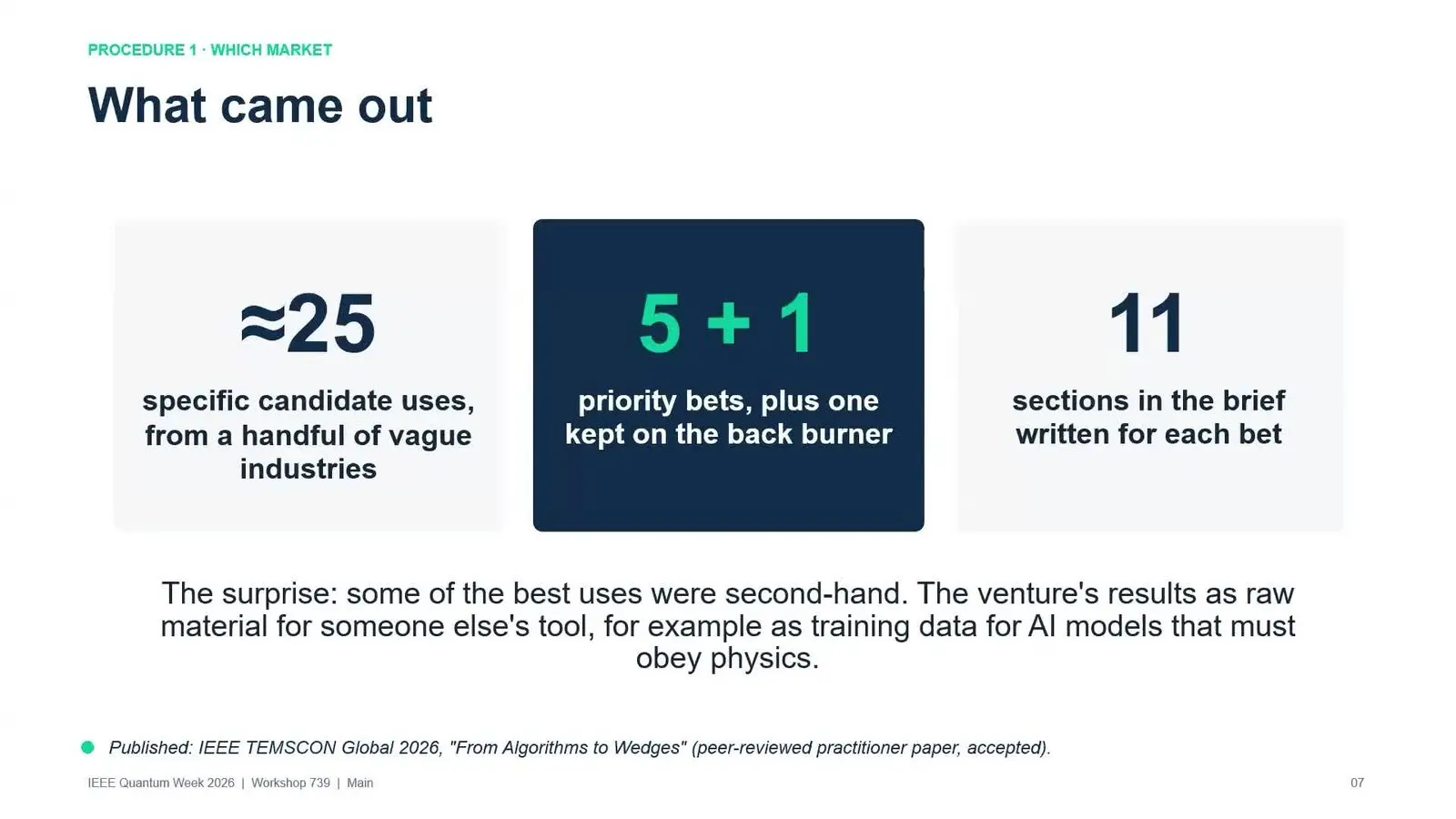
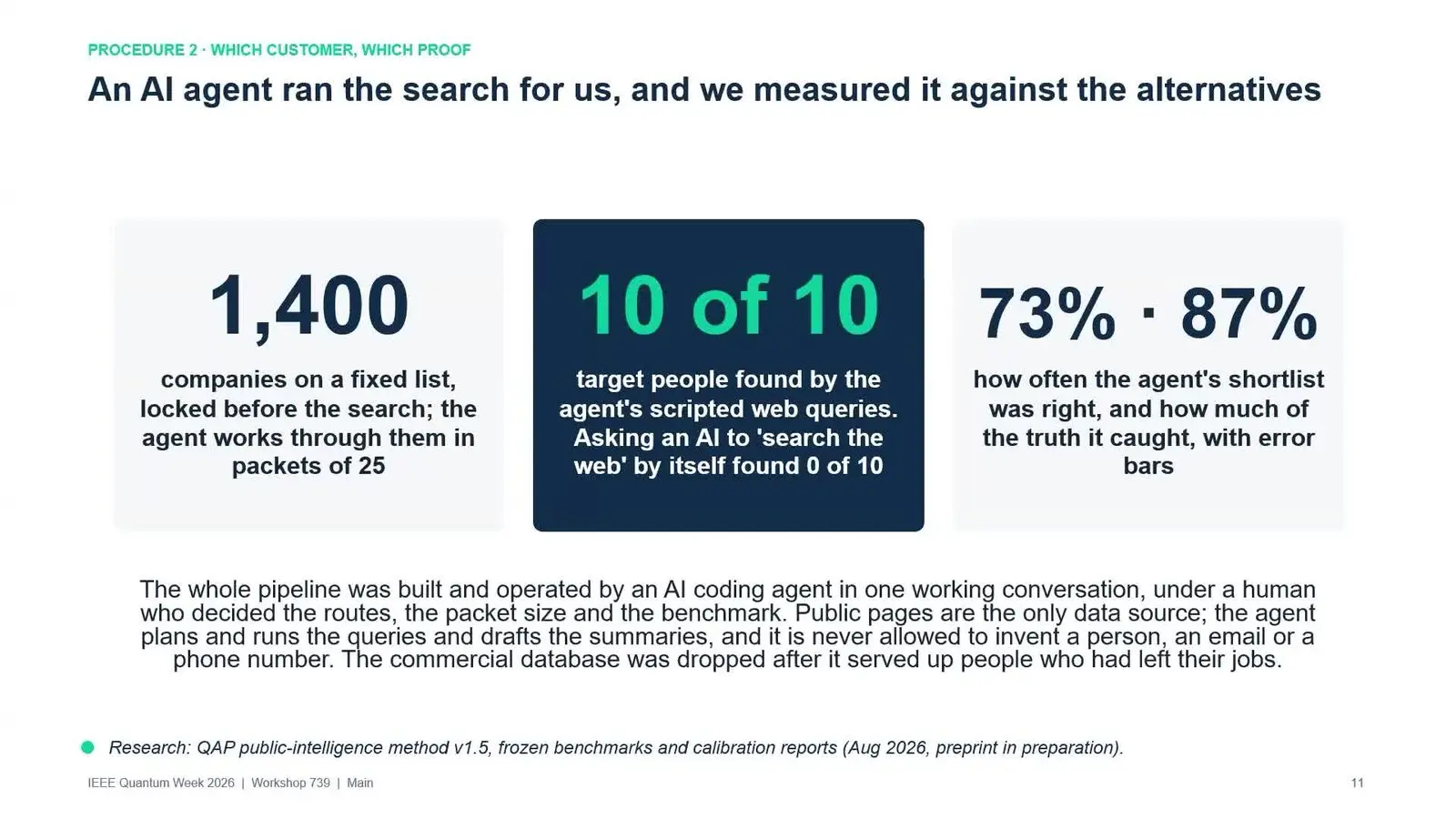
Procedure one picks a market. In an eight-week case, about ten working days of analysis produced about 25 specific uses and five priority bets. Procedure two finds customers from public web pages, and in a test on small car firms around Toronto, scripted searches found all ten target people while a model searching the web alone found none.
Procedure three rewrites a document for the reader who can refuse it. A controlled study found that a design with shared context beat designs that split reviewers into roles, by 34 points in a study at PIMS. Bozzo-Rey said the result is under review.
Founders should listen before the demo
Ruffner gave the main talk of the third session. Ruffner told founders to start with the person who must pay, to keep the company pitch to three slides and then to stop and listen to what the customer needs before showing anything. A demo in the first minute looks nervous.
Selling quantum straight to a chief executive fails, Ruffner said, because a one-year money question can waste the meeting, so Ruffner starts with a firm’s scientists. A team should not wait for 50,000 qubits before selling. No one jumps there from a hundred in one move.
A panel on energy-based computing and the industry’s history
A Monday panel looked at a different kind of machine, one built around energy. Steven Rayan of Saskatchewan chaired it. With them were Alán Aspuru-Guzik of Toronto, Ali Javadi-Abhari of IBM and Jacob Biamonte of ETS Montreal. Aspuru-Guzik said the hunt for the lowest energy state is a habit left over from the days of weak computers, and that a warm molecule in a liquid may be both easier to model and of more use.
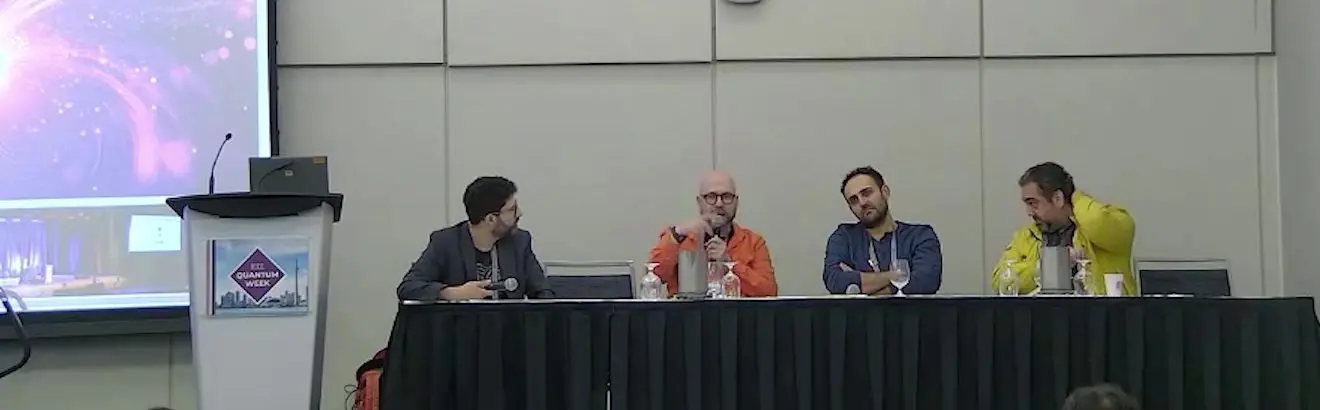
Javadi-Abhari described a split of the work. The quantum chip samples answers and a classical machine finishes the smaller sum, with about a million samples sent to RIKEN’s Fugaku supercomputer. They said a signal now comes back from circuits of about 7,000 to 8,000 gates, which is still short of a useful job.
Aspuru-Guzik then told the history of the trade. It ran through D-Wave, then Zapata, which went public and crashed, and Xanadu, which grew out of a start-up lab in Toronto. The talk also showed a circuit tied to a neural network that proposed a molecule against KRAS, a protein linked to cancer, and Aspuru-Guzik said an ordinary computer could have done that work on its own.
Quantum readiness for business leaders
A full Thursday workshop gave leaders plain advice on staff, security and where to start. Robert Loredo of Florida Atlantic University gave three talks, and after each one came a panel.
Three seats to fill before hiring a physicist
Robert Loredo runs quantum work at Florida Atlantic University and founded Entangled Solutions Group. They drew on their 2026 book, Quantum Readiness for Leaders. Eight of their first ten consulting clients asked the same questions about what quantum computing is and where to start, and they cited a 2023 McKinsey note that put one qualified person against three open jobs.

Before hiring, Loredo wants three seats filled by existing staff. One knows the machines, one knows the firm’s trade and one watches security and export rules. Their 90-day list asks a firm to name an executive owner, map three to five problems and pick one pilot measured against a classical baseline.
A guest panel on readiness and migration
Rafael Sotelo, dean of engineering at the Universidad de Montevideo, chaired a panel of six. Andrea Delgado of Qblox said a lab follows a funder’s long plan while their firm runs on a much shorter clock, which makes it hard for the two to plan together. Lefebvre said Sherbrooke’s quantum degree takes 15 to 25 students a year.
Serina Kaye told firms to know the result they want and whether it is ripe in their trade, and named life sciences and materials as readiest. On security, Lefebvre pointed to Canada’s 2035 deadline. Lefebvre told small firms to ask each supplier for a date for post-quantum ciphers and to replace any supplier with no answer.
What a leader can buy today
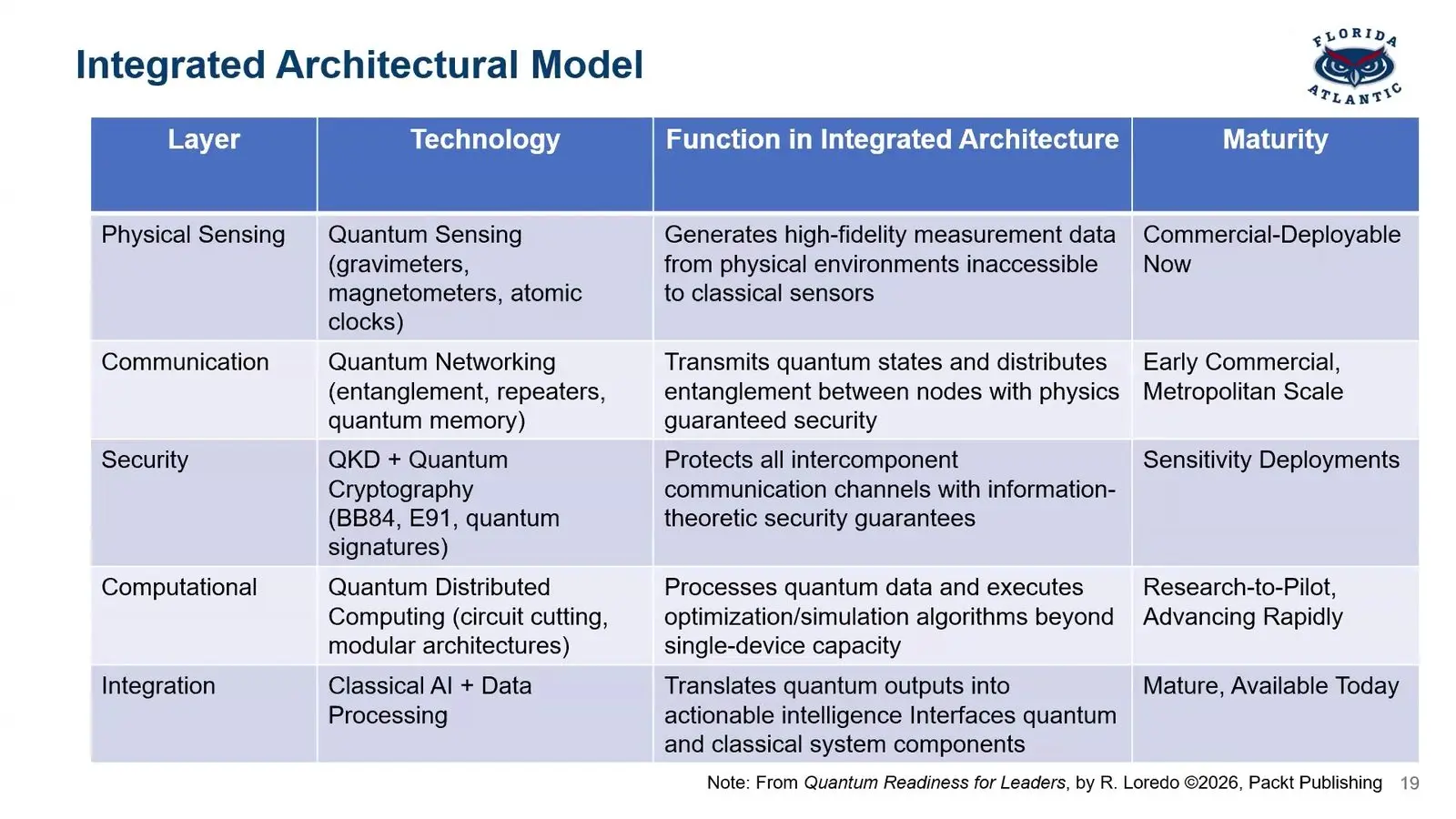
Loredo’s second talk set out how ready each kind of quantum technology is. Loredo said the table holds only for the date it was written. Sensing gear, from gravimeters to atomic clocks, is ready to buy now, while links that share quantum states are early and distributed quantum computing is still a research pilot.
The rules card asks whether a tool falls under US export rules. It also asks whether a foreign party triggers a review by CFIUS, the US committee that screens foreign investment. On security they stressed that the fix for quantum code-breaking is new public-key methods that run on ordinary computers, and they did not want a debate about hardware to delay the search for devices that still use weak ciphers.
A panel on joining quantum chips to ordinary computers
Sotelo chaired Blake Johnson of IBM, Miguel Paredes Quiñones of Dell, Sahar Ben Rached of Etheriq Computing, Kenny Heitritter of qBraid and Zheng Cui of IonQ. Johnson recalled IBM’s 2016 cloud machine as a 5-qubit lab test. The newer habit, Johnson said, pairs each quantum chip with ordinary processors and graphics chips.
Paredes Quiñones said splitting a large circuit into pieces a chip can run still costs a lot of classical time. Heitritter traced qBraid to a Dartmouth class where about 80 percent of the hours went on installing early software, and said the service now hosts 24 devices behind one interface.
Judge the spend over years
Loredo’s third talk was a field guide to staff and money. Their pyramid puts literate leaders, lawyers, teachers and investors in the wide base and physicists at the narrow tip. Loredo told the room not to judge the spend like a day trade, and to measure it over two to five years, since a million dollars spent this year will not come back as two next year.

Public money usually takes the early risk, they said. A large Florida fund reached community colleges and trades as well as the state campuses. In their view even a world-class lab cannot make up for a gap in talent, capital or governance, and they listed six capabilities that have to grow together.
Leaders on where to start and when ciphers break
Sotelo chaired Allison Schwartz of D-Wave, Denise Ruffner of Haiqu, Feite Kraay of PINQ², Ron Bewtra of IQM and Garfield Jones of QuSecure. Schwartz said politicians must hear the case in plain business words. Schwartz often tells buyers they do not need quantum.
Jones owned up to being a pessimist. Jones said some leaders in the field give 2029 for a machine that can break today’s ciphers, and Jones read US national security guidance as pointing at 2027, hence the advice to set money aside now. Asked what stops firms starting, Jones named a funding stop, a champion who leaves and a goal nobody shares.
Venture money and the start-ups chasing it
The IEEE Quantum Venture Summit spent Monday on the money that sits between public grants and paying customers. Three sessions put investors and founders in the same room.
Baczyk says 2026 is the year to fund the supply chain
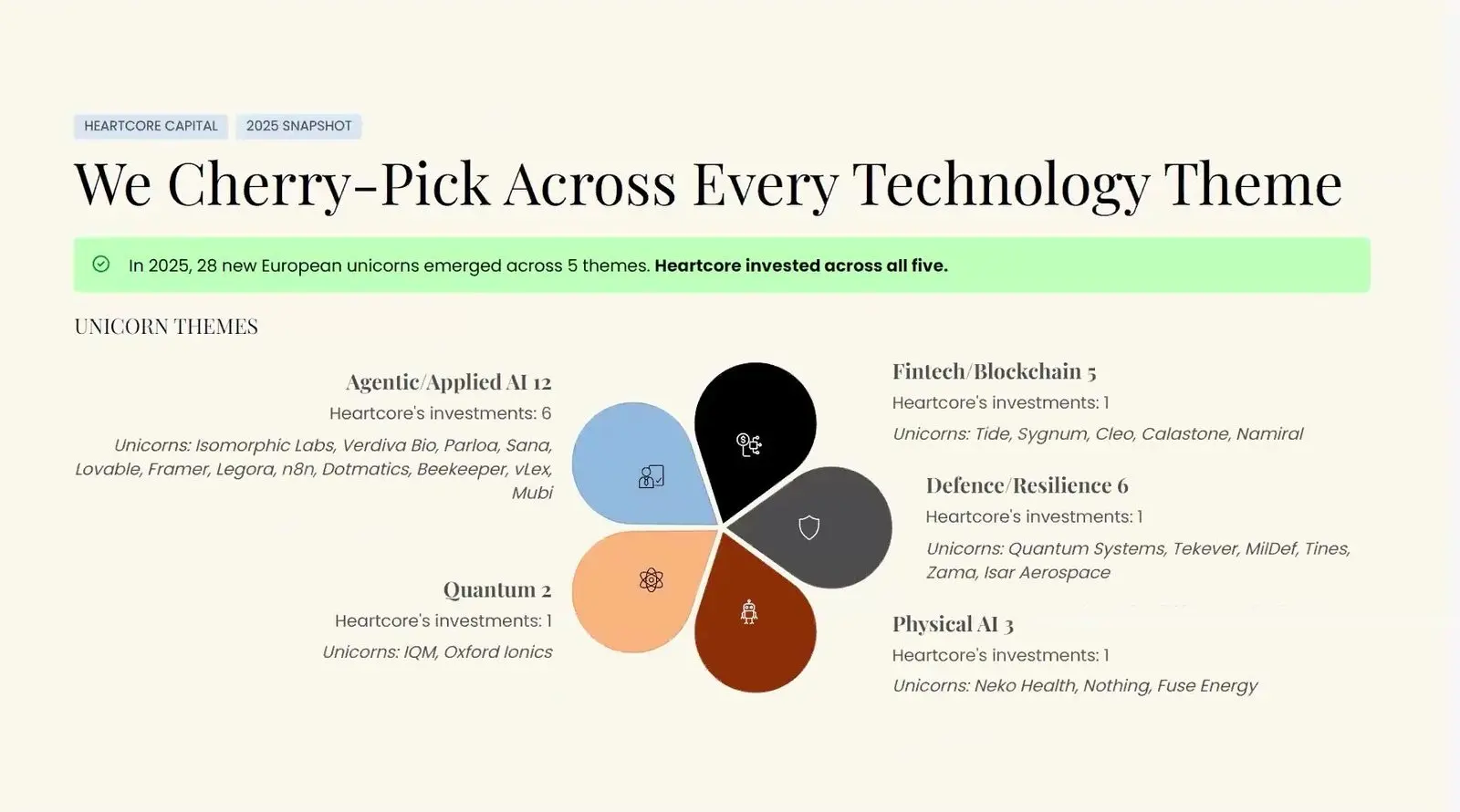
Michael Baczyk of Heartcore Capital, who chairs the summit, argued that 2026 is the right year to invest because quantum now has a supply chain that industry can build on. The MRI trade paid for the cold. On Baczyk’s figures Europe holds 38 percent of government quantum funding and a third of the companies. Baczyk also conceded that today’s machines still sit orders of magnitude short of DARPA’s chart of useful work.
Asked about public money that matches private funds, Baczyk told founders to show large local users first and then take that interest to government. Schemes of that kind in the United Kingdom and Germany have gone down well, Baczyk said.
Denzler’s reverse pitch puts the investors on stage
Tobias Denzler of QAI Ventures ran a reverse pitch, in which funds presented to the start-ups for five minutes each. QAI’s first fund of 20 million went into 37 companies, and the Basel firm is raising an early fund of 50 million and a later one of 150 million US dollars. Baczyk claimed a 19-year record and seven unicorns for Heartcore. Holds of 12 years and more are normal, Baczyk said.

Chloé Archambault, a partner at Quantacet, described a first fund of 24 million that writes pre-seed and seed cheques of half a million to a million from Quebec and Ontario. The firm also rents out a shared dilution fridge. Most of its companies had no sales when it invested, Archambault said. A family office with 45 companies and Wavepeak Ventures also pitched.
Raveendran’s QEC Labs and eight more start-ups pitch
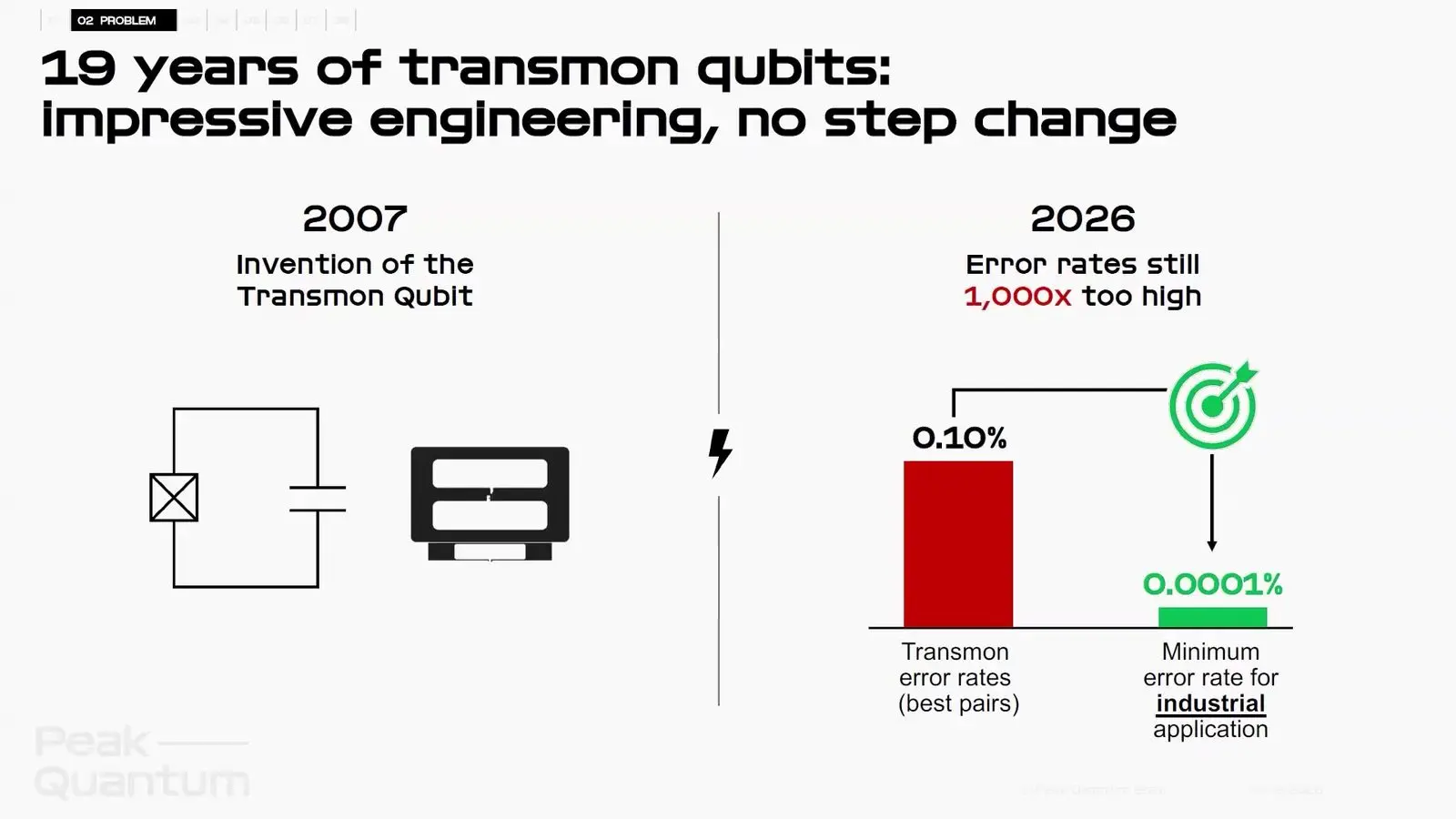
Baczyk chaired nine start-up pitches of five minutes each. Peak Quantum of Munich said the best transmon pairs make errors 0.10 percent of the time, against an industrial need of 0.0001 percent, so error rates are still 1,000 times too high. QEC Labs, led by Nithin Raveendran, builds error-correction hardware and targets 10 to 50 times more usable qubits. It asked for a pre-seed of 2.5 million dollars.
Zahir Alam of atom opticks proposed making chips with beams of atoms instead of light, at a scale near 0.01 nanometres, and showed 65-nanometre lines in silicon. b01t offered proofs that a checker called Lean 4 can replay. A Qiskit upgrade, the firm said, can change a result while its tests still pass. Q-READY cited more than 7,000 open quantum jobs in June 2025, and PexMachina, Qatalyst, SQUIRE and a firm built on open-source code also pitched.
Responsible quantum and claims that can be checked
A Tuesday workshop on responsible quantum technology asked who checks what vendors say, and who the supply chain leaves out. Six talks came from it.
Bassoli finds no score yet for responsibility
Riccardo Bassoli, a junior professor at TU Dresden, argued that responsible quantum work should borrow from resilience engineering, the craft of keeping a system up when things go wrong. The Dresden lab has three quantum computers. A quantum link runs into the core of a 5G network. Bassoli’s frame sets values, such as trust and care for the planet, apart from measures such as delay and time to recover, though none of the measures had a number.
Partners split the same word, Bassoli said. Industry treats sustainability as cost and the means to keep a growing system going, while academics mean energy use and harm to the planet. Once talk reaches a score, Bassoli said, it is hard to tell whether a 10 counts as responsible and a 9 still does.
Marco finds Germany’s benchmark does not run on every kit
Fabienne Marco, head of the Quantum Social Lab at the Technical University of Munich, found that DIN SPEC 91480, Germany’s own benchmark meant to work on any platform, does not run on every quantum software kit. Germany writes its own rules. Yet it sees the machines through IBM and Amazon Web Services interfaces, from software kits to access tiers. From 78 documents, the team coded ten in depth into 151 passages.
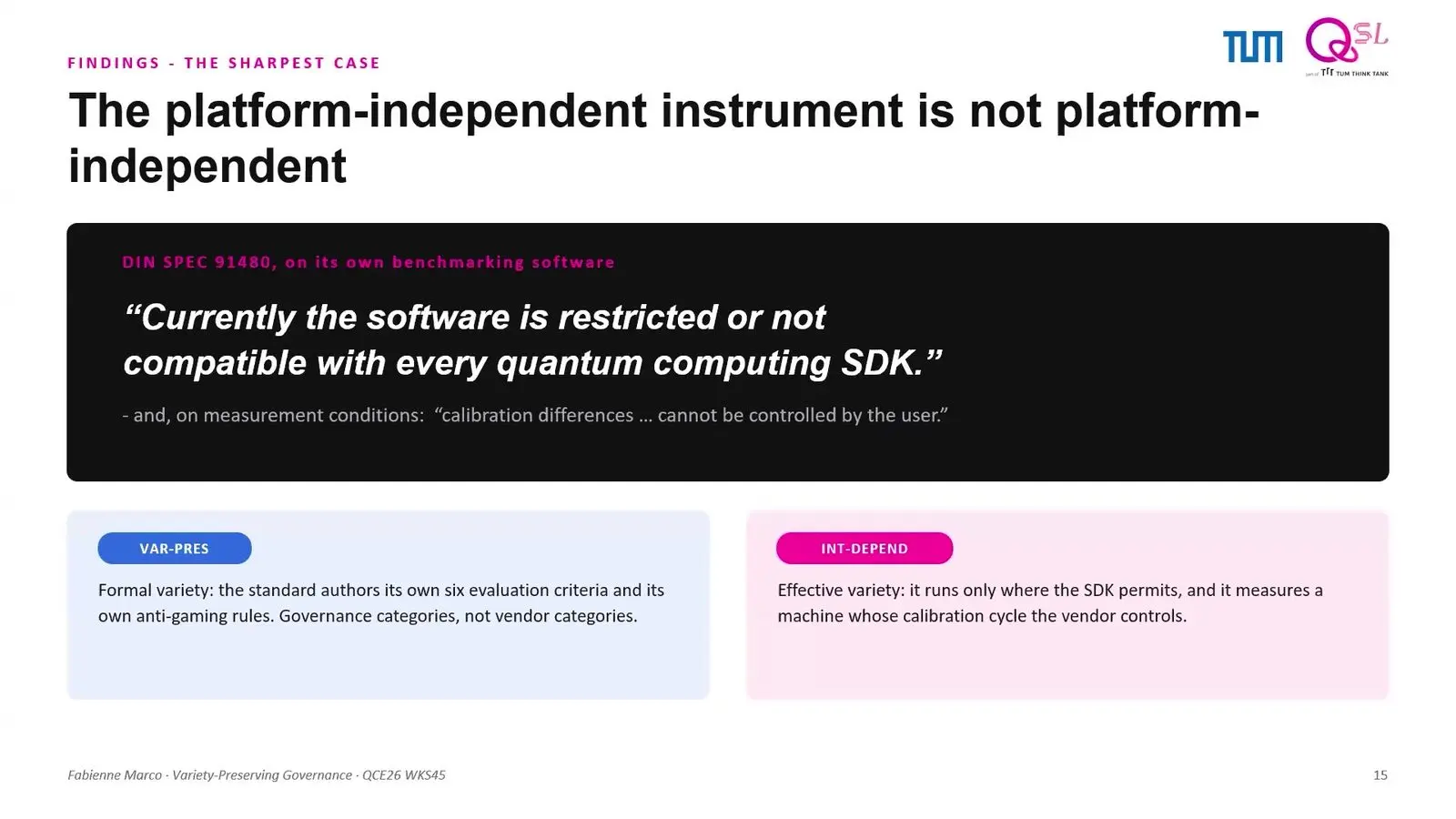
The specification’s own text says its software is restricted or will not work with some kits, and that users cannot control how a machine is tuned. Marco asked for no new body. The BSI, Germany’s security agency, should watch the vendors’ interfaces, Marco said, and any project paid for with federal money should have to report its benchmark scores. Use has stayed flat since about 2020, Marco said. It costs money, and nobody requires it.
Lolur splits quantum advantage into three grades
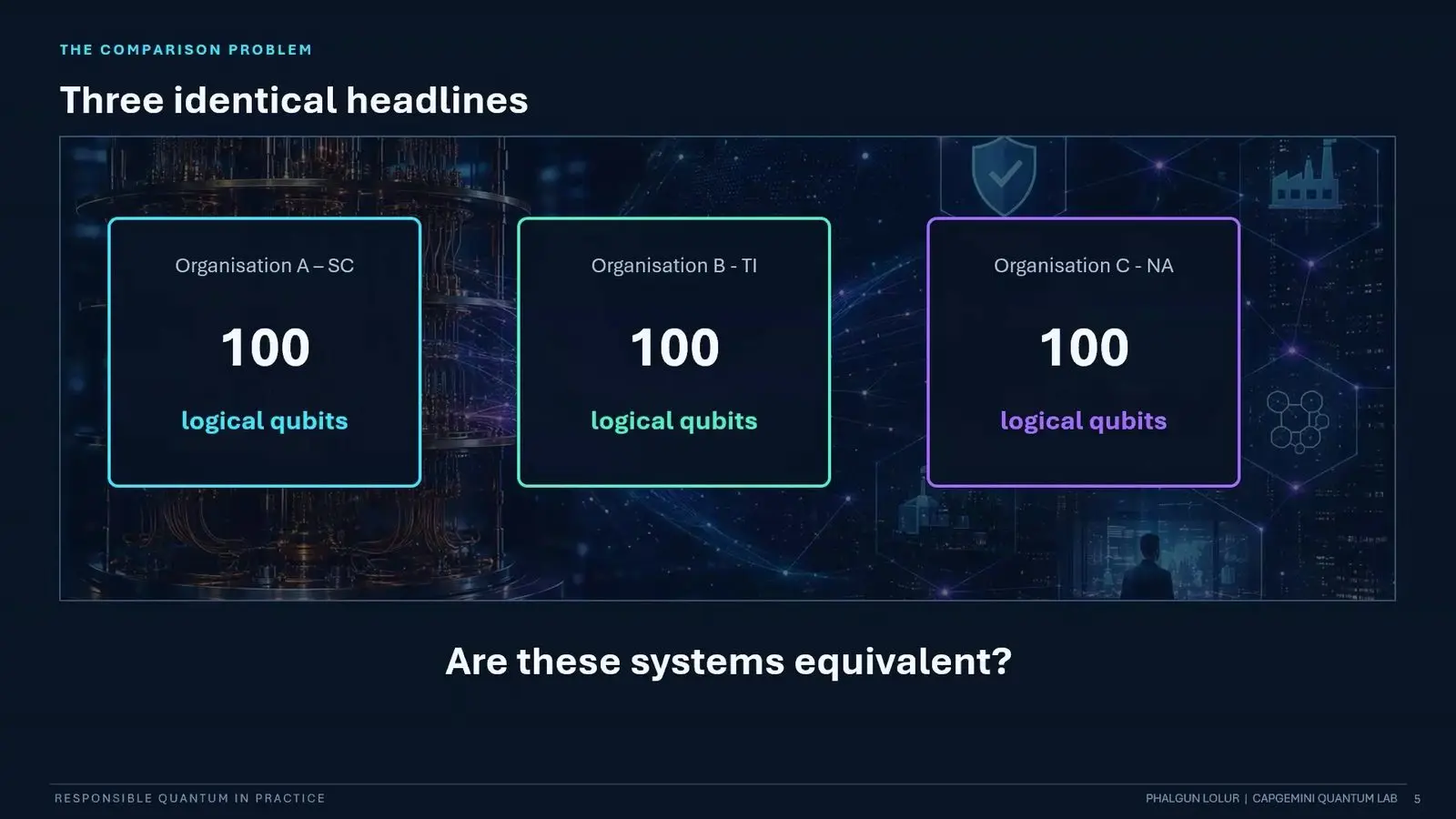
Phalgun Lolur of the Capgemini Quantum Lab showed three organisations each announcing 100 logical qubits, on three kinds of hardware, and said the headlines give a firm too little to compare. The code, the decoder, the run length and whether the number is measured or a target all stay hidden. The work is a joint view with the UK National Quantum Computing Centre and KPMG.
Lolur’s grades start with quantum advantage, which beats a stated classical method on a set task. Practical advantage still holds once the extra costs and checks are paid, and commercial advantage goes further still, since it changes a real business choice at a price that makes sense for the firm. Random circuit sampling, in Lolur’s view, has the second grade but not the third. No Capgemini client yet pays to run quantum in production, Lolur said.
Al Sherbaz’s model card finds none of 20 claims checked by an outsider
Ali Al Sherbaz, an associate professor at the University of Cambridge, graded 20 claims about one vendor’s quantum model. The Quantum Model Card gives each claim one of four labels, which run from a claim the vendor makes on its own word up to one that an outsider has rerun and confirmed. Only an outside party can move a claim up. A vendor cannot.
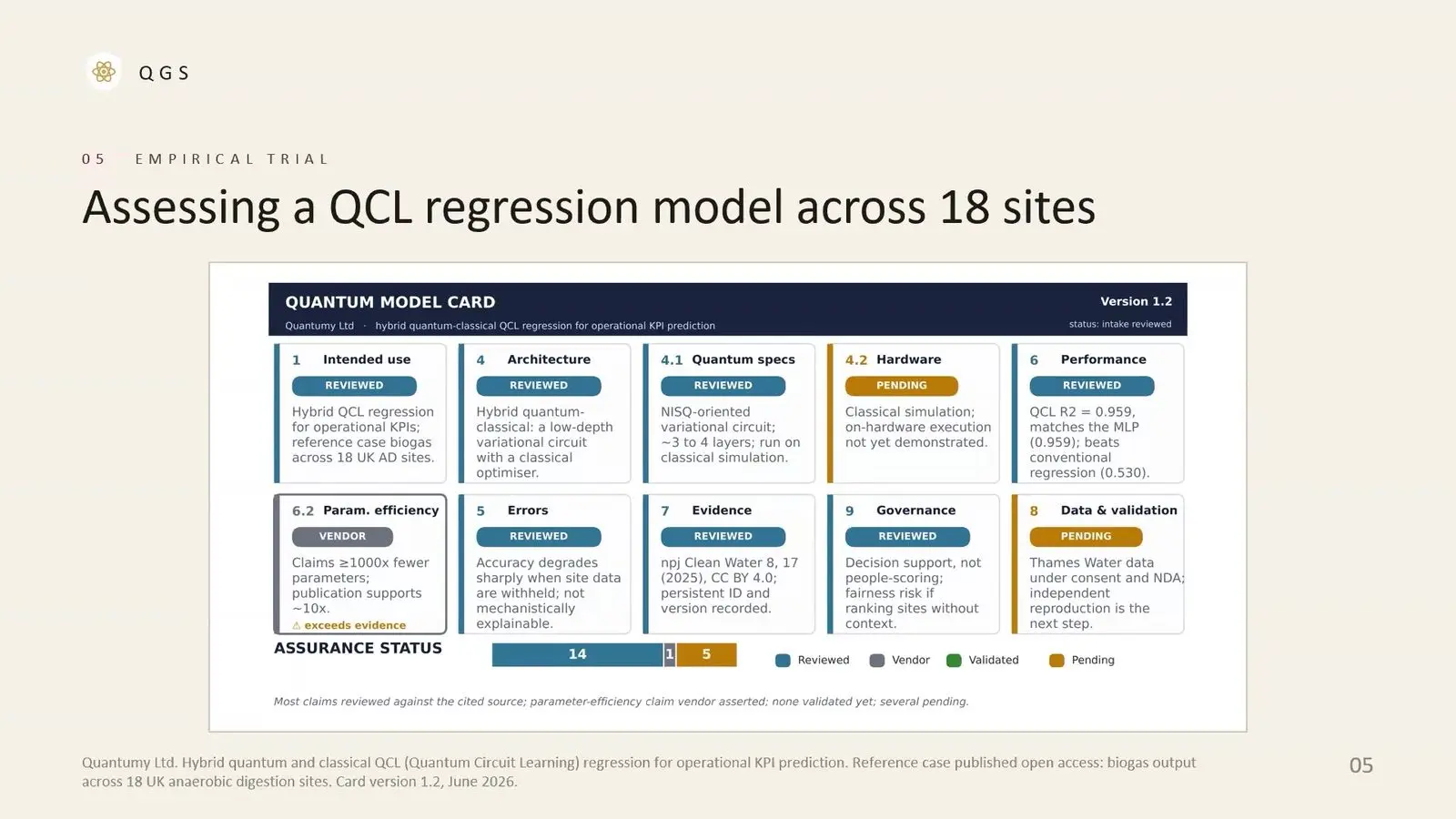
The trial covered Quantumy Ltd’s model of biogas output across 18 UK sites, run so far only in classical simulation. Of the 20 claims, 14 were checked against documents, one rested on the vendor’s word and five were pending. None was confirmed by an outsider. The vendor claims at least 1,000 times fewer parameters to train, while its own paper backs about ten times. Al Sherbaz conceded that the pilot is one case with one checker, and that one of the co-authors had helped to found the firm that built the model.
Oughton finds no way yet for a classical user to check one quantum server
Natasha Oughton, who leads policy and ethics at the UK National Quantum Computing Centre, asked when a user is right to trust what a quantum computer says. The paper, still in progress, is with Gerard Milburn and Elham Kashefi. Oughton’s answer leans on an idea from philosophy. A user may believe an output if a process with a good track record made it.

Verification was the first test. Blind computation hides what is being run so that traps can be set, and a much smaller quantum device can do the checking, but no protocol yet lets a purely classical user verify the work of a single quantum server. Oughton said neutral parties should run benchmarks, and pointed to the centre’s testbed of seven quantum computers with no commercial stake.
Effoduh, Moll and Swiatko ask for Indigenous consent at five stages
Work by the lawyers Effoduh, Moll and Swiatko argued that quantum’s supply chain should seek the free, prior and informed consent of Indigenous peoples. The frame is UNDRIP, the 2007 UN declaration on their rights, backed by 143 states. The United States, Canada, Australia and New Zealand at first opposed it. It is not binding.
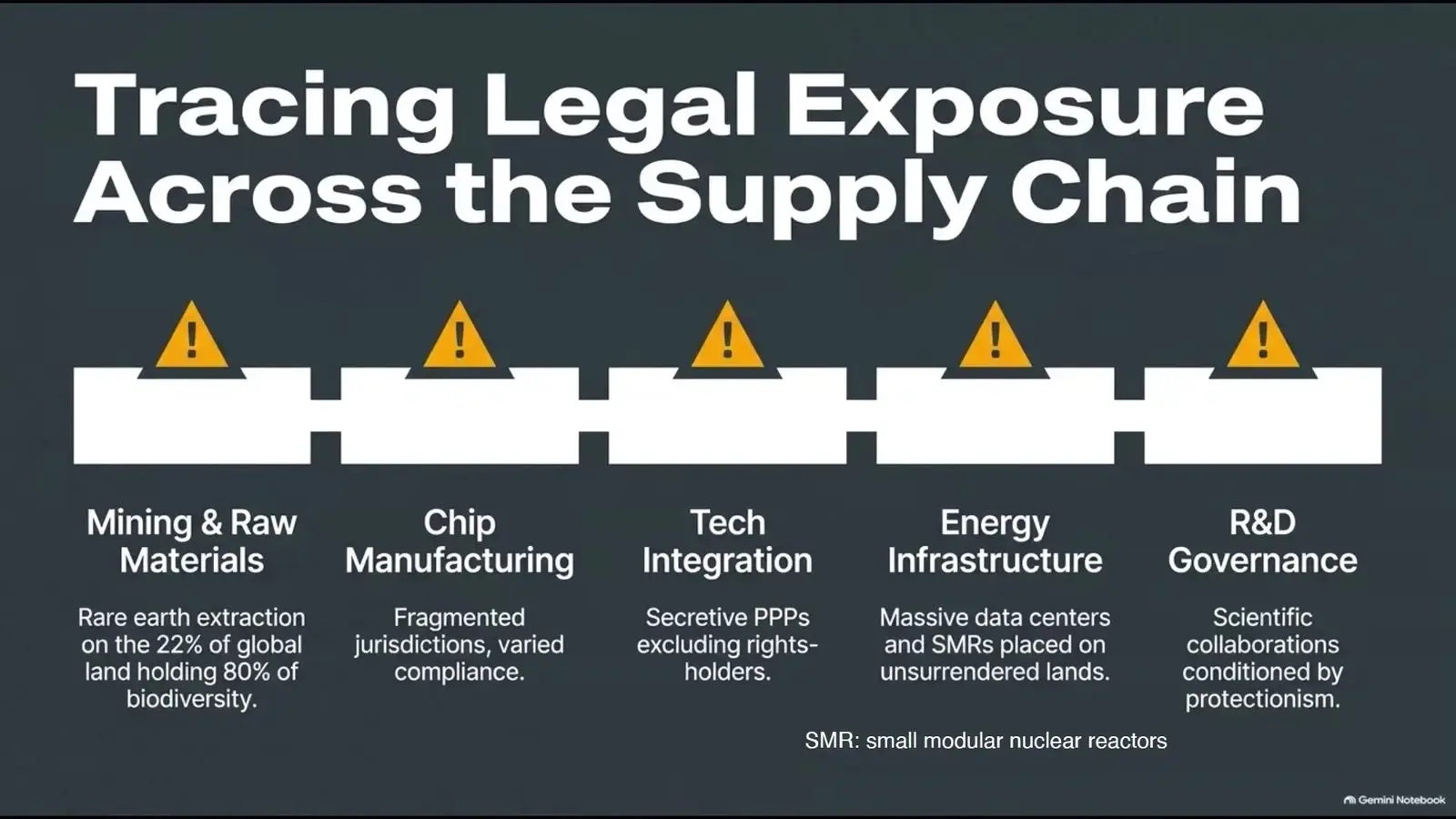
The five stages run from mining through chip making and assembly to energy and the rules for research. The talk named one way round consultation. Its name was classification laundering, in which a civilian label carries money toward defence use. Two Canadian court cases anchored the case, the 2017 Clyde River ruling on seismic tests in the Arctic and the 2025 Kebaowek ruling, which the talk called the first to apply UNDRIP in Canadian law. A physicist asked why quantum needs its own framework.
What it means for security teams and policy makers
Two practical lessons follow for anyone who has to act. A security team should plan its move to new ciphers against the earliest date given on stage for a code-breaking machine, IonQ’s roadmap year of 2028, and treat Canada’s 2035 deadline as a ceiling and not a target. Our plain guide to post-quantum cryptography sets out the new standards.
A university, company or smaller country that wants a say should join the standards rooms now, while the vocabularies are still being drafted and none has won. Devaney put the cost at two to four hours a month. A buyer weighing a vendor’s claim can borrow the Cambridge model card, which found none of 20 claims on one model checked by an outsider. Most of the evidence here was cases, surveys and personal experience, so the claims are best read as informed opinion.
On this evidence, quantum computing is unlikely to get its Asilomar. The rules are already being drafted, in other rooms and by other hands.
Frequently asked questions
What is quantum policy?
Quantum policy covers how governments fund, control and set rules for quantum technology. It includes national research programmes, export controls on quantum equipment, deadlines for moving to new ciphers and the standards that let machines be compared and connected.
When will a quantum computer break encryption?
Nobody knows. At QCE26, Daniela Becker of IonQ said a machine that could threaten public-key encryption is on IonQ’s roadmap for 2028, and Garfield Jones of QuSecure said some in the field give 2029. Michele Mosca of Waterloo said Mosca sees no code-breaking threat in the machines that exist now.
What is the Quantum Genesis Q Competition?
It is a US Department of Energy competition launched by Hal Finkel at QCE26. Phase I pays up to 1.5 million dollars per company for early milestones, and Phase II holds a pool of 100 million dollars for machines with at least 100 logical qubits. Total planned funding is up to 215 million dollars.
How many quantum standards are being written?
Bruce Kraemer, chair of IEEE P7130, counted about 60 active quantum standards projects worldwide. They run in bodies such as the IEEE, ETSI and JTC 3, the joint committee of the IEC and ISO for quantum technologies, which first met in May 2024.
How should a company start preparing for quantum computing?
Robert Loredo of Florida Atlantic University suggested three internal seats, one for the machines, one for the firm’s own trade and one for security and export rules. Their 90-day plan names an executive owner, maps three to five problems and runs one pilot against a classical baseline.
What happened at IEEE Quantum Week 2026?
IEEE Quantum Week 2026, also called QCE26, ran from 13 to 18 September at the Metro Toronto Convention Centre. This guide covers 32 of its talks on quantum policy, standards and business, from a panel on governing dual-use research to a US competition for logical qubits.
This guide is based on 32 talks, panels and workshop sessions at IEEE Quantum Week 2026 (QCE26), held at the Metro Toronto Convention Centre from 13 to 18 September 2026, and on the published conference programme. Names follow the programme where it lists them. Affiliations and titles not listed there are as speakers gave them. Results are stated as each speaker presented them, and most rest on cases, surveys and personal experience. Company claims are the companies’ own.
- Qubit hardware and scaling roadmaps
- Photonics and quantum sensing
- Control electronics, calibration and readout
- Quantum error correction and decoders
- Fault-tolerant compilation and magic states
- Modular and distributed quantum computing
- Quantum computers in supercomputing centres
- Compilers, circuit synthesis and languages
- AI and language models for quantum software
- Testing and reproducible quantum experiments
- Benchmarks, error mitigation and quantum advantage
- Quantum state preparation, oracles and arithmetic
- Quantum optimisation, QAOA and annealing
- Quantum machine learning
- Chemistry, materials and life sciences
- Differential equations and fluid dynamics
- Power grids and energy
- Quantum finance
- Logistics, climate, databases and games
- Quantum networks and key distribution
- Quantum security and post-quantum cryptography
- Quantum education and workforce


See today’s quantum computing news on Quantum Zeitgeist for the latest breakthroughs in qubits, hardware, algorithms, and industry deals.