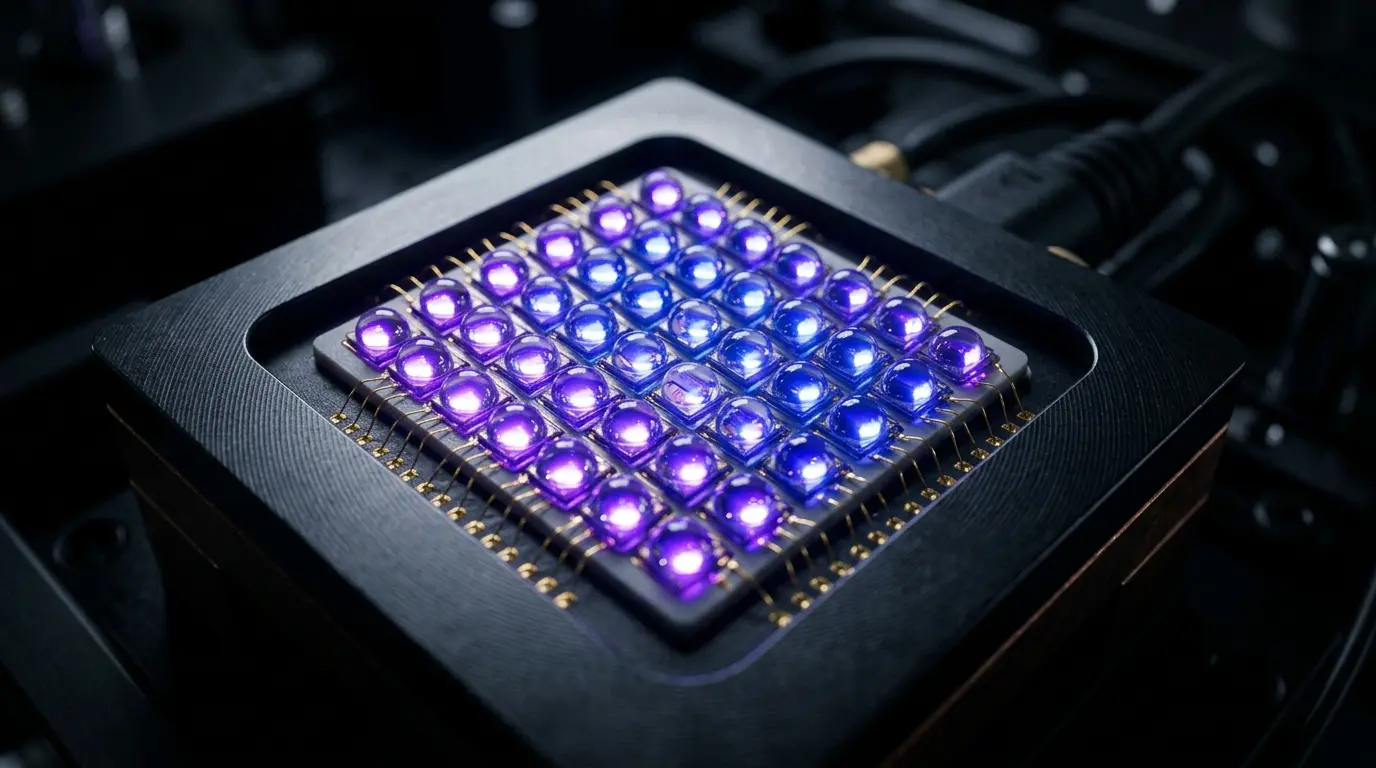
A $12 million award from the U.S. Department of Energy will fund a collaborative project linking artificial intelligence and quantum computing. The effort, called Application-Aware Error Correction Codesign for Scientific Quantum Computing, is one of twelve Phase II awards under the Genesis Mission. Eun-Ah Kim, Hans A. Bethe Professor at Cornell, will lead machine-learning work focused on a reinforcement-learning compiler that translates quantum algorithms into physical movements on a reconfigurable neutral-atom quantum computer, alongside researchers from MIT, Harvard, QuEra Computing, NVIDIA, Anthropic and three national laboratories.
ASQC Project: Advancing Quantum Computing via AI Integration
Kim’s group will concentrate on two key stages, beginning with compilation. They will build a reinforcement-learning compiler to convert algorithms into specific atom movements and gate operations. The ASQC project unites expertise from MIT and Harvard alongside industry partners QuEra Computing, NVIDIA and Anthropic, demonstrating a broad collaborative effort. Researchers from Los Alamos, Lawrence Berkeley, and Sandia national laboratories also contribute to the initiative, administered by the Department of Energy’s Advanced Scientific Computing Research division.
According to the Department of Energy’s announcement of the Genesis Mission awards, “The goal is to integrate the world’s best supercomputers, experimental facilities and AI systems to advance American research and innovation.” This collaboration extends beyond algorithm translation, aiming to improve the entire pipeline from scientific question to hardware execution. Harvard Professor Mikhail Lukin, co-director of the Harvard Quantum Initiative, leads the project overall, with Kim serving as a co-investigator. The project’s funding signifies a commitment to linking AI and quantum computing for scientific advancement.

See today’s quantum computing news on Quantum Zeitgeist for the latest breakthroughs in qubits, hardware, algorithms, and industry deals.