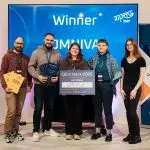
Applied Materials signaled a strategic shift in its quantum sensing efforts, declaring “The Midwest is the place in the US for quantum sensing.” The company demonstrated this commitment by hosting a quantum sensing workshop on October 30th at the University of Chicago’s Rubenstein Forum, a departure from its typical California location. The event drew six quantum sensing startups, nearly all from the Midwest, and highlighted a regional ecosystem that can advance the technology toward real-world deployment in areas like semiconductor manufacturing and medicine.
Midwest Ecosystem Drives Quantum Sensing Advancement
The event’s location signaled a clear acknowledgement of the region’s unique concentration of expertise and resources, attracting attendees from six quantum sensing startups, most of which were based in Midwestern states. David Awschalom, director of the Chicago Quantum Exchange and the Liew Family Professor of Molecular Engineering at the University of Chicago, explained that “A quantum sensor can’t become a product until the scientist who invents it meets an engineer who can scale it and an investor who can fund it.” This emphasis on ecosystem building highlights a departure from traditional research models, prioritizing connections and shared problem-solving. Applied Materials will measure the event’s success not just by the presentations given, but by the relationships forged in the following weeks.
Beyond the immediate connections made at the workshop, the region’s strength also lies in its ability to address the practical challenges of scaling quantum sensing technology. Michael Prossnitz, government affairs liaison at Mesa Quantum, noted that while the fundamental physics of quantum sensors is now well-established, significant hurdles remain in reducing their size and cost. “The key part here is everything else,” Prossnitz said.
Leo Chou, a student at the Pritzker School of Molecular Engineering, echoed this sentiment, observing that the workshop revealed the diversity of real-world problems being tackled and the range of proposed solutions. “It was particularly interesting to hear how many problems there are in the real world, and how everybody has a different solution to it,” he said.
Quantum sensing is where the field’s promise is becoming tangible, and it’s happening in a region that has built an ecosystem to support it.
David Awschalom, director of the Chicago Quantum Exchange and the Liew Family Professor of Molecular Engineering at the University of Chicago
Quantum Sensors Target Semiconductor & Medical Industries
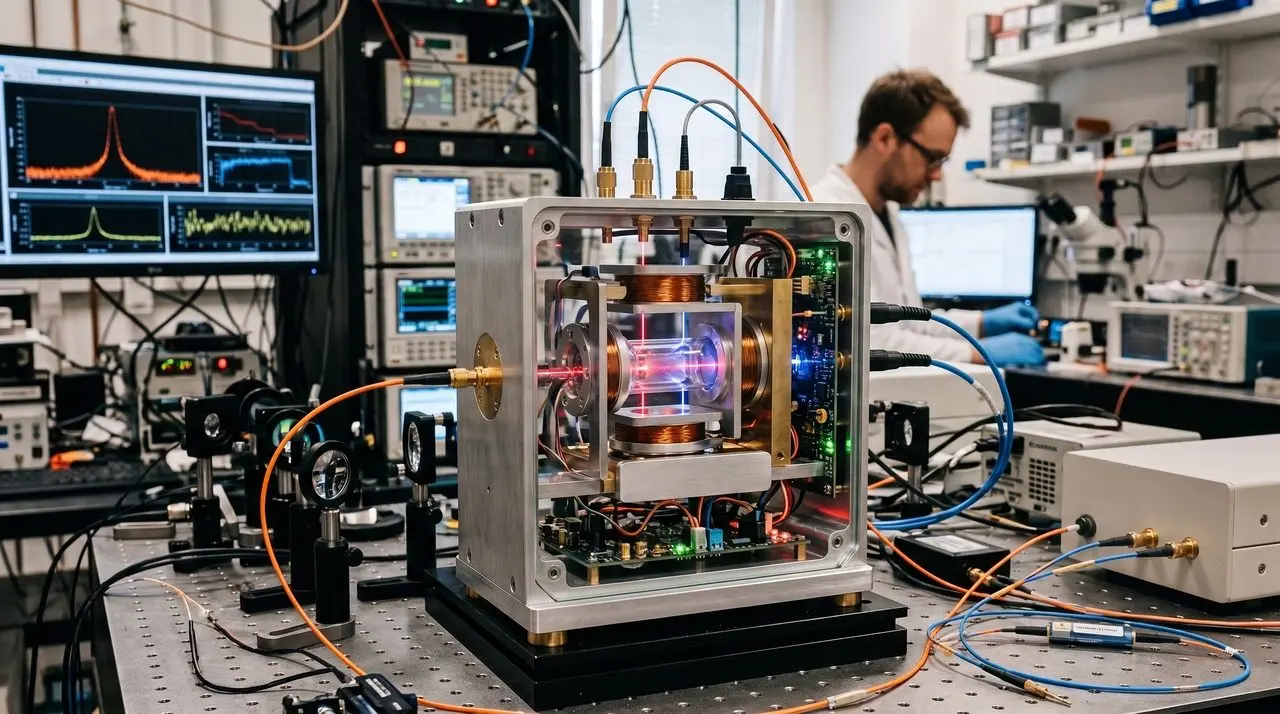
Quantum sensors offer the potential to visualize structures at the molecular level, a capability that would dramatically refine diagnostics and materials science. Presentations at a recent workshop hosted by Applied Materials indicated that the next generation of these sensors could reduce detectable structure sizes from half a millimeter to individual molecules. The workshop highlighted how quantum sensing technologies can address specific challenges within semiconductor manufacturing and medicine. Companies like EuQlid, LeviSens, and QZabre presented their products designed for these tasks, demonstrating a move beyond theoretical potential toward practical application.
In the medical field, discussions centered on bridging the communication gap between biologists, physicists and medical professionals, acknowledging that “Each person on the team is of course a deep expert in their own field, but they have to be sufficiently familiar with the language of the others on the team to work together effectively.” Beyond improved detection capabilities, quantum sensors offer a secure alternative to GPS for navigation, particularly in environments where signals are disrupted or spoofed. Boeing and SandboxAQ detailed test flights using quantum sensor-based navigation systems, addressing growing concerns about signal interference affecting commercial and military aviation.
“The physics is proven out—there’s no technical question on whether [quantum sensors] work or whether or not they’ll be important,” a presenter said, adding that the focus has shifted to the practicalities of scaling and integration.
The Midwest is the place in the US for quantum sensing.
Robert Visser, vice president in Applied Materials’ CTO Group
Navigation & Timing Solutions Emerge from Workshop Findings
These trials demonstrate a potential secure alternative to traditional satellite-dependent positioning, a capability increasingly vital given the vulnerability of current systems. The workshop highlighted the potential for quantum sensors to operate reliably in GPS-denied environments, offering a safeguard against intentional or unintentional signal loss. Presenters discussed advancements in quantum sensing applications extending beyond navigation, including precise timing networks, gravity sensing for projects and collaborative efforts with Quantum Corridor.
Organizers emphasized that the workshop’s true impact will unfold as connections forged during the event mature into collaborative ventures, supporting innovation beyond the immediate presentations. “The real action starts after the workshop, when people meet each other and understand the problems that the industry is facing in turning an idea into a business,” said Om Nalamasu, senior vice president and CTO of Applied Materials and president of its venture arm, Applied Ventures.
“Quantum sensing is not new to medicine—MRI, which uses quantum spin, is already a first-generation quantum sensor,” demonstrating that the field is building on established principles rather than starting from scratch.
Quantum sensing is not new to medicine-MRI, which uses quantum spin, is already a first-generation quantum sensor.
Li, who is also the director of the Center for Quantum Technologies (CQT), an NSF Industry/Un


See today’s quantum computing news on Quantum Zeitgeist for the latest breakthroughs in qubits, hardware, algorithms, and industry deals.