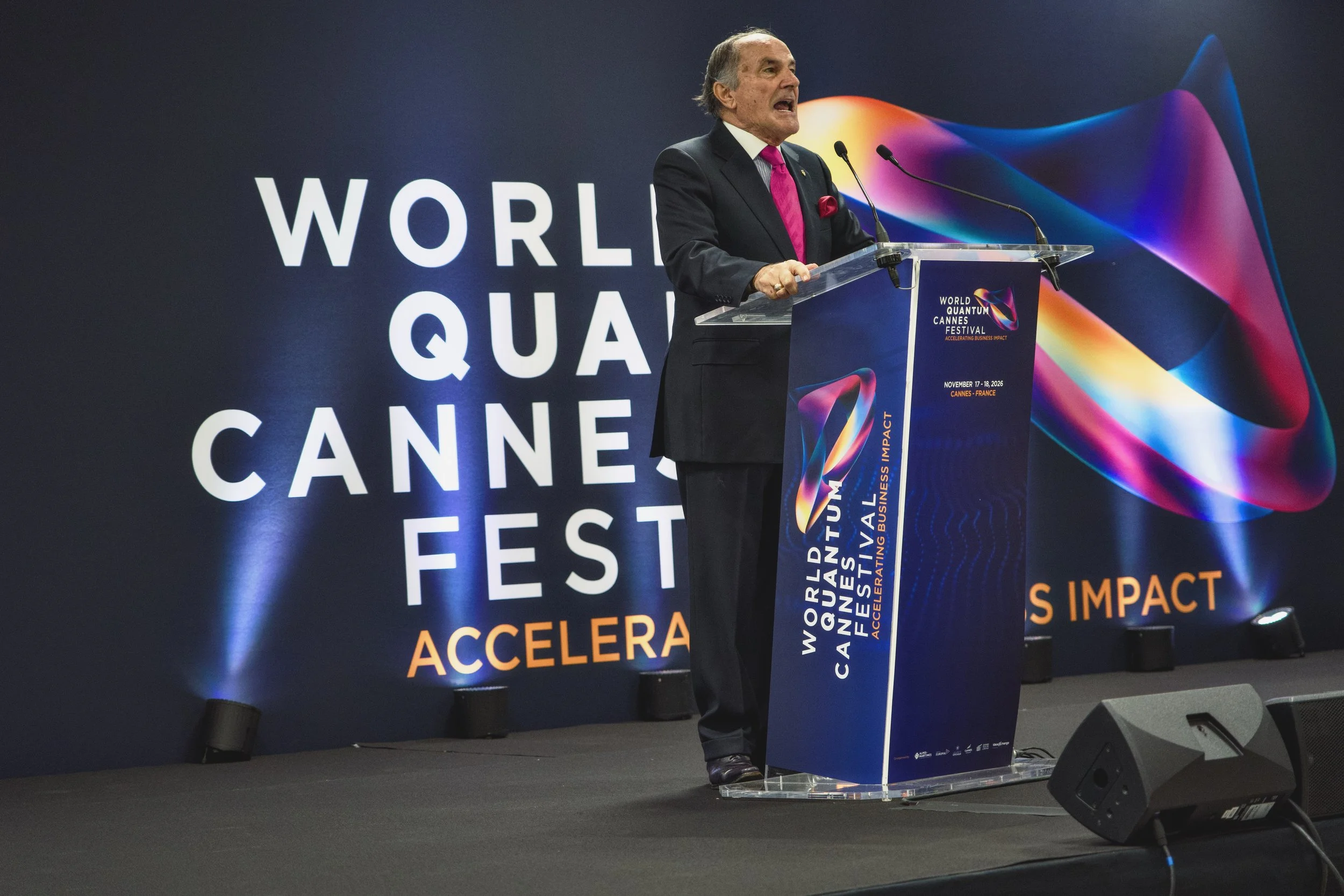
Researchers and industry leaders converged in Cannes on November 17-18, 2026, for the World Quantum Cannes Festival, where Quantum Valley Lower Saxony presented four startups, cdo2, Quant-X Security, Twin Photonics and Laser nanoFab, showing the breadth of its QVLS ecosystem. The event provided a platform to discuss the growth of the quantum sector, a vision Quantum Valley Lower Saxony shares with initiatives like the European Quantum Act and Germany’s Hightech Agenda.
Cannes Mayor David Lisnard spoke enthusiastically about quantum technology, stating it is “one of the key technologies of the future,” reflecting the festival’s focus on connecting research with industrial development. Quantum Valley Lower Saxony used the festival to highlight the importance of collaboration between universities, research institutions and companies in building a robust quantum industry.
QVLS Startups Showcase Quantum Tech at Cannes Festival
The company, one of four startups presented by Quantum Valley Lower Saxony (QVLS) and hannoverimpuls, focuses on laser-based micro- and nanofabrication, a process essential for creating the detailed structures found in quantum chips. Twin Photonics, also exhibiting, further contributes to the hardware side of the sector with its development of entangled photon pair sources for quantum technologies, a vital component for quantum communication and sensing, Quantum Valley Lower Saxony says. cdo2’s quantum sensing for battery monitoring and analysis demonstrates a move towards practical applications, while Quant-X Security tackles the urgent need for quantum-safe cybersecurity solutions.
This diversity, with companies addressing components, manufacturing, applications and security, allowed festival attendees to grasp the breadth of expertise within the QVLS network. Sharing a booth facilitated these interactions, providing a concentrated point of access to multiple teams and their innovations. QUDORA Technologies and Classiq supported the festival as badge sponsor and event sponsor, respectively, alongside their activities at their own booths.
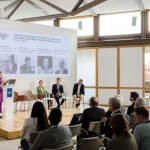
The festival’s focus on industrial capacity resonated with QVLS’s core mission, as highlighted by Prof. Dr. Christian Ospelkaus during the panel discussion, “Expand industrial capacity for quantum technologies – or lose the race.” He detailed the interplay of public and private funding in Germany, emphasizing how universities and companies can collaborate to build a robust quantum industry. “Building a quantum industry depends on these contributions working together,” he explained, highlighting the need for a symbiotic relationship between foundational research and commercial development.
The discussion extended beyond funding models to the importance of supporting close relationships between academic institutions and businesses. For an ecosystem like Quantum Valley Lower Saxony’s, maintaining these connections is vital, as is actively seeking partnerships beyond regional boundaries. The Cannes festival provided a platform to present this collaborative approach to other European quantum communities, facilitating potential partnerships and knowledge exchange.
This international outlook is critical, as no single region possesses all the necessary expertise and resources to drive quantum technology forward in isolation. Amado Bautista-Salvador, CEO of QUDORA Technologies, offered a concrete hardware perspective with his keynote, “Long-Lived Qubits: Why Coherence Time Matters for Scaling Quantum Computing.” He used an analogy involving hummingbirds from his native Mexico to illustrate the challenges of maintaining qubit coherence, a key factor in building stable and scalable quantum computers.
The success of Quantum Valley Lower Saxony’s presence in Cannes relied on the contributions of a large team, including Prof, according to the company. Christian Ospelkaus, Sabine Möhlmann, Dr. Lena Bittermann and several others. Franziska Greinert will present the European Competence Framework for Quantum Technologies at the Quantum Symposium in Hamburg on November 19, focusing on the skills needed to advance the field. On November 25, the Quantum Job Afternoon in Garbsen will connect students with potential employers in the quantum sector, encouraging the next generation of quantum professionals.

See today’s quantum computing news on Quantum Zeitgeist for the latest breakthroughs in qubits, hardware, algorithms, and industry deals.