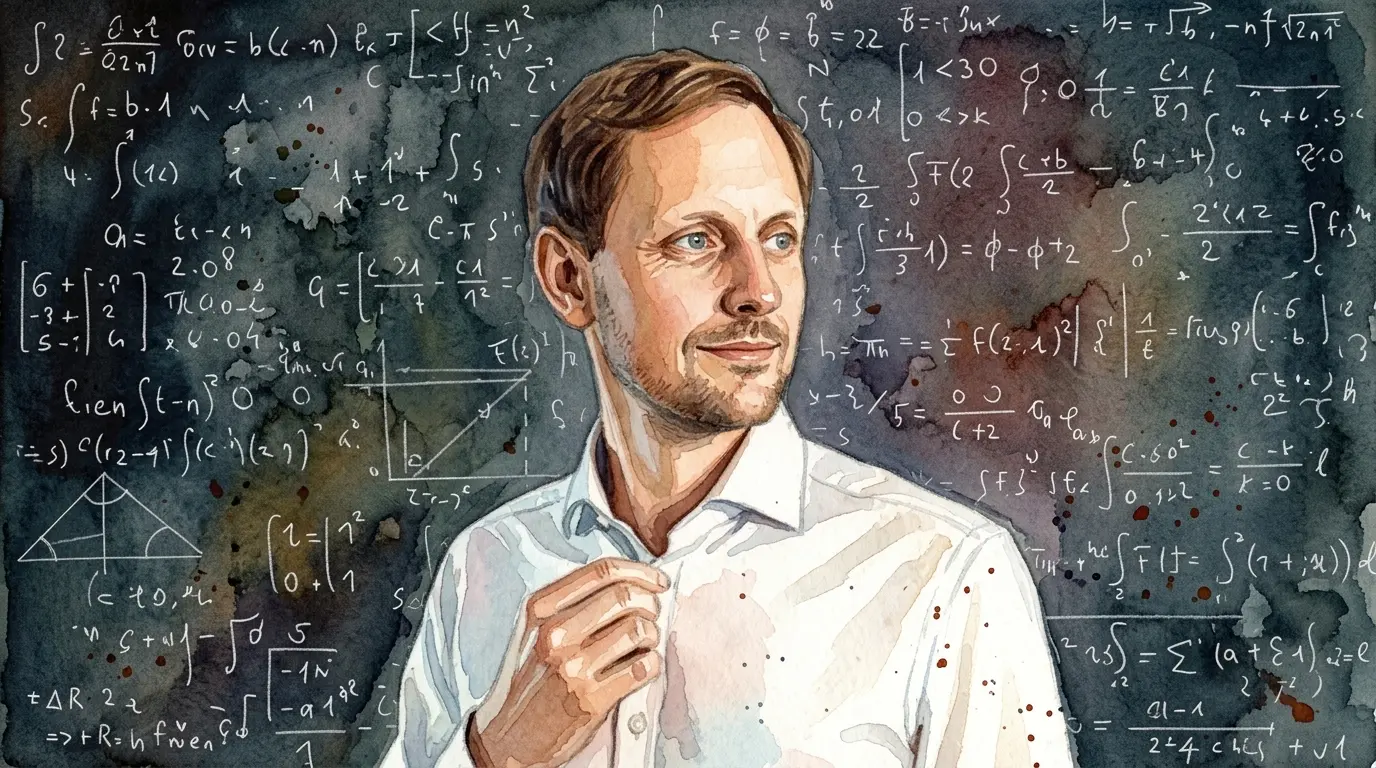
A microwave physicist who turned a university lab idea into the first European quantum computing company to list on a major United States exchange, by IQM’s own account, one superconducting chip at a time.
- Who Jan Goetz is
- From low-temperature physics to a doctorate
- The move from Munich to Helsinki
- Building IQM into a European hardware company
- Machines installed across Europe, Asia and the United States
- Funding, scale, and a Nasdaq listing
- Sole chief executive and leadership style
- Where IQM sits in the wider quantum field
- Why Jan Goetz matters in quantum computing
- Frequently asked questions
Who Jan Goetz is
Jan Goetz is a German quantum physicist and the co-founder and chief executive of IQM Quantum Computers, one of Europe’s most prominent quantum hardware companies. He helped spin the venture out of Finnish academic research in 2018 and has since turned it into a builder of full-stack superconducting quantum machines. His name is now closely tied to the question of whether Europe can field a globally competitive quantum hardware industry. A fuller corporate biography of Jan Goetz at IQM is published by the company itself.
Jan Goetz sits at an unusual point where deep experimental physics meets the hard realities of running a scaling deep-tech business. He spent years inside a low-temperature physics laboratory studying microwave quantum circuits, then chose to carry that expertise into a company rather than a tenured academic post. That decision shaped both his career and the strategic direction of IQM.
Understanding Jan Goetz means understanding the technology he bet on, which is the superconducting qubit. These devices operate at temperatures colder than deep space and rely on carefully engineered circuits to behave as artificial atoms. His professional life has revolved around making such circuits reliable enough to sell as working computers.
His public reputation rests on a simple but demanding promise, that quantum hardware can be engineered and sold today rather than only studied in a laboratory. Jan Goetz has repeatedly argued that progress depends on building real machines that customers can install and use. That conviction separates him from researchers who treat commercial quantum computing as a distant goal.
In July 2026 the stakes around that promise rose sharply, because IQM became a public company. It began trading on the Nasdaq Global Select Market under the ticker IQMX, the first European quantum computing company to list, as IQM describes it on a major United States exchange. For Jan Goetz, the listing turned a decade of private engineering into a story now told in quarterly numbers.
From low-temperature physics to a doctorate
Jan Goetz trained as a physicist and pursued his doctorate on superconducting quantum circuits at the Technical University of Munich. The experimental work took place at the Walther-Meissner-Institute, a centre for low-temperature research, where he studied how quantum circuits couple to propagating microwave fields.
His thesis was completed in 2017, and the work sat at the boundary between fundamental measurement and the engineering of usable devices. That boundary would define the rest of the career of Jan Goetz.
What superconducting circuits actually do
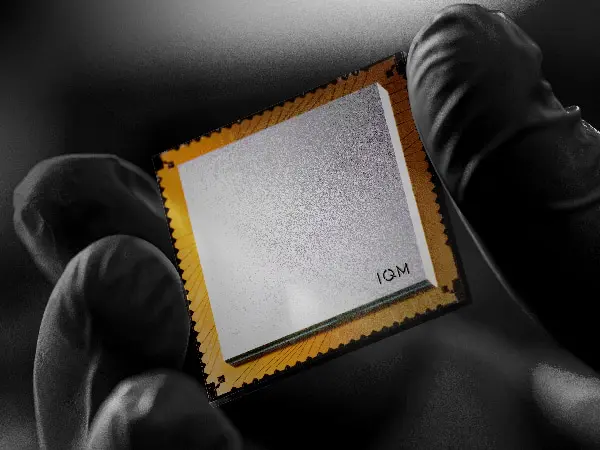
Superconducting qubits are tiny electrical circuits that lose all resistance when cooled near absolute zero. At those temperatures the circuit can hold a fragile quantum state and act as the basic unit of quantum information. Jan Goetz spent his early research years probing how these states interact with microwave photons, the same physics that later forms the operating basis of a working quantum processor.
This grounding matters because superconducting qubits remain one of the leading routes to large-scale quantum computing. The technical vocabulary he learned in the lab, covering coherence, control pulses, and readout, became the language of the company he would build. His credibility with engineers and physicists rests heavily on that hands-on background.
From measurement to manufacturing
The gap between measuring a single circuit and manufacturing reliable processors is enormous, and Jan Goetz has spent years working to close it. A research device can be coaxed into working once for a publication, while a product must perform consistently for paying customers. That distinction shaped how he approached the company he later founded.
Jan Goetz often points out that scaling quantum hardware is as much an engineering and supply-chain problem as a physics problem. Fabrication yield, cryogenic cooling, and control electronics all have to improve together for systems to grow. His background gave him the technical fluency to lead those parallel efforts inside a company.
The move from Munich to Helsinki
After completing his doctorate, Jan Goetz moved to Finland in 2017 to continue research at Aalto University, joining the country’s strong community of quantum and low-temperature physicists. Finland had invested for decades in cryogenics and superconducting electronics, which gave the region a deep talent base. That environment proved decisive for what came next.
While in Helsinki, Jan Goetz and his co-founders saw an opening to commercialize superconducting quantum hardware rather than keep it confined to academic experiments. The combination of Aalto University and the VTT Technical Research Centre of Finland offered both the science and the fabrication know-how needed to attempt it. In 2018 that vision became IQM.
The move illustrates a recurring theme in the career of Jan Goetz, a willingness to follow the technology to wherever it can best be built. He left a familiar German research base for a smaller but specialized Finnish ecosystem. That bet on location and talent would later look prescient as IQM grew.
Why Finland became the base
Finland offered a rare concentration of cryogenic and microwave engineering talent, much of it nurtured around Aalto University and national research institutes. Jan Goetz could draw on physicists who already understood the demands of operating circuits near absolute zero. That existing expertise lowered the risk of trying to build hardware from scratch.
The decision also reflected access to supportive public funding and a national interest in quantum technology. Finnish institutions were prepared to back an ambitious hardware venture at an early stage. Jan Goetz used that environment to assemble a founding team and the first fabrication capabilities IQM would need.
He did not found the company alone. Jan Goetz built IQM with the physicist Mikko Möttönen, its co-founder and an Academy Professor at Aalto University, along with
Building IQM into a European hardware company
Jan Goetz co-founded IQM Quantum Computers in 2018, spinning it out of Aalto University and the VTT Technical Research Centre of Finland. The company set out to design and manufacture complete superconducting quantum computers rather than just individual chips. From its Espoo headquarters it has grown into one of the larger quantum hardware employers in Europe, with a workforce numbering in the hundreds.
On-premises machines for supercomputing centres
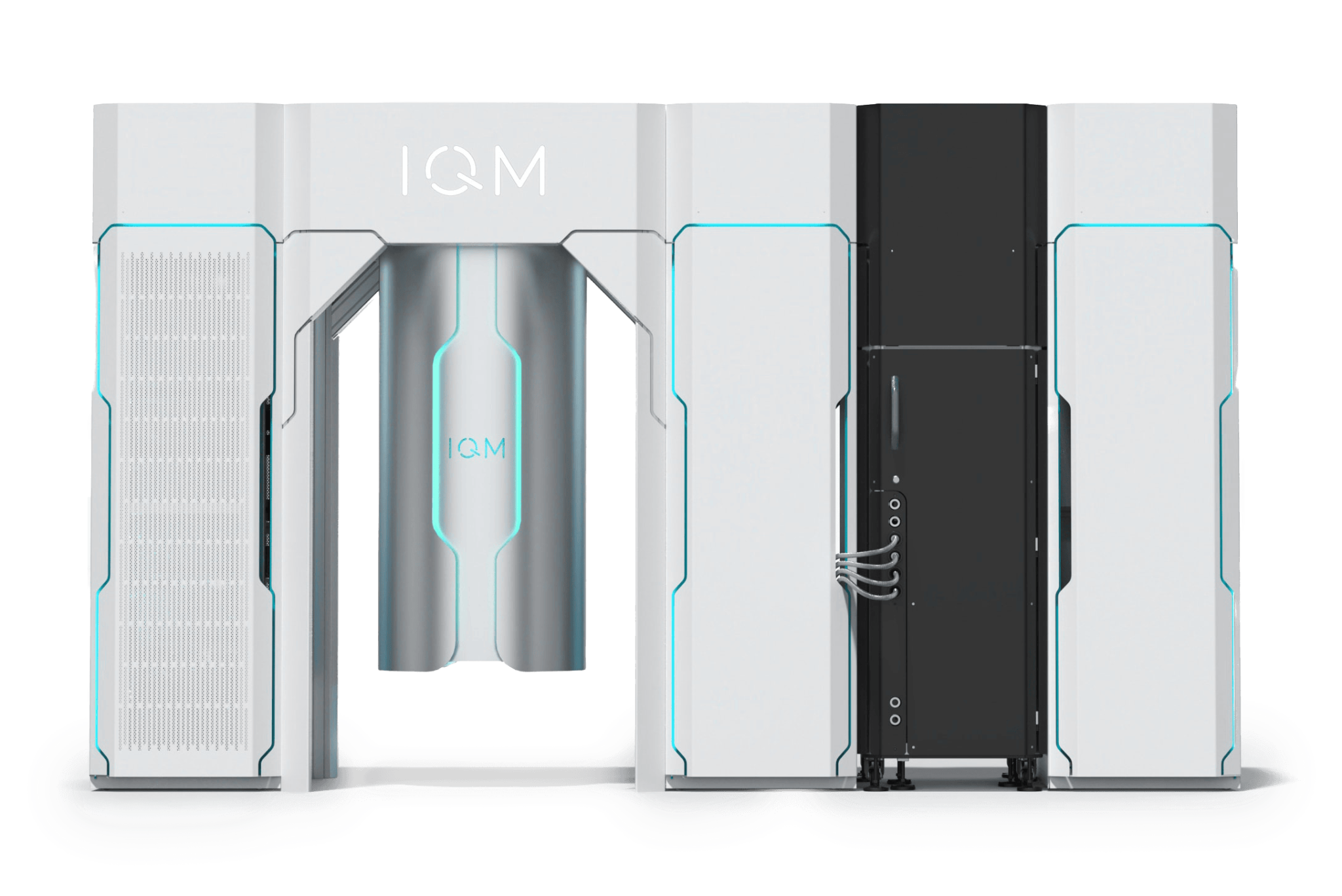
A central part of IQM’s strategy under Jan Goetz is selling on-premises quantum computers to high-performance computing centres. Rather than only offering cloud access, IQM installs physical machines inside customer facilities so they can be integrated with classical supercomputers. By the time it went public, the company said it had sold 23 quantum computers worldwide, more than any other quantum hardware manufacturer.

The strategy rests on a belief that useful quantum computing will arrive through tight coupling with existing infrastructure rather than in isolation. Placing a quantum processor beside a supercomputer lets researchers test hybrid workflows where classical and quantum resources share a problem. Jan Goetz has framed this integration-first approach as the practical path to adoption.
The product family from Spark to Radiance
IQM has organized its hardware into named systems aimed at different markets. The IQM Spark is a compact five-qubit machine pitched at universities, and it drew attention as one of the first quantum computers. That price point helped Goetz argue that hardware, not just cloud time, could reach a broad research market.
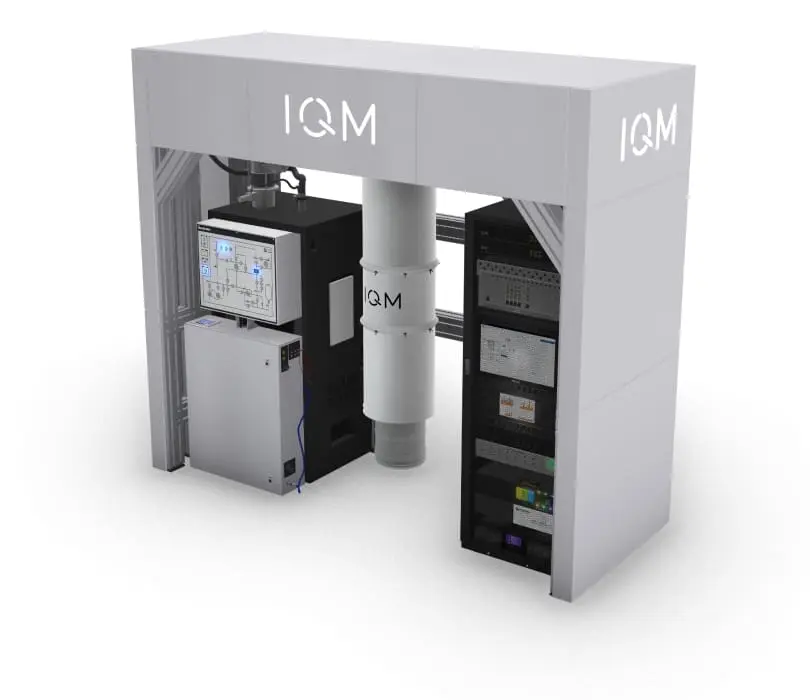
At the high end sits IQM Radiance, a research-grade on-premises system offered in configurations that have scaled from 20 to 54 and on toward 150 qubits. The company also runs a cloud service called Resonance and a line named Halocene aimed at error-correction work. This range lets IQM serve universities, national labs, and industrial partners with very different needs.
By owning the full stack, from chip design through control software, IQM can tune its systems for reliable delivery rather than relying on outside vendors. Goetz has argued that this vertical control is what allows a young company to ship working machines on a predictable schedule. It also gives IQM a tighter feedback loop between what customers report and what its engineers build next.
Machines installed across Europe, Asia and the United States
The clearest evidence for the strategy of Goetz is the map of places running IQM hardware. Working with VTT, the company delivered the first 50-qubit superconducting quantum computer developed in Europe, and it has since contracted to supply VTT with a 150-qubit machine in 2026 and a 300-qubit error-correction system in 2027. These Finnish machines anchor IQM’s home base and serve as proving grounds for new designs.
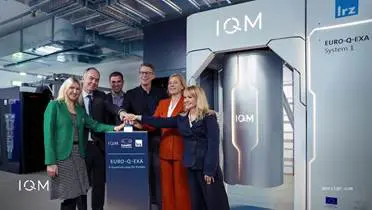
Germany has become a second heartland for the company, with IQM systems tied to national supercomputing efforts and European high-performance computing programmes. Goetz has repeatedly pointed to these German installations as proof that public computing centres want quantum resources on site. The deployments also deepen IQM’s ties to the country where its chief executive was trained.
Beyond the two anchor markets, IQM has placed systems more widely across the continent. It deployed Poland’s first superconducting quantum computer at a university in Wroclaw, and it supplied a Radiance machine that became one of Italy’s most powerful quantum computers in Bologna. Each installation extends the reach that Goetz uses to argue that European demand is genuine.
The company has also pushed into Asia, forming partnerships to distribute superconducting systems in Japan and elsewhere in the region. These deals matter because they show IQM competing for customers well outside its European base. For Goetz, an international order book strengthens the case that the company can scale as a global supplier rather than a regional champion.
Taken together, the installations span more than a dozen customers, including several of the largest supercomputing centres in Europe. Each machine is not only a sale but a long-term relationship, since IQM maintains and upgrades the systems it installs. Goetz treats that installed base as the company’s most durable asset, because it turns one-off orders into recurring engineering partnerships.
Under Goetz, IQM raised more than 600 million dollars in private capital before its public listing, placing it among the best-funded quantum companies in Europe. A 128 million euro round in 2022 was among the largest raised by a European quantum hardware developer at the time. A later Series B in 2025 brought in roughly 275 million euros, led by Ten Eleven Ventures alongside the Finnish state investor Tesi.
The scale of that backing reflects both ambition and the capital intensity of building quantum hardware. Fabrication, cryogenics, and control electronics all demand heavy upfront investment before revenue arrives. Goetz used the funding to expand headcount into the hundreds and to widen IQM’s geographic footprint across Europe and Asia. In December 2025 the company also signed a 50 million euro venture debt facility with Kreos Capital VII, a BlackRock-owned lender. Only 5 million euros of it was ever drawn, and IQM repaid the facility in full by 31 July 2026.
The road to the public markets
In 2026 IQM moved toward the public markets through a business combination with Real Asset Acquisition Corp, a special purpose acquisition company listed on Nasdaq. The deal valued IQM at roughly 1.9 billion dollars and cleared a shareholder vote in June 2026. For Goetz, the transaction turned a long-running private venture into a listed company almost overnight.
Trading began in early July 2026, with IQM’s American depositary shares changing hands on the Nasdaq Global Select Market under the ticker IQMX and its warrants under IQMX WS. The company also listed in parallel on Nasdaq Helsinki, where trading in its shares began on 3 July 2026, keeping a foot in its Finnish home market. The transaction left IQM with a pro forma cash position of around 337 million euros to fund its next phase.
Quantum computing is reaching an inflection point. Around the world, organizations are moving from exploration to implementation, investing in quantum infrastructure and building the capabilities that will define the next generation of computing.
Goetz, as IQM began trading on Nasdaq, July 2026
What the listing means
Going public raises the bar on disclosure and on the pressure to show revenue and customer growth. IQM’s own prospectus acknowledged the uncertainty of the field, warning that large-scale commercial traction of quantum computing may never occur. IQMX opened at $12.76 on 2 July 2026 and closed its first session at $13.03, against a deal reference price of $10.00.
Goetz has answered the skepticism by pointing to IQM’s order book and its supercomputing partnerships as evidence that demand is already real. He has argued that the company enters the market from a position of strength rather than hope. The listing, in his telling, is a milestone in a longer plan rather than a finish line.
IQM enters the public markets from a position of strength, with leading technology, a growing global customer base, and a clear strategy for scaling the commercial adoption of quantum computing.
Goetz, on IQM’s Nasdaq debut, July 2026
The first machines outside Europe
The deployments that followed the listing took the company off its home continent for the first time. IQM named Oak Ridge National Laboratory as the site of its first quantum computer in the United States, and announced a first enterprise purchase in Japan by Toyo Corporation, alongside a quantum technology centre in Maryland. For a company whose pitch has been European sovereignty, selling into the United States and Japan is a different argument, and it is the one Goetz now has to make.
The pattern is the same as it was in Europe. The buyer takes delivery of a machine and runs it on its own floor, rather than queueing for time on somebody else’s. What changes is that the sovereignty framing, which worked well with European ministries funding European capability, becomes a straightforward argument about control and latency when the customer is American or Japanese.
The people around him
A listed company needs a deeper bench than a startup, and the months around the listing brought one. Craig Ciesla joined as chief technology officer from Illumina in June 2026, and Inés de Vega became chief scientist in the same announcement. The post-listing board runs to seven members under the chair Bernd Pötting, with Goetz among them.
That matters for how the company is read from outside. A founder-chief-executive with a doctorate in the underlying physics is a familiar figure in quantum computing, and so is the moment when such a company hires professional managers around the founder. Goetz has kept the chief executive role while handing the technical leadership to people who did not build the thing.
How he compares with the other founders in this field
Quantum hardware is unusually full of physicist-executives, and the comparison is instructive. John Martinis built Google’s superconducting effort and left it, Jay Gambetta runs IBM’s programme from inside a much larger company, and Alan Baratz leads D-Wave, which sells a different kind of machine entirely. Hartmut Neven founded the Google effort Martinis later joined.
What separates Goetz from most of them is the business model rather than the physics. IBM and Google sell access to machines they keep. IQM sells the machine and walks away, which makes its revenue lumpy, its customer list short and public, and its manufacturing capacity the thing that limits growth. Dario Gil at IBM is running the opposite experiment at far greater scale.
Sole chief executive and leadership style
Goetz led IQM for years within a co-chief-executive structure before taking sole charge at the start of 2026. From 2024 the top job had been split between Goetz, who handled external relations and fundraising, and Mikko Vaelimaeki, who ran commercial operations. On the first of January 2026 the board consolidated the role, naming Goetz the single chief executive.
The reshuffle came with other changes to the leadership team as the company prepared for public markets. Mikko Vaelimaeki stepped back from the commercial role and stayed on as an adviser into early 2026, while Soeren Hein joined as chief operating officer and deputy chief executive. IQM’s chairman, Sierk Poetting, described the move to a single chief executive as a sign of the organization’s maturity.
IQM is well positioned to meet the evolving needs of AI-driven organisations and high-performance computing centres.
Goetz, on becoming sole CEO of IQM, January 2026
From shared command to sole chief executive
The earlier co-leadership model let Goetz concentrate on investors, partnerships, and the public case for European quantum technology. Taking the sole top role placed full strategic responsibility for IQM on him weeks before the listing. It also made him the clear single point of accountability as the company moved toward its Nasdaq listing.
Colleagues describe his style as a mix of technical depth and persistent salesmanship for the whole European quantum cause. Goetz tends to frame IQM’s progress as evidence for what the region can achieve rather than as a single-company story. That broader framing has helped him build alliances across labs, governments, and industry groups.
Recognition and public roles
His work has drawn notable recognition in the German and European business community. Handelsblatt named Goetz Founder of the Year in 2023, and WirtschaftsWoche later listed him among a group of executives seen as shaping Germany’s future. Those honours arrived as IQM was selling its first sub-million-euro machines and posting Europe’s largest quantum funding round.
Goetz served on the board of the European Innovation Council from 2021 to 2023 and is now an EIC Ambassador and holds a board seat in the European Quantum Industry Consortium, roles that place him inside European quantum strategy. He is frequently invited to speak on how the continent can compete with heavily funded American and Asian programmes. That public profile has made Goetz one of the recognizable faces of European quantum entrepreneurship.
Where IQM sits in the wider quantum field
IQM competes in a crowded race to build practical quantum hardware, alongside large technology firms and a growing set of specialized startups. The superconducting approach that Goetz champions is shared by some of the field’s best-known players, so the company competes on engineering quality, cost, and delivery. Its European base also gives it a distinct position in conversations about technological sovereignty.
The company’s focus on selling installed machines to supercomputing centres sets it apart from rivals that emphasize cloud access alone. By embedding quantum processors next to classical supercomputers, IQM aims to make hybrid quantum-classical workflows easier to test. This strategy reflects the belief of Goetz that real adoption will come through integration with existing computing infrastructure.
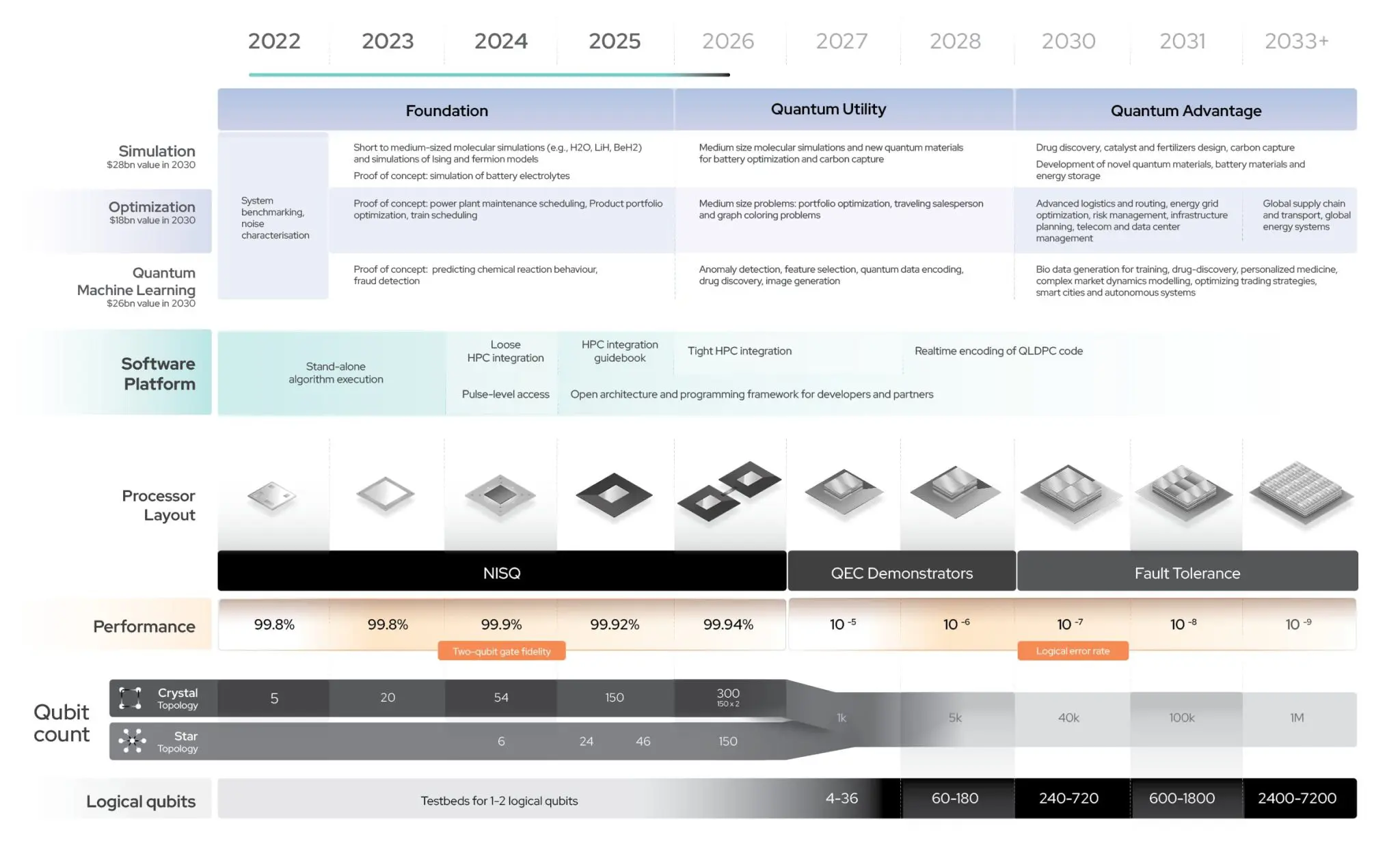
Like the rest of the field, IQM must still cross the long distance to fault-tolerant machines that correct their own errors. The company has published a roadmap that targets fault tolerance around the end of the decade, leaning on error-correcting codes that promise to cut the qubit overhead of older schemes. Goetz treats that roadmap as a commitment rather than a marketing slide.
The superconducting route that IQM follows is only one of several competing bets, with trapped ions, neutral atoms, and photonics all chasing the same prize. Each approach trades away something, whether speed, connectivity, or ease of cooling, and no single design has yet proven decisive. Goetz argues that superconducting circuits offer the clearest path to manufacturable systems, because they draw on fabrication techniques already refined by the semiconductor industry.
European policymakers increasingly treat domestic quantum hardware as a strategic asset rather than a nice-to-have. That climate has worked in IQM’s favour, giving it access to public funding and supportive procurement. Goetz has been deliberate about aligning the company with this push for technological independence.
The listing also put numbers on the business for the first time. IQM reported revenue of 31.3 million euros for 2025 against 16.4 million the year before, a net loss of 54.4 million euros, and an accumulated deficit of 232.2 million euros at the end of December 2025. Those are the figures a chief executive now has to explain every quarter.
Why Jan Goetz matters in quantum computing
Goetz matters because he represents a credible attempt to build a globally competitive quantum hardware company from a European base. He combines genuine experimental expertise in superconducting circuits with the commercial drive needed to raise hundreds of millions and ship physical machines. That blend is rare, and it has made IQM a reference point for European deep-tech ambition.
His career also illustrates how foundational quantum research can move from a university laboratory into industry within a single generation. The circuits Goetz once measured at a low-temperature institute now form the core of products sold to national computing centres. That arc shows how quickly the field has matured from pure science toward commercial systems.
The Nasdaq listing has sharpened the test he faces, because IQM must now prove its case in public view. Whether the company can convert its order book into durable revenue will help decide whether Europe can hold its own in the hardware race. Goetz has staked his reputation on the belief that it can.
For anyone following quantum computing, Goetz is one of the people whose decisions will shape the outcome because his decisions will shape a large part of the European story. The outcome of IQM’s growth and public listing will offer a real measure of that ambition. Whatever happens, his work has already helped put European superconducting quantum hardware firmly on the map.
Quantum Zeitgeist does not provide personal investment or financial advice, and does not act as a personal financial, legal, or institutional investment adviser. We do not individually advocate the purchase or sale of any security or investment, or the use of any particular financial strategy, and all investment strategies carry the risk of loss for some or even all of your capital.
Before pursuing any financial strategy discussed here, or relying on information within this website, you should always consult a licensed financial adviser. Any analysis we provide is for informational purposes only, does not take your circumstances into account, and should not be treated as an individualised recommendation, since the securities mentioned may not be suitable for all investors.
Frequently asked questions
Who is Jan Goetz?
What company did Jan Goetz co-found?
What did Jan Goetz study?
Is IQM a public company?
How much funding did IQM raise before listing?
What kind of quantum computers does IQM build?
How many quantum computers has IQM sold?
When did Jan Goetz become sole CEO of IQM?
What recognition has Jan Goetz received?
Why is Jan Goetz important to quantum computing?


See today’s quantum computing news on Quantum Zeitgeist for the latest breakthroughs in qubits, hardware, algorithms, and industry deals.