IQM Quantum Computers is the Finnish company that builds superconducting quantum computers and sells them outright, installing full machines inside universities, supercomputing centres and national labs rather than renting time on a distant cloud. Founded in 2018 as a spin-out from Aalto University and Finland’s VTT research centre, IQM has grown into one of Europe’s flagship quantum-hardware makers, and it is now preparing to become the first European quantum computing company to list on a major United States exchange. This is the commercial history of IQM Quantum Computers, from a Helsinki-area startup to a Nasdaq listing under the ticker IQMX.
1. A Finnish superconducting pioneer. IQM Quantum Computers was founded in 2018 as a spin-out from Aalto University and VTT, and it builds superconducting quantum computers from its base in Espoo, near Helsinki.
2. It sells whole machines. Unlike rivals that offer only cloud access, IQM specialises in on-premises systems, delivering complete quantum computers that customers own and run inside their own data centres.
3. Real commercial traction. By the end of 2025 IQM had sold 23 quantum computers and delivered 18 of them, with installations across Germany, Finland, Poland, Spain, Italy and beyond.
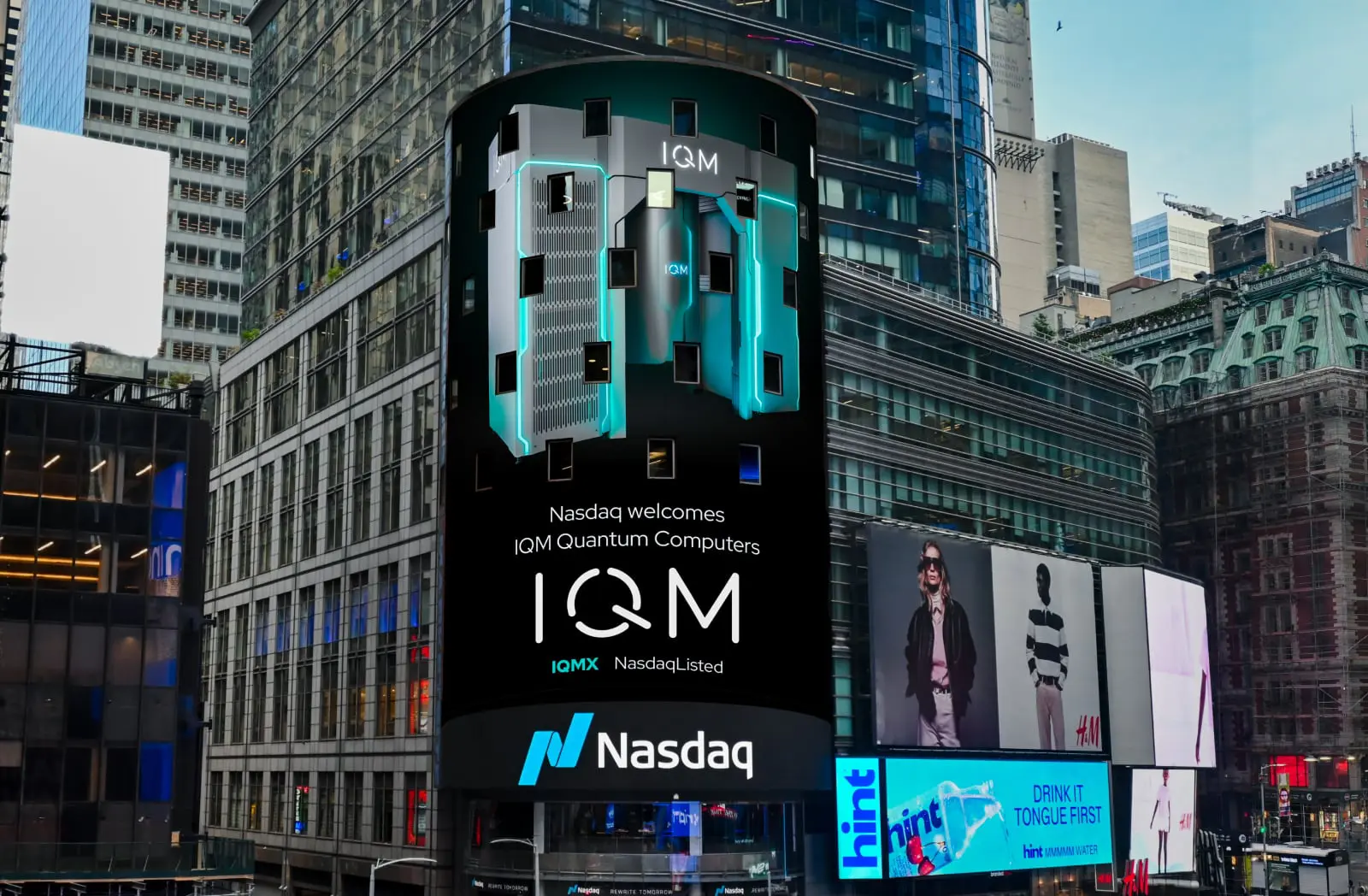
4. A completed Nasdaq listing as IQMX. IQM combined with the listed shell Real Asset Acquisition Corp and began trading as IQMX on the Nasdaq on 2 July 2026, the first European quantum computing company to list on a major United States exchange.
5. The listing brought cash. IQM’s listing announcement of 2 July 2026 put the pro forma cash position at 337 million euros. The company says it had raised more than 600 million dollars privately before listing.
6. A clear technology roadmap. IQM sells the Spark, Radiance and cloud-based Resonance products, built on its Crystal and Star processor designs, and it has published a roadmap toward fault-tolerant machines by 2030.
What IQM Quantum Computers does
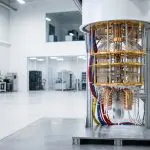
IQM Quantum Computers designs and builds quantum computers based on superconducting qubits, the same broad approach used by IBM and Google, in which tiny circuits cooled to near absolute zero behave as controllable quantum bits. The company makes the full stack, from the quantum processor and its cryogenic plumbing to the control electronics and software, and it ships that hardware as a complete, installed system. Its customers are the research institutions, universities, high-performance computing centres and national labs that want a quantum machine of their own rather than a slice of someone else’s.
That focus on owned, on-premises hardware sets IQM apart in a field where most providers sell only remote access. IQM sits firmly in the superconducting quantum computing camp, and it positions itself as Europe’s answer to the American hardware giants, supplying machines that European governments and HPC centres can host inside their own borders. The pitch is sovereignty as much as performance, giving buyers physical control over the quantum systems they depend on.
Origins as an Aalto and VTT spin-out
IQM began in 2018 when a group of physicists spun the company out of Aalto University and the VTT Technical Research Centre of Finland, two institutions at the heart of the country’s strong quantum-physics tradition. The founders, including current chief executive Jan Goetz and longtime academic Mikko Mottonen, set out to commercialise the superconducting-qubit research that Finland had built over years of public investment. From the start the plan was to make and sell real machines, not just to publish results.
The company grew quickly from that academic base into a serious industrial operation employing more than three hundred people, with engineering in Finland and a commercial reach that now spans Europe, Asia and North America. Jan Goetz, a co-founder, serves as chief executive, consolidating leadership as IQM moved from a research-led startup toward a public company. That transition from laboratory roots to a structured corporate organisation is a recurring theme in IQM’s commercial story.
Why IQM sells whole machines
The strategic choice that defines IQM is its bet on on-premises hardware. Most quantum companies have gravitated toward the cloud, where one machine serves many users over the internet, because it is easier to operate and to monetise. IQM took the opposite view, arguing that the biggest buyers, supercomputing centres and governments, would want quantum computers physically installed alongside their classical machines, both for performance and for control over sensitive workloads.
That decision shapes everything from the product design to the sales motion. Selling a whole machine means IQM has to deliver, install and support complex cryogenic systems on customer sites, a harder business than offering an account on a website. It also means each sale is large and visible, and it ties IQM closely to the wave of national quantum programmes funding such installations across Europe. The approach has made IQM one of the most active sellers of physical quantum computers in the world, even as the cloud model dominates headlines elsewhere.
The product line, from Spark to Radiance
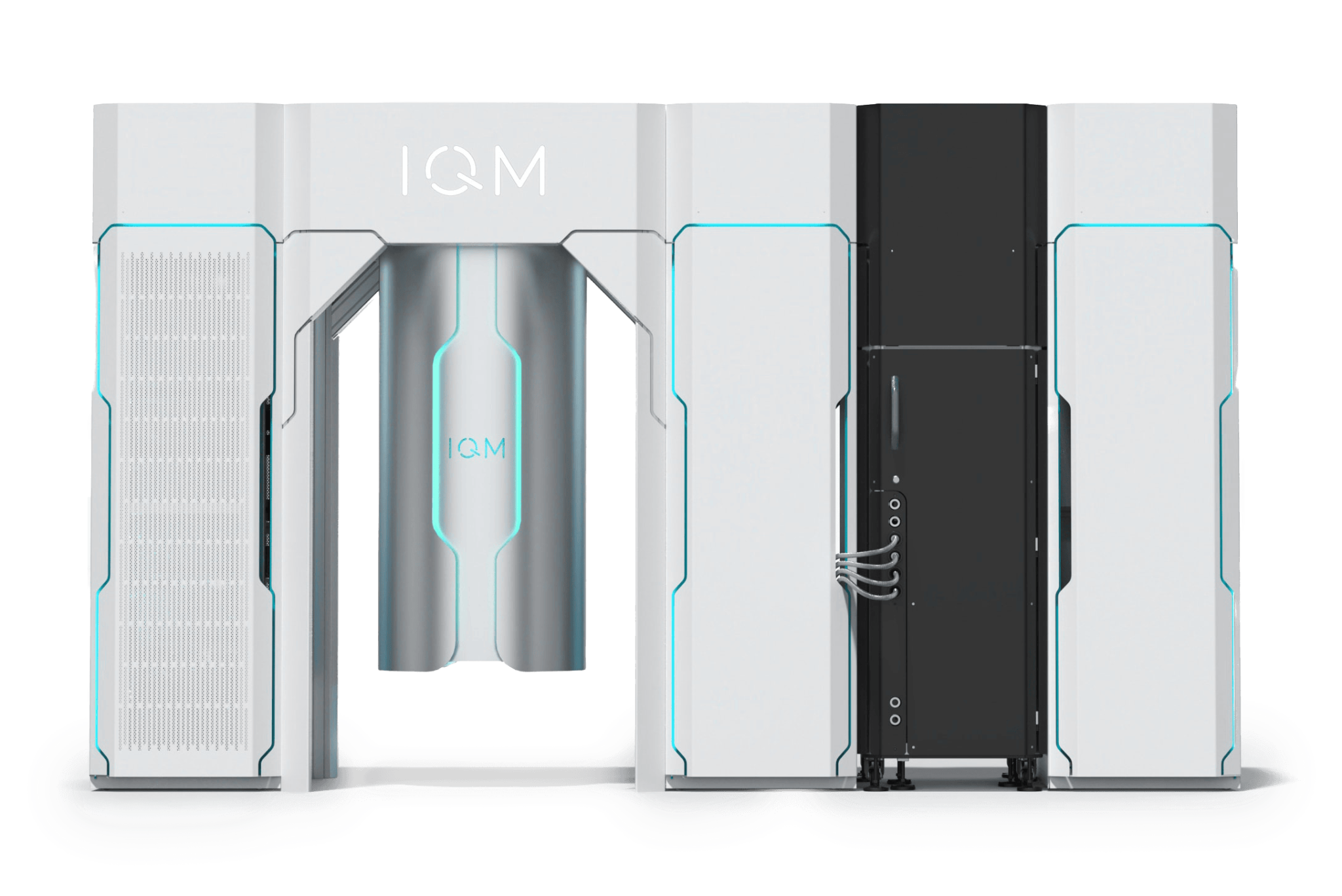
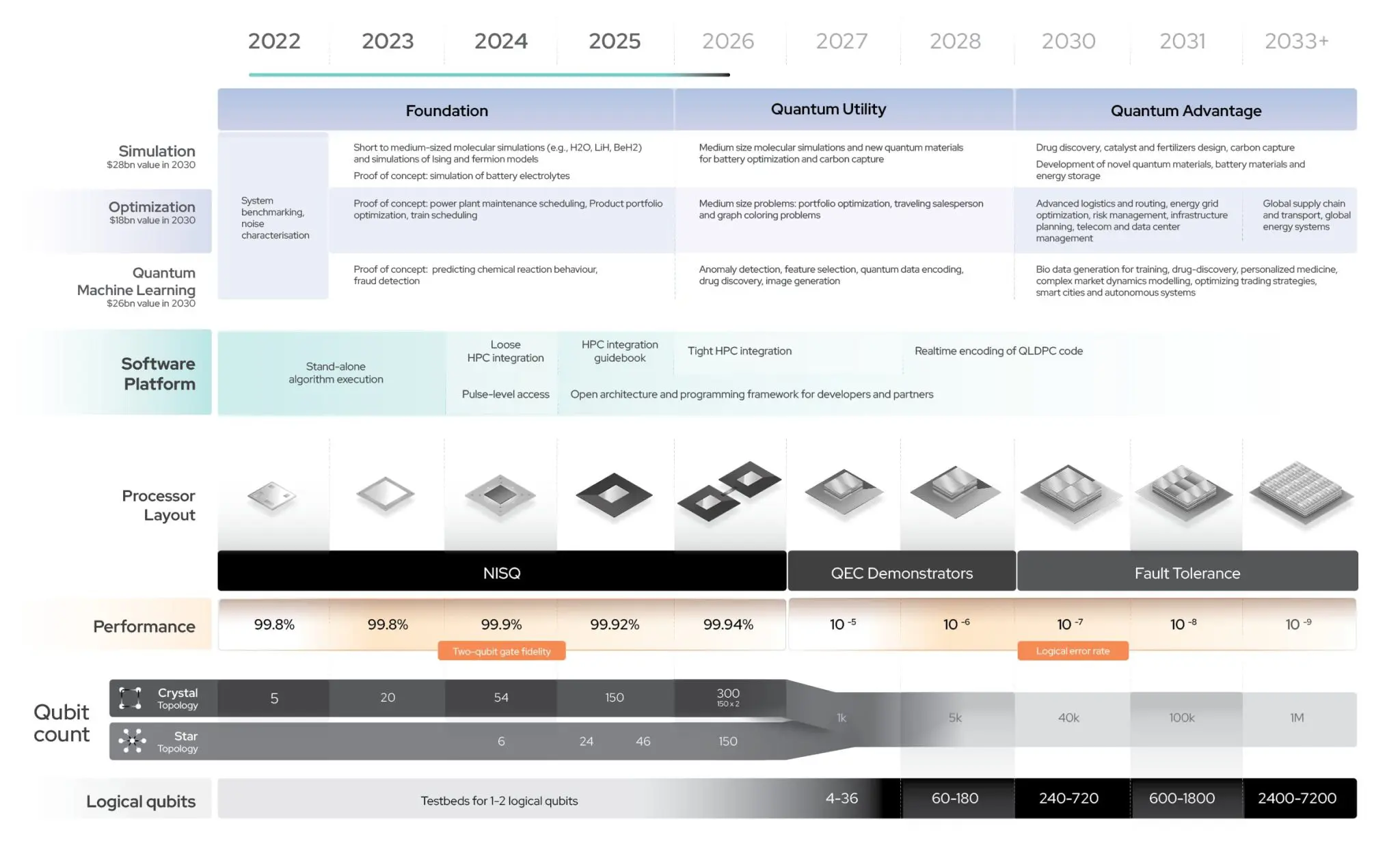
IQM has built a tiered product family so that buyers of very different sizes can host a machine. At the entry level sits IQM Spark, a compact five-qubit system aimed at universities and teaching labs that want hands-on quantum hardware without a major facilities project. At the top of the range is IQM Radiance, the flagship line offered in larger configurations of twenty, fifty-four and one hundred and fifty qubits, designed to slot into high-performance computing centres as a computational node.
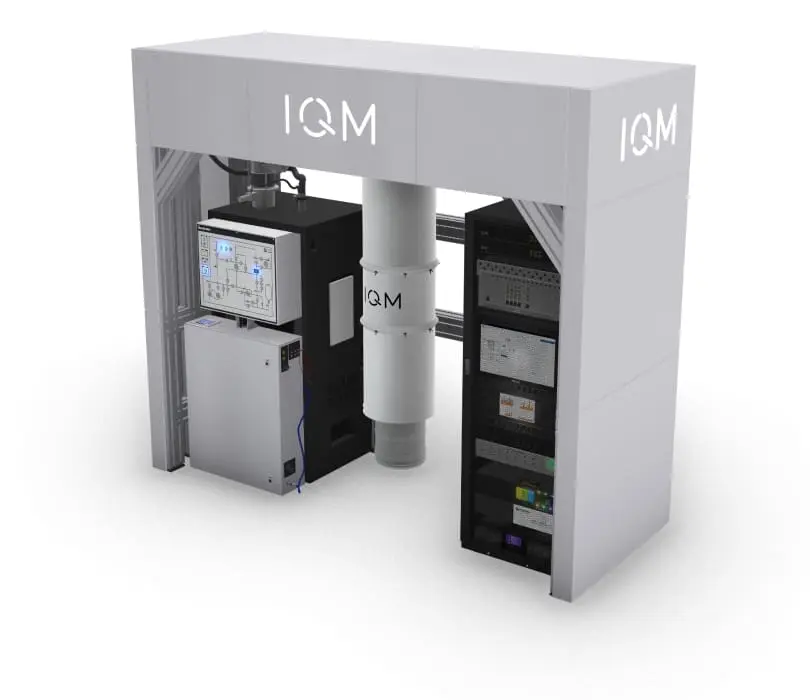
Alongside the on-premises machines, IQM runs a cloud service called IQM Resonance, which gives developers remote access to its systems and tooling without buying hardware. Resonance lets researchers run jobs on a hosted machine, learn the platform and prototype algorithms, and it acts as an on-ramp for customers who may later buy a system of their own. Together the Spark, Radiance and Resonance offerings let the company meet a customer wherever they are, from a single teaching lab to a national supercomputing facility.
Crystal, Star and the road to error correction
Underneath the products are two complementary processor designs that IQM has named Crystal and Star. Crystal is a square-lattice layout in which each qubit connects to its nearest neighbours and gates run in parallel, an arrangement that has reported two-qubit gate fidelity of 99.93 per cent in internal demonstrations. Star takes a different shape, using a central computational resonator to link many qubits with high connectivity and fewer gates, which can make some algorithms cheaper to run.

The longer game is fault tolerance, the point at which a quantum computer can correct its own errors and run indefinitely. IQM has published a roadmap toward that goal by the end of the decade, and it has argued that its quantum low-density parity-check approach can need far fewer physical qubits than the conventional surface code, claiming an eightfold reduction in qubit overhead. It has also worked with partners such as NVIDIA on the real-time decoding that error correction demands, and it markets a dedicated error-correction product line under the Halocene name.
Commercial milestones and deployments
IQM has spent the past few years turning its technology into a string of real installations. It deployed Europe’s first EuroHPC quantum computer and brought a fifty-four-qubit machine online at the CESGA centre in Spain, and it has since gone live at CINECA in Italy and at universities in Poland. The company also pushed beyond Europe, sealing its first Asia-Pacific deal in Japan and landing a first private enterprise sale alongside its public-sector wins.

- 2018IQM is founded as a spin-out from Aalto University and VTT in Finland.
- 2023IQM closes a large Series A round and ships systems to European HPC centres.
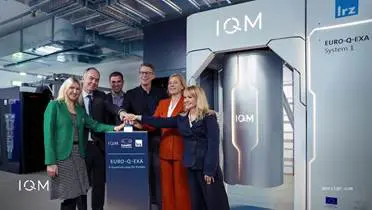
- 2024The Euro-Q-Exa machine launches at the Leibniz Supercomputing Centre in Munich.
- 2025IQM raises a large Series B and reports the most on-premises systems shipped in its field.
- 2026Jan Goetz leads IQM through its Nasdaq listing.
- 2026IQM completes a business combination with Real Asset Acquisition Corp and begins trading on the Nasdaq as IQMX on 2 July.
One deployment captures the strategy especially well. At the Leibniz Supercomputing Centre near Munich, IQM installed the Euro-Q-Exa machine as part of a European push to pair quantum processors with classical supercomputers, a flagship example of the on-premises model in action. Each such site is both a reference customer and a proof that the company can deliver a working machine into a demanding national facility.
IQM funded its rise through some of the largest private rounds in European quantum computing. It raised successive venture rounds that took its total backing well past half a billion euros, including a Series B in 2025 that ranked among the biggest quantum raises outside the United States. The company also secured a fifty-million-euro debt facility to fund research and growth, broadening its sources of capital beyond equity alone.
That war chest paid for the engineering, the manufacturing and the global expansion that a hardware company demands, but private capital has limits. Building and shipping cryogenic machines is expensive, and a public listing offers a deeper, more permanent pool of funding plus a currency for future deals. By 2026 IQM had decided that the next stage of its growth would be financed in the public markets, setting up the listing that now defines its near-term story.
The IQMX listing on the Nasdaq
IQM completed its business combination with Real Asset Acquisition Corp and has traded on the Nasdaq Global Select Market under the ticker IQMX since 2 July 2026. Nothing here is investment advice, and anyone acting on any of it should check the company’s current filings first.
IQM went public through a business combination with Real Asset Acquisition Corp, a special purpose acquisition company that traded under the ticker RAAQ. Under the agreement struck in early 2026 the two firms merged, and the combined business listed on the Nasdaq, where it trades under the symbol IQMX. The companies have framed the deal as making the company the first European quantum computing company to list on a major United States exchange, a milestone for the region’s quantum industry.
The transaction is done. The United States securities regulator declared the registration statement effective in mid-2026, Real Asset Acquisition Corp shareholders approved the combination on 25 June 2026, and IQMX began trading on 2 July 2026. Reported terms value the company at roughly 1.8 billion dollars before the new money, a figure that reflects investor appetite for European quantum hardware as much as the company’s current revenue.
The cash side of the deal matters as much as the valuation. IQM projected a cash position of up to 477 million dollars before redemptions were known. After redemptions the company reported net proceeds from the combination and the private placement of 198.7 million euros, and put its pro forma cash position at 337 million euros in its listing announcement of 2 July 2026. IQM also listed on Nasdaq Helsinki, where trading in its shares began on 3 July 2026. You can follow each step through Quantum Zeitgeist’s coverage of the SEC clearance and the road to the listing.
How the listing was actually done
The route to the Nasdaq was not a conventional initial public offering. The company combined with Real Asset Acquisition Corp, a special purpose acquisition company, and the merged business began trading on the Nasdaq Global Select Market under the ticker IQMX on 2 July 2026. That mechanism has been the usual door onto American public markets for quantum hardware firms, and it is how several of the sector’s other listed names arrived.
What the transaction supplied was cash rather than prestige. IQM’s own listing announcement of 2 July 2026 gave the listing cited a pro forma cash position of 337 million euros, on top of more than 600 million dollars raised across earlier private rounds, on the company’s own figure. For a company whose product is a physical machine that has to be manufactured, shipped and installed, that balance is the constraint that decides how many systems it can build at once.
What being listed changes
A private company can miss a delivery date quietly. A listed one reports quarterly, and its roadmap becomes a set of public commitments against which it will be measured. That is the same discipline IBM took on when it began publishing quantum dates, and it cuts both ways, because a schedule that reassures customers also hands critics a calendar.
It also changes who the audience is. Until July 2026 the people who needed convincing were research directors and procurement officers at national laboratories. They still matter, and they still buy the machines, but the company now answers to holders of a listed security as well, and those two audiences do not always want the same things on the same timescale.
Buying software to sit on the hardware
Days after the listing the company announced it had acquired selected assets of Quantistry, a Berlin developer of cloud-based simulation software aimed at chemicals, materials, automotive and aerospace customers. We covered the Quantistry acquisition at the time. The logic is straightforward enough, in that a company selling whole machines to industrial buyers needs something for those buyers to run on them.
It is also a familiar pattern in this industry. Hardware vendors discover that the bottleneck is not the qubits but the absence of applications, and they start buying the application layer. Whether that works here will not be visible for some years, and nothing in the public record yet shows what the acquired software contributes commercially.
IQM Quantum Computers by the numbers
For anyone trying to place the company, a handful of facts frame IQM Quantum Computers better than any single headline. It is a hardware-first business whose value rests on how many machines it can sell and how quickly it can scale them toward error correction, rather than on near-term profit. Its progress is best read through system deliveries, processor milestones and, since July 2026, its public filings.
What comes next will decide whether IQM Quantum Computers becomes Europe’s anchor quantum-hardware maker or one strong player among several. The IQMX listing completed on 2 July 2026, the Radiance machines have to keep winning HPC slots, and the Crystal and Star roadmap has to deliver real error correction. You can follow the company’s own announcements on the IQM Quantum Computers official site, and track each development as it happens through Quantum Zeitgeist’s ongoing coverage.
Quantum Zeitgeist does not provide personal investment or financial advice, and does not act as a personal financial, legal, or institutional investment adviser. We do not individually advocate the purchase or sale of any security or investment, or the use of any particular financial strategy, and all investment strategies carry the risk of loss for some or even all of your capital.
Before pursuing any financial strategy discussed here, or relying on information within this website, you should always consult a licensed financial adviser. Any analysis we provide is for informational purposes only, does not take your circumstances into account, and should not be treated as an individualised recommendation, since the securities mentioned may not be suitable for all investors.
IQM Quantum Computers FAQ
What does IQM Quantum Computers do?
IQM Quantum Computers designs and builds superconducting quantum computers and sells them as complete, installed machines. Its customers are mainly universities, supercomputing centres and national labs that want to own and run a quantum computer on their own premises rather than rent cloud access.
What is the IQM stock ticker?
IQM trades on the Nasdaq Global Select Market under the ticker symbol IQMX. It completed its business combination with Real Asset Acquisition Corp and began trading on 2 July 2026, becoming the first European quantum computing company to list on a major United States exchange. Nothing here is investment advice.
Is IQM a public company yet?
IQM has been publicly traded since 2 July 2026. It agreed a merger with the listed shell Real Asset Acquisition Corp, whose shareholders approved the combination.
Where is IQM Quantum Computers based?
IQM is headquartered in Espoo, in the Helsinki region of Finland, where it was spun out of Aalto University and the VTT research centre in 2018. It also runs commercial operations across Europe, Asia and North America to support its global customers.
What technology does IQM use?
IQM builds quantum computers from superconducting qubits cooled to near absolute zero, the same broad approach used by IBM and Google. It uses two processor designs, the square-lattice Crystal and the resonator-centred Star, and it is working toward error-corrected, fault-tolerant machines.
How many quantum computers has IQM sold?
By the end of 2025 IQM had sold 23 quantum computers and delivered 18 of them to customers. Its installations span Germany, Finland, Poland, Spain and Italy, with further deals reaching into Asia, which makes it one of the most active sellers of on-premises quantum systems.
Why is the IQM listing significant for Europe?
IQM has positioned the deal as making it the first European quantum computing company to list on a major United States exchange. That gives Europe a flagship public quantum stock and a deeper pool of capital for a domestic hardware maker, in a field that American and Chinese firms have so far dominated.
How is IQM different from cloud quantum providers?
Companies such as IonQ and D-Wave reach most users through the cloud, whereas IQM specialises in selling whole machines that customers install and own. That on-premises model suits supercomputing centres and governments that want physical control of their quantum hardware rather than shared remote access.




See today’s quantum computing news on Quantum Zeitgeist for the latest breakthroughs in qubits, hardware, algorithms, and industry deals.