Quantum Galileo Interferometer Measures Falling Atom Interference
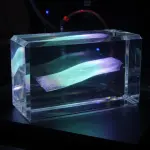
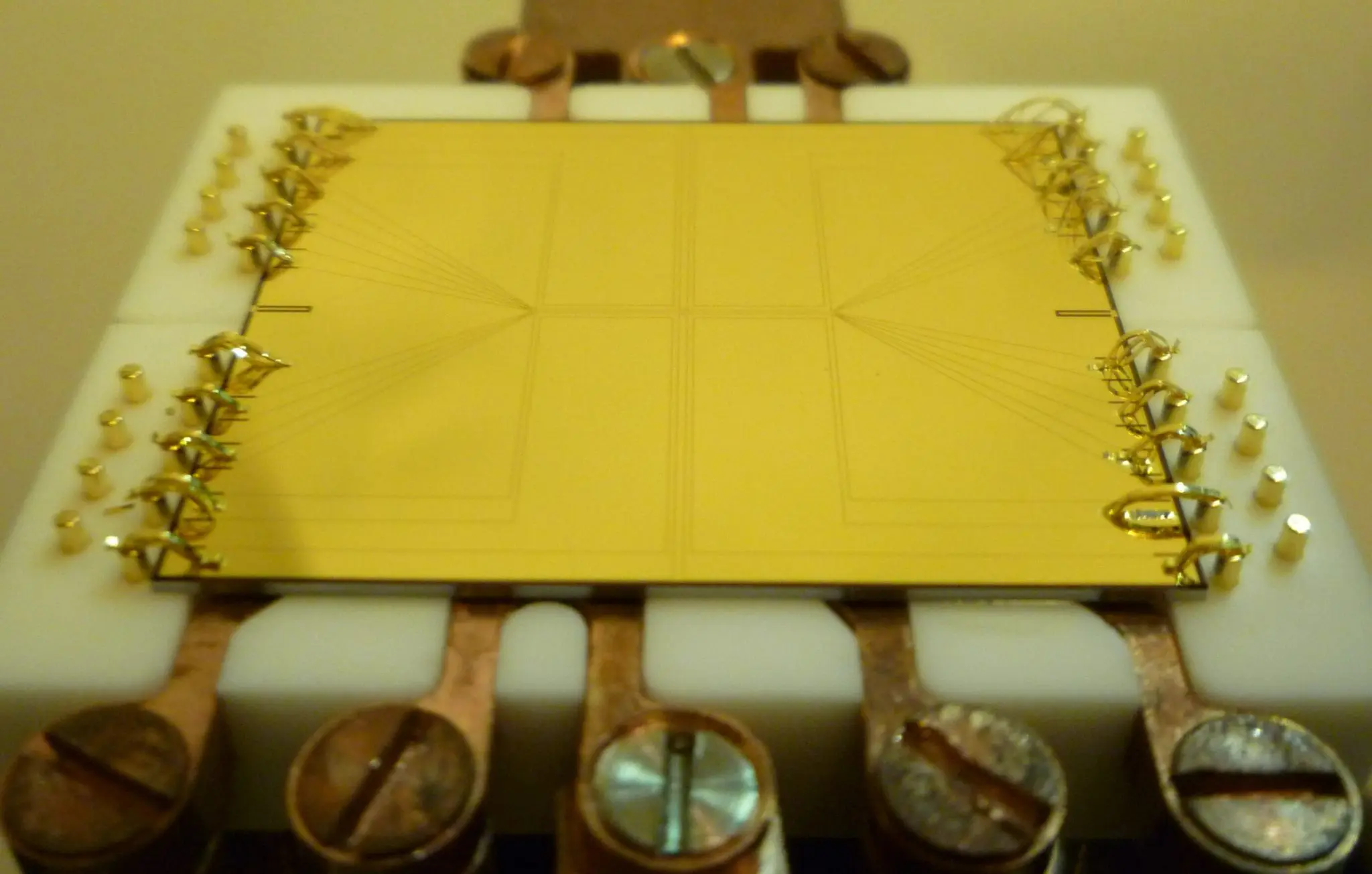
The experiment directly measured the quantum phase of freely falling atoms, a feat previously unachieved and confirming a key prediction of Einstein’s equivalence principle when applied to quantum objects. The atoms, cooled to just above absolute zero, were manipulated using microwave pulses and precisely controlled magnetic fields generated by an atom chip. Professor Vlatko Vedral at the University of Oxford explained the significance of the findings, stating, “We have no consistent theory telling us why quantum physics should fail.” This experiment pushes quantum mechanics into one of its most intriguing frontiers, gravity, and shows that, once again, its predictions hold. The Quantum Galileo Interferometer, named in homage to Galileo’s work on gravity, enabled the researchers to observe how gravity altered the falling wave, a subtle effect detectable through the interference pattern created when the two atomic waves were reunited. One portion of the atomic wave was held stationary using magnetic fields that counteracted gravity, while the other experienced a ballistic trajectory similar to a thrown ball, allowing for a direct comparison of their quantum phases. This work builds on over a century of reliance on quantum mechanics and Einstein’s theory of gravity, two extraordinarily successful but historically incompatible descriptions of nature. Lead author Professor Ron Folman of Ben-Gurion University of the Negev described the study as “a unique paper, in the sense that it combines a hard experiment with a far-reaching theoretical interpretation, about one of the most fundamental questions in physics: How can gravity (described by Einstein’s theory of relativity) and quantum theory be unified into one understanding of the universe?” The experiment did not achieve a full unification of these two theories, but rather demonstrated the consistency of Einstein’s equivalence principle within the quantum realm. The team’s technique represents a step towards more complex experiments involving heavier objects, including nanodiamonds, which could potentially test Professor Sir Roger Penrose’s hypothesis that quantum mechanics may break down for sufficiently massive objects in superposition. While the current experiment did not reach the necessary mass or timescale to evaluate Penrose’s theory, the researchers are already pursuing such investigations at Ben-Gurion University of the Negev. The international collaboration included researchers from the University of Oxford, the University of Southampton, the German Aerospace Center, the Institute of Quantum Technologies in Ulm, Universität Ulm, and Texas A&M University, highlighting the global effort to reconcile quantum mechanics and gravity. “Observation of the quantum phase of free fall and the consistency with the equivalence principle” will be published in Science Advances on September 2, 2026, further detailing the methodology and results of this study.We have no consistent theory telling us why quantum physics should fail. This experiment pushes quantum mechanics into one of its most intriguing frontiers, gravity, and shows that, once again, its predictions hold. Professor Vlatko Vedral, Department of Physics, University of Oxford
More like this

Quantum PhysicsBohr’s principle isn’t fundamental, new qubit study suggests
Quantum Physics2D Adelaide University arrays unlock quantum absolute magnetic field measurement
PhysicsResearchers Find Defects Induce Scale-Free Quantum Walk Localisation
PhysicsResearchers Build Superleak That Filters Quantum Gas Components
Stay current
See today’s quantum computing news on Quantum Zeitgeist for the latest breakthroughs in qubits, hardware, algorithms, and industry deals.