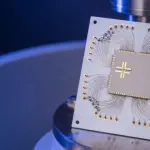
ORCA Computing’s PT-2 photonic quantum processor has been used to generate a 48-dimensional latent distribution for a malware detection model, offering a non-classical alternative to standard Gaussian distributions. Researchers at ST Engineering and ORCA Computing compared this quantum-derived distribution with classical Gaussian models, finding the quantum version exhibited “richer internal structure with better effective rank and latent similarity.” The work demonstrates that while final detection accuracy remained comparable to refined Gaussian models, the quantum-derived model benefited most from subsequent refinement using greedy and reinforcement-learning methods, suggesting a more malleable latent space.
Quantum PT-2 Data Refines Malware Detection Latency
Thesath Wijayasiri of ST Engineering, Omar Bacarreza and William Clements of ORCA Computing, alongside Kar Wai Fok and Vrizlynn L. L. Thing of ST Engineering, demonstrated differences while investigating the impact of latent distribution choice on generative anomaly detection. Their work, building on the SAGEGAN framework, focused on refining models trained exclusively on benign data to improve their ability to identify malicious files.
Across ten independent experimental runs, the team observed that optimization techniques yielded a greater mean improvement in the quantum-based model than in its Gaussian counterparts. The study’s approach centered on anomaly detection, where systems learn to recognize benign files and flag deviations as potential threats.
Generative approaches to this problem rely on a latent distribution, often Gaussian, to represent the core characteristics of normal files. Researchers questioned whether the choice of this prior distribution mattered and whether a quantum-generated distribution would behave differently. The team’s findings suggest that the structural properties of the quantum-derived latent space warrant further investigation, even if immediate gains in detection accuracy are not substantial. The observed differences in latent geometry and refinement behavior indicate that quantum data introduces a unique organization to the model’s understanding of benign files.
This is about potentially unlocking new avenues for improving the robustness and adaptability of malware detection systems. The research highlights a practical application of current quantum hardware beyond the well-trodden path of cryptography, demonstrating its potential to refine machine learning techniques.
SAGEGAN Architecture Enables Latent Style Vector Analysis
Researchers constructed two 48-dimensional configurations alongside a standard 512-dimensional Gaussian baseline, enabling a direct comparison of classical and quantum-derived latent spaces at matched dimensionality and style tensor sizes. The team’s approach focused on isolating the effect of the quantum data by creating a dimension-matched classical Gaussian prior with identical latent and style dimensionality.
This setup allowed for analysis of how the differing priors influenced the system’s ability to encode and refine representations of benign files. The encoder, generator, and discriminator components remained agnostic to the specific prior distribution used, ensuring a fair comparison of the resulting models.
Layer-wise style construction involves transforming a base latent vector, sampled from the selected prior, into seven layer-specific style vectors using learnable affine mappings. Further investigation involved latent optimization techniques applied directly to the layer-wise style tensors produced by the encoder’s analysis pathway. The team’s analysis extended to evaluating how well each configuration’s latent space could be refined using these optimization techniques.
The results indicated that the quantum-derived latent space, denoted PT48, exhibited a unique response to refinement, benefiting most from both the greedy search and the learned policy. “StyleGAN2 provides layer-wise synthesis controls and uses latent optimization to invert an input image,” the paper notes, framing this work as an extension of existing GAN inversion and generative anomaly detection techniques.
Photonic Qumodes Define Quantum Latent Space Width
This finding challenges the assumption that latent space dimensionality is the primary determinant of model performance in anomaly-based malware detection, and suggests quantum-generated data shapes the model’s understanding of benign files in a unique way. Researchers compared a 512-dimensional Gaussian reference, a 48-dimensional Gaussian configuration, and a 48-dimensional configuration using precollected measurements from an ORCA Computing PT-2 photonic quantum processor. The study compared the quantum-derived latent space, dubbed PT48, against a 512-dimensional Gaussian model and a 48-dimensional Gaussian control, all within the SAGEGAN architecture.
Each configuration used the same detector architecture and 7×48 style tensors, allowing for a direct comparison of the impact of the prior distribution itself. The PT-2 processor’s 48 measured output qumodes directly informed the base latent coordinates, creating a 48-dimensional vector before layer-wise style mappings were applied.
This approach ensured that the quantum data contributed directly to the model’s representation of benign files, rather than simply acting as a dimensionality reduction technique. The team found that PT48 consistently exceeded the performance of the 48-dimensional Gaussian model in terms of effective rank, a measure of the variation within the encoded benign files.
The greedy method, a non-learned control, established a baseline for the potential of local search within the latent space, while the reinforcement-learning methods explored more complex optimization strategies. This suggests that the unique geometry of the PT48 latent space is more malleable and responsive to these techniques, allowing for greater precision in shaping the model’s understanding of benign files.
The team standardized the latent vectors using a single global mean and standard deviation, removing distributional mismatches as a confounding factor. The results demonstrate that the quantum-derived latent space, while not necessarily yielding higher final detection accuracy, offers a more powerful process for improvement through refinement. These findings highlight a potential pathway for using quantum hardware to enhance the quality and malleability of the data used to train those models.
Effective Rank Measures Latent Variation in SAGEGAN
Effective rank, a measure of variation distribution across latent dimensions, distinguishes the behaviour of malware detection models trained with different data sources. This metric characterizes the distribution of variation within the latent space, providing insight into how effectively the model captures the nuances of benign data. Beyond effective rank, the study also examined the root mean squared error (RMSE) between the encoded moments of the style tensors and moments from sampled benign data. These results suggest that the quantum-derived latent space more accurately represents the statistical properties of the benign training data.
Latent Matching Assesses Prior-Representation Alignment
Latent matching revealed distinct structural properties in the representations learned from quantum data, with the ORCA Computing PT-2 processor generating a latent space exhibiting higher effective rank than its classical counterparts. This contrasts with the Gaussian configurations used for comparison, which demonstrated a more concentrated distribution of variation. The study used SAGEGAN, a style-based malware detector, to examine these latent spaces, mapping input files to layer-specific style vectors used for reconstruction.
This process allowed researchers to directly examine the encoded styles and refine them after initial training, assessing how each prior distribution responded to optimization. Latent matching assesses the alignment between encoded benign representations and the generative prior, indicating how well the model’s internal understanding of normal files corresponds to the distribution from which it samples. The researchers noted, implying a fundamentally different organization of the latent space.
Beyond immediate performance, the study explored the potential for future improvements through increased quantum system complexity. Longer-range entanglement across qumodes, demonstrated to enhance generative performance in chemistry tasks, could further refine results.
Quantum Latent Shows Greater Refinement Gains
Analysis revealed that the quantum latent benefited most from refinement procedures, demonstrating a greater responsiveness to optimization techniques than its classical counterparts. While final malware detection accuracy remained comparable between the refined quantum and Gaussian models, the degree of improvement achieved through refinement varied significantly. Researchers focused on two key areas of variation: the choice of latent distribution and the application of post-training refinement.
They directly compared a 48-dimensional distribution sampled from the PT-2 processor with both the original 512-dimensional Gaussian prior used in SAGEGAN and a reduced 48-dimensional Gaussian, controlling for dimensionality to isolate the effect of the quantum-generated data. The PT configuration achieved a higher normalized effective rank and closer moment matching, indicating a potentially more efficient and representative encoding of benign data.
These structural properties, they suggest, warrant further investigation to understand the underlying mechanisms at play. The gains from latent refinement were notably larger for the PT configuration than for both the 512-dimensional and 48-dimensional Gaussian models.
👉 More information
🗞 Quantum-Assisted Generative Anomaly Detection: A Dimension-Controlled Study of Latent Refinement
✍️ Thesath Wijayasiri, Kar Wai Fok and Vrizlynn L. L. Thing (ST Engineering); Omar Bacarreza and William Clements (ORCA Computing)
🧠 ArXiv: https://arxiv.org/abs/2611.13671v1



See today’s quantum computing news on Quantum Zeitgeist for the latest breakthroughs in qubits, hardware, algorithms, and industry deals.