SEALSQ Corp (NASDAQ: LAES) is one of the few public companies built entirely around the threat of quantum computers. It was spun out of the Swiss security group WISeKey. It designs and sells the tamper-resistant chips that store digital keys, and it has rebuilt those chips around cryptography meant to survive a quantum attack. This is its commercial history, from a corporate carve-out into a standalone Nasdaq stock, to the QS7001 Quantum Shield, to a cash-rich push into satellites and quantum hardware. It is a factual company history compiled from regulatory filings, so it is reporting rather than investment advice.
1. A WISeKey spin-off. SEALSQ Corp was carved out of WISeKey International Holding, a Geneva security company. The two still share leadership, a campus and a roadmap, and Carlos Moreira chairs and runs both.
2. Public as NASDAQ: LAES. SEALSQ began trading on the Nasdaq under the ticker LAES on 24 May 2023, and it got there through a partial spin-off rather than a conventional initial public offering.
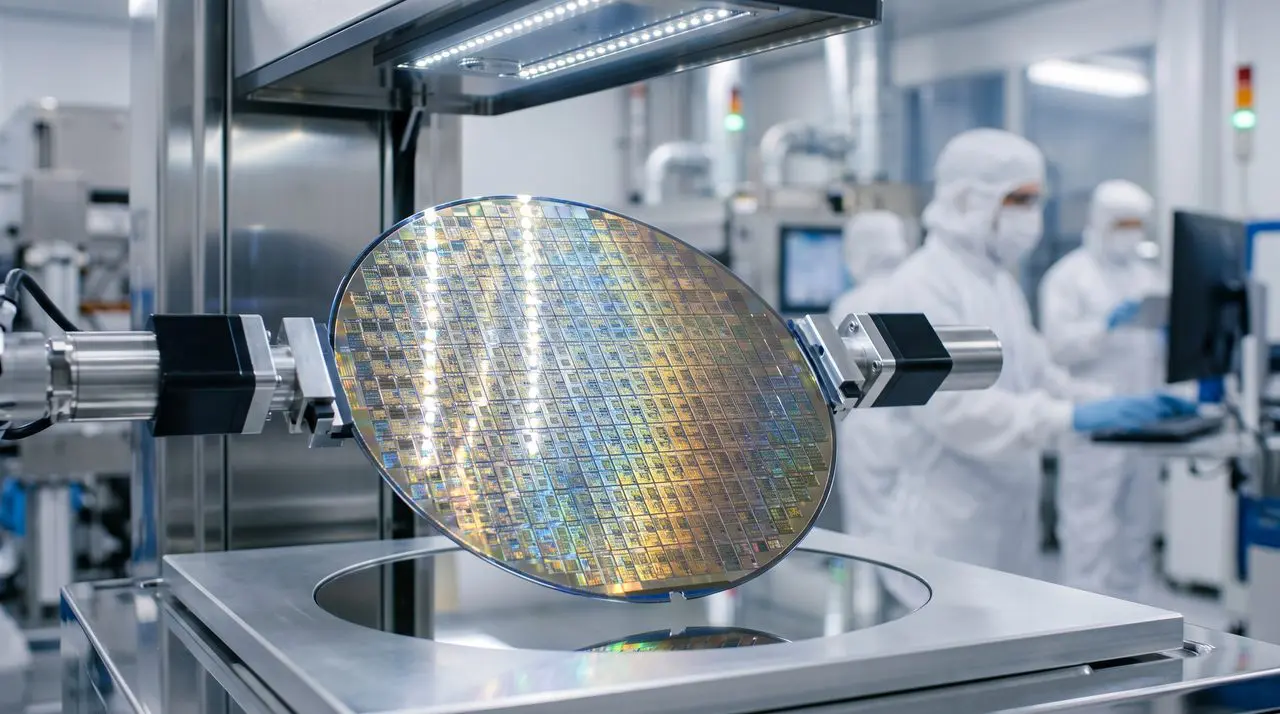
3. A pure post-quantum play. The company sells secure elements, the chips that hold the keys inside a connected device, and it has rebuilt them around the post-quantum algorithms that ordinary chips will need.
4. The QS7001 is the flagship. SEALSQ launched the QS7001 Quantum Shield in November 2025, a chip built to run the new standardised post-quantum algorithms inside small IoT and embedded devices.
5. Validated entropy, certification pending. SEALSQ says the QS7001 runs the algorithms picked by NIST, the United States standards body. The chip has earned a NIST entropy-source certificate. The company calls that a precondition for the FIPS and Common Criteria approvals it is still working toward.
6. Cash-rich and expanding. SEALSQ raised substantial equity capital while investor demand for quantum stocks was strong, and held 417.7 million dollars of cash at the end of 2025, since partly deployed. It has since put that money into its own investment programme, into the photonics company Miraex, and into a satellite venture with its former parent.
What SEALSQ Corp does
SEALSQ Corp designs secure microcontrollers. These are the small chips that guard the digital identity and the encryption keys inside a connected product. They sit in payment cards, industrial sensors, satellites and crypto-currency wallets, and their job is to keep a secret key safe even when an attacker is holding the device. The company pairs that silicon with software and personalisation services that turn a blank chip into a trusted device.
What sets the modern SEALSQ apart is the quantum threat, because a large enough quantum computer would break the public-key cryptography that protects most of the internet. So the company rebuilt its secure elements around post-quantum cryptography, the new family of algorithms designed to resist that attack. It now sells itself as the hardware layer of that transition. It supplies the chips that let billions of devices move to quantum-safe security.
The WISeKey spin-off and the LAES listing
SEALSQ began life inside WISeKey International Holding. The Swiss parent has sold digital-identity and cybersecurity technology for more than twenty years. It split the chip business out on its own, so the new company could raise its own money and tell its own story. The two stay closely tied. They share a chairman and chief executive in WISeKey founder Carlos Moreira, and a roadmap that spans secure chips, satellites and identity software. The chip business is registered in the British Virgin Islands and run from Cointrin, on the edge of Geneva.
The separation reached the public market in 2023. There was no initial public offering. WISeKey handed SEALSQ shares to its own shareholders and listed the company directly, and regular trading began on the Nasdaq under the ticker LAES on 24 May 2023. That put SEALSQ among the small group of pure-play quantum-security stocks anyone can buy, even though its underlying business is still semiconductors rather than quantum computers.
Why a chipmaker bet on post-quantum cryptography
The bet behind SEALSQ is a future quantum computer big enough to run Shor’s algorithm, a machine that would unravel the RSA and elliptic-curve cryptography behind banking, messaging and software updates. Security teams already plan for harvest-now, decrypt-later attacks. Data stolen today is stored until a quantum computer can crack it. That risk turns a slow market, the secure chips inside long-lived kit, into an urgent upgrade cycle.
SEALSQ answered by tying its products to the standards process at the United States National Institute of Standards and Technology, or NIST. NIST settled its first post-quantum standards in 2024. SEALSQ builds its newer chips to run those algorithms in hardware rather than software. It has also stacked up patents around the shift. A January 2025 prospectus described 40 patent families covering over 110 individual patents, with another 12 under review, a position the company argues suits the compliance rules now appearing in Europe and elsewhere. The 2025 annual report gives a lower current count of 88 individual patents.
The QS7001 Quantum Shield
The clearest expression of that strategy is the QS7001. SEALSQ launched it in November 2025, and its annual report dates the launch to the fourth quarter. The chip is a small, low-power secure microcontroller that drops into IoT and embedded devices, where it generates and protects keys using the standardised post-quantum algorithms. SEALSQ calls it the trusted root, the piece everything above it relies on.
The point of the QS7001 is scale. It moves SEALSQ from selling ordinary secure chips to selling quantum-safe ones in the same volumes. The company has framed it as suitable for deployment across millions of devices, and has shown it protecting quantum-resistant crypto-currency wallets. Each one turns post-quantum security from a talking point into repeat chip revenue.
NIST algorithms and the road to certification
For a security chip, standards compliance is the product. SEALSQ says the QS7001 embeds two NIST-standardised algorithms directly in hardware. They are ML-KEM, also called Kyber, which sets up a shared key, and ML-DSA, also called Dilithium, which signs. Both replace classical methods a quantum computer would break, and building them into silicon rather than software is what lets a small device run quantum-safe cryptography without draining its battery.
Certification is the slow part, and SEALSQ has been clearing it in stages. In the first half of 2026 the QS7001 won a NIST SP 800-90B entropy-source validation, certificate number E333. That validation covers the chip’s source of randomness, and it is a mandatory step toward the FIPS 140-3 Level 3 and Common Criteria EAL5+ approvals that government and enterprise buyers demand.
The higher certifications are not yet in hand. The QS7001 grew out of QUASAR, a project started in 2022 to build a post-quantum root of trust. It was designed to meet the recommendations of ANSSI, the French national cybersecurity agency, and Common Criteria EAL5+. SEALSQ reported in April 2026 that the chip had passed fault-injection and side-channel testing, and the laboratory report then goes to ANSSI, which issues the EAL5+ certificate.
SEALSQ revised that timetable on 14 August 2026, citing regulatory and technical developments. It now expects the hardware evaluation report and the Common Criteria laboratory letter for the first version of the QS7001 in September 2026, and the same pair of documents for the second version in December 2026. A laboratory letter is not a certificate, so EAL5+ approval is still a target rather than a completed step.
Commercial milestones and partnerships
SEALSQ has spent two years signing deals meant to give it a global footprint. It is building what it describes as India’s first post-quantum cryptography personalisation centre with the manufacturing partner Kaynes Semicon. That joint venture is still being set up, after a letter of intent in January 2026. It has also signed a non-binding letter of intent with Ajyal Holding to build a post-quantum semiconductor operation in Abu Dhabi. Its 2025 annual report does not list that deal among the ones it has completed. These centres do the sensitive work of loading keys into chips, and putting them in new regions serves customers who want sovereign control of their supply chain.
- 2023SEALSQ lists on the Nasdaq as LAES through a partial spin-off from WISeKey.
- 2024NIST finalises its first post-quantum standards, anchoring SEALSQ’s roadmap.
- 2025SEALSQ starts its quantum investment programme with an initial 20 million dollar allocation.
- 2025Non-binding letter of intent signed with Ajyal Holding for an Abu Dhabi venture.
- 2025The QS7001 Quantum Shield secure element launches in November.
- 2026QS7001 gains NIST entropy validation; the India centre with Kaynes is announced.
- 2026The programme is raised to 200 million dollars in March and SEALSQ closes the Miraex acquisition on 2 June.
The financial picture turned with the commercial one. The 2025 annual report on Form 20-F records net sales of 18.3 million dollars against 11.0 million a year earlier, an increase of 66 percent. About 3.5 million of that came from five months of IC’Alps, an ASIC business SEALSQ had bought. Preliminary unaudited first-half 2026 revenue came in at roughly 11 million dollars, up about 120 percent on the year, and the company has reaffirmed guidance of 50 to 100 percent growth for the year, which it says implies revenue of 27 to 36 million dollars.
Those growth rates sit on a small, loss-making base, and the filings say so plainly, with revenue of 18.3 million dollars in 2025 still well below the 30.1 million recorded in 2023. The net loss widened to 34.2 million from 21.2 million, leaving an accumulated deficit of 76.1 million at the year end. What changed the company’s options was not profit but the balance sheet, which held 417.7 million dollars of cash at the end of 2025 after a year in which financing brought in 399.5 million.
From a fund to satellites and quantum hardware
With that cash in hand, SEALSQ has been assembling a wider quantum stack rather than sticking to secure elements. It set up an internal investment programme in 2025 with 20 million dollars, and by March 2026 the approved allocation had reached 200 million. The company is careful to call this an initiative that deploys its own cash, not a fund raised from outside investors. By August 2026 it reported more than 60 million dollars deployed, across IC’ALPS, Miraex, Quobly, Quantix Edge Security, ColibriTD, EeroQ, WISeSat and the Wecan Group.
The money has bought positions across the stack. SEALSQ has invested in ColibriTD, a French quantum-as-a-service firm, and in Quobly, a silicon-spin processor developer, and it has taken two separate stakes in EeroQ. On 2 June 2026 it closed the acquisition of all of Miraex, a Swiss photonics company at the EPFL Innovation Park that works on converting quantum information between microwave and optical frequencies. The logic is to own more of the chain linking classical secure hardware to future quantum machines.
Space is the other frontier. With WISeSat, the satellite arm of its former parent, SEALSQ has announced the Quantum Spatial Orbital Cloud, a planned constellation of 100 satellites selling quantum key distribution, random number generation and post-quantum identity by subscription. The company’s own filings put full operational capability in 2033. This is a long-dated programme, not a near-term product.
The structure matters as much as the ambition. SEALSQ has described taking an irrevocable right to use the capacity of an initial twelve satellites, launched over roughly two years, while WISeSat keeps ownership and operational control of the constellation and the ground infrastructure. SEALSQ’s own risk factors note that the initiative depends exclusively on WISeSat, and that a failure to finalise the arrangements could delay it.
WISeSat.Space is itself moving to a public listing. Under a business combination agreement dated 9 November 2025 and amended on 6 August 2026, it is due to combine with Columbus Acquisition Corp, and SEALSQ agreed on the same day to subscribe for 10 million dollars of shares in the resulting company. These moves take the chipmaker well beyond its original niche.
How SEALSQ makes money
At its core the company earns revenue by selling secure chips and the services around them. The largest part is supplying secure-element semiconductors to device makers, who embed them in products that need protected keys, and that revenue scales with how many devices ship with a SEALSQ chip inside. The QS7001 is meant to lift both the volume and the value of those sales as buyers upgrade.
Two further streams sit alongside the silicon. SEALSQ runs personalisation centres that load keys and identities into chips, a repeat service that grows as it opens sites in India and the Gulf. It also licenses software and patents, and its investment arm can take stakes that pay off later. Together these lines are how the business means to turn the post-quantum shift into steady revenue rather than a single sale.
SEALSQ Corp by the numbers
SEALSQ is a small business with a large public profile. Its filings tie the outlook to the size and timing of the post-quantum upgrade cycle, not to profit in the next year or two. It reports progress through chip wins, certifications and the repeat services that follow them.
What comes next decides whether SEALSQ becomes the default supplier of post-quantum security hardware or just one early mover among many. Three things have to go right. The QS7001 has to win design slots in real products, the certifications have to land, and the move into investments, photonics and satellites has to add value rather than dilute focus. You can follow the company’s own announcements on the SEALSQ Corp official site, and track each development through Quantum Zeitgeist’s coverage.
The figures in this article are drawn from SEALSQ’s annual report on Form 20-F for the year ended 31 December 2025, filed on 31 March 2026. They also draw on its later reports on Form 6-K, including the preliminary first-half 2026 results released on 6 July 2026. All filings are available through the company’s SEC EDGAR filing history. This page was last reviewed against those filings on 22 August 2026, including the reports on Form 6-K of 6, 10, 14 and 18 August 2026. Quantum Zeitgeist is not affiliated with SEALSQ Corp or WISeKey, and company and product names are used here for identification only.
Quantum Zeitgeist does not provide personal investment or financial advice, and does not act as a personal financial, legal, or institutional investment adviser. We do not individually advocate the purchase or sale of any security or investment, or the use of any particular financial strategy, and all investment strategies carry the risk of loss for some or even all of your capital.
Before pursuing any financial strategy discussed here, or relying on information within this website, you should always consult a licensed financial adviser. Any analysis we provide is for informational purposes only, does not take your circumstances into account, and should not be treated as an individualised recommendation, since the securities mentioned may not be suitable for all investors.
SEALSQ Corp FAQ
What does SEALSQ Corp do?
SEALSQ Corp designs and sells secure microcontrollers, the chips that protect digital keys and identity inside connected devices. Its current focus is post-quantum cryptography, and it builds secure elements such as the QS7001 that run the new algorithms designed to resist attacks from future quantum computers.
What is the SEALSQ stock ticker?
SEALSQ Corp trades on the Nasdaq stock market under the ticker symbol LAES. The shares began regular-way trading on 24 May 2023 after the company was spun off from its parent, WISeKey.
Is SEALSQ part of WISeKey?
SEALSQ was carved out of WISeKey International Holding and listed as a separate public company, although the two firms remain closely connected. They share leadership, including Carlos Moreira, who is chairman and chief executive of both, and they collaborate across secure chips, satellites and digital identity.
What is the SEALSQ QS7001 chip?
The QS7001 is SEALSQ’s post-quantum secure element, a small low-power chip launched in November 2025 for IoT and embedded devices. It generates and protects cryptographic keys using the post-quantum algorithms standardised by NIST, which are designed to resist attacks from future quantum computers. The chip’s higher security certifications are still in progress.
Which post-quantum algorithms does SEALSQ use?
SEALSQ says the QS7001 embeds the NIST-standardised algorithms ML-KEM, also called Kyber, and ML-DSA, also called Dilithium, directly in hardware. Implementing these in silicon rather than software lets small devices run quantum-safe cryptography efficiently.
When did SEALSQ go public?
SEALSQ became a public company in 2023 through a partial spin-off from WISeKey rather than a conventional initial public offering. Its ordinary shares began regular trading on the Nasdaq under the ticker LAES on 24 May 2023.
Is SEALSQ Corp profitable?
No. SEALSQ reported a net loss of 34.2 million dollars for 2025 on net sales of 18.3 million dollars, against a loss of 21.2 million dollars the year before, and its accumulated deficit stood at 76.1 million dollars at the end of 2025. Revenue grew 66 percent that year and the company held 417.7 million dollars in cash at the year end, but profitability still depends on the pace of the post-quantum upgrade cycle.
How is SEALSQ different from quantum computing stocks?
Companies such as IonQ and D-Wave build quantum computers, whereas SEALSQ builds the classical security chips meant to defend against them. SEALSQ is a post-quantum cryptography play rather than a quantum-hardware maker, so its fortunes track the demand for quantum-safe security rather than progress in quantum computing itself.


See today’s quantum computing news on Quantum Zeitgeist for the latest breakthroughs in qubits, hardware, algorithms, and industry deals.