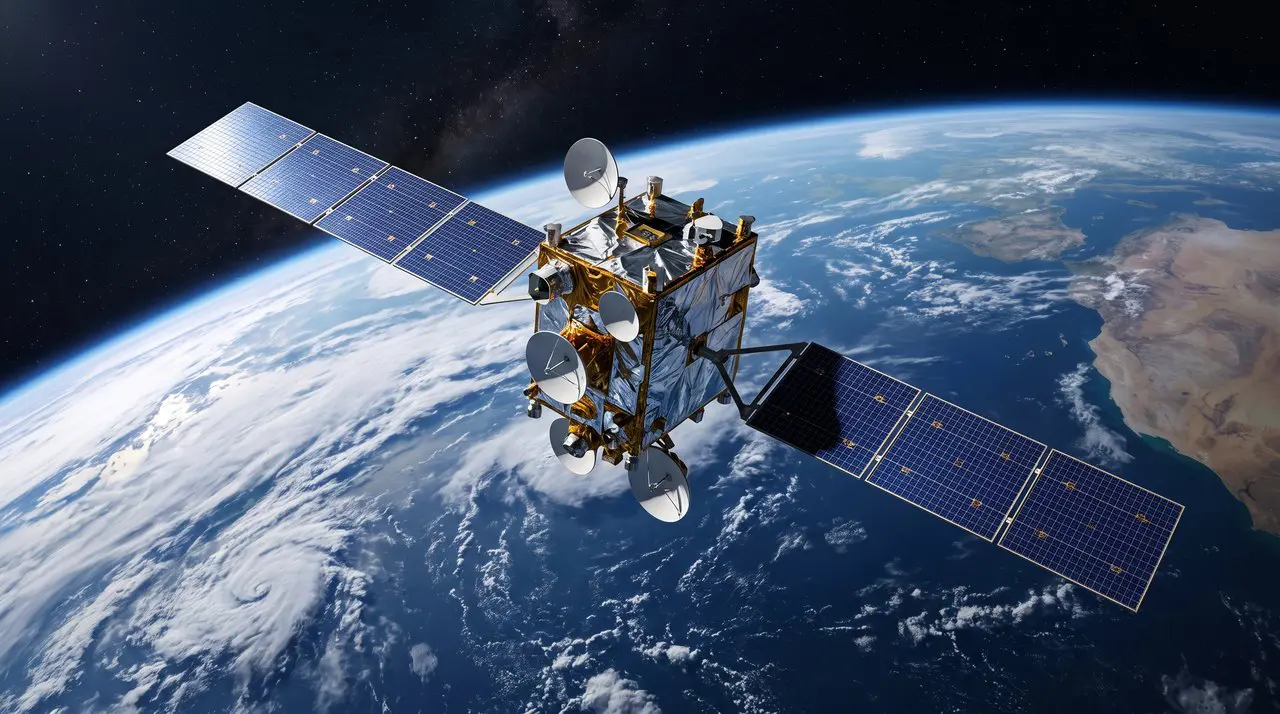
WISeSat. Space (NASDAQ: SAIQ) will ring the Nasdaq Opening Bell on October 9 at 151 West 43rd Street, New York, to showcase its strategy for quantum-resilient space communications. The event will include a Quantum Space Security Roundtable connecting experts in space, quantum technology and cybersecurity to address emerging threats to satellite networks. “Ringing the Nasdaq Opening Bell is an opportunity to introduce investors to our strategy and the milestones ahead as we work to bring trust and quantum resilience into space infrastructure,” notes Carlos Moreira, Founder and CEO of WISeSat.
Space. The company intends its planned orbital infrastructure to support the QSOC roadmap and advance secure space communications.
WISeSat.Space Nasdaq Listing and Quantum Security Strategy
WISeSat. Space will convene a Quantum Space Security Roundtable immediately following the Nasdaq Opening Bell ceremony on October 9, bringing together experts to address vulnerabilities in satellite communications posed by advancing quantum computing capabilities. The full-day event, scheduled from 8:30 a.m. to 4:00 p.m. ET at 151 West 43rd Street in New York, will focus on technologies and milestones needed to secure space infrastructure against these emerging threats.
Participants will explore how to build long-term protection into space infrastructure, spanning orbital platforms, ground stations and user devices. The roundtable’s first session, “Space Security and Sovereignty,” will feature Jessica Rosenworcel, Executive Director of the MIT Media Lab and former Chair of the US Federal Communications Commission, alongside Cristina Dolan, Non-Executive Director of SEALSQ, Liz Hanson, Managing Director at KeyBanc Capital Markets and Mark Minevich, Strategic Partner at Mayfield and President of Going Global Ventures.
Discussions will center on establishing sovereign control over identities, keys and data, considered essential foundations for resilient space communications. Space representatives Philip Hamelink, Gwenael Rouy-Poirier and Alex Moreira. Space intends to use its planned satellite missions to expand orbital infrastructure supporting the Quantum Spatial Orbital Cloud (QSOC) roadmap, a SEALSQ-owned initiative.
The company’s strategy focuses on integrating additional security capabilities through successive deployment, testing and validation milestones. These capabilities are intended to complement existing encryption mechanisms by strengthening authentication, protecting cryptographic keys and supporting secure updates throughout a satellite’s operational life. Space’s long-term strategy includes hybrid architectures combining dedicated satellite infrastructure with access to compatible third-party space assets and terrestrial networks, all supported by trusted identity and cryptographic technologies, with potential applications ranging from secure IoT connectivity to resilient communications for governments and critical infrastructure operators.
Ringing the Nasdaq Opening Bell is an opportunity to introduce investors to our strategy and the milestones ahead as we work to bring trust and quantum resilience into space infrastructure.
Space




See today’s quantum computing news on Quantum Zeitgeist for the latest breakthroughs in qubits, hardware, algorithms, and industry deals.