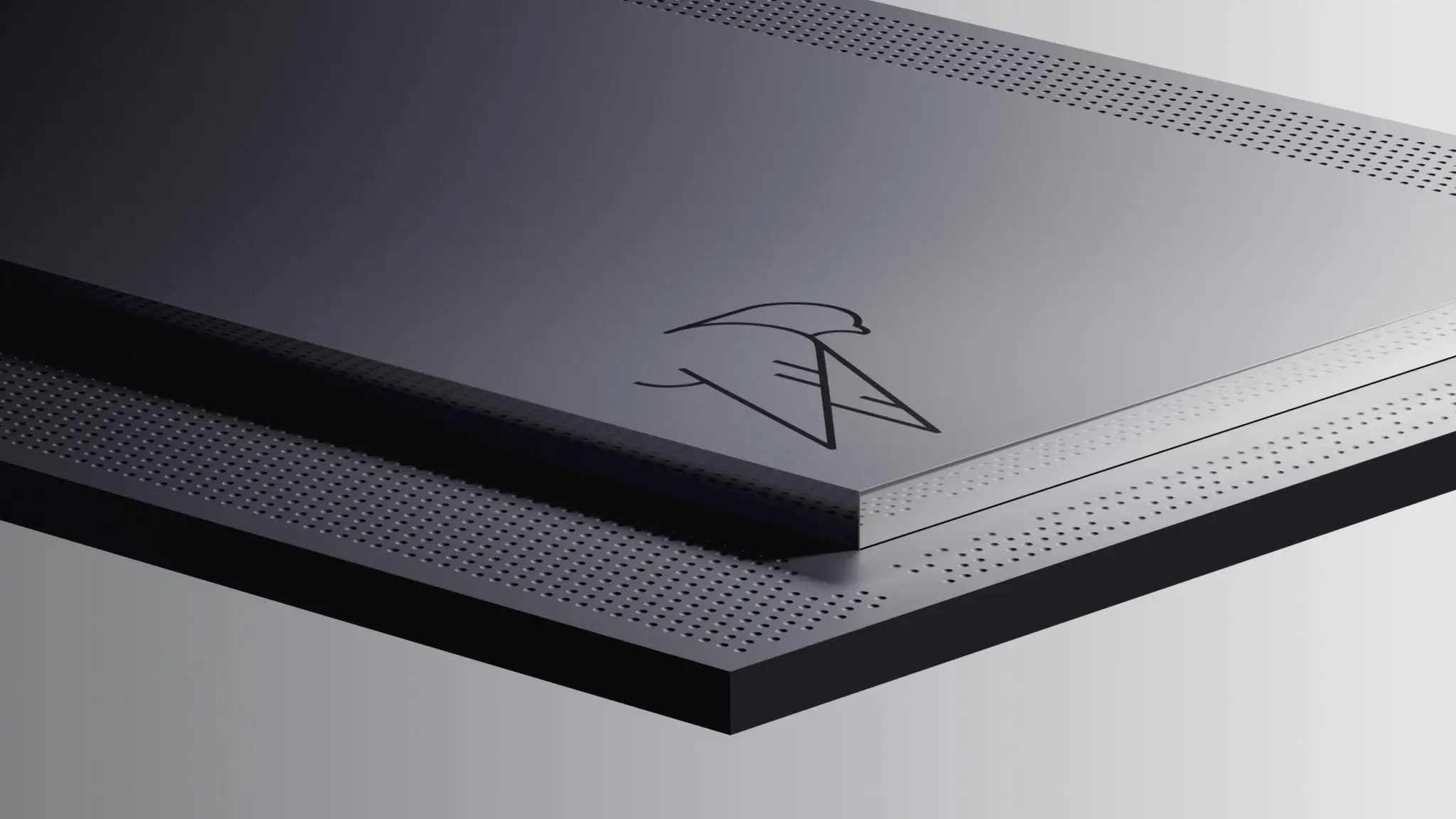
IBM Quantum’s Nighthawk r2 is now available on the IBM Quantum Platform, delivering a substantial leap in processing speed for complex quantum circuits. The new processor executes over 100,000 circuits per second, a rate 25 times faster than the IBM Quantum Heron fleet today. Nighthawk r2 maintains the scale of 120 programmable qubits as its predecessor, but focuses on accelerating computations with a new high-speed qubit reset architecture.
Nighthawk r2’s 120 programmable qubits are supported by 218 dedicated couplers and 120 independent qubit reset elements, one paired with each programmable qubit, for a total of 458 physical quantum elements. This advancement has already demonstrated accurate results on circuits containing more than 7,500 gates, achieving a key 2026 milestone on the IBM Quantum Roadmap.
Nighthawk r2’s Dissipative Reset Gadget Improves Qubit Quality
Nighthawk r2 departs from conventional conditional reset techniques, which are limited by measurement fidelity and require hundreds of microseconds of idle time between circuit executions. Instead, the new processor utilizes a dissipative reset gadget, linking each of its 120 programmable qubits to a cold environment via a high-dynamic-range tunable coupler. This allows the system to actively draw qubits back to their ground state on demand, eliminating the need for lengthy pauses and accelerating computation. These additional components are engineered to be virtually indistinguishable from the programmable qubits themselves.
This makes Nighthawk r2 the most complex quantum processor IBM has ever brought into production, representing a significant increase in physical qubit density. A square-lattice architecture benefits from effective qubit reset, enabling greater complexity and efficiency in circuit design because most qubits are linked to four neighbors, compared to two or three in prior designs. This new reset capability is not limited to use between circuits, but is also available during circuit execution, offering substantial gains for dynamic circuits. Dynamic circuits perform qubit measurements within a single execution and benefit from the increased efficiency.
The team reports that these improvements in both speed and quality are already enabling demonstrations of quantum advantage and accelerating the discovery of quantum applications. According to IBM Quantum, these results show how advances in throughput and quality are translating into practical computational capability, ticking off milestones on their roadmap and demonstrating a path toward real-world quantum solutions.
120 Qubit Processor Demonstrates Advantage with 7,500+ Gate Circuits
Nighthawk r2 achieves a circuit execution rate exceeding 100,000 per second, a performance benchmark enabled by a novel approach to qubit control and reset architecture. This speed represents a 25-fold increase over the circuit throughput of today’s IBM Quantum Heron fleet, allowing for significantly more complex computations within a given timeframe.
The processor’s architecture incorporates 458 physical quantum elements, supporting the qubits utilized for computation and incorporating dedicated elements for individual qubit control. This level of circuit complexity allows for exploration of more sophisticated quantum algorithms and the potential for demonstrating quantum advantage in practical applications.
This contrasts with earlier architectures limited to two or three connections per qubit. Beyond increased speed, Nighthawk r2 introduces a dynamic reset capability available not only between circuit executions but also during them. The team emphasizes that this combination of speed and quality is a step toward realizing the full potential of quantum computing for solving real-world problems.
Nighthawk r2 Enables Dynamic Circuits for Error Correction Research
Nighthawk r2 introduces a reset capability functional not only between circuits, but also during their execution, a feature that will accelerate research into advanced quantum workflows. This innovation delivers substantial efficiency gains for dynamic circuits, which perform qubit measurements mid-calculation, a technique increasingly vital for complex quantum error correction protocols. Many protocols and workflows demand this capability, and reliable, independent qubit reset across all programmable qubits positions Nighthawk r2 as a powerful platform for exploration in these areas.
The new reset functionality expands experimental possibilities by enabling the repeated use of auxiliary qubits during quantum error detection and correction, specifically protocols like space-time checks. This provides additional flexibility for experiments introducing logical qubits into workloads, reflecting Nighthawk r2’s intended role within the broader IBM Quantum Roadmap.
The availability of Nighthawk r2 on the IBM Quantum Platform offers researchers a system designed to scale application research, explore dynamic circuits, and advance quantum error correction, ultimately allowing for more quantum computing at a faster pace.




See today’s quantum computing news on Quantum Zeitgeist for the latest breakthroughs in qubits, hardware, algorithms, and industry deals.