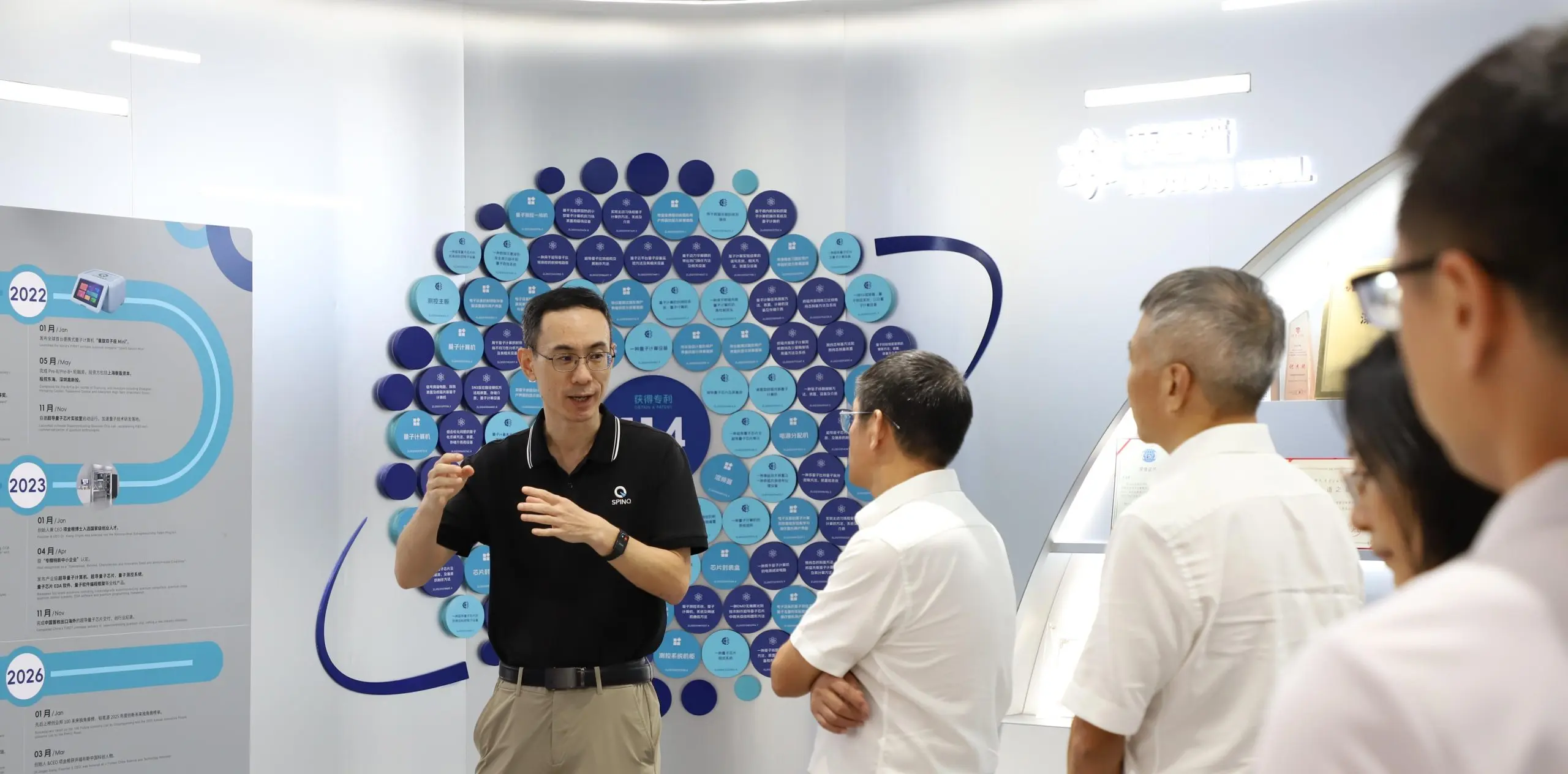
A unified push for quantum computing within meteorological agencies is underway as Zhuang Xudong, Party Secretary and Director of the Guangdong Provincial Meteorological Bureau, joined with Zhou Biao, Party Secretary and Director of the Shenzhen Municipal Meteorological Bureau, to visit Quantum Spin Technology. The visit focused on the company’s full-stack quantum computing layout, encompassing superconducting quantum chips, measurement systems and deployable desktop computers, with discussions centering on applications for weather forecasting and disaster warnings, Quantum Spin Technology says. “The purpose of this research visit is to build a normalized government-enterprise connection and exchange platform,” said Zhuang Xudong, aiming to integrate technological innovation with meteorological operations and improve public safety.
Guangdong & Shenzhen Meteorological Bureaus Explore Quantum Computing Applications
The Guangdong Provincial and Shenzhen Municipal Meteorological Bureaus are actively investigating the integration of quantum computing into their operations, as evidenced by a joint research visit to Shenzhen Quantum Spin Technology on November 5. The visit focused on identifying specific applications within critical meteorological functions like weather forecasting and disaster warning systems.
During the symposium, officials examined Quantum Spin Technology’s capabilities, specifically focusing on the development of superconducting quantum chips, quantum measurement and control systems and deployable desktop quantum computers. Discussions centered on overcoming technical hurdles and establishing viable pathways for integrating quantum computing into existing meteorological workflows, with particular attention paid to scenarios involving extreme weather events.
Zhuang Xudong emphasized the necessity of integrating advanced technologies for the continued development of meteorological services, stating, “The high-quality development of meteorological undertakings is inseparable from the empowerment of cutting-edge technologies.” He articulated the goal of establishing a consistent platform for collaboration between government and industry, enabling the rapid adoption of quantum computing innovations. He expressed a desire for both sides to identify synergistic opportunities, accelerate the translation of quantum technology into practical meteorological tools, and ultimately enhance public safety and well-being.
Quantum Spin Technology representatives responded by outlining their research and development system, highlighting both current achievements and long-term plans, according to the company. They committed to using their full-stack technology to address specific meteorological needs and to facilitate ongoing testing and verification of quantum computing solutions in real-world applications. The company intends to deepen its collaboration with the meteorological departments, bridging the gap between laboratory research and tangible benefits for citizens.



See today’s quantum computing news on Quantum Zeitgeist for the latest breakthroughs in qubits, hardware, algorithms, and industry deals.