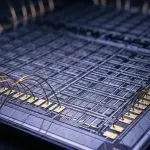
Quantum X Labs initiated an end-to-end Quantum Error Correction program on the Arbel superconducting quantum processor at the Israeli Quantum Computing Center. The company’s first hardware experiments establish a unified workflow connecting quantum device characterization, circuit execution and error decoding, a key step toward real-time error correction. “The program represents an important technological milestone in our efforts to develop an integrated quantum error correction architecture,” Quantum X Labs reports. By uniting these previously separate processes, the company aims to improve the reliability and scalability of quantum computing systems.
Quantum X Labs Targets Real-Time Error Correction Architecture
The program’s architecture centers on three interconnected technological layers, beginning with detailed quantum device characterization and calibration. This involves analyzing processor behavior and identifying specific noise characteristics to refine quantum operations. Quantum X Labs intends to integrate this characterization data directly into the circuit execution workflow, supporting more effective operation of quantum circuits on the Arbel processor. Noise-aware quantum error decoding forms the third layer, using the company’s developing decoder to interpret error information and identify appropriate corrections.
The ultimate goal is to achieve real-time operation, processing errors as they occur during computation. Initial experiments on the Arbel processor are intended to provide the hardware foundation for this architecture, with subsequent phases focused on incorporating the noise-aware decoder into the operational workflow. This approach differs from many current efforts, which rely heavily on theoretical models and simulations.
Quantum X Labs’ strategy emphasizes validation and integration with actual quantum hardware, allowing its technologies to be evaluated against the operational characteristics and noise profiles of a physical quantum processor. The company believes this is essential for developing error correction solutions that are robust and adaptable to real-world conditions. The development roadmap includes progressively integrating processor characterization, quantum control, and accelerated decoding capabilities, ultimately aiming for a closed-loop architecture.
This architecture is designed to minimize latency, enabling error information generated by the quantum processor to be analyzed and translated into corrective actions with minimal delay. Reducing this latency is a fundamental requirement for fault-tolerant quantum computing, as processing error information rapidly enough to support ongoing quantum operations is important. Quantum X Labs intends to collaborate with control-system and accelerated-computing partners to connect quantum hardware operations and classical computational processing into a coordinated system.
The company acknowledges that the initial stage of the program does not constitute a demonstration of real-time quantum error correction or fault-tolerant quantum computation, clarifying that these remain objectives of subsequent development phases. However, the launch of experiments at IQCC is viewed as an important first hardware milestone, reflecting Quantum X Labs’ broader strategy of developing technologies applicable across different quantum computing architectures. The company’s vision encompasses quantum software, advanced algorithms, error correction, and classical accelerated computing to support the emerging quantum computing ecosystem.


See today’s quantum computing news on Quantum Zeitgeist for the latest breakthroughs in qubits, hardware, algorithms, and industry deals.