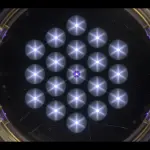
Researchers at Harvard University have demonstrated a dual-species quantum computing platform using Rubidium-87 and Ytterbium-171, achieving a coherence time of 14.6(8) seconds for Ytterbium-171 qubits while simultaneously cooling and trapping Rubidium-87 atoms. The Semeghini group’s system uses optical lattice transport and multiple wavelengths of optical tweezers to continuously reload both elements, a hardware innovation differentiating it from approaches focused solely on increasing qubit count. This combination uses Rubidium’s simple atomic structure alongside Ytterbium-171’s long-lived nuclear spin for extended quantum information storage, anticipating a use case where Rubidium atoms serve as rapidly replaced ancilla qubits alongside Ytterbium data qubits.
Rb-87 and Yb-171 Dual-Species Platform for Quantum Computing
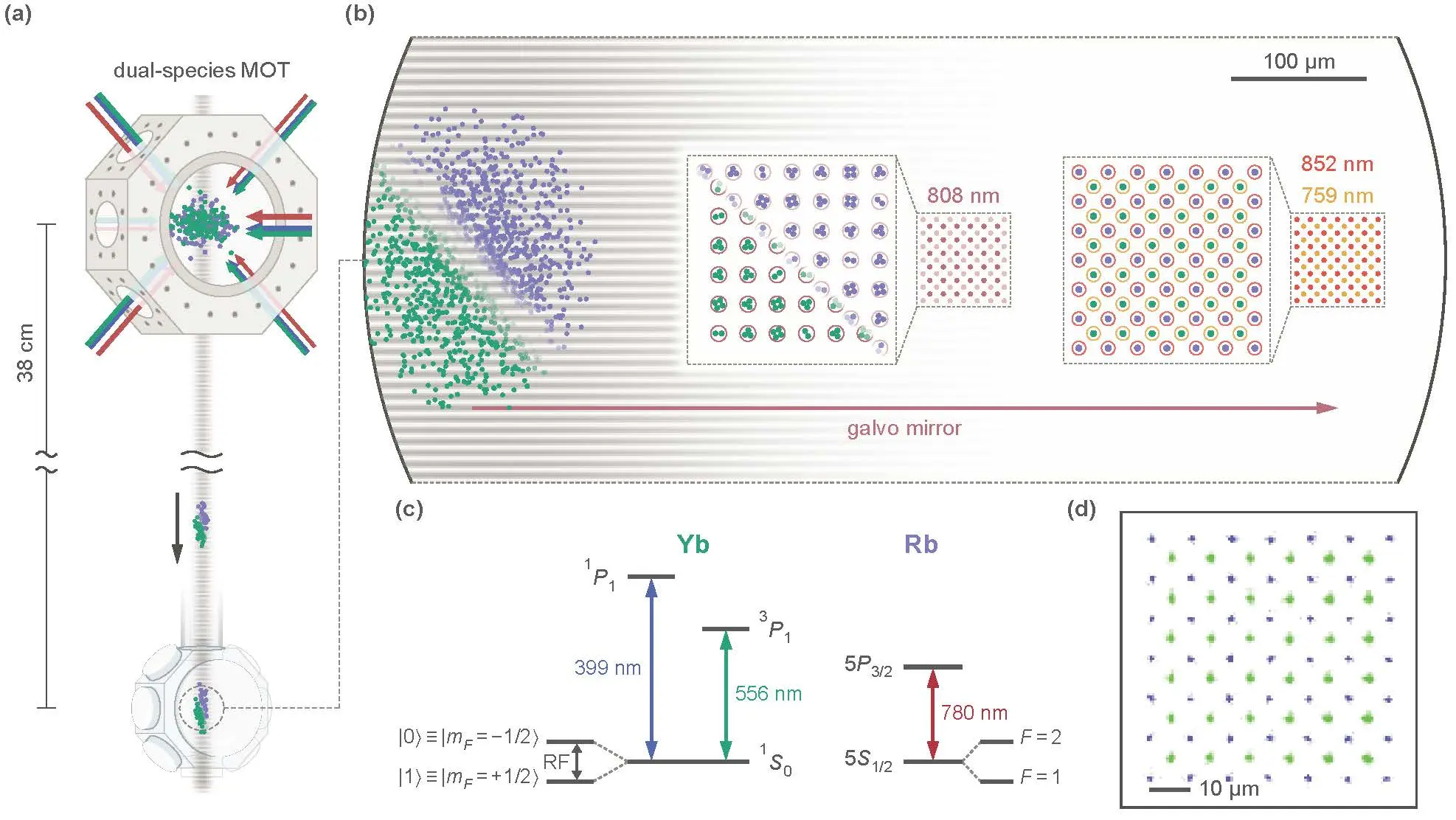
Rubidium-87’s well-understood, hydrogen-like atomic structure simplifies initial cooling and trapping procedures, while Ytterbium-171’s long-lived nuclear spin provides a robust storage medium for quantum information. The platform’s architecture begins with a dual-species Magneto Optical Trap, where both Rubidium and Ytterbium atoms are initially cooled and trapped before being transported to a glass cell containing the qubit register.
Optical tweezers then selectively extract atoms from the transport lattice and position them within element-specific trapping sites. Wavelengths are carefully tuned to both cool the atoms and define the quantum states used to encode information in the Ytterbium-171 qubits. An averaged fluorescence image visually confirms the successful trapping of both purple Rubidium and green Ytterbium atoms, showing the co-location of the two species. A pre-print detailing the findings is forthcoming on ArXiv.




See today’s quantum computing news on Quantum Zeitgeist for the latest breakthroughs in qubits, hardware, algorithms, and industry deals.