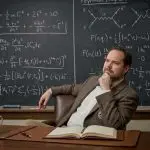
Thirty-nine years at IBM, a founding executive of IBM Quantum, and the author of Dancing with Qubits. He now runs Sutor Group, his own firm advising clients and investors on quantum technologies and AI.
A veteran of Big Blue
Bob Sutor spent 39 years at IBM, rose to vice president, and was one of the founding executives in the IBM Quantum program. The firm is his own. He is the CEO and founder of Sutor Group Intelligence and Advisory, which he announced on 31 January 2025 to advise on quantum technologies and AI. He is also the author of Dancing with Qubits, the 2019 textbook that has taught quantum computing to thousands of students, practitioners, and executives. He sits on the board of Nu Quantum and advises the venture capital firm Forma Prime.
He announced the firm in a post on 31 January 2025, which he said was his last full-time day at The Futurum Group. In it he thanked Daniel Newman for the chance to learn the analyst and advisor business, and he named himself chief executive of Sutor Group Intelligence and Advisory LLC. Several consulting contracts were already in hand. He had ideas for a couple more books as well.
“I’m not retiring. Why would I when things are getting so interesting?”
31 January 2025 announcement
Clients and investors hire him to make sense of quantum computing and put it to work in their own industries. As an author and communicator, he also helps clients bring their own messages to current and potential customers in clear and powerful ways. The firm covers more than computing. It also advises on quantum sensing, which measures the world with quantum effects, and quantum networking, which links machines over quantum connections. Its paid work runs from due diligence on startups for investors to in-house training and market reports, and he discloses that he still holds equity or stock options in both IBM and Infleqtion.
The firm also counts the market. In July 2025 it published two market reports, one on the 83 companies building quantum processors across 21 countries and one on the 126 quantum software firms across 24 countries. Taken together, the release said, the reports cover more than 170 companies in more than 25 countries, backed by over 500 investors and funders.
Where the career came from
The maths came first. He took an AB from Harvard in 1980, then a master’s from Princeton in 1983 and a doctorate from Princeton in 1992. He calls himself a theoretical mathematician by training. Over more than 40 years his work has run across quantum computing, AI, blockchain, maths software, Linux and open source, standards, product management, and computer algebra.
He spent over two decades at the Thomas J Watson Research Center in Yorktown Heights, New York. There he led or contributed to efforts as a vice president in AI, quantum computing, optimization, mathematical software, and blockchain. As vice president for mathematical sciences he ran a 300-person department for six years and oversaw AI projects for clients in farming, energy, finance, food, healthcare, insurance, and oil and gas. In 2017 he joined the leadership of the IBM Quantum program. By his own count the whole stretch came to 39 years, 2 months, and 8 days.
“I moved to ColdQuanta in March after 39 years at IBM because I believe the value of quantum technology extends far beyond the data center.”
Prepared statement for the Senate hearing of 29 September 2022
In March 2022 he left IBM for ColdQuanta, a Boulder, Colorado firm that builds quantum computers and sensors and took the name Infleqtion at the end of that year. He was its vice president of corporate development, and later its chief quantum advocate. That September he went to Washington. On 29 September 2022 he gave evidence to the Senate’s commerce committee on keeping America ahead in new kinds of computing, and he told the senators why he had left IBM. After two years there he spent eleven months at the analyst firm The Futurum Group, as vice president and practice lead for emerging technologies.
The machines of the day, he said, held anywhere from a handful of qubits to slightly more than 100, and useful ones would need hundreds of thousands to millions. The payoff, he said, could include new materials and new medicines, antibiotics and antiviral drugs among them, and more efficient lithium batteries for transport. He argued that the workforce would need trained manufacturing and IT staff as well as people with doctorates, and that quantum sensors and atomic clocks could one day back up or replace GPS. He was blunt about the task. “In what I think is a massive understatement, quantum is not easy.” He has briefed lawmakers and officials around the world, and he helped draft the World Economic Forum’s Quantum Economy Blueprint of January 2024.
The books
Dancing with Qubits came out in 2019. Quantum Zeitgeist reviewed the first edition in 2020. Dancing with Qubits, Second Edition, followed from Packt in March 2024, adding chapters on quantum machine learning and on NISQ algorithms, the methods written for the noisy, mid-sized machines of today. It opens up the details to readers who may not have a university degree in physics. In 2021 he added Dancing with Python, a first course in Python code for classical, quantum, and AI computing.
The seats he still holds
Nu Quantum made him a non-executive director in September 2024. Quantum Zeitgeist reported the appointment at the time. The company spun out of the University of Cambridge in 2018, and it builds the links that join quantum computers into larger machines. In his January 2025 note he said he was working as an advisor with Charles Beyrouthy and his venture capital firm Forma Prime. He would also stay on the Nu Quantum board, working with Carmen Palacios-Berraquero and her team.
He teaches too. He is an adjunct associate professor of computer science and engineering at the University at Buffalo. His newsletter on Substack is called Quantum Tech, Investment, and Applications, and its masthead carries the Sutor Group name. The press quotes him widely. In 2022 he told the Senate he had been quoted and interviewed by the Washington Post, the New York Times, the Guardian, Barron’s, USA Today, and CNBC.
On stage, and October in New York
He speaks at the big conferences. He was booked for the Economist’s Commercialising Quantum event in London on 13 and 14 May 2025, and his session abstract argued that quantum sensing, networking, and communications could reach practical use before quantum computing does. At Q2B Silicon Valley 2025 he gave a talk titled Quantum Marketing 101, Get out of the Weeds for Fun and Profit. In April 2026 he joined host Kris Naudts and investor Yariv Adan on the Time to Talk Quantum podcast, in an episode titled Quantum in the Age of AI.
The firm, he wrote in the January 2025 note, would start with quantum technologies and with AI, though not always at the same time. The next big date is Q+AI 3.0, a conference on quantum and AI together, which he will host in New York City from 25 to 27 October 2026. He announced it on 18 May 2026.
Frequently asked questions
Who is Bob Sutor?
What does Sutor Group do?
What did Bob Sutor do at IBM?
What was Bob Sutor’s job at Infleqtion?
Where does Bob Sutor work now?
What is Dancing with Qubits?
Where is the newsletter?



See today’s quantum computing news on Quantum Zeitgeist for the latest breakthroughs in qubits, hardware, algorithms, and industry deals.