He turned a NASA side project into the lab that crossed quantum computing’s hardest thresholds, and he keeps telling the world the machines are arriving faster than anyone expects.
From computer vision to the quantum frontier
Hartmut Neven built one of the most consequential research programs in modern computing, yet his path into quantum hardware ran through a very different field. Born in Aachen, Germany, in 1964, he trained as a physicist and spent years teaching machines to see long before he thought seriously about qubits. The through line across his whole career is a fascination with computation that solves problems no ordinary method can touch.
That fascination makes him unusual among quantum leaders, most of whom arrive from physics or electrical engineering. Neven came instead from artificial intelligence, and he still tends to describe quantum computers first as a new kind of processor for hard problems rather than as an exercise in fundamental physics. That framing colors nearly everything he says in public about where the technology is headed.
A physicist who studied across four countries
Neven pursued physics and economics across an unusually wide arc of institutions, studying in Brazil, in Cologne, in Paris, in Tübingen, and in Jerusalem before settling into research at home in Germany. He completed a master’s thesis on neuronal object recognition at the Max Planck Institute for Biological Cybernetics, working under the theoretical neuroscientist Valentino Braitenberg. The subject was how brains and machines might recognize what they are looking at, a question that would occupy him for the next two decades.
He earned his doctorate in physics in 1996 from the Institute for Neuroinformatics at Ruhr University Bochum, where he worked in the group of Christoph von der Malsburg. His dissertation, titled Dynamics for Vision-Guided Autonomous Mobile Robots, tackled how a machine could find its way using vision rather than pre-programmed maps. The early work was about perception and control, not about the strange behavior of quantum systems.
The face recognition years and two startups
Before quantum computing claimed his attention, Neven made his name in face and object recognition. He moved to the United States as a research professor at the University of Southern California, and by 2003 he headed a laboratory for human machine interfaces at the university’s Information Sciences Institute. That academic base gave him the freedom to push facial analysis from a laboratory curiosity toward something that could run on consumer hardware.
He then carried the research into industry, co-founding two companies and serving as chief technology officer at Eyematic before leading Neven Vision. The teams he built developed real time facial feature analysis and some of the earliest mobile visual search, technology that let a camera phone identify what it was pointed at. Face filters from his group appeared on Japanese carrier networks years before such effects became a social media staple, which put him at the leading edge of applied machine learning well ahead of the deep learning boom.
The Google acquisition that changed his trajectory
Google acquired Neven Vision in 2006, and the move pulled Neven into the company that would define the rest of his career. Inside Google he managed teams advancing visual search, and his group’s work fed directly into products such as Google Goggles, which later evolved into Google Lens. He also contributed to the earliest Google Glass effort, whose first prototype was completed around 2011, placing him near several of the company’s most ambitious perception projects at once.
His computer vision teams compiled a striking competition record during these years, winning international benchmarks in text reading and in large scale object recognition. One project he set in motion, an investigation into how neural networks could be fooled by carefully crafted patterns, helped open the research areas now known as adversarial machine learning and produced the hallucinatory imagery of DeepDream. That fluency in machine learning would later shape how he framed quantum computing, which he approached as a tool for harder forms of computation rather than as physics pursued for its own sake.
How machine learning led him to qubits
Neven did not abandon artificial intelligence when he turned to quantum computing, he followed it there. Around 2006 he began asking whether a quantum processor could accelerate the combinatorial search problems that sit at the heart of machine learning, problems where the number of possible answers explodes far faster than any classical computer can handle. That question became the seed of everything that followed.
He is widely credited with coining the terms quantum machine learning and quantum artificial intelligence, framing a field that barely existed at the time. The vocabulary mattered, because it told researchers and executives that quantum hardware might be a practical instrument for learning tasks rather than an abstract curiosity. Naming the target helped make it fundable.
Early experiments with D-Wave hardware
To test the idea, Neven’s group collaborated with the Canadian company D-Wave Systems, whose quantum annealers were among the only devices then available. In 2007 the collaboration demonstrated an image recognition system that ran a machine learning routine with the help of a quantum algorithm, an early proof that the two fields could be joined at all. The demonstration was modest in scale, yet it established a direction.
The work continued at academic venues, and by 2009 the team showed a binary classifier trained on a quantum processor, presented at a leading machine learning conference. These experiments did not deliver a practical advantage, and Neven has always been candid that the early hardware was far too limited for real tasks. What they did provide was a reason to believe the long term bet was worth making, and the confidence to argue for a dedicated laboratory inside Google.
Founding the Google Quantum AI lab
In 2012, Hartmut Neven founded the effort that became Google Quantum AI, establishing it in partnership with NASA at the Ames Research Center alongside the center’s director, Pete Worden. The lab began with a pragmatic question about whether quantum hardware could attack the optimization problems that show up across machine learning and logistics. It grew from a small research bet into one of the best resourced quantum programs in the world.
The early lab leaned on outside hardware, including D-Wave machines installed at Ames, while Neven and his colleagues studied what those systems could and could not do. That period sharpened a crucial realization, which was that the annealers on offer would not be enough for the goals he had in mind. If Google wanted a machine capable of universal, error corrected computation, it would have to build its own.
A vertically integrated bet on superconducting qubits
The decision to build an in house superconducting qubit program was a long and expensive commitment. Rather than rely solely on external suppliers, Google brought in physicists and engineers to design, fabricate, calibrate, and program its own processors under one roof. That vertical approach, with chip design, control electronics, and algorithms developed together, became the lab’s signature and set the stage for the milestones that followed.
By controlling the full stack, the team could iterate on the exact bottlenecks that limited performance rather than wait on a vendor’s roadmap. That discipline of owning fabrication and software alike proved decisive once the work shifted from raw speed toward the far harder goal of suppressing errors. Few leaders in the field have shaped a single research agenda for as long as Neven has steered this one.

Recruiting John Martinis to build the hardware
The turning point for the hardware came in 2014, when Neven recruited the experimental physicist John Martinis and his group from the University of California, Santa Barbara to build Google’s superconducting processors. Martinis brought a decade of expertise in high coherence qubits, and his team took charge of the fabrication effort that Neven had argued for. The partnership between Neven’s strategic direction and Martinis’s device physics produced the chips that made the lab famous.
Martinis led the hardware group through the 2019 supremacy result before leaving Google in 2020 after a reorganization of the quantum program. His departure marked the end of one chapter, yet the fabrication capability he helped establish remained the foundation for everything the lab built next. Readers can follow that story in the Quantum Zeitgeist profile of John Martinis, which traces his role in the Sycamore era and his work since.
The Sycamore supremacy moment
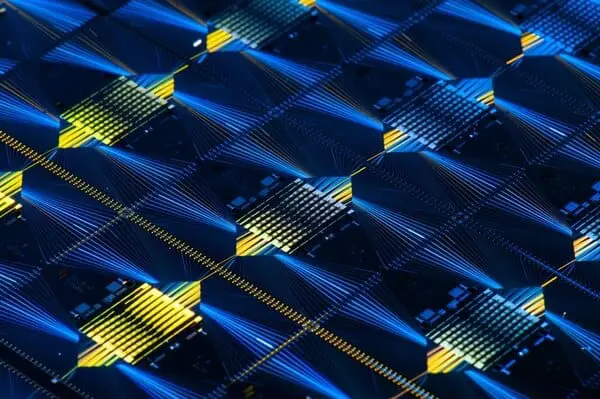
In October 2019, Google announced in the journal Nature that its Sycamore processor had performed a sampling computation that would be effectively intractable for the best classical supercomputers of the day. The experiment used 53 of the chip’s 54 superconducting qubits, since one qubit did not function, and the result was often called quantum supremacy. It marked the first time a programmable quantum device appeared to outrun classical hardware on a specific task, and it brought sudden global attention to the lab Neven had founded.
The chosen task, sampling from the output of a random quantum circuit, was designed to be hard for classical machines rather than immediately useful. That was the point, since the goal was to demonstrate a clear separation in capability before worrying about applications. Neven led the lab through the result and treated it as a checkpoint on a much longer road.
Why the milestone mattered beyond the headline
For Neven, Sycamore was less an end point than proof that the hardware roadmap was real. The result validated years of engineering choices and gave the team the confidence to pursue the much harder goal of error correction. Quantum supremacy, in his framing, was the moment the field stopped asking whether quantum computers could ever do something special and started asking how to make that capability dependable.
The term itself carries a specific history, having been coined by the physicist John Preskill in 2012 to describe exactly the kind of separation Sycamore was built to show. Neven’s team supplied the experiment that gave the phrase its first concrete demonstration. The pairing of a sharp theoretical idea with a working device is a recurring pattern in how the lab has framed its results.
The classical pushback that followed
The announcement was not without controversy, and rivals questioned how long a classical machine would really need to reproduce the output. IBM argued that a suitably clever classical simulation, using abundant disk storage, could match the task in days rather than the ten thousand years Google had estimated. Later classical algorithms narrowed the gap further, chipping away at the original claim.
Neven generally treated the criticism as part of a healthy scientific process, since each challenge pushed the bar for the next experiment higher. The back and forth also sharpened the entire field’s standards for what a convincing demonstration requires. That lesson would matter enormously when the lab designed its next headline results, which were built to be far harder to dismiss.
Willow and the error correction threshold
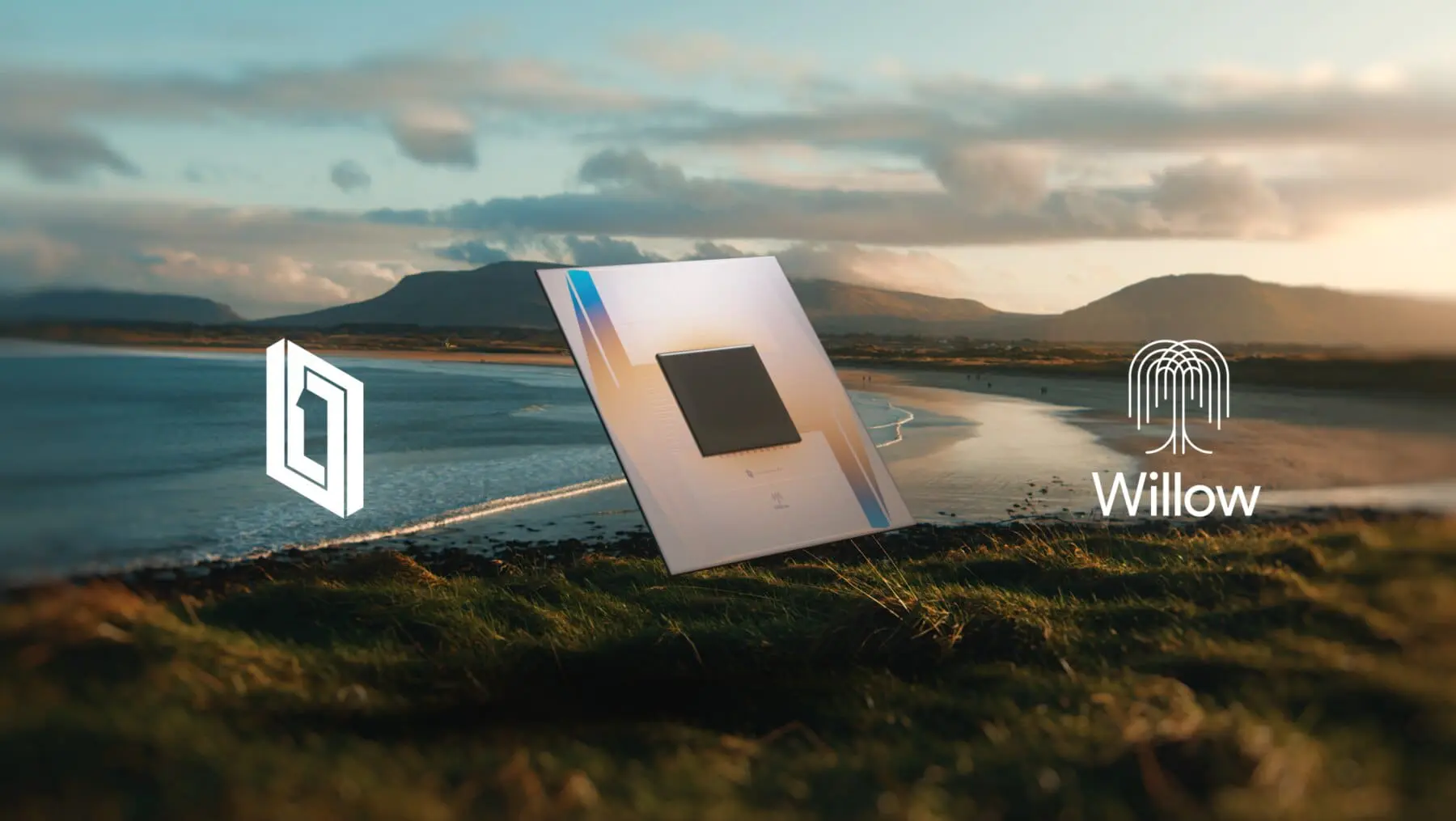
In December 2024, Google unveiled Willow, a 105 qubit superconducting processor, and with it a result that many physicists consider more important than the 2019 supremacy claim. On Willow, the team showed that adding more physical qubits to a quantum error correcting code reduced the logical error rate, crossing what researchers call the surface code threshold. This was the first convincing demonstration that scaling up could make a quantum computer more reliable rather than noisier.
Neven framed the achievement in plain language when the chip was announced, writing that the more qubits the team used in Willow, the more they reduced errors, and the more quantum the system became. He presented the below threshold result as evidence that fault tolerant quantum computing is an engineering problem with a visible path, not a distant dream. The work earned the Google Quantum AI team a share of the Physics World Breakthrough of the Year for 2024.
The 2023 result that pointed to Willow
Willow did not arrive without warning, and its central result had a clear precursor. In 2023, Hartmut Neven’s team published in Nature a demonstration that a larger surface code, using a distance five patch of qubits rather than a distance three patch, produced a slightly lower logical error rate. It was the first time the lab had shown that growing the code could reduce error rather than add to it, even if only by a small margin.
That 2023 experiment was the proof of principle, and Willow turned the small margin into a convincing one. The lesson Neven drew was that the surface code was working as the theory promised, and that better hardware would widen the gap in the right direction. Everything the team announced in December 2024 rested on that earlier, quieter milestone.
Below threshold in plain terms
The surface code spreads one protected logical qubit across many noisy physical qubits, and being below threshold means the protection improves as the patch of qubits grows. On Willow, a larger code distance produced a lower error rate, exactly the behavior the theory predicts when the underlying hardware is good enough. Neven has described the result as cracking a key challenge in quantum error correction that the field had pursued for almost 30 years, and clearing it reframes the remaining work as a matter of scale and patience.
The result does not mean a practical, fully fault tolerant machine exists today. It does mean the trend line now points in the right direction, which is what Neven and the team had been chasing since the lab’s earliest days. Each additional layer of qubits should now buy more reliability rather than less, turning a decades old worry into a question of engineering effort.
The random circuit sampling headline
Willow also posted a striking speed benchmark that dominated the headlines. The chip ran a random circuit sampling task in under five minutes that, by Google’s estimate, would take one of today’s fastest supercomputers ten septillion years, a figure written as ten to the twenty fifth power. Neven described this as the classically hardest benchmark that can be done on a quantum computer today, a way of stress testing the machine rather than a useful application.
He was careful to separate that speed record from the error correction result, which he considered the more meaningful of the two. The sampling number captured public imagination, but the below threshold demonstration is what convinced many physicists that the roadmap to a large machine is sound. Holding both ideas at once, spectacle and substance, is characteristic of how Neven presents the lab’s work.
Neven’s law and the case for fast progress
Hartmut Neven is closely associated with an idea the press dubbed Neven’s law, which he described publicly in May 2019. He observed that the gap between Google’s quantum processors and classical simulation appeared to widen at a doubly exponential rate. The reasoning combines two compounding effects, quantum hardware improving exponentially while the classical cost of simulating it also grows exponentially.
The claim drew both excitement and skepticism, since a doubly exponential trend is extraordinary and rested on a short run of data points. Critics cautioned that it was too early to crown a Moore’s law for quantum computing. Neven, for his part, has used the idea less as a precise forecast and more as a way to argue that intuitions about slow quantum progress are badly miscalibrated.
Why a doubly exponential trend is so striking
A single exponential already produces explosive growth, so a doubly exponential trend climbs at a pace that defeats ordinary intuition. The idea pairs steady hardware gains with the rapidly rising classical cost of keeping up, and the product of those two curves balloons. Even sympathetic observers note that confirming such a trend would require far more data than the field had in 2019.
Whatever its long term accuracy, the framing captures Neven’s consistent public message that the technology is arriving sooner than most people expect. He has repeatedly urged industry and policymakers to prepare for capable quantum machines within years rather than generations. That sense of urgency runs through nearly every interview and keynote he gives.
Quantum Echoes and the push for useful advantage
The lab’s most recent headline came in October 2025, when Google reported what it called the first verifiable quantum advantage, again on the Willow chip. Running an algorithm named Quantum Echoes on a subset of the processor, the team measured a physical quantity roughly thirteen thousand times faster than the best known classical method could. Crucially, and unlike the 2019 supremacy claim, the result can be checked by repeating it on another quantum computer.
The algorithm works by sending a signal into the quantum system, nudging a single qubit, and then reversing the system’s evolution to listen for an echo amplified by constructive interference. That time reversal trick gives access to correlations that would otherwise be scrambled beyond reach. Neven and his colleagues argued that the verifiability is the important part, because a result other machines can confirm carries scientific weight in a way an unrepeatable speed record does not. Quantum Zeitgeist covered the Quantum Echoes announcement in detail as it landed.
The kind of quantity the algorithm measures also hints at where useful work might first appear. Reading out these scrambled correlations is closely related to techniques in nuclear magnetic resonance, so Google has pointed to molecular structure and materials characterization as natural early applications. For Hartmut Neven, that connection is the whole point, since it moves the lab from benchmarks designed to be hard toward measurements that a chemist or materials scientist might actually want.
A concrete case for the five year horizon
Neven has paired these hardware results with a specific and repeated forecast about applications. In early 2025 he said the team remained optimistic that within five years the world would see real world applications that are possible only on quantum computers, pointing to fields such as materials science, medicine, and energy. He frames these not as marketing promises but as the problems where quantum simulation has a natural edge over classical methods.
That five year message is deliberately concrete, naming domains rather than gesturing at a vague future. Neven ties it to the below threshold result, arguing that once error correction improves with scale, the remaining path is engineering rather than discovery. The claim is bold, and he knows it, yet he has stated it consistently enough that the broader industry now treats it as a benchmark to measure against.
A public voice for quantum computing
Beyond the lab, Hartmut Neven has become one of the most recognizable spokespeople for quantum computing. He explains the field in vivid, sometimes provocative terms, and when Willow was announced he linked its performance to interpretations of quantum mechanics that invoke parallel universes. He wrote that the result lends credence to the notion that quantum computation occurs in many parallel universes, in line with the idea that we live in a multiverse.
Those remarks about the multiverse drew wide coverage and some pushback from physicists, who noted that a fast benchmark is not evidence for any particular interpretation of quantum theory. Neven has not claimed otherwise, and the comments reflect his habit of connecting hardware results to the deepest questions in physics rather than a formal scientific assertion. Quantum Zeitgeist has explored these stranger corners of the field, where interpretation and engineering meet, in its own coverage of the weird science of quantum computing.
He tends to anchor his public case in concrete applications, pointing to drug discovery, battery chemistry, and new materials as early targets for quantum advantage. He also emphasizes quality over quantity, arguing that a smaller number of reliable qubits matters more than a large count of noisy ones. That focus keeps his message grounded even when the philosophical asides make headlines.
The name of the lab is itself a clue to how Hartmut Neven thinks, since Google Quantum AI joins the two threads that have run through his whole career. He has consistently argued that quantum computing and artificial intelligence will strengthen each other, with quantum hardware attacking problems that stump classical machine learning and classical AI helping to design and tune quantum experiments. That conviction is why a computer vision researcher ended up leading a superconducting qubit program in the first place.
His visibility has consequences for the whole field, since Google’s announcements set expectations that competitors and investors react to. When Neven speaks about timelines, the broader quantum industry listens and often recalibrates. That influence makes his measured optimism a genuine force in how the technology is funded and pursued, which is one reason serious researchers tend to engage with his claims rather than dismiss them.
Recognition and lasting influence
The work Hartmut Neven has led has been honored repeatedly in recent years. The Google Quantum AI team shared the Physics World Breakthrough of the Year for 2024 for the Willow error correction result, and Neven himself was named to the TIME100 AI list in 2025 as one of the most influential people shaping artificial intelligence. He was also recognized earlier as one of Fast Company’s most creative people in business.
His standing in the academic community has grown alongside the industrial results. In 2025 the University of Coimbra in Portugal awarded him an honorary doctorate, and TU Wien selected him to deliver its Vienna Gödel Lecture, a platform reserved for figures at the frontier of computer science. These honors span both his scientific contributions and his public role as an interpreter of the field.
What distinguishes his career is continuity, since he has guided a single ambitious program through more than a decade of hardware generations. Many research directors move between projects, but Neven has stayed with quantum computing from the lab’s founding through its defining milestones. That persistence let the team accumulate the deep engineering knowledge that the Willow result required.
His influence also shows in the people and ideas the lab has produced, from advances in superconducting qubit design to a series of landmark error correction experiments. The program he built is now a benchmark that rival efforts measure themselves against. Whatever happens next in the race for fault tolerance, the modern shape of the field owes a great deal to the agenda he set.
Why Hartmut Neven matters in quantum computing
Hartmut Neven matters because he turned a speculative NASA collaboration into the lab that crossed two of quantum computing’s most cited thresholds. The 2019 Sycamore result showed a quantum device outpacing classical hardware on a chosen task, and the 2024 Willow result showed error correction improving with scale. The 2025 Quantum Echoes advantage then added a result other machines can verify, moving the field a step closer to useful computation.
He also matters as a translator between the laboratory and the public, shaping how a broad audience understands what quantum computers can and cannot yet do. His insistence that capable machines are near, captured in the doubly exponential framing of Neven’s law, has helped drive investment and urgency across the industry. Few researchers combine technical leadership with that kind of reach.
For readers tracing the history of this technology, Neven is a thread that runs from early quantum machine learning experiments to today’s race for fault tolerant hardware. Understanding his choices clarifies why Google pursued superconducting qubits and why the surface code became the field’s central battleground. His career is, in many ways, a compact history of how quantum computing grew up.
Frequently asked questions
Who is Hartmut Neven?
What did Hartmut Neven do before quantum computing?
When did he found Google Quantum AI?
Did Hartmut Neven coin the term quantum machine learning?
What was the Sycamore quantum supremacy result?
What is the Willow chip?
What is Neven’s law?
What is the Quantum Echoes result from 2025?
What did Hartmut Neven say about the multiverse?
When does Hartmut Neven expect useful quantum computers?
What awards has Hartmut Neven received?
Why is Hartmut Neven important to quantum computing?




See today’s quantum computing news on Quantum Zeitgeist for the latest breakthroughs in qubits, hardware, algorithms, and industry deals.