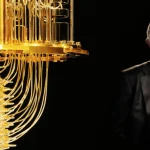
Pedro Lopes of followed a path from São Paulo, Brazil, to Boston, driven by a growing fascination with quantum information. His career began with a focus on topological matter and the physics of materials, influenced by supervisor Amir Caldeira, who received the 2025 Nobel Prize in physics for theoretical analyses of macroscopic quantum tunneling. “The kind of physics I was exposed to early on was at the core of what later became the physics of superconducting qubits,” Lopes explains.
Early Physics Foundation Fueled Pursuit of Quantum Information
Caldeira’s insights into quantum phenomena significantly influenced Lopes’ early exposure to the field, establishing a foundation that would later prove central to his work with superconducting qubits. Lopes recalls that this early immersion in quantum principles occurred throughout his doctoral studies at the Universidade Estadual de Campinas in São Paulo, Brazil, though his primary focus at the time remained elsewhere. He initially dedicated his research to the physics of materials, specifically exploring topological matter, a field that captured his interest more directly than nascent quantum devices.
Lopes’ career trajectory involved multiple international moves, beginning with his undergraduate studies in São Paulo and continuing through postdoctoral positions in Vancouver and Sherbrooke before culminating in Boston. While at the Institut quantique de l’Université de Sherbrooke in Quebec, Lopes encountered quantum information as a prevalent research topic, even though his direct contributions remained focused on other areas.
During his move to the University of British Columbia, Lopes’ work was “pretty close to the topic of designing topological qubits,” which he says was a “progressive move” in his career towards the field of quantum information. Lopes also actively engaged in public outreach during his time at UBC, volunteering to educate both the general public and incoming undergraduates about quantum information, an experience that ultimately shaped his career path.
This public engagement prompted Lopes to transition into a role at the Stewart Blusson Quantum Matter Institute, part of the Grand Challenges program at UBC, where he served as a Program Manager. “I’ve been to many places, and I changed positions and jobs many times, and I know that it’s quite scary to do that alone,” Lopes reflects, acknowledging the anxieties associated with career shifts.
He describes a deliberate approach to his career, guided by a desire to pursue what resonated most with his passions. “I’m a dreamer, definitely, and I just chose what was closest to my dream at every instant of my life. When it was time to not do science, I did not hesitate: I did not do science.” At QuEra, Lopes is focused on the practical applications of quantum computing, asserting that the technology is already proving valuable for scientific discovery, the company says.
To do science, I can clearly answer ‘yes.’ They are today. We don’t need to wait.
We are finding things out, and arguably the key early applications of quantum computing will be in scientific research.” The team recently used QuEra’s Aquila processor to uncover new phenomena in quantum dynamical phase transitions, findings soon to be published in Nature. Lopes explains his current role as ensuring efficient integration of hardware, error correction, and algorithms, stating, “The hardware provides physical limitations, and the error correction provides the bridge between the physical limitations of the hardware and the requirements of the algorithms.”
The kind of physics I was exposed to early on was at the core of what later became the physics of superconducting qubits.
Pedro Lopes, QuEra
From Quantum Matter to QuEra: Lopes’ Career Transition
Lopes’ transition to QuEra wasn’t a direct line. He completed his bachelor’s of science in physics and his PhD in condensed matter physics at the Universidade Estadual de Campinas in São Paulo, Brazil. Joining in 2022 as a Business Developer initially meant becoming the entirety of the company’s business team alongside the CEO. “Basically, I was the business team,” Lopes recalls, adding that the experience provided valuable lessons in technology, management and entrepreneurship.
He actively learned the technical aspects of the company’s neutral-atom quantum computing approach, skills he would later use upon returning to a research-focused role. “It was a good experience for me to learn the tech, and to have the time to learn new concepts and develop new skills, both managerial and entrepreneurial.” Returning to scientific research as Quantum Advocate, Lopes now focuses on bridging the gap between national labs and the scientific community.
“What I think that got me here is an honest passion for physics. In my case, I just love it.
Working in research is about producing knowledge.” Currently, Lopes’ work centers on ensuring efficient integration of these critical components. “While I don’t develop the error correction, I do ensure that I create computer architecture that allows me to connect these three things efficiently to be able to run the algorithms properly and as fast as possible.” This career trajectory reflects a willingness to embrace diverse roles and a consistent pursuit of what resonated most with his passion for physics and its potential to advance scientific understanding.
As the business grew, I talked to the CEO, and we got someone else to lead the business side of things, and I got to focus on the science side again.
Pedro Lopes, QuEra


See today’s quantum computing news on Quantum Zeitgeist for the latest breakthroughs in qubits, hardware, algorithms, and industry deals.