From the head of IBM Research to a seat shaping American science, Dario Gil has spent two decades arguing that quantum computing deserves a national strategy.
Who Dario Gil is
Dario Gil is one of the most influential figures connecting quantum research, corporate science, and United States national policy. Born in 1975 in El Palmar, in the Murcia region of Spain, he built a career that carried him from a doctoral lab at MIT to the leadership of one of the world’s largest industrial research organisations. Few leaders have done as much to keep quantum computing in front of governments, boards, and the public.
For most of his professional life, Gil was identified with IBM, where he rose to become Senior Vice President and Director of IBM Research. In 2025 he stepped into a very different arena, taking a senior post in the American federal science establishment. The arc of his career tracks the maturing of quantum computing itself, from a niche physics pursuit into a strategic technology that nations now compete to lead.
His current title is Under Secretary for Science at the United States Department of Energy, a role he was confirmed for in September 2025. That makes him the government official responsible for the largest federal programme of basic research in the physical sciences. The move ended a long chapter at IBM and opened a new one at the centre of national science strategy.
Gil retains Spanish citizenship and is celebrated in his home region of Murcia, where local academies have honoured his rise. His story is unusual because it spans two cultures and two worlds, the commercial laboratory and the public policy table. That dual vantage point is part of why his views on quantum computing carry weight in both.
From Los Altos to MIT
The early education of Dario Gil set the foundation for a research career rather than a purely managerial one. He finished high school at Los Altos High School in California in 1993, having moved from Spain during his youth. That transatlantic start shaped both his technical training and his outlook on how science travels across borders.
He went on to study engineering at the Stevens Institute of Technology in New Jersey, earning his bachelor’s degree in 1998. Stevens has since celebrated him as a distinguished alumnus, pointing to his later government confirmation as proof of where an engineering education can lead. His undergraduate years pushed him toward the physical foundations of computing rather than the business side of technology.
Doctoral work at MIT
At the Massachusetts Institute of Technology, Gil completed a PhD in Electrical Engineering and Computer Science in 2003, with research centred on nanoscale structures. Working at the scale of individual nanostructures gave him an early, hands-on appreciation for how quantum effects emerge in real materials. That grounding in physics would later inform his confidence in talking about qubits, error rates, and the practical limits of quantum hardware.
His academic record connects him to institutions that still claim him proudly. His MIT doctorate remains the credential most often cited when his technical depth is described, and the Department of Energy notes that he has since received two honorary doctorates. Dario Gil entered industry as a researcher first and a manager second, a sequence that coloured how he led for the rest of his career.
That research-first path matters because it set him apart from many corporate executives who reach the top through business roles. He had spent time at the bench, working with the kind of devices that quantum theory describes, before he ever managed a budget. When Gil later spoke about the realities of building quantum hardware, audiences understood that he had once done some of that work himself.
A researcher who became a leader
The step from scientist to executive is one that many technical people never manage cleanly. Gil made it by staying inside the same organisation and taking on progressively broader responsibility, so his management grew out of his research rather than replacing it. That continuity let him speak the language of the laboratory and the boardroom without losing either audience.
It also gave him a habit of explaining complex ideas in plain terms, a skill that later served him well in front of lawmakers. He learned to translate qubit counts and error rates into stakes that a non-specialist could weigh. That translation work became a signature of his public role long before he joined the government.
Two decades inside IBM Research
Dario Gil joined IBM in 2003, the same year he finished his doctorate, and stayed with the company for more than twenty years. He advanced through a series of scientific and management roles rather than arriving as an outside executive. That long internal climb gave him deep familiarity with how a corporate laboratory turns basic science into products.
By the late 2010s he had taken on senior responsibility for the company’s artificial intelligence and quantum efforts. He was closely associated with IBM Q, the initiative that put the company’s early quantum processors online for researchers around the world. That programme became the public face of IBM’s quantum ambitions and a reference point for the wider field.
Director of IBM Research
Gil became Director of IBM Research in 2019, succeeding Arvind Krishna, who moved toward the role of chief executive. Gil was later elevated to Senior Vice President, placing him at the head of one of the largest corporate laboratories on the planet. In that role he oversaw thousands of researchers and a portfolio that ranged from semiconductors and artificial intelligence to quantum systems.
He used the position to argue, repeatedly and in public, that quantum computing was moving from theory toward useful machines. IBM kept its systems available to outside users through the cloud, a strategy that turned the company into a benchmark for the broader field and for the wider set of public quantum computing companies trying to find a commercial footing. Gil became a familiar voice describing where the technology stood and where he believed it was heading.
His leadership style leaned on long, public roadmaps that committed IBM to specific qubit counts and timelines. Setting targets in the open was a deliberate choice, meant to hold the company accountable and to give the wider field a sense of pace. Gil treated those roadmaps as both an engineering plan and a communication tool, a way of telling governments and customers that progress was real and measurable.
His public profile extended beyond IBM itself. He joined the board of trustees at Rensselaer Polytechnic Institute, one of several appointments that tied his corporate role to the academic world. Those overlapping seats made him a connector between universities, industry, and government long before he entered public service.
Beyond quantum, artificial intelligence and chips
Quantum computing was the most visible part of Gil’s portfolio, but it was far from the only part. IBM Research under his direction covered artificial intelligence, hybrid cloud software, and semiconductor science, and he treated those areas as connected rather than separate. He often argued that progress in AI, classical high-performance computing, and quantum would reinforce one another.
On the hardware side, IBM Research pushed the frontier of conventional chips as well, including work on advanced nodes that packed more transistors into the same area. Gil pointed to that semiconductor pedigree as evidence that IBM could manufacture and scale the kind of exotic devices quantum computing demands. The two efforts shared fabrication know-how and a culture of long-horizon engineering.
His AI message tended to stress trust and enterprise use rather than consumer novelty. He framed artificial intelligence as a tool that had to be reliable, explainable, and grounded in real data before businesses could depend on it. That emphasis on dependability echoed the same values he brought to quantum, where a demonstration means little without repeatability.

Building the IBM Quantum program
The quantum programme Gil championed was defined by a public roadmap that few competitors matched for detail. IBM committed to a sequence of processors with rising qubit counts, and it hit a series of the milestones it had announced. The Eagle processor reached 127 qubits in 2021, Osprey followed with 433 qubits in 2022, and Condor crossed the thousand-qubit mark in 2023.
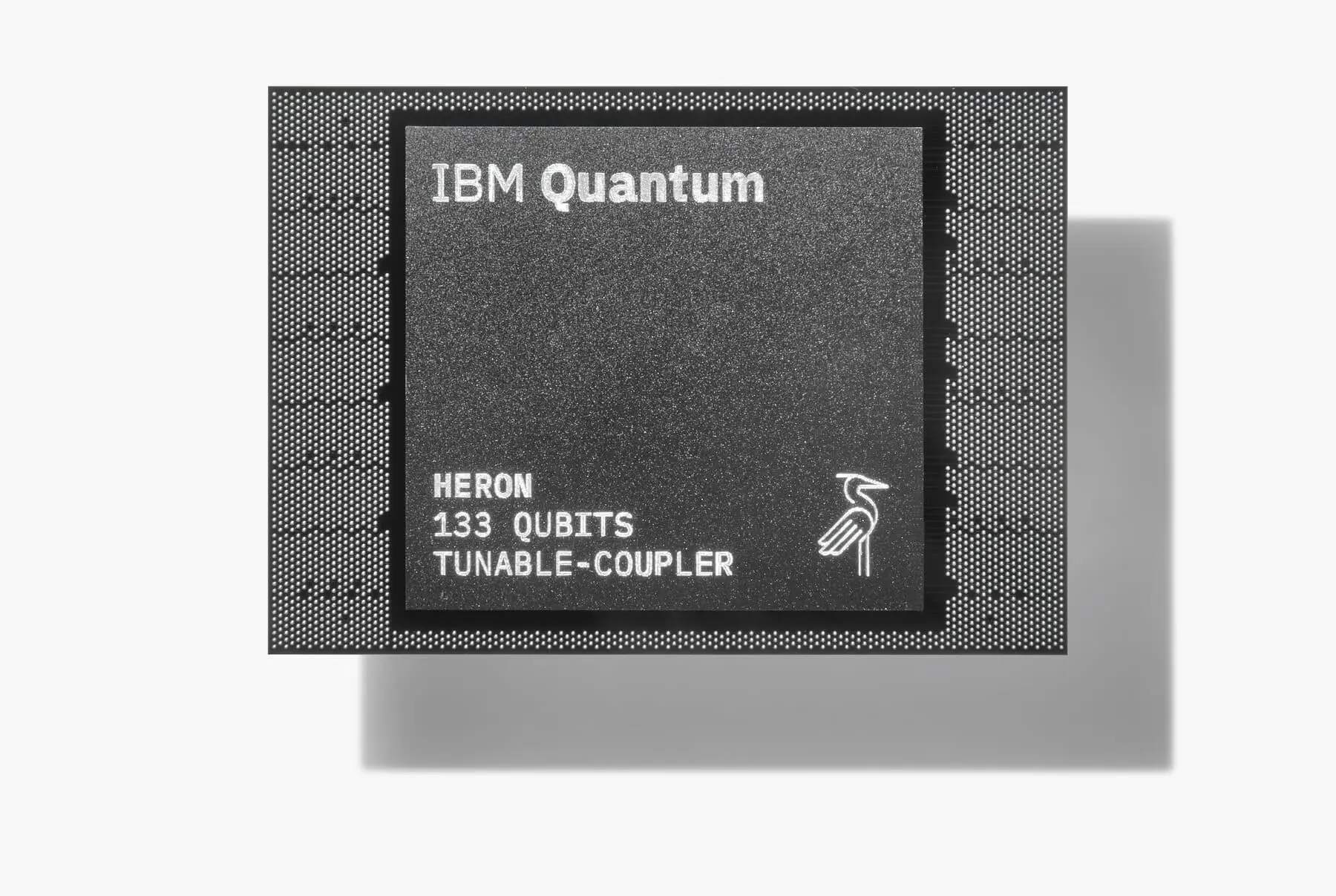
Raw qubit counts were only part of the story that Gil told. As the roadmap matured, the emphasis shifted toward quality and modularity rather than sheer size, with processors such as Heron built for higher fidelity and lower error rates. IBM paired those chips with the Quantum System Two architecture, a modular design meant to link multiple processors and scale toward much larger machines.
Software and the cloud
Hardware alone was never the whole strategy, and Gil often stressed the software layer that sat on top of the chips. IBM built Qiskit, an open-source framework that let researchers write quantum programs and run them on real hardware over the internet. That combination of cloud access and open tooling helped seed a generation of quantum developers who learned on IBM machines.
Gil framed this openness as a way to grow the whole field rather than a single company. By making early processors available to universities, startups, and students, IBM turned its roadmap into a shared reference for what progress looked like. The approach also gave policymakers a concrete example when they argued for national investment in quantum technology.
The software layer kept evolving alongside the chips, with runtime services and error-mitigation techniques designed to squeeze more useful results out of noisy hardware. Those tools mattered because near-term machines still make frequent errors, so getting meaningful answers requires clever post-processing. Gil pointed to that combination of hardware and software as the reason IBM could talk about utility while full fault tolerance was still years away.
Toward fault tolerance
The later roadmap that Gil helped set pointed squarely at error correction and fault tolerance, the hardest problems in the field. IBM laid out a plan to reach large-scale, fault-tolerant machines by the end of the decade, backed by a major financial commitment to United States quantum leadership. That plan tied specific processors to specific years, extending the same public-target philosophy Gil had used from the start.
Reaching fault tolerance means suppressing errors faster than they accumulate, which requires both better hardware and clever codes. Gil consistently described this as the real finish line, far more meaningful than any single benchmark result. His framing helped shift industry attention toward what is quantum error correction and why it decides whether quantum computers ever become dependable tools.
Quantum utility and the supremacy debate
One of the defining episodes of his IBM tenure came in 2019, when a rival announced a milestone often called quantum supremacy. Gil was among the most prominent voices pushing back on the framing, arguing that a single laboratory benchmark with no practical use should not be treated as a finish line. He stressed the gap between a one-off experiment and a reliable system that can run real workloads.
Gil and his colleagues promoted the idea of quantum advantage instead, a continuum in which quantum machines gradually become useful for specific problems rather than a single dramatic leap. The debate over what is quantum supremacy and what it really proves became a defining argument of the era, and Gil helped shape how the industry talked about progress. His position favoured measurable, applied progress over headline claims.
The 2023 utility experiment
That argument gained hard evidence in June 2023, when IBM published a utility-scale experiment on the cover of Nature. Running on the 127-qubit Eagle processor, the work modelled a physical system at a scale where exact classical simulation becomes very difficult, with scientists at the University of California, Berkeley providing verification. It was offered not as supremacy but as a first demonstration of useful, utility-scale quantum computation.
Gil, then Senior Vice President and Director of IBM Research, put the result plainly. “This is the first time we have seen quantum computers accurately model a physical system in nature beyond leading classical approaches,” he said, framing the milestone as a beginning rather than an endpoint. The phrasing captured his consistent message that the field should be judged on what its machines can actually compute.
The experiment reflected a broader emphasis, visible across his speeches and interviews, on reliability, error rates, and the long road to fault tolerance. Dario Gil tended to frame quantum computing as a marathon of engineering rather than a sprint to a single record. That view had commercial logic behind it as well, since a field judged on useful workloads gives customers and investors a clearer way to track value over time.
How the field received the argument
Not everyone accepted the utility framing without pushback, and some researchers noted that classical algorithms later matched parts of the 2023 result. Gil treated that back-and-forth as healthy rather than threatening, since the point of a public benchmark is to invite exactly that kind of scrutiny. The lasting effect was to move the conversation toward what quantum machines can usefully compute today.
Over time, the vocabulary he promoted became common across the industry. Rivals and analysts increasingly framed progress in terms of useful advantage on specific problems rather than a single supremacy headline. That shift in language is one of the quieter but more durable marks Gil left on the field.
A bridge into national science policy
Long before he entered government, Dario Gil was already moving in the world of American science policy. He was appointed to the National Science Board in 2020, the body that helps set direction for the National Science Foundation and advises on national research priorities. That seat gave him a formal voice in how the United States organises and funds science.
Chair of the National Science Board
In 2024 Gil became Chair of the National Science Board, reported as the first leader actively working in industry to hold that role in roughly three decades. The appointment underlined how seriously policymakers were taking the convergence of industrial research and public science. It also positioned him as a natural candidate for a larger federal role.
Throughout this period Gil was a visible champion of sustained national investment in quantum computing and related technologies. He argued that the United States needed coordinated strategy rather than scattered effort, echoing the spirit of the country’s national quantum initiative. His message was consistent, presenting quantum as a strategic capability rather than a research curiosity.
His policy views reached beyond quantum into the wider question of how science and power now connect. “Technology has been elevated to the same level of geopolitical importance as things like trade or military alliances,” Gil argued in one interview on science and technology policy. That framing captured why he saw research investment as a matter of national competitiveness rather than academic housekeeping.
Sitting on a national advisory body while running a corporate lab gave Gil an unusual perspective. He could see how academic funding, industrial development, and government priorities fit together, or failed to. He had also served earlier on the President’s Council of Advisors on Science and Technology, deepening his familiarity with how federal science advice is actually made.
That vantage point informed his frequent calls for the public and private sectors to pull in the same direction on emerging technology. He argued that the United States could not treat basic research as an afterthought if it wanted to lead in fields like quantum and artificial intelligence. The message was consistent whether he was speaking to executives, academics, or lawmakers.
Under Secretary for Science
In January 2025 Dario Gil was nominated for the post of Under Secretary for Science at the United States Department of Energy, a senior role overseeing a large share of the nation’s basic research enterprise. The nomination drew attention precisely because it moved a leading industry figure into one of the most important science positions in the federal government. It signalled how closely quantum and computing expertise was now tied to national strategy.
Confirmation and the move from IBM
After a nomination and hearing process, Gil was confirmed by the United States Senate on 18 September 2025, by a vote of 51 to 47. His confirmation marked a clear break from his long career at IBM, as he left the company to take up the government role. He assumed office later that month, moving fully from corporate research into public service.
His departure also reshaped the top of IBM Research. Jay Gambetta, the physicist who had led IBM’s quantum hardware and software effort for years, succeeded Gil as Director of IBM Research effective 1 October 2025. The handover kept IBM’s quantum roadmap in the hands of someone who had helped design it, while Gil carried his quantum advocacy into government.
What the role oversees
The Under Secretary for Science sits atop the Department of Energy’s Office of Science, described by the department as the nation’s largest federal sponsor of basic research in the physical sciences. The office supports work across the seventeen United States National Laboratories, spanning advanced computing, fusion, nuclear and high energy physics, basic energy sciences, and biological and environmental research. In that seat, Gil serves as a principal science and technology adviser to the department.
Placing Gil in this role connected his quantum advocacy directly to the machinery of federal science. Much of the country’s leading quantum information research runs through those national laboratories and the supercomputing centres attached to them. His public testimony and lectures from late 2025 onward reflected that new official role rather than his former corporate one.
Moving from a private company to the federal government is a significant step for any technology leader. It changes both the incentives and the audience, from shareholders to citizens and from product roadmaps to national strategy. For Dario Gil, the shift extended a long pattern of arguing that science is a national asset that deserves serious, sustained support.
What he inherits
The Office of Science funds a large share of the country’s work in fields that touch quantum information, from advanced computing to fundamental physics. It also runs some of the most powerful supercomputers in the world, machines that increasingly work alongside quantum processors in hybrid experiments. Gil arrives with a clear view of how those classical and quantum resources can complement one another.
His challenge is different from the one he faced at IBM, where he set targets for a single company. In government he helps steer a sprawling ecosystem of laboratories, universities, and contractors, each with its own priorities and constituencies. Turning a coherent quantum strategy out of that mix is a harder coordination problem than any product roadmap.
The national laboratories he now oversees have become central to quantum research in the United States. Facilities such as Oak Ridge and its leadership computing centre already pair quantum processors with the world’s fastest classical supercomputers, testing how the two can share a single workflow. Gil has long argued for exactly this kind of hybrid approach, so the role gives him a chance to push it at national scale.

Recognition and academic ties
Gil’s standing in the scientific community is reflected in a set of formal honours that predate his government role. He was elected to the National Academy of Engineering, one of the highest professional distinctions for an engineer in the United States, cited for contributions to artificial intelligence and quantum computing. Membership in the academy signals recognition by peers rather than by employers or the public.
He has also collected honorary doctorates, with the Department of Energy noting two such degrees among his credentials. Those honours, together with his elected chairmanship of the National Science Board, mark him as a figure trusted across both the academic and policy worlds. Such breadth is rare for someone whose day job was running a corporate laboratory.
His ties to universities run deeper than ceremonial awards. Through board seats, lectures, and advisory roles, Gil stayed connected to the institutions that train the next generation of quantum researchers. That network of relationships is part of what makes him effective at moving ideas between industry, academia, and government.
He has also become a familiar face on the international stage, speaking at global technology forums about the future of computing and the responsible use of advanced tools. Those appearances extended his influence beyond the United States, where quantum policy is now a subject of intense interest in Europe and Asia as well. His reputation as a clear and credible voice travels with him across those venues.
How Dario Gil talks about quantum computing
Across speeches, interviews, and written pieces, Dario Gil has been one of the clearest public explainers of where quantum computing stands. He tends to avoid hype, focusing instead on roadmaps, error correction, and the difference between a demonstration and a dependable tool. That measured tone helped him earn credibility with both technical audiences and policymakers.
He is fond of correcting a common misconception about what a quantum machine really is. “It is the wrong thinking to say that a quantum computer is a faster computer,” Gil told an audience during a lecture at his alma mater, adding that “what it is, is a fundamentally different type of computer.” The point runs through much of his public teaching, where he stresses that quantum machines solve certain problems differently rather than simply solving all problems faster.
He is also willing to make bold, datable predictions when he believes the evidence supports them. “I am convinced that the big bang of quantum computing will happen in this decade,” Gil said in one interview, tying the promise of the technology to a concrete window rather than a vague future. Statements like that gave reporters and policymakers a clear sense of the pace he expected.
Gil has consistently framed quantum computing as part of a broader shift in how scientific discovery happens, alongside advances in artificial intelligence and high-performance computing. He often describes a future where these tools work together to accelerate research across chemistry, materials, and energy. This systems-level view, rather than a focus on any single device, is a recurring theme in how he communicates.
Because he held the top research job at a major quantum vendor and then a senior science-policy post, his words carry unusual weight. When Gil describes the state of the field, audiences read it as a signal about both industry direction and government priorities. That combination is rare, and it is a large part of why his profile matters.
He is also a frequent user of analogies, from decks of cards to the geography of a map, when he explains why a qubit differs from a bit. Those teaching devices helped make his talks accessible to audiences with no physics background, including the lawmakers who decide budgets. Reducing a hard idea to a clear image, without distorting it, is a skill he honed over many public appearances.
Why Dario Gil matters in quantum computing
Dario Gil matters because he combines three things that rarely align in one person, namely deep technical training, leadership of a major quantum program, and a formal role in national science policy. Many people advocate for quantum computing, but few have shaped corporate roadmaps and government priorities at the same time. His career shows how a research technology becomes a matter of national strategy.
His influence is also about framing. By pressing the case for quantum advantage and utility over a single supremacy milestone, Gil helped set expectations that emphasise useful, reliable machines rather than headline experiments. That framing continues to guide how progress in the field is judged and reported.
His move into the Department of Energy ties his long-standing quantum advocacy to one of the most powerful science budgets in the world. Whatever the field achieves over the coming years, the policies and priorities he helps shape will be part of the backdrop. For that reason, Dario Gil remains one of the figures worth watching as quantum computing matures.
He also moves easily between the corporate and public spheres at a moment when the two are converging fast. The same person who set IBM’s quantum targets now helps decide how the United States funds its national laboratories. Careers that span both sides of that line are rare, and they give Gil a rounded view of how emerging technology actually gets built and paid for.
There is a symbolic weight to his trajectory as well, tracing the field from a laboratory curiosity to an instrument of national strategy. When a physicist who once modelled nanostructures ends up steering a national research budget, it says something about how far quantum computing has travelled. For students and early-career researchers, that path offers a concrete example of how technical work can lead to public influence.
None of this guarantees that the predictions Gil has made will come true on his timeline. The hard problems of error correction and scaling remain unsolved, and history is full of technologies that arrived later and looked different than their champions expected. What Gil has reliably done is keep quantum computing funded, discussed, and taken seriously while those problems get worked out.