
This week stands out with substantial investment news. Both Pasqal’s Nasdaq listing and the Canadian government’s funding of Xanadu signal increasing confidence in the commercial viability of quantum technologies. Alongside financial commitments, research continues to address core challenges. Developments range from faster qubit tuning and improved cooling methods to advances in quantum error correction and molecular simulation tools.
The selected articles also reveal a strong emphasis on practical application and community building. Quantinuum’s presentation at IEEE Quantum Week, IBM’s software release, and the Taiwan-IBM hackathon all demonstrate steps toward building a functional quantum ecosystem. Researchers are actively working to translate theoretical advancements into tangible results.
1. Pasqal Achieves $2 Billion Valuation with Nasdaq Listing
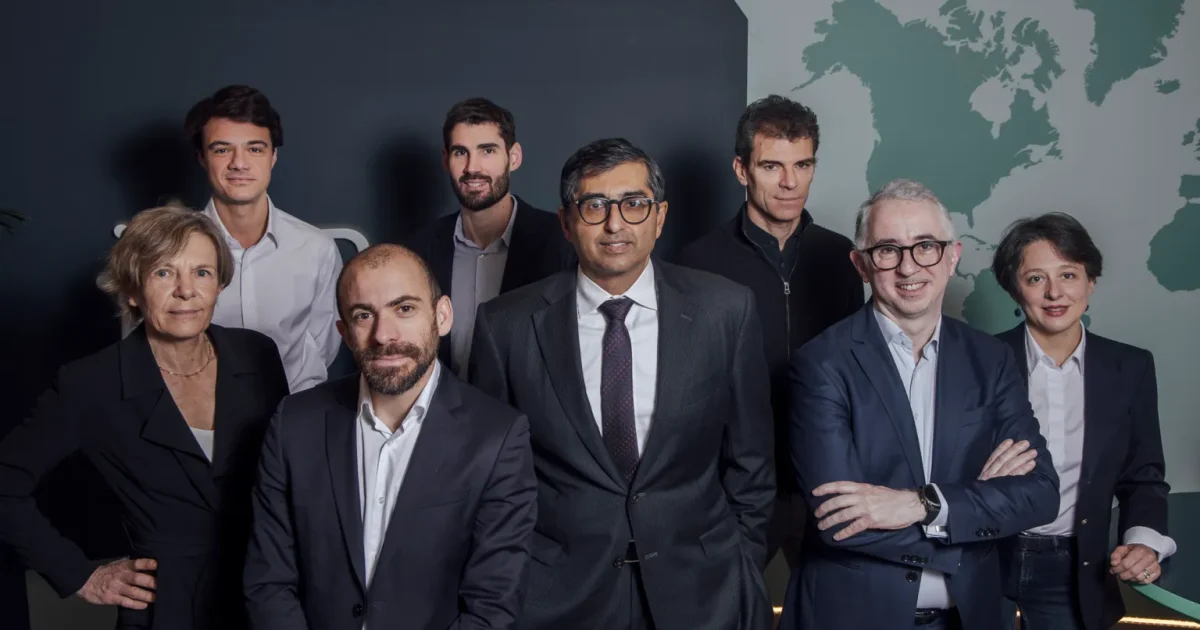
Pasqal, a neutral-atom quantum computing company, began trading on the Nasdaq Stock Market under the symbol “PSQL” as of today, August 31, 2026, with an enterprise value of approximately $2 billion. The listing generated $360 million in gross proceeds to support Pasqal’s development of industrial-scale quantum systems. Early investor Quantonation, which initially backed Pasqal in a seed round and subsequent Series A funding in 2021, celebrated the listing as validation of its investment strategy and a sign of maturing quantum businesses. Quantonation notes this public listing demonstrates a broader industry shift toward quantum companies raising capital and competing globally.
2. Canada Invests $195M in Xanadu for Domestic Quantum Manufacturing
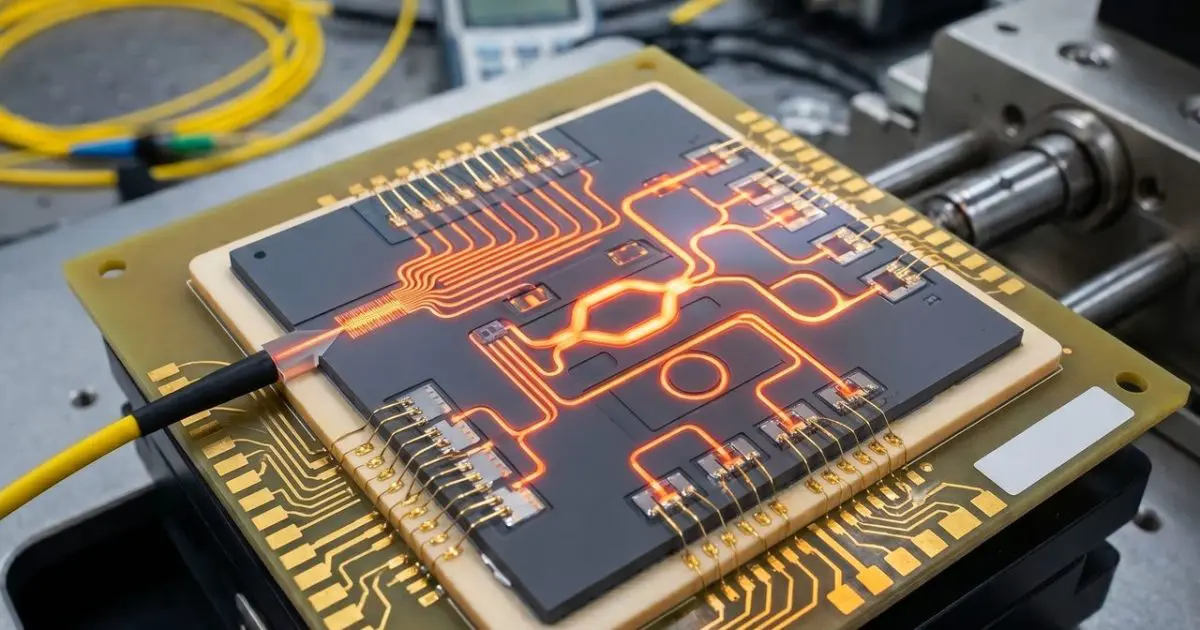
Xanadu Quantum Technologies received $195 million from the Government of Canada to establish large-scale quantum computer manufacturing capabilities. This funding completes the federal commitment to Project OPTIMISM, focused on building a fully integrated supply chain for quantum components, including photonic chips and semiconductor testing. These areas currently lack robust infrastructure. Xanadu will manufacture all components in-house to support future quantum data centers and strengthen Canada’s position in the quantum technology sector, with benefits also expected for the wider semiconductor industry. The investment aims to create jobs and bolster Canada’s economic sovereignty in advanced manufacturing and digital innovation.
3. IEEE Quantum Week 2026: Largest Quantum Computing Conference to Date
The IEEE has announced its Quantum Week 2026 conference will be held in Toronto from September 13-18. This year’s event features the largest program to date, including 372 technical papers, 47 workshops, and 48 tutorials, alongside ten keynote sessions. The conference aims to connect researchers and industry professionals, covering a broad range of qubit technologies and applications, and expects over 80 exhibitors and sponsors. With attendance exceeding 1,760 at the 2025 event, organizers anticipate a strong presence from both industry and academia this year.
4. AI-Powered System Dramatically Speeds Qubit Tuning for Quantum Processors

Quantum Machines and Academia Sinica have achieved a significant advancement in quantum processor calibration, reducing the time required to tune two-qubit gates from 15 minutes to 25 seconds. This improvement utilizes a reinforcement learning agent connected directly to Quantum Machines’ OPX1000 controller and a GPU via OPNIC technology, allowing for real-time hardware feedback and adaptation. The team demonstrated simultaneous optimization of a five-qubit circuit, addressing a key bottleneck in scaling quantum computers by enabling continuous calibration and maintaining high fidelity despite parameter drift. This work was tested on Academia Sinica’s tunable qubits and provides a pathway toward automated, in-situ control essential for industrial-scale quantum algorithm development.
5. Quantinuum to Demonstrate Full-Stack Quantum Computing at IEEE Quantum Week
Quantinuum will present its advances in fault-tolerant quantum computing at IEEE Quantum Week 2026, held September 13-18. CEO Rajeeb Hazra will detail benchmarks and workloads essential for field advancement in a keynote address on September 14. The company will demonstrate an integrated full-stack approach, focusing on the convergence of generative AI, quantum systems, and software, with workshops and presentations on topics including quantum-HPC integration and AI-optimized circuit optimization. This event signals a focus on moving beyond theoretical quantum research toward practical application.
6. Quantum Cooling Faces Hurdles in Small Systems, Google Experiments Show
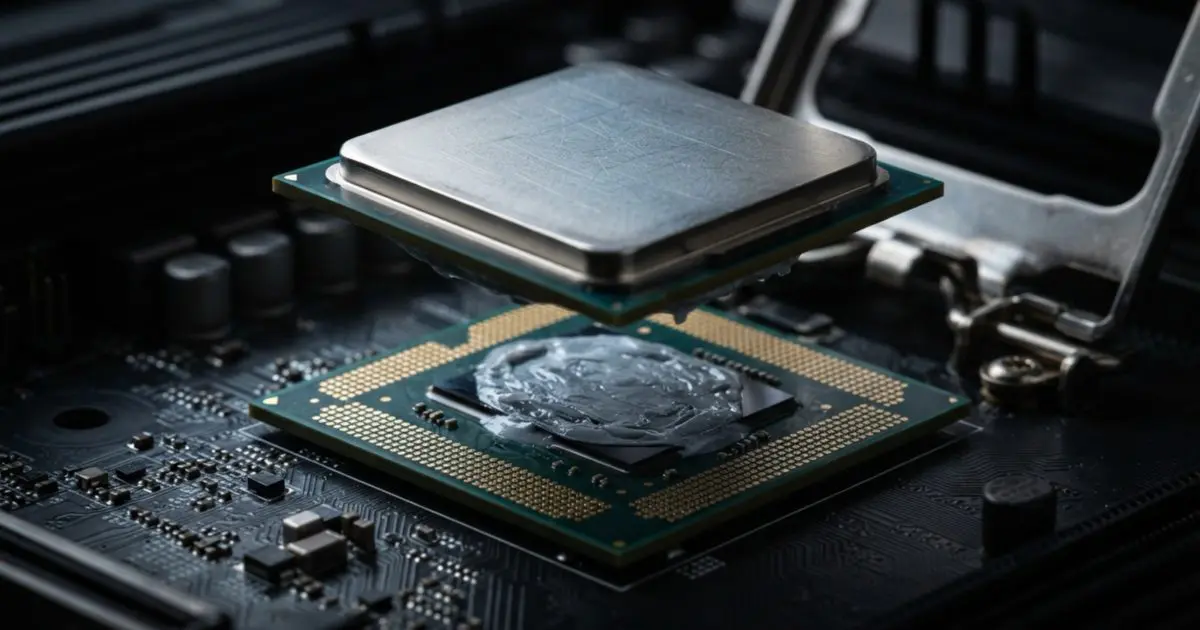
Google Quantum AI researchers detailed challenges in cooling quantum systems, finding that standard statistical mechanics assumptions don’t easily translate to the limited size of current devices. Their work revealed that small heat baths cause system recurrences instead of stable states, hindering thermalization. Experiments on a 35-qubit Google processor demonstrated low-energy state preparation using a resettable bath of auxiliary qubits, and theoretical advances from Chen et al. offer algorithms that may reduce the need for perfect energy resolution, though algorithmic challenges remain.
7. IBM Releases Qiskit Fermions for Advanced Molecular Simulation

IBM has released Qiskit Fermions, an open-source software framework to simplify quantum simulations of molecules and materials. The tool addresses a gap in existing quantum software by directly handling fermionic systems—the behavior of interacting particles—before translating them into qubit-based instructions. By delaying this conversion, Qiskit Fermions enables circuit optimizations, reducing two-qubit gate depth in simulations like the Fermi-Hubbard model, and offers researchers greater flexibility in developing new quantum algorithms.
8. Origin Quantum Achieves High-Fidelity Qubit Routing on Superconducting Processor
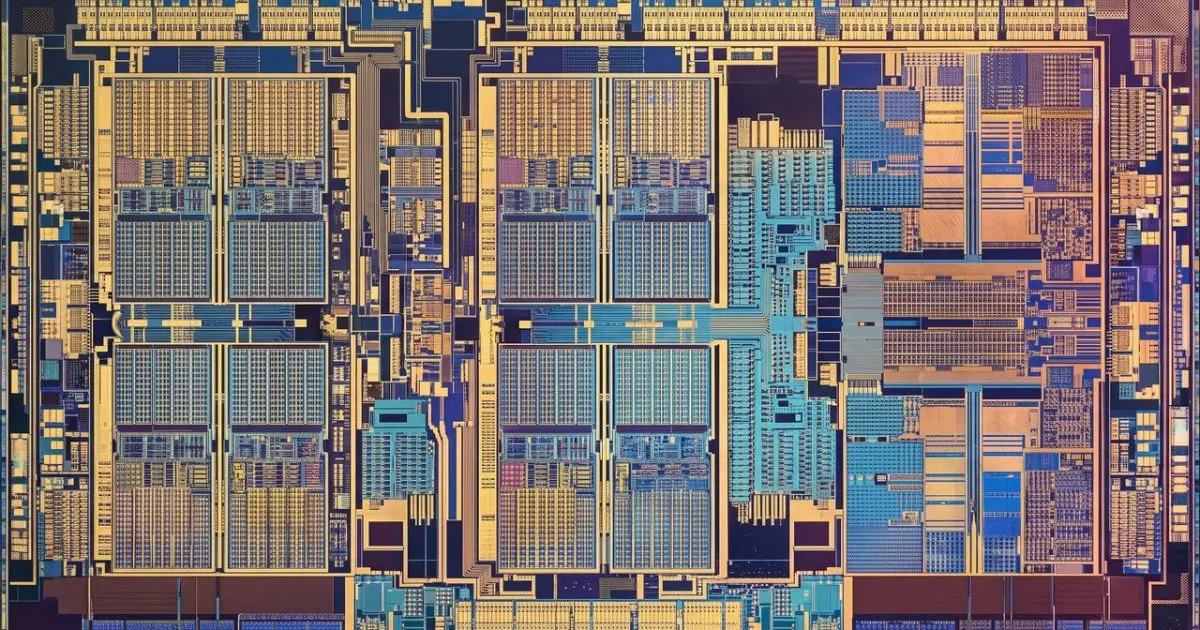
A team from Origin Quantum, in collaboration with Chinese institutions, demonstrated coherent quantum routers on a superconducting processor, enabling a new approach to quantum random access memory (QRAM). Experiments yielded an average fidelity of 94.8% for individual routers and 82.4% for a two-layer routing network. This system utilizes a transition composite gate scheme to streamline qubit movement and includes an erasure-detection capability to mitigate routing errors, representing progress toward scalable quantum memory and networks. The work establishes a hardware framework for managing quantum information within a processor.
9. Taiwan-IBM Hackathon Advances Quantum Algorithms, International Collaboration

The National Taiwan University-IBM Quantum Computer Center concluded its 2026 hackathon August 12-14, after a pandemic-related cancellation in 2021. The event drew over 80 participants, including international teams from Japan, South Korea, and the Czech Republic, fostering progress in quantum computing education. Winning teams developed a variational quantum circuit framework with reduced parameters and explored methods for quantum compilation and continual learning; one team also achieved full accuracy on IBM’s Marrakesh hardware using quantum reinforcement learning. The hackathon, funded since 2019 by Taiwan’s National Science and Technology Council, demonstrated advances in both algorithm development and hardware application.
10. Photonic’s New QLDPC Code Reduces Qubit Count for Quantum Logic

Photonic demonstrated a quantum low-density parity-check (QLDPC) code family, called SHYPS codes, capable of performing quantum computation with fewer qubits. This advancement requires fewer physical qubits than current surface codes, enabling more efficient quantum logic and error correction. The company’s Entanglement First architecture supports the high connectivity needed for these codes, representing a demonstrated result with implications for quantum computer development and timelines. This research, published in Nature Communications, marks a milestone in reducing the hardware demands of practical quantum computing.



See today’s quantum computing news on Quantum Zeitgeist for the latest breakthroughs in qubits, hardware, algorithms, and industry deals.