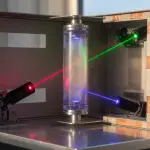
IBM recently deployed the Quantum System Two in Chicago with $750 million in state and private investment, indicating increased competition to build practical quantum computers. The system will initially focus on drug discovery and power grid optimization, but reliable computation with imperfect qubits remains a challenge. This week, Quantinuum and NVIDIA announced approaches to address this. Quantinuum’s Nexus platform aims to simplify error correction for developers, while NVIDIA is using AI to optimize hardware design for improved error resilience, successfully demonstrating eight-qubit correction.
The financial implications of this push are becoming increasingly visible. IonQ reported a 336% revenue increase, driven by demand for its systems and foundry services, and secured a $300 million DARPA contract. Simultaneously, IQM Quantum Computers secured EUR 42.2 million in Q3 orders, largely from CSC’s LUMI AI Factory for its error-correction platform. These figures suggest a shift from purely academic investment toward commercial applications, and a growing willingness to pay for solutions that address the core problem of qubit stability.
IBM’s work on verifying quantum code distances, identifying overestimates in published results, shows the need for rigorous validation as the field matures. The coming years will reveal whether these converging efforts, software abstraction, AI-driven hardware, and increased investment, can deliver fault-tolerant quantum computing at scale, or if the limitations of current technology will continue to define the timeline.
1. IBM Deploys Quantum System Two in Chicago, Delivering Early Results
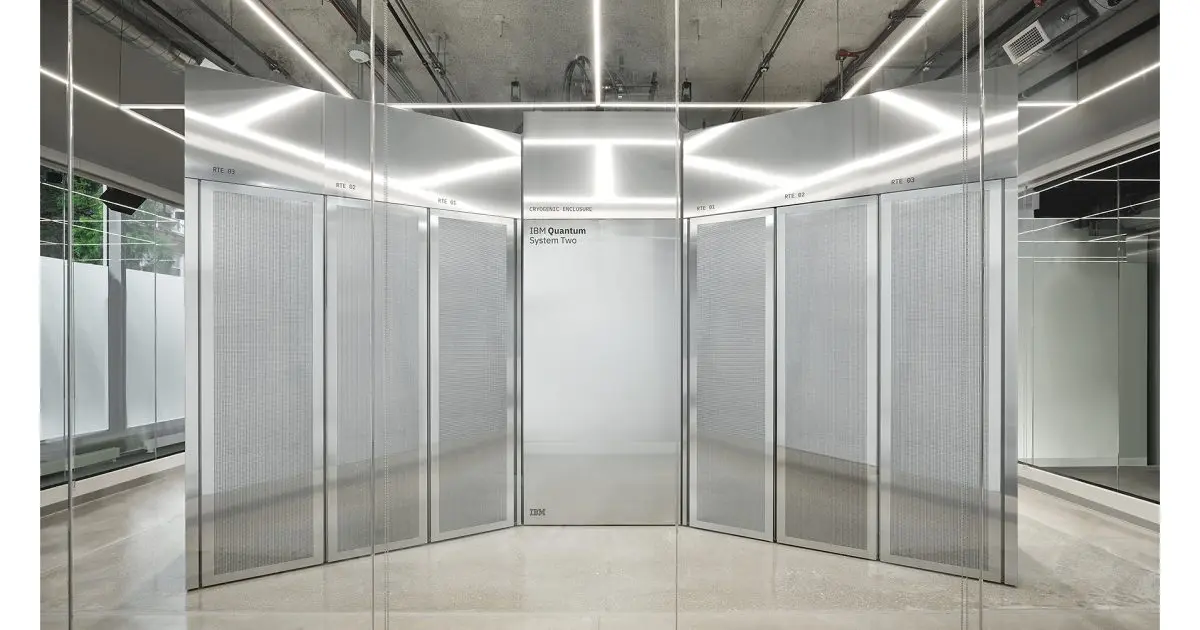
IBM launched the Quantum System Two in Chicago on November 6, 2026, its most advanced quantum computer to date. Powered by the IBM Quantum Nighthawk chip, the system at the University of Chicago’s Hyde Park Labs supports research in drug discovery and power grid optimization, with early collaborations including Deloitte, AbbVie, EPRI, and the University of Illinois Urbana-Champaign. This deployment builds on the foundation of the NQAC, established in 2024 with IBM as a key member, and the Illinois Quantum and Microelectronics Park, establishing Illinois as a growing quantum hub. IBM is also investing in workforce development through the FutureNow Chicago center, a partnership with City Colleges of Chicago, creating 750 jobs in AI, cybersecurity and quantum computing. The system’s arrival is intended to accelerate the translation of quantum research into practical applications for businesses and researchers.
2. IBM Certifies Quantum Code Distances Up To 16 Using New Method

IBM researchers Bin Cheng, Naixu Guo, and Feng Pan have developed a method to accurately verify the performance of quantum error correction codes. Their technique, using tropical partition functions and rank-based dynamic programming, certified a circuit distance of 16 for IBM’s two-gross memory circuits, correcting a prior assumption of 18. This new approach also audited 26 recent papers, identifying overestimates in reported code distances, with discrepancies reaching at least eight. By allowing the use of imperfect qubits, the team showed that 94% of memory blocks remain usable when certified at a distance of 10, an improvement over the 53% achievable with only perfect blocks.
3. Quantinuum Launches Nexus Platform for Fault-Tolerant Quantum Application Development
Quantinuum has introduced Nexus, a software platform designed to accelerate the creation of applications for future fault-tolerant quantum computers. The platform’s initial release features Guppy FT, a programming framework that shields developers from the complexities of quantum error correction, allowing them to build applications without specialized QEC knowledge. This abstraction layer, coupled with tools like InQuanto, enables practical experimentation with fault tolerance today, and will remain compatible with future hardware improvements culminating in the 2029 launch of Quantinuum’s Apollo computer. By decoupling application development from the specifics of error correction, Nexus aims to foster a more collaborative ecosystem and bridge the gap between algorithm design and deployment, ultimately making fault-tolerant quantum computing more accessible.
4. NVIDIA Achieves Eight-Qubit Error Correction with AI-Driven Hardware Design
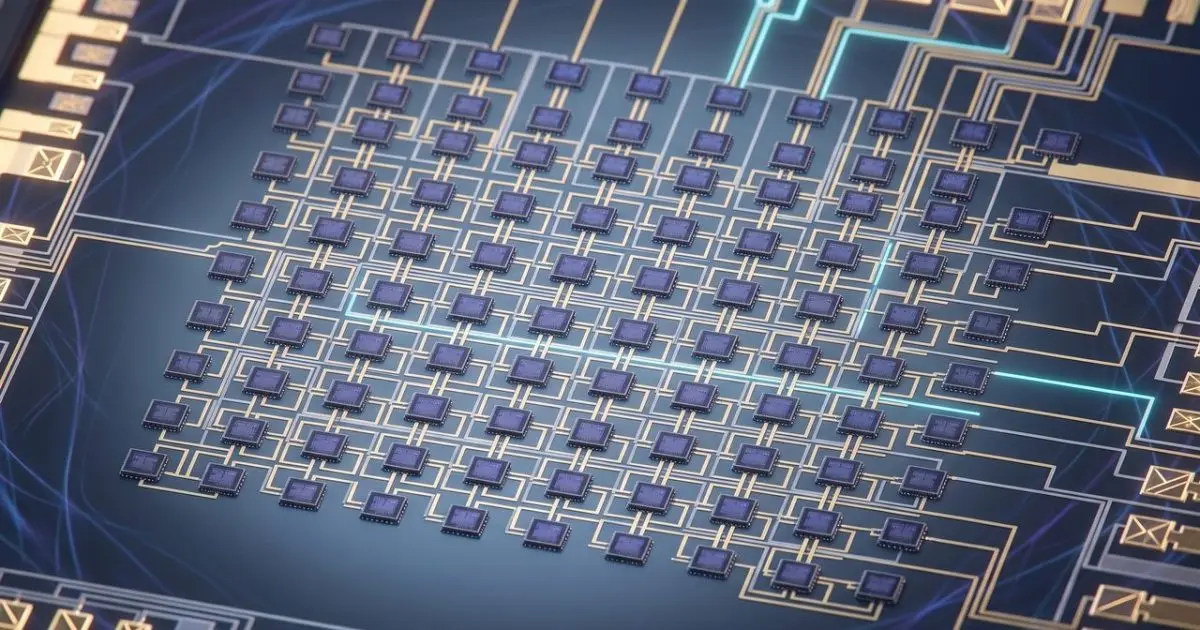
NVIDIA researchers, including Arpit Arora, Adam Holmes, Krysta M. Svore, and Taylor L. Patti, have demonstrated an AI-assisted workflow for designing quantum error correction directly onto superconducting hardware. The team successfully tested an eight-qubit toric code, connecting the quantum code space to the low-energy states of a physical device model for the first time. Their method groups anticommuting Pauli interactions to more efficiently bound unwanted interactions, outperforming traditional summation techniques and providing a tighter constraint on system behavior. This pipeline identifies problematic interactions and offers actionable insights for refining device couplings, potentially streamlining future quantum hardware development and enabling predictive engineering. The work formally verified the presence of isolated low-energy states essential for maintaining the intended code space.
5. IonQ Reports $173.8 Million in Revenue, Orders Reach $1.2 Billion
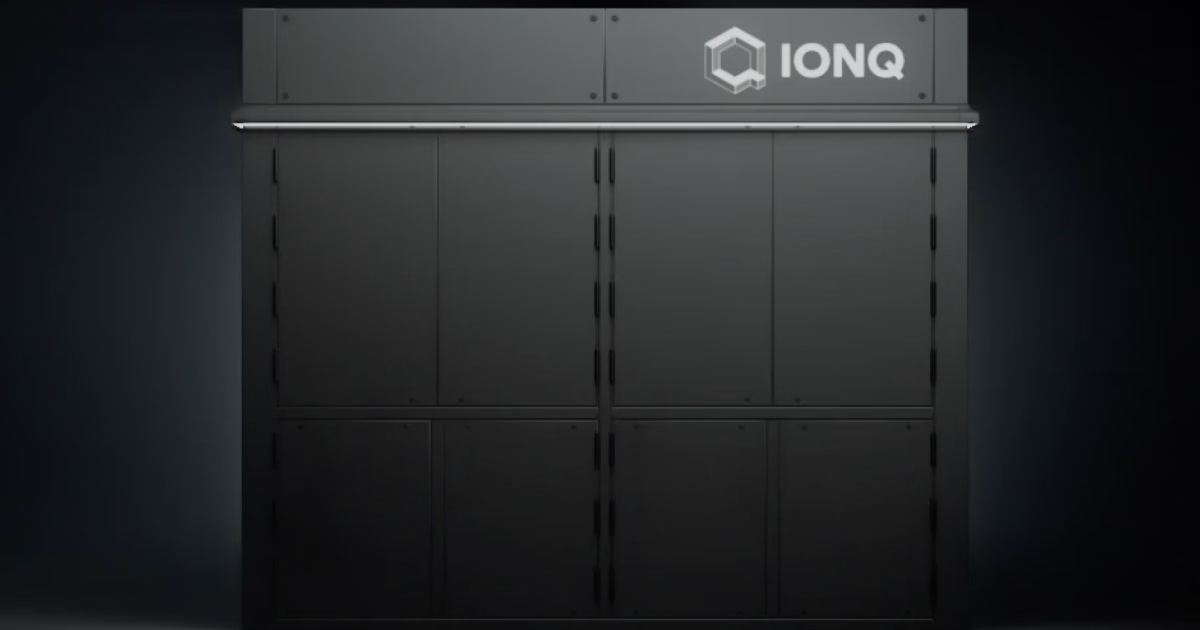
IonQ reported record third-quarter revenues of $173.8 million, a 336% increase year-over-year, and raised its full-year revenue guidance to between $505 and $515 million. This growth was driven by deployments of the IonQ Tempo computer and the performance of its SkyWater foundry services, which generated $83.5 million. The company’s backlog totaled $1.2 billion, fueled by demand for the Superion 256 system and a DARPA program with a potential value of up to $300 million. IonQ is expanding beyond computing with acquisitions like Elisity, adding quantum security solutions to its offerings and building a broader quantum ecosystem. With $3.7 billion in cash, IonQ has financial resources to invest in its technology and manufacturing infrastructure.
6. Quantinuum Reports 233% Revenue Increase, Achieves 99.9995% Logical Fidelity
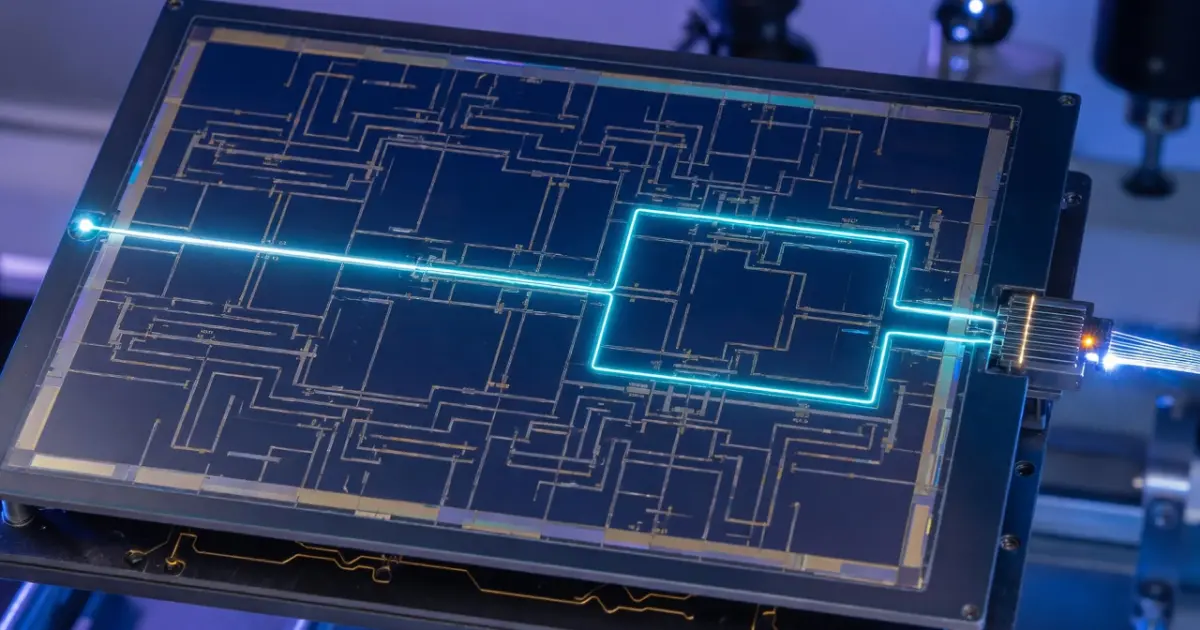
Quantinuum announced $9.1 million in revenue for the third quarter of 2026, a 233% increase over the previous year’s $2.7 million. This growth coincides with a tenfold rise in job submissions to their Nexus platform, indicating a move beyond purely academic use. The company’s Helios system achieved 99.9995% logical fidelity, an error rate ten times lower than its previous record and better than other hardware. Quantinuum also released Nexus software in September with Guppy tools for logical-qubit programming and supported error-correction encoding. Planned enhancements for a December release will expand hybrid quantum-classical workflows, supported error-correction codes, and execution analytics for application optimization, supporting over 215 organizations currently using the platform.
7. ORNL, IBM, and AMD Advance Quantum Error Correction with 120-Qubit System

Oak Ridge National Laboratory, collaborating with IBM and AMD, has launched a co-design platform to accelerate quantum error correction research. The platform integrates IBM’s 120-qubit Nighthawk quantum computer with ORNL’s Umbra high-performance computing system, powered by AMD Instinct MI355X GPUs and Turin CPUs. This combination provides the classical computing power needed to decode quantum information and optimize error correction techniques, addressing a challenge in scaling quantum systems. Researchers will use the platform to evaluate different approaches and inform the development of both IBM Quantum Starling and future supercomputers, supporting the Department of Energy’s Quantum Genesis Mission. The initiative builds on previous collaborations and aims to streamline the entire quantum computing process, from circuit optimization to software orchestration.
8. IQM Quantum Computers Designs Honeycomb Lattice for Enhanced Qubit Connectivity

IQM Quantum Computers has designed a honeycomb lattice for superconducting qubits, aiming to improve connectivity and reduce errors. This architecture allows each qubit to connect to twelve neighbors within a unit cell, using tunable couplers and a shared central element to create all-to-all connectivity. The team’s novel conditional-Z gate scheme reduces gate operation time, performing in a single step where previous designs required two MOVE operations. By mitigating crosstalk from neighboring qubits and addressing decoherence, this design offers a pathway to faster and more reliable quantum computations, particularly as quantum processors scale up.
9. IonQ Allocates 300 Hours of Quantum Time to Commonwealth Universities

IonQ is providing 300 annual hours on its quantum computing platform to universities in developing Commonwealth countries, focusing on Africa and the Caribbean. The initiative includes access to the cloud platform, guest lectures from IonQ engineers, and support for student hackathons, building a skilled quantum workforce. Beyond computing time, IonQ will also offer security specialists to help Commonwealth central banks transition to quantum-safe cryptography, protecting financial systems from future attacks. Small Island Developing States will receive free radar satellite imagery and analysis for disaster response, coastal monitoring, and illegal fishing detection, enabling more effective resource management. IonQ anticipates these commitments will foster long-term collaboration and sustained growth in quantum technology across the Commonwealth.
10. IQM Quantum Computers Secures EUR 42.2 Million in Q3 Orders with Halocene Platform

IQM Quantum Computers reported EUR 42.2 million in new orders for the third quarter of 2026, with a EUR 33 million contract from CSC’s LUMI AI Factory for its Halocene error-correction platform driving growth. This brings the company’s year-to-date order intake to EUR 52.9 million, increasing the total order backlog to EUR 102.5 million as of September 30, 2026. IQM also secured its first quantum computer sales in South America and a second in Japan, demonstrating commercial expansion. Revenue increased 51% year-over-year to EUR 8.9 million from commercial contracts, and the company maintains its full-year guidance of EUR 65-75 million in order intake and EUR 42-47 million in revenue. A leading AI factory committed to a multi-year path toward logical qubits on IQM hardware.



See today’s quantum computing news on Quantum Zeitgeist for the latest breakthroughs in qubits, hardware, algorithms, and industry deals.