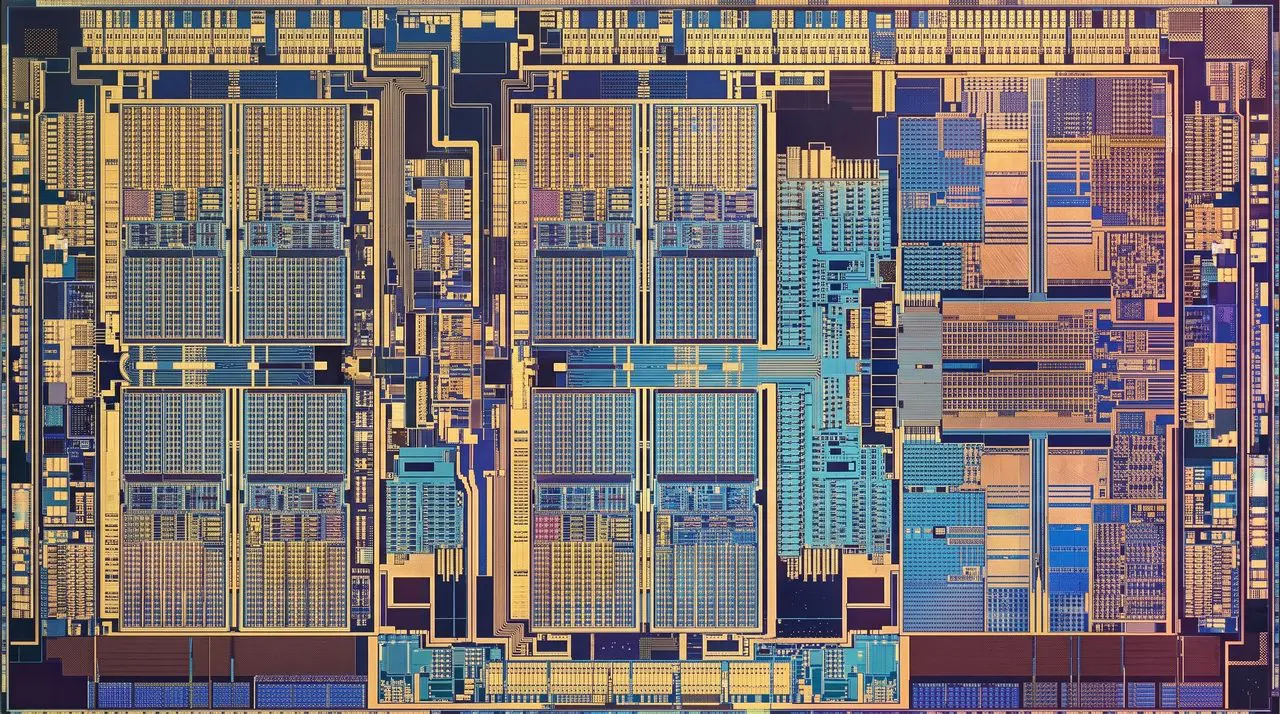
Researchers affiliated with institutions in China, in collaboration with Origin Quantum, have demonstrated coherent quantum routers, essential components for a novel quantum random access memory system on a superconducting processor. The quantum router at the core of their implementation utilizes a transition composite gate scheme, preserving straightforward initialization while reducing circuit complexity; experiments achieved an average fidelity of 94.8% across three individual routers. A two-layer quantum routing network achieved a fidelity of 82.4%. These results represent an advancement in quantum routing technology, providing enhanced fidelity and practical scalability crucial for future quantum computing architectures.
Superconducting Processor Enables Bucket-Brigade QRAM
A superconducting processor has enabled the creation of a quantum random access memory (QRAM) system, a development researchers affiliated with institutions in China, including Origin Quantum, report represents a novel approach to managing quantum information. This architecture, previously unrealized coherently, allows for the directed movement of qubits within a processor. The demonstrated system relies on quantum routers to move qubits, utilizing a transition composite gate scheme that streamlines gate operations.
By leveraging two-qubit primitives in its construction, the quantum router preserves straightforward initialization and calibration while significantly reducing circuit depth and duration relative to traditional gate-based decompositions. Encoding routing addresses in nonadjacent qutrit states, specifically |0⟩ and |2⟩, inherently enables erasure-detection capability, providing efficient postselection to mitigate routing errors. This design choice allows the system to identify and correct for some errors during the routing process, improving the reliability of quantum computations.
Experimentally, the researchers achieved an average fidelity of 94.8% across three individual quantum routers. This multi-layer network confirms the potential for building more complex and powerful quantum memory systems. The team’s approach also allows for quantum information transfers accurately when routing addresses are prepared in arbitrary quantum superpositions, a key requirement for many quantum algorithms. This partnership highlights a focused effort to translate theoretical advancements in quantum information science into practical quantum hardware.
The research team included Sheng Zhang, Yun-Jie Wang, Peng Wang, Ren-Ze Zhao, Xiao-Yan Yang, Ze-An Zhao, Tian-Le Wang, Hai-Feng Zhang, Zhi-Fei Li, Yuan Wu, Hao-Ran Tao, Liang-Liang Guo, Lei Du, Chi Zhang, Zhi-Long Jia, Wei-Cheng Kong, Zhuo-Zhi Zhang, Xiang-Xiang Song, Yu-Chun Wu, Zhao-Yun Chen, Peng Duan, and Guo-Ping Guo. The work establishes a hardware-efficient framework that advances the development of scalable quantum memory and large-scale quantum networks.
Transition Composite Gates Streamline Quantum Router Design
This novel approach to quantum memory directly addresses a longstanding limitation in quantum computing by enabling the dynamic management and retrieval of quantum information. Unlike traditional memory architectures, this system actively directs qubits to specific memory locations, a capability crucial for complex algorithms. Central to this advancement is the implementation of coherent quantum routers, devices that move qubits between processing and storage elements. These routers utilize a “transition composite gate scheme,” a technique leveraging auxiliary energy levels to mediate conditional qubit interactions.
This reduction in circuit depth and duration is a significant step toward mitigating the effects of decoherence, a major obstacle in building stable quantum computers. The collaborative effort involved researchers affiliated with institutions including the Laboratory of Quantum Information at USTC and Origin Quantum, highlighting a growing trend of partnerships between academic institutions and quantum computing companies. This synergy is accelerating the translation of theoretical advancements into tangible hardware.
This architecture relies on the precise and coherent direction of qubits, a feat previously challenging to achieve without introducing significant errors or operational complexity. This inherent erasure-detection capability represents a step towards building more robust quantum systems.
82.4% Fidelity Achieved in Individual Quantum Routers
This architecture moves beyond simply storing qubits to actively managing their flow, a critical step towards realizing more complex quantum computations. The team’s approach centers on coherent quantum routers, devices designed to direct qubits between storage locations with minimal loss of quantum information. This advancement addresses a fundamental limitation in scaling quantum computers; possessing qubits is insufficient without the ability to precisely control their interactions.
This streamlined approach is essential for minimizing decoherence, the loss of quantum information due to environmental noise. Crucially, the design incorporates a unique error-detection mechanism allowing for efficient postselection, a technique to identify and discard erroneous routing operations, thereby improving the overall reliability of the quantum memory.
Two-Layer Network Validates Scalable Quantum Routing
The conventional image of quantum computation centers on static qubits performing calculations; however, directing the flow of quantum information is proving essential for building more complex processors. This system departs from simply possessing qubits to actively directing their movement within a superconducting processor, a critical step towards realizing practical quantum algorithms.
This advancement hinges on a two-layer quantum routing network, which validated the scalability of the approach. The implications extend beyond quantum random access memory, as the ability to reliably route qubits opens doors to more complex quantum algorithms, including Grover’s search and quantum machine learning, potentially accelerating progress in fields ranging from drug discovery to materials science.
👉 More information
🗞 Demonstrating Coherent Quantum Routers for Bucket-Brigade Quantum Random Access Memory on a Superconducting Processor
✍️ Sheng Zhang et al.
🧠 DOI: http://link.aps.org/doi/10.1103/h5m3-qrn9


See today’s quantum computing news on Quantum Zeitgeist for the latest breakthroughs in qubits, hardware, algorithms, and industry deals.