Delta Gold Technologies is directing US$500,000 from its 2026 budget to Penn State for a magnetic field instrument designed to manipulate three-dimensional magnetic fields around gold nanoclusters. This investment adds a dedicated workstream in quantum sensing to Delta Gold’s existing US$6 million, six-year program, signaling a significant shift in focus toward near-term intellectual property creation.
“We are very pleased to announce the details of the acceleration of quantum research at Penn State and the University of Toronto,” says R. Michael Jones, CEO of Delta Gold, as the company expands its sensing and communications work at both Penn State and the University of Toronto.
Delta Gold Expands Quantum Sensing at Penn State & Toronto
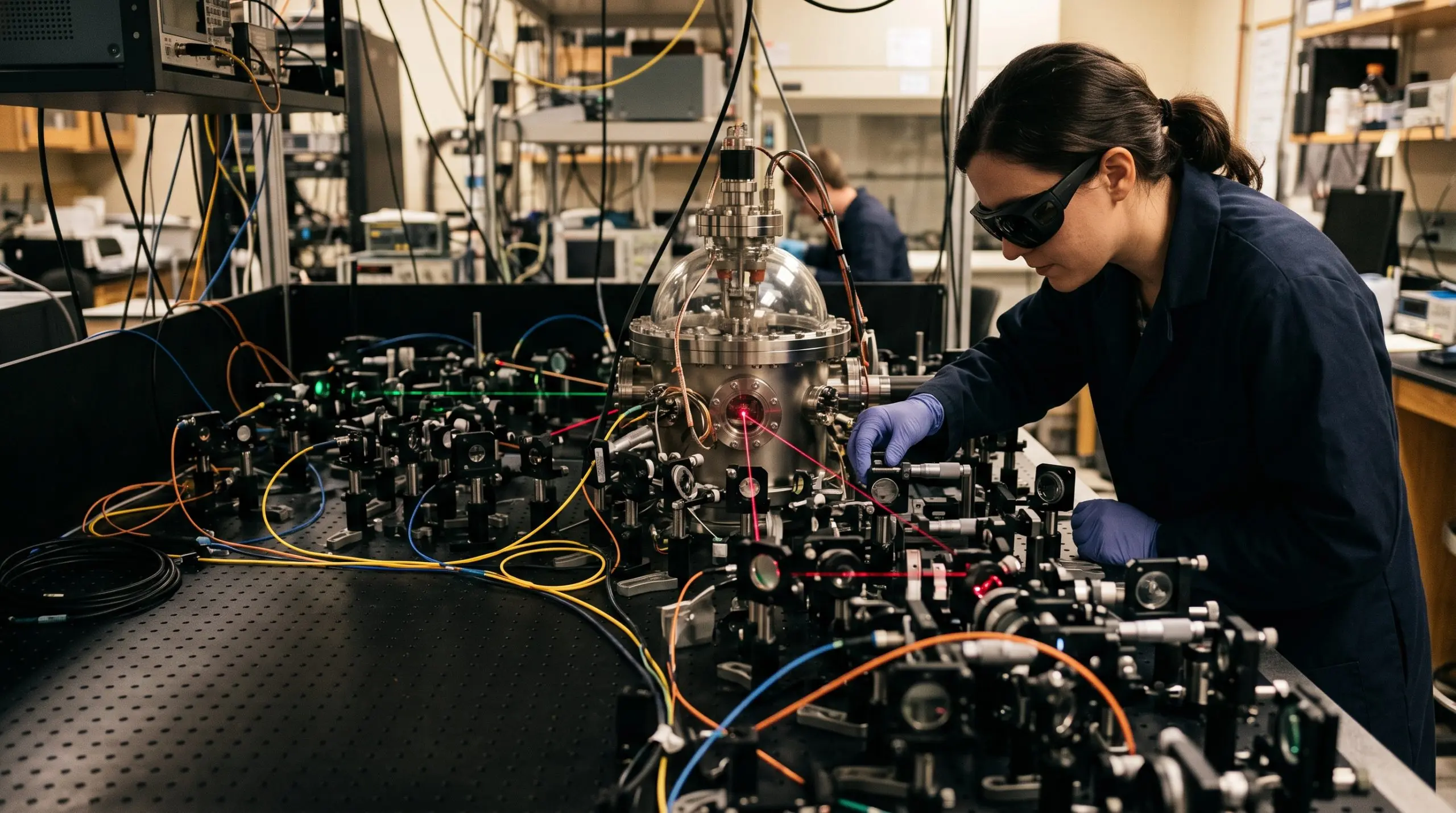
Penn State will construct a magnetic field instrument with US$500,000 from Delta Gold’s current budget, designed to induce alterations in three-dimensional magnetic fields surrounding gold nanoclusters. This specialized equipment will facilitate investigations into the potential of these nanoclusters as robust platforms for quantum sensing, including their responsiveness to magnetic field changes.
Delta Gold anticipates the instrument will support the development of devices for applications like non-GPS navigation, using the Earth’s magnetic field as a reference point. This focus is coupled with ongoing investigations into gold’s potential as a material for quantum computing, creating a dual pathway for innovation.
Professor Harry Ruda of the University of Toronto explained that quantum sensing investigations collaborating with Penn State will provide near-term opportunities while also furthering their combined investigation into the potential of gold for a quantum computer. The two institutions are actively collaborating, with Penn State concentrating on the photonic properties of gold and the University of Toronto examining its electronic properties. The company’s commitment to the University of Toronto remains at C$3 million, with C$2 million already paid, and an additional C$500,000 in optional research funding is available after the initial three-year vesting period.
We are very pleased to announce the details of the acceleration of quantum research at Penn State and the University of Toronto.
At Penn State, quantum communications and sensing have been
Penn State Focuses Gold Nanoclusters for Magnetic Field Sensing
Penn State will use a newly purchased US$500,000 magnetic field instrument to manipulate the 3D magnetic environment surrounding its gold nanoclusters, a key step in evaluating their potential as quantum sensors. This investment directly supports experiments designed to induce magnetic field changes and assess the nanoclusters’ suitability for applications including navigation, building on three recently filed patent applications. The research focuses on using the stable spin-polarized light emission exhibited by these gold nanoclusters, a characteristic the company believes is important for creating a robust and sensitive magnetometer.
Professor Kenneth Knappenberger of Penn State explained the anticipated benefits of this platform, stating, “Our gold nanoclusters are stable spin-polarized emitters.” This work represents a deliberate shift toward near-term commercial applications within the larger, six-year research program. Complementing the Penn State efforts, the University of Toronto will receive funding for advanced fabrication and microscopy equipment, with a C$500,000 budget amendment approved for its purchase.
Quantum sensing investigations collaborating with Penn State will provide near-term opportunities while at the same time furthering our combined investigation into the potential of gold for a quantum computer.
Professor Harry Ruda of the University of Toronto
University of Toronto Fabricates Layers for Quantum Sensing Devices
The University of Toronto has secured C$500,000 to acquire specialized fabrication equipment, enabling the construction and analysis of layered atomic structures intended for quantum sensing devices. This funding, drawn from a previously committed C$3 million sponsorship by Delta Gold Technologies, will support research focused on the electronic properties of gold, complementing Penn State’s work on its photonic properties. The equipment purchase represents a direct investment in the physical infrastructure needed to advance device development, rather than solely fundamental research.
This staged investment strategy suggests a long-term vision for sustained collaboration and intellectual property creation. Collaboration between the University of Toronto and Penn State is central to this expanded program, with each institution focusing on distinct aspects of gold’s properties. Professor Kenneth Knappenberger of Penn State highlighted the synergistic potential of the combined research efforts, stating, “We expect them to be ideal for a robust platform for quantum sensing, including responding to magnetic field changes, and the next phase of work will test that model.”
Our gold nanoclusters are stable spin-polarized emitters. We expect them to be ideal for a robust platform for quantum sensing, including responding to magnetic field changes, and the next phase of work will test that model.
Professor Kenneth Knappenberger of Penn State



See today’s quantum computing news on Quantum Zeitgeist for the latest breakthroughs in qubits, hardware, algorithms, and industry deals.