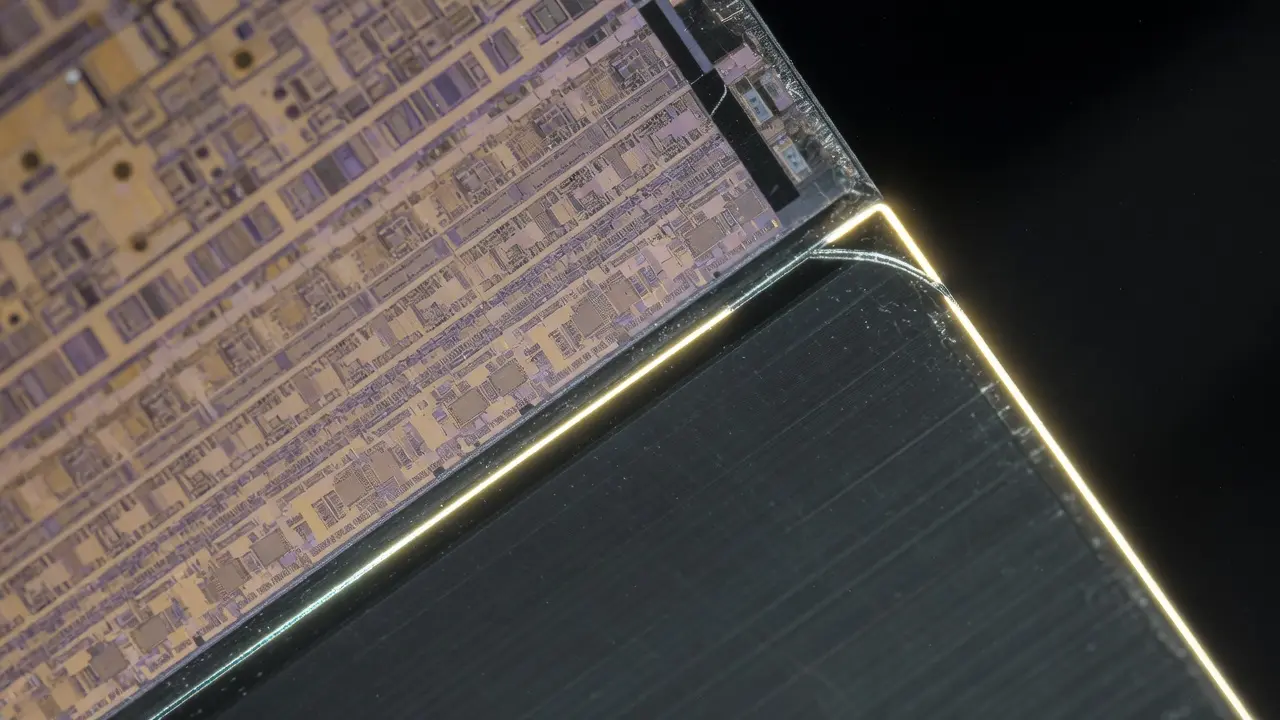
The team’s work demonstrates high-fidelity operations through a unified, automated calibration routine applied to a six dot semiconductor quantum processor. This approach systematically reaches over 99% readout fidelity and greater than 99% shuttling fidelity, all on timescales comparable to expert human operators. The flexibility of the method provides a systematic framework to tune semiconductor quantum devices and enables interpretability of the identified optimal operation points.
Automated Calibration for Spin Qubit Operations
Automated calibration reached 99. 5% single-qubit gate fidelity on a six-dot semiconductor quantum processor, a result demonstrating a new level of precision in controlling spin qubits. The team’s method systematically optimizes gate operations by tailoring cost functions and tuning parameters based on the underlying physics of each operation, a departure from traditional manual calibration techniques. The calibration process focused on three key building blocks for quantum computation: readout, shuttling, and single-qubit gate operation.
Researchers employed an evolutionary algorithm to fine-tune parameters within a linear array of six gate-defined quantum dots fabricated in a silicon-germanium heterostructure. Specifically, the automated routine addresses the performance of Pauli Spin Blockade (PSB) readout, a technique sensitive to parameters like pulse amplitudes and ramp times. The optimization of shuttling, the movement of qubits between dots, was quantified by assessing qubit coherence, with the algorithm aiming to eliminate background potential variations caused by disorder in the material.
Unified Evolutionary Optimization with CMA-ES
The optimization process used the Covariance Matrix Adaptation Evolution Strategy (CMA-ES) to navigate high-dimensional parameter spaces inherent in devices exhibiting long-range Coulomb interactions, a characteristic that often complicates calibration. This gradient-free approach enhances flexibility when dealing with noise, a critical factor in maintaining qubit stability and performance. The unified algorithmic framework employed is designed for straightforward integration into existing spin-qubit operation software, suggesting a potential path toward simplifying quantum processor control.
Initial device tuning brought visibility to approximately 85% before the automated optimization began, establishing a baseline for improvement. Subsequent CMA-ES runs tracked the evolution of a task-specific cost function, with the algorithm iteratively adjusting parameters to minimize this value. The resulting parameter sets were then uploaded to an arbitrary wave generator, controlling the device and enabling a closed-loop calibration process.
Analysis of Rabi oscillations, obtained using parameters extracted from the optimization points, revealed a Rabi visibility of 99.3 ± 0.6%, demonstrating a substantial increase in signal clarity. Shuttling fidelity over an effective distance was optimized. The team fitted measured datasets to the function A = A₀pᵈ + C to quantify this improvement, highlighting the precision of the automated calibration.
99% Readout Fidelity via Optimized PSB
Achieving greater than 99% readout fidelity represents an advance in semiconductor quantum processor development, a level previously requiring extensive manual tuning by expert operators. This precision was systematically reached using an automated calibration routine, exploring the covariance between multiple variables to reveal subtle influences on readout quality not readily apparent through traditional methods. The algorithm’s success hinges on its ability to maximize Pauli Spin Blockade (PSB) readout visibility, consistently exceeding 98% and translating directly into the reported fidelity figures.
The optimization process itself involved tailoring 14 variables, voltages controlling detuning and energy levels during the “read” stage, alongside ramp and measurement times, using the CMA-ES algorithm. Initial parameter sampling drew from a normal distribution, iteratively refined over 100 generations, each evaluating 50 parameter sets across 1000 measurement shots.
Analysis of the most significant parameters revealed that contributions to readout fidelity were heavily weighted towards plunger and barrier voltages, demonstrating the impact of crosstalk effects on maintaining the Pauli spin blockade regime. Specifically, initialization parameters and proved critical in achieving visibility exceeding 99%. This consistency highlights the potential for scaling up quantum processors without relying on time-intensive manual adjustments.
The method’s reliance on covariances between variables is not merely a computational trick. It provides insights into the complex interplay of parameters influencing device performance. These insights, previously obscured during manual tuning, offer a deeper understanding of the underlying physics governing qubit behavior.
The ability to identify and quantify the contributions of individual parameters, as illustrated by the pie and bar charts detailing their impact on readout fidelity, is a valuable benefit of this automated approach. The framework’s adaptability extends beyond optimizing individual operations.
High-Fidelity (99%) Quantum Dot Shuttling
The automated approach to calibration addresses a significant bottleneck in quantum computing, where tuning individual components often requires substantial time and expertise. The research demonstrates that the automated method can not only match but, in some instances, surpass the results of manual tuning, suggesting a pathway to scaling up quantum processors without a corresponding increase in human effort.
Specifically, the team’s work built upon earlier conveyor shuttling experiments, resolving crosstalk issues that previously required manual intervention to reach optimal performance. The team focused on three core operations, readout, shuttling, and single-qubit gates, demonstrating the versatility of the approach.
The automated tuning also reveals the relative importance of different parameters. The largest contributions to readout fidelity are attributed to the plunger and barrier voltages, due to crosstalk between control lines. Identifying these key parameters allows for more targeted refinement and a deeper understanding of the device’s behavior. This adaptability is particularly valuable given the inherent variability of semiconductor devices and the complexity of the noise environment in which they operate.
Automated tuning of semiconductor quantum computing platforms is seen as a top candidate for artificial intelligence methods, and this work provides a concrete example of its potential. Consistently achieving high-fidelity operations with minimal human intervention is an essential step toward building practical, scalable quantum computers. The team’s findings suggest that a contemporaneous, on-device global optimization can efficiently tackle a diverse set of semiconductor quantum processor operation tasks.
99.5% Single-Qubit Gate Fidelity with Benchmarking
Automated calibration routines have now achieved 99% readout fidelity, > 99% shuttling fidelity and > 99.5% single-qubit gate fidelity. This level of precision, reached through a unified optimization approach, demonstrates a pathway toward scaling quantum computing hardware without relying on extensive human intervention.
For example, the algorithm’s reliance on identifying correlations between variables improved readout quality to over 98% visibility, translating to 99% readout fidelity. This improvement was achieved by maximizing the probability of successful state detection, a critical step in quantum computation. Shuttling fidelity, essential for moving quantum information between qubits, also benefited significantly from the automated approach. The optimization focused on preserving the coherence of the electron wavefunction during the shuttling operation, a delicate process requiring precise control.
Single-qubit gate fidelity was assessed using a randomized benchmarking sequence, a standard method for characterizing gate performance. The cost function used for optimization focused on maximizing the return probability for the randomized benchmarking sequence, a metric directly related to gate accuracy. The speed of the automated process is notable; the single-qubit gate tune-up completed in just 20 minutes. The entire automated calibration sequence, encompassing readout, shuttling and single-qubit gates, required a total of approximately 10 hours and 25 minutes.
This timeframe is comparable to, or even shorter than, the time expert operators would typically spend performing the same tasks manually. The cost functions for each operation converged well before the total run time elapsed, indicating the efficiency of the algorithm.
The shuttling cost function converged after only one hour, while the readout visibility reached 98% after approximately one hour as well. “We use the settings corresponding to the green circle configuration to execute a full RB procedure,” the researchers noted, highlighting the precision of the automated process.
👉 More information
🗞 Unified evolutionary optimization for high-fidelity spin qubit operations
✍️ Sam R. Katiraee-Far et al.
🧠 DOI: http://link.aps.org/doi/10.1103/fl24-s4n7



See today’s quantum computing news on Quantum Zeitgeist for the latest breakthroughs in qubits, hardware, algorithms, and industry deals.