IEEE Quantum Week 2026 comes to Toronto from Sunday 13 September to Friday 18 September. Its programme is the largest the conference has published. Six days at the Metro Toronto Convention Centre carry 372 technical papers, 47 workshops, 48 tutorials and ten keynote sessions.
Few events in quantum technology cover the field at this range. The nine peer-reviewed technical tracks run from photonics and device engineering through algorithms, software systems, machine learning and networking to applications and industrial case studies, and each is treated at the depth of an IEEE conference rather than a trade show. Around that core sit the workshops, tutorials, panels and posters, together with a career fair and structured student mentorship, so the week works as a research meeting and as a place to meet the people actually building the quantum future.
The conference is also agnostic about how a qubit is built. Its technologies and engineering track alone covers superconducting, trapped-ion and silicon qubits, quantum dots, neutral atoms and photonics, while the algorithms and applications tracks add adiabatic computation and quantum annealing, so no single modality sets the agenda.
Research and commercial sessions run side by side across the six days. Workshops, tutorials and technical papers carry the research, while the panels, exhibits and career fair cover the business and hiring side.
Twelve keynote speakers lead the programme across ten sessions. The conference runs two keynote sessions on each full day, with a single session on the opening Sunday and another on the closing Friday. Tuesday morning is a joint IonQ session carrying two talks. Three of them run companies as chief executive. The rest hold senior technical, research or strategy roles at Microsoft, NVIDIA, IBM Research, IonQ, Quantum Machines, Oak Ridge National Laboratory and the University of Toronto. Both the commercial view and the research view run across the same week.
Each workshop takes 20 to 50 participants and runs as three 90-minute sessions. The conference prefers discussion over presentations, and the rooms are small enough for direct access to the people doing the work.
The attendance figures come from Quantum Week 2025 and the exhibitor number is the conference’s own expectation for 2026. They describe the audience that 2026 builds on. Industry and government made up 60 per cent of attendees and academia made up 40 per cent. Students were a quarter of the total, drawn from across both groups.
Why 2026 Is The Biggest Event Yet
IEEE Quantum Week has grown every year, and 2026 builds on that record. Every strand is larger than in 2025. Technical papers are up by more than two fifths. Workshop papers have more than doubled.
| Strand | Quantum Week 2025 | Quantum Week 2026 |
|---|---|---|
| Keynotes | 9 | 11 |
| Workshops | 41 | 47 |
| Tutorials | 37 | 48 |
| Technical papers | 261 | 372 |
| Workshop papers | 68 | 156 |
| Posters | 146 | 195 |
| Panels | 13 | 22 |
| Birds of a feather sessions | 3 | 7 |
The Keynote Speakers
Ten keynote sessions carry twelve speakers across the six days. Morning sessions run from 08:00 to 09:30 and evening sessions from 17:00 to 18:30, Eastern Daylight Time. Tuesday morning is a joint IonQ session with three speakers and two talks. Only Alán Aspuru-Guzik has no published talk title.
| Speaker | Organisation | Role | Session | Talk |
|---|---|---|---|---|
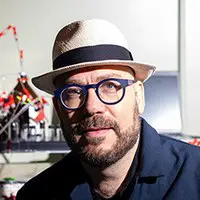 Alán Aspuru-Guzik | University of Toronto and NVIDIA Research | Professor | Wed 16 Sep, 08:00 to 09:30 EDT | Title not yet published |
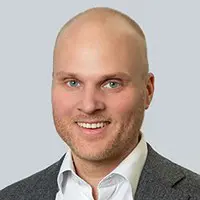 Niels Bultink | Qblox | CEO and Co-Founder | Thu 17 Sep, 08:00 to 09:30 EDT | Building the Quantum Infrastructure Layer |
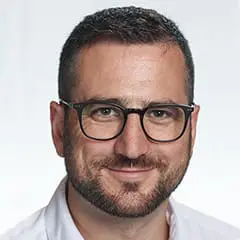 Gilad Ben-Shach | Quantum Machines | VP Business Development and Partnerships | Sun 13 Sep, 17:00 to 18:30 EDT | From Pulse to Platform: How Quantum Machines is Building the Control Layer for Fault-Tolerant Quantum Computing |
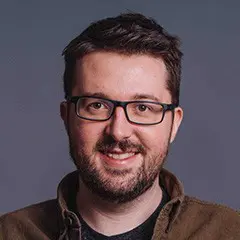 John Gamble | IonQ | Vice President, Architecture | Tue 15 Sep, 08:00 to 09:30 EDT | “Engineering Quantum for Real-World Impact” |
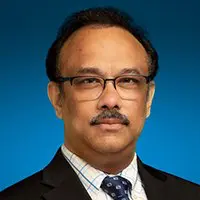 Rajeeb Hazra | Quantinuum | President and CEO | Mon 14 Sep, 17:00 to 18:30 EDT | Logically Speaking: The Next Era of Error Correction |
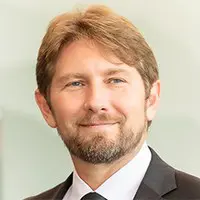 Travis Humble | Oak Ridge National Laboratory | Director of the Quantum Science Center and Distinguished Scientist | Thu 17 Sep, 17:00 to 18:30 EDT | Unleashing Quantum Acceleration: From Architectures to Applications |
 Ali Javadi-Abhari | IBM Research | Principal Research Staff Member and Head of Qiskit | Tue 15 Sep, 17:00 to 18:30 EDT | Software for Scaling Quantum Advantage |
 Lisa Lambert | IonQ | Vice President Global Strategy, and Managing Director Canada | Tue 15 Sep, 08:00 to 09:30 EDT | “Quantum, Eh? What Canada’s Quantum Journey Teaches Us About Building a Global Quantum Economy” |
 Martin Roetteler | IonQ | Head of Quantum Applications R&D | Tue 15 Sep, 08:00 to 09:30 EDT | “Engineering Quantum for Real-World Impact” |
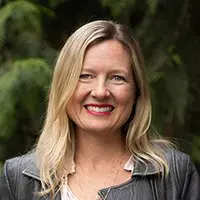 Krysta Svore | NVIDIA | Vice President of Applied Research for Quantum Computing | Wed 16 Sep, 17:00 to 18:30 EDT | Designing the Accelerated Quantum Supercomputer for the Fault-Tolerant Era |
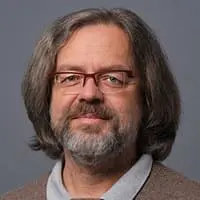 Matthias Troyer | Microsoft | Technical Fellow and Corporate Vice President | Fri 18 Sep, 08:00 to 09:30 EDT | Quantum Architecture for Utility Scale |
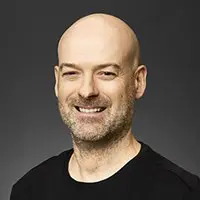 Christian Weedbrook | Xanadu | Founder and CEO | Mon 14 Sep, 08:00 to 09:30 EDT | Scaling Photonic Quantum Computing |
The keynotes cover every serious way to build a quantum computer. Rajeeb Hazra of Quantinuum speaks for trapped ions, and so do John Gamble and Martin Roetteler of IonQ. Lisa Lambert speaks for IonQ as well, on the policy and economics of building a national quantum sector rather than on the hardware. Christian Weedbrook of Xanadu speaks for photonics, and he speaks on home ground, because Xanadu has its headquarters in Toronto. Ali Javadi-Abhari of IBM Research heads Qiskit, the software most widely used on superconducting hardware.
The rest of the line-up brings the classical machines and the science. Niels Bultink of Qblox builds the control electronics these processors depend on. Krysta Svore of NVIDIA and Matthias Troyer of Microsoft shape how large enterprises set their quantum timelines. Travis Humble directs the Quantum Science Center at Oak Ridge National Laboratory. Alán Aspuru-Guzik of the University of Toronto and NVIDIA Research works on quantum chemistry and machine learning.
Who The Keynote Speakers Are
Christian Weedbrook founded Xanadu in 2016 and still runs it as chief executive from the company’s Toronto headquarters. Xanadu builds photonic quantum computers, and it also wrote PennyLane, the open source quantum machine learning library it released in 2018. The company listed on Nasdaq and the Toronto Stock Exchange under the ticker XNDU after completing a business combination with Crane Harbor Acquisition Corp., which made it the first publicly listed pure-play photonic quantum computing company. It has since entered discussions for up to 390 million Canadian dollars of support from the governments of Canada and Ontario.
Rajeeb Hazra is president and chief executive of Quantinuum, which listed on Nasdaq in June 2026. The company priced its Nasdaq listing at 60 dollars a share in June 2026, above the 53 to 55 dollar range it had guided, and raised 1.68 billion dollars in an upsized offering that left it valued at 15.7 billion dollars by the close of its first day of trading. Quantinuum trades under the ticker QNT and was formed in 2021 out of the merger of Honeywell’s quantum computing division with Cambridge Quantum, with Honeywell retaining roughly 48 percent of the voting power after the offering.
Lisa Lambert is vice president of global strategy at IonQ and its managing director for Canada. She came to the role from Quantum Industry Canada, where she was the inaugural chief executive and built the body into the national voice of the Canadian quantum sector before concluding her tenure at the end of June 2026. IonQ became the first publicly traded pure-play quantum computing company when it closed a business combination with dMY Technology Group III in September 2021 and began trading on the New York Stock Exchange the following day. It remains one of the most closely followed pure-play quantum companies on the market.
John Gamble is vice president of architecture at IonQ, where he oversees future machine designs and the characterisation, modelling and optimisation of the processors the company has already built. He took his doctorate in physics at the University of Wisconsin-Madison in 2013, working on the theory of quantum computing and solid state physics. He was a Harry S. Truman Fellow and then technical staff at Sandia National Laboratories, and a quantum engineer at Microsoft Quantum, before joining IonQ.
Martin Roetteler heads IonQ’s quantum applications research team, which works with customers to establish what the company’s machines are actually worth to them. He took his doctorate in computer science at the University of Karlsruhe in 2001. He led the quantum computing team at NEC Laboratories America from 2007 to 2013, then spent eleven years at Microsoft as a founding member of Azure Quantum and head of the Q# libraries team. He joined IonQ in 2024. His published work includes resource-optimised implementations of Shor’s algorithm and early work on benchmarking quantum applications.
Gamble and Roetteler share the Tuesday morning session with Lambert, and the two talks divide the company neatly. Lambert speaks for IonQ’s strategy and its Canadian operation, and Gamble and Roetteler speak for the machines and what runs on them.
Krysta Svore is vice president of applied research for quantum computing at NVIDIA, and she arrived there after nearly two decades at Microsoft. She led the Azure Quantum software team, which grew out of the Quantum Architectures and Computation group at Microsoft Research, and she held the titles of distinguished engineer and vice president of quantum software before she moved.
Matthias Troyer is a technical fellow and corporate vice president at Microsoft, where he works on the system architecture of quantum computers and their applications. He took his doctorate at ETH Zurich in 1994 and was a professor of computational physics there until he joined Microsoft in 2017. He is a fellow of the American Physical Society and has won both the Rahman Prize for Computational Physics and the Hamburg Prize for Theoretical Physics.
Niels Bultink is chief executive and co-founder of Qblox, which he built out of TU Delft after finishing a doctorate there. Qblox makes the control and readout stack that superconducting, spin and colour-centre processors depend on. In March 2026 the company announced a collaboration with Riverlane that puts Riverlane’s Deltaflow 2 error-correction engine directly into the Qblox control stack, aimed at taking latency out of real-time error correction.
Ali Javadi-Abhari is a principal research staff member at IBM Research and head of Qiskit, the most widely used quantum programming framework. Qiskit lets developers write circuits in Python and reach a full computing stack that runs them efficiently across a range of hardware, and Javadi-Abhari was one of its principal architects, as he was of the earlier Scaffold language. He holds a doctorate in computer science from Princeton, awarded in 2017, and his work concentrates on compilers and architecture for noisy hardware.
Travis Humble directs the Quantum Science Center at Oak Ridge National Laboratory, where he is also a distinguished scientist and directs the laboratory’s Quantum Computing Institute. Oak Ridge is a United States Department of Energy national laboratory and home to some of the largest supercomputers ever built. Humble’s focus is hybrid platforms that couple quantum processors to leadership-class high-performance computing, together with the applications and algorithms such machines would run, and he serves as editor in chief of ACM Transactions on Quantum Computing.
Alán Aspuru-Guzik is a professor of chemistry and computer science at the University of Toronto, cross-appointed across chemical engineering, materials science and medical science, and he is senior director of quantum chemistry at NVIDIA. His research sits where quantum computing, artificial intelligence and chemistry meet, taking in near-term algorithms, fast quantum chemistry simulation and self-driving laboratories for materials design.
Gilad Ben-Shach speaks for Quantum Machines as its vice president of business development and partnerships. The company builds the control systems that quantum computers are operated with, and its OPX platform drives superconducting, spin, neutral-atom, trapped-ion and optically addressable qubits from the same hardware. Its systems run in commercial development labs and university groups alike, and like Qblox the company works on the control layer rather than on the processors themselves.
Quantum Workshops
The 2026 programme carries 47 workshops, up from 41 for Quantum Week 2025. These are working sessions rather than presentations. For most researchers, the workshops are the strongest reason to attend.
A tutorial is taught and usually hands-on. It covers a specific tool or method in practical detail, and most run half a day. A workshop is a research meeting on one topic. It runs from 10:00 to 16:30 as three 90-minute sessions, takes 20 to 50 participants, and is built around contributed work and discussion.
Workshops run in parallel on every day of the week. Thursday is the heaviest day, with twelve running at once, Tuesday has ten and Wednesday has nine. In practice that allows one workshop per day. The schedule sets out no separate sign-up for workshops, so the only real constraint is the clash with other sessions.
The thirteen below are chosen to span the range rather than to be complete. They cover all six days, and on the busiest days they clash. The official schedule lists all of them with organisers and room allocations.
| Day | Workshop | Track |
|---|---|---|
| Sun 13 | Q-GenAI, synergies between quantum computing and generative AI | QGenAI |
| Sun 13 | Quantum computing security, privacy and resilience (Q-Sec) | QSEC |
| Sun 13 | Quantum chemistry on quantum computers, from theory to practice | QNATSCI |
| Mon 14 | Quantum computing entrepreneurship | QCAPX |
| Tue 15 | Responsible quantum in practice | QPOLY |
| Tue 15 | Quantum resource estimation workshop | QREST |
| Tue 15 | Quantum error correction, quantum low-density parity-check codes | QEC |
| Wed 16 | QuBench, quantum benchmarking, validation and resource estimation | QECS |
| Wed 16 | Accelerated quantum supercomputing | QHPC |
| Thu 17 | Quantum supercomputing for utility-scale applications | QHPC |
| Thu 17 | Quantum algorithms for financial applications | QALG |
| Thu 17 | Quantum governance and migration for leaders | QPOLY |
| Fri 18 | 6th WIHPQC, integrating HPC with quantum computing | QHPC |
The rest of the list covers error correction, simulation, networking, control systems and software engineering. A policy strand covers international standards and governance for leaders. A few are worth naming for who is behind them, since the organiser list is the best available signal of how settled a subject is.
Thursday’s workshop on quantum supercomputing for utility-scale applications is organised by Mohseni, Anand, Lott and Ferguson. The surface code remains the default route to fault tolerance, and Tuesday’s error correction workshop covers quantum low-density parity-check codes, the main challenger to it. Travis Humble organises three separate workshops and also gives one of the keynotes. The conference publishes the room and time for every workshop, tutorial, panel and birds-of-a-feather session on its official schedule.
Tutorials, Panels And Technical Papers
These three parts of the programme teach, argue and publish. The 48 tutorials teach a method that can be applied immediately. The 22 panels put the field’s open arguments on a stage, with the people who hold them. The 372 technical papers carry the peer-reviewed work, and nine tracks organise all of it.
The Tutorials
The 48 tutorials are the taught half of the week and they have grown faster than anything else, up from 37 last year. Scott Pakin of Los Alamos National Laboratory and Eleanor Rieffel of the University of Queensland teach a two-part introduction to quantum computing across Sunday and Monday. It remains the standard entry point for newcomers. Three core Qiskit maintainers teach circuit compilation on Thursday afternoon. They are Matthew Treinish, Jake Lishman and Julien Gacon. A Friday tutorial from Hao, Tannu and Austin Fowler covers fault-tolerant computation with the open-source TQEC package.
The Panels And Birds Of A Feather
The 22 panels are where the arguments happen. Sunday’s panel asks whether quantum needs its own Asilomar moment on dual-use research. Tuesday puts all five United States Department of Energy national quantum information science research centres on one stage in Hall G. A second Tuesday panel asks where quantum and high-performance computing integration stands in 2026. The birds-of-a-feather sessions cover the informal end. Subjects include Africa’s quantum ecosystem and quantum in a regulated biopharma pipeline.
The Nine Technical Paper Tracks
The 372 technical papers are organised into nine peer-reviewed tracks. The official schedule tags every session with topic codes. These nine sit inside a wider set that also covers error correction, HPC integration, security and policy. The codes filter a very large schedule down to a single field.
| Code | Track |
|---|---|
| QAPP | Quantum Applications |
| QECS | Quantum End-to-end Hybrid Case Studies |
| QGDD | Quantum and GenAI Co-Design and Co-Discovery |
| QALG | Quantum Algorithms |
| QSYS | Quantum System Software |
| QNET | Quantum Networking and Communications |
| QTEM | Quantum Technologies and Systems Engineering |
| QML | Quantum Machine Learning |
| QPHO | Quantum Photonics |
What The Programme Shows
The 47 workshops, 48 tutorials, 22 panels and 7 birds-of-a-feather sessions all carry track tags and published titles, so the shape of the programme can be counted rather than guessed at. Four patterns come out of that count.
Error correction is the largest single subject at the conference, with 14 sessions tagged to it across workshops, tutorials and panels. The titles have moved into engineering language, covering real-time fault tolerance, quantum low-density parity-check codes, GPU-accelerated decoders, machine verification and the standardisation of error correction interfaces. The track pairings show the same shift, because error correction is programmed alongside quantum software five times and alongside quantum systems five times, and alongside the algorithms track not once.
The vocabulary of the NISQ decade has gone. Across the entire schedule document the terms NISQ, supremacy, breakthrough, revolution and roadmap appear zero times. In their place is a transition construction used in fourteen titles, running from theory to practice, from research to commercialisation, from decision problems to deployable workflows, and from manual to automated calibration. Six titles use the word practice and four use the word bridging, and one panel asks where quantum and high-performance computing integration actually stands in 2026.
No session is organised around a qubit type. The terms trapped ion, spin qubit, topological and annealing appear nowhere in the schedule, and superconducting and neutral atoms appear three times each as engineering context inside systems and compilation sessions. The programme is arranged by what is being built rather than by which physical platform builds it.
Turning the technology into commercial value is the subject of seven sessions, and six of them are panels rather than workshops. They ask who will turn quantum computing into value, how to cross the chasm to a mainstream user with product-led experiences, how to define the quantum workforce for the next five years, and whether binational strategies can close the gap between academic research and commercial deployment. The single workshop in this group covers quantum entrepreneurship.
Student Events
Students made up a quarter of the people who attended in 2025. The conference runs a mentorship session aimed directly at them.
The student speed mentorship session runs on Wednesday 16 September from 11:30 to 13:00 and is presented by the IEEE Computer Society. Speed mentoring uses short rotating conversations in small groups with working professionals. The conference has published its mentor list, which draws on Quantinuum, Google Quantum AI, PsiQuantum, Rigetti Computing, Phasecraft and the Canadian Imperial Bank of Commerce among others. Space is limited, and places are reserved by RSVP on the registration form. The official page has not published a room.
Quantum Careers And Recruitment
The career fair is the recruitment element of the programme. It puts attendees in front of hiring companies face to face.
The fair runs on Wednesday 16 September 2026 from 13:00 to 15:00 Eastern Time, in the Exhibit Hall at the Metro Toronto Convention Centre. Every registered attendee can walk in.
Profiles and CVs go to the IEEE Computer Society Career Center well before the conference. The Career Center sets its own submission cut-off ahead of the event, and the current date is on the official career fair page. Quantum-related keywords and the option that lets employers search a CV both matter, because recruiters work from those records before the event begins.
Only companies and institutions approved by IEEE Quantum Week management can recruit at the event. The official page does not name them in advance, so the exhibitor list is the best available guide to who will be in the hall.
Two other parts of the programme cover hiring and careers. Tuesday carries a panel on the quantum workforce for the next five years. Wednesday asks who will turn quantum computing into value, and weighs specialists against domain experts. The official page carries the full career fair details.
For Industry And Team Leads
The 2025 event ran at approximately sixty per cent industry and government, and drew more than 1,760 participants. The conference expects more than 80 exhibitors and sponsors in 2026.
The exhibition runs through the week. Quantum companies, start-ups and research laboratories take stands, so vendors, recruiters and potential partners are all in one hall. The exhibitor list is published in advance.
The Quantum Exhibit Theater sits inside the Exhibition Hall. This 50-seat venue runs talks from Tuesday 15 to Thursday 17 September for business and start-up attendees. The commercial strands are stronger this year. A Monday workshop covers quantum computing entrepreneurship. A Wednesday panel covers quantum and generative AI in financial services. A Thursday workshop covers quantum governance and migration for leaders.
Xanadu has its headquarters in Toronto, and IonQ continues to build a Canadian presence. The host city carries an established quantum industry of its own.
How To Register
Registration runs through the IEEE Computer Society and is open now. One registration covers all six days and the whole programme, from the Sunday workshops to the closing Friday keynote. The schedule lists no separate sign-up for workshops, so the only thing standing between an attendee and a session is another session at the same hour.
IEEE membership is not required to attend. It does cut the bill. The conference gives members of IEEE, and of the societies sponsoring it, a discount of about 20 per cent on every registration package and fee. That is worth working out before booking rather than after.
Attendance is either in person in Toronto or remote by Zoom, with the virtual programme running in Eastern Time. Registered attendees also get the recorded sessions about a week afterwards. Nothing is lost to a clash, whichever way an attendee books.
Anyone travelling in from outside Canada has one job to do first. The conference keeps a page on Canadian visa applications with what it needs from an attendee, and starting there makes the rest of the booking straightforward.
One planning note applies to everything above. The organisers revise the workshops and tutorials schedule regularly. Any specific session should be confirmed against the current official schedule before travel is booked.

IEEE Quantum Week is the IEEE International Conference on Quantum Computing and Engineering, financially co-sponsored by the IEEE Quantum Technical Community and the IEEE Computer Society, and chaired for 2026 by Hausi Müller of the University of Victoria. Conference operations are run by IEEE Computer Society staff.


See today’s quantum computing news on Quantum Zeitgeist for the latest breakthroughs in qubits, hardware, algorithms, and industry deals.