The first pure-play quantum computing company to trade publicly, built on trapped-ion technology. This is how it grew from a university spin-out into an acquisitive quantum group.
IonQ (NYSE: IONQ) holds a place in the record books as the first pure-play quantum computing company to trade on a public stock exchange. Spun out of academic ion-trap research in 2015, it grew into one of the most closely watched names in the field, backed by a trapped-ion approach and a run of acquisitions that few rivals could fund. This is the commercial history of IonQ, from a two-million-dollar university seed round to a multibillion-dollar company buying its own supply chain.
What the company does
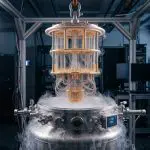
IonQ designs and operates trapped-ion quantum computers and sells access to them, mostly through the major cloud platforms. Its machines hold individual ytterbium or barium ions in place with electromagnetic fields, then manipulate them with lasers to run quantum algorithms. The approach gives every qubit identical properties and long coherence times, which the company argues lowers the error-correction burden compared with solid-state qubits.
The company measures progress with its own yardstick, algorithmic qubits, written as #AQ, which it devised in 2020 to capture qubit quality and gate depth rather than raw qubit count. IonQ sells to enterprises, governments and researchers, and it has pushed steadily beyond computing into quantum networking and sensing. That widening scope is central to how it now pitches itself to investors.
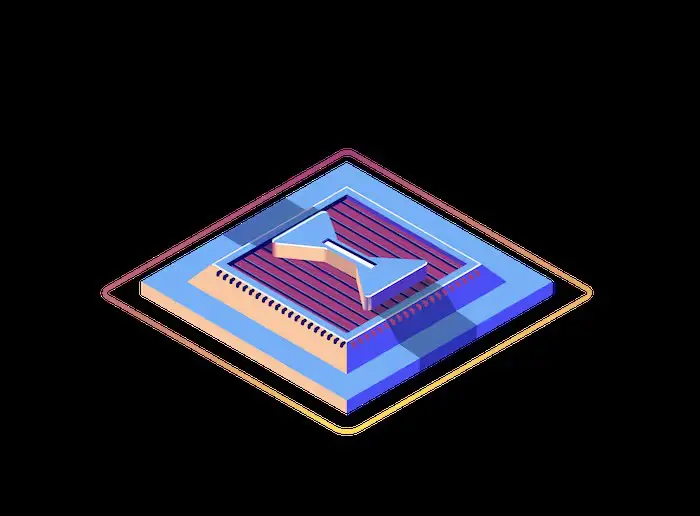
The company sells access in two main ways, through the big cloud marketplaces and through direct enterprise agreements. That dual channel lets a researcher experiment for a few dollars while a government laboratory signs a multi-year contract for dedicated capacity. The breadth of access is part of why IonQ is among the most widely used quantum platforms in the world.
Founded at Maryland and Duke in 2015
IonQ was founded in 2015 in College Park, Maryland, by Christopher Monroe of the University of Maryland and Jungsang Kim of Duke University, with two million dollars of seed funding from New Enterprise Associates. The pair had spent decades building ion-trap systems in academic labs, and the company was an effort to turn that science into a product. David Moehring, who came from the United States intelligence research agency IARPA, joined as the first chief executive in 2016.
Early venture money followed quickly, including a twenty-million-dollar round in 2017 led by Google Ventures and New Enterprise Associates. Peter Chapman, a former engineering director at Amazon, became chief executive in 2019 and steered the company toward its public listing. That leadership change marked the shift from research project to growth company.
The academic pedigree behind the company is unusually strong. Christopher Monroe had helped demonstrate some of the earliest quantum-logic gates in the 1990s, and Jungsang Kim brought the engineering discipline needed to turn delicate physics experiments into repeatable machines. That pairing of a world-class physicist with a systems engineer gave IonQ both scientific credibility and a path to manufacturing.
From Harmony to Tempo
IonQ has shipped a steady sequence of systems, each adding usable qubits and better fidelity. The named generations trace the commercial arc of the business and give customers a roadmap to plan against.
Alongside the hardware, IonQ broadened access by listing its machines on Amazon Braket, Microsoft Azure Quantum and Google Cloud. That cloud-first distribution let it reach developers without selling rare physical machines. The strategy keeps the installed base light while building recurring usage.
The naming convention tells the story of steady progress. Each system has carried more usable performance than the last, and the company has tied its roadmap to its algorithmic-qubit measure rather than to raw counts. That lets customers compare generations on a consistent yardstick and plan their own projects against a published trajectory.
The first pure-play quantum IPO
IonQ entered the public markets in October 2021 through a merger with dMY Technology Group III, a special purpose acquisition company. The deal raised about 636 million dollars and put IonQ on the New York Stock Exchange under the ticker IONQ, making it the first pure-play quantum computing company available to ordinary investors. The listing gave the young industry its first true public benchmark.
The early trading years were volatile, as they were for most companies that arrived through a SPAC. Sentiment turned sharply positive across 2024 and 2025, when a wave of investor enthusiasm for quantum computing lifted IONQ and its peers to valuations far above their revenue. That rising share price became the currency IonQ used to fund an unusual run of acquisitions.
The capital raised at listing changed what the company could attempt. With hundreds of millions of dollars on the balance sheet, IonQ could fund research, hire aggressively and, later, pursue acquisitions that smaller rivals could not contemplate. The public listing turned a promising laboratory venture into a company with the firepower to shape the sector.
A buying spree builds the stack
From late 2024, IonQ used its market value to buy capability across the quantum supply chain rather than build everything in-house. The pace and size of the deals set it apart from every other public quantum company.
The company acquired the networking specialist Qubitekk in 2024, then in 2025 added the quantum-safe cryptography pioneer ID Quantique, the chip-based ion-trap firm Oxford Ionics for around 1.1 billion dollars, the memory and interconnect startup Lightsynq, the satellite operator Capella Space, and the quantum-sensing maker Vector Atomic. In early 2026 it agreed to buy the semiconductor foundry SkyWater Technology for about 1.8 billion dollars, a move toward owning its own chip manufacturing. Together these deals reshaped IonQ from a single-product computer maker into a vertically integrated quantum networking, sensing and computing group.
Buying capability rather than building it carries its own risks, chiefly the work of integrating very different teams and technologies. IonQ has argued that owning the full stack, from ion-trap chips to networking and sensing, will let it move faster and capture more of each customer’s spend. Whether that vertical model pays off is one of the most important questions for the stock.
Revenue, networking and error correction
IonQ’s recent commercial story is one of fast-growing revenue from a small base and a deliberate push beyond computing. The company reported that its first-quarter revenue surged 755 percent to 64.7 million dollars, a figure inflated by acquisitions but striking nonetheless. The second quarter was larger again, at 80.1 million dollars against 20.7 million a year earlier, a rise of 287 per cent. For the half year revenue reached 144.7 million, up 412 per cent. It has also opened a dedicated research and development lab in Boulder to deepen its hardware work.
On the technology side, IonQ has leaned hard into the quantum internet, shipping a 256-qubit networking chip to a partner in Dublin and promoting quantum key distribution against the harvest-now-decrypt-later threat. It has also reported progress on error-correcting codes that make better use of its high-fidelity qubits. Enterprise reach grew further as Microsoft opened access to IonQ systems through its cloud.
The cadence of announcements has been relentless, spanning revenue, hardware, networking and error correction. For investors, the signal to watch is whether these advances translate into repeat orders and larger contracts rather than one-off headlines. The company’s own framing emphasises a transition from research projects to production deployments.
How the company makes money
IonQ earns revenue in three main ways, and the mix is shifting as the company grows. The core is cloud and direct access, where customers pay to run workloads on IonQ hardware, often through the big cloud marketplaces that take a share in return for distribution.
The second stream is large contracts with governments and national laboratories, which value sovereign access and fund early research. The third, newer stream comes from the networking and sensing businesses it has acquired, which sell hardware and services into telecommunications and defence. IonQ’s bet is that owning more of the stack, down to chip fabrication, will turn these strands into durable margins as the technology matures.
Investors should read the revenue figures with care, because much of the recent growth reflects acquisitions as well as organic demand. The clearer signal is bookings, the value of contracts signed, which the company highlights as evidence that customers are committing to multi-year work. Turning that pipeline into recurring, profitable revenue remains the central task.
The bull and bear case
The bull case for IonQ rests on optionality and momentum. The company has assembled trapped-ion computing, quantum networking, sensing and, with the SkyWater deal, its own chip fabrication, which means it can sell into several markets at once rather than waiting for fault-tolerant computing to arrive. Revenue is growing quickly, the balance sheet is strong after years of equity raises, and the trapped-ion approach has a credible technical story about fidelity. Supporters argue that owning the supply chain is exactly what a maturing industry rewards.
The bear case is just as clear. IonQ’s market value has often sat far above its revenue, the recent growth leans heavily on acquisitions rather than organic demand, and integrating so many companies at speed carries real execution risk. Trapped-ion machines may also face harder scaling challenges than some rivals as qubit counts climb. Investors weighing IonQ are betting that a broad, vertically integrated quantum group can grow into a valuation that already assumes success.
The balance of the argument comes down to execution against expectation. IonQ has the technology, the cash and the ambition, and the open question is whether it can knit its acquisitions into a coherent whole fast enough to justify a rich valuation. Patient investors are betting that breadth plus a clean qubit technology is the winning combination.
Where it fits among quantum stocks
IonQ sits in the trapped-ion camp of quantum hardware, the same broad family as Quantinuum, and the two are often compared on fidelity and quantum volume. Against superconducting rivals such as Rigetti and the private giants IBM and Google, IonQ argues that its qubits are cleaner and more uniform, even if its raw qubit counts look modest. That debate over architecture runs through the whole sector.
For investors, IonQ is one of a small group of pure-play quantum stocks that trade alongside D-Wave, Rigetti and Quantum Computing Inc, each representing a different technology bet. IonQ’s distinguishing feature within that group is its acquisition-led expansion beyond computing into the wider quantum economy. You can see how the approaches compare in the guide to top trapped-ion quantum computing companies.
Within that field, IonQ’s distinguishing move is its push beyond computing into the wider quantum economy. While most rivals concentrate on a single architecture, IonQ is assembling a portfolio that spans computing, communication and sensing. That makes it harder to compare directly with any one competitor, and it is exactly the position the company wants to occupy.
The road ahead
The next phase of the story will test whether breadth becomes strength or distraction. The business now spans computing, networking, sensing and chip fabrication, and the immediate task is to make those acquired teams work as one rather than as a loose collection. Management has signalled that quantum networking, where secure links and distributed systems are sold to telecommunications and government buyers, could produce revenue sooner than fault-tolerant computing. That near-term commercial bridge matters for a stock valued on expectations.
Hardware progress remains the long-term anchor. Higher qubit counts, better gate fidelity and the move toward error-corrected logical qubits are the milestones that would justify the platform. Owning a semiconductor foundry, through the planned SkyWater purchase, is meant to give the firm control over the chips that everything else depends on. If that vertical integration delivers, it would be a rare advantage in a field where most players rely on outside fabrication.
The risks are equally concrete. Rapid acquisitions can leave a business overextended, and the market has priced in years of clean execution. Competition is intensifying from both trapped-ion and superconducting rivals, and any stumble in revenue growth would be punished given the valuation. The firm enters this phase financially strong and strategically broad, yet still some distance from the profitability that would settle the debate about its worth.
The company enters this phase financially strong, yet the burden of proof now sits with results rather than strategy. Investors will watch for signs of organic demand rather than revenue bought through deals. The concentration is easing on the company’s own disclosure. Two customers accounted for 33 per cent of second-quarter revenue, against 65 per cent in the same quarter of 2025.
Integrating several businesses at once consumes cash and management attention, and the market expects the pieces to work together within a few quarters rather than years. A run of repeat orders from enterprise and government buyers would steady sentiment more than any single headline.
The wider backdrop is favourable for the moment. Government programmes, enterprise pilots and rising awareness of the quantum threat to encryption all widen the pool of potential customers, and the task is to convert that interest into signed contracts at the pace the valuation assumes.
Few competitors can match the same combination of scale, balance-sheet strength and reach across the quantum economy. That breadth is why the business remains one of the most watched names in the sector, and the coming year of results will show whether it has become a genuine edge rather than a costly experiment.
The next few years will reveal whether IonQ’s breadth becomes a durable advantage. If the networking and sensing businesses scale while the core computing roadmap advances, the company could occupy several growing markets at once. The opportunity is large, and IonQ has positioned itself to pursue all of it from a position of financial strength.
How trapped-ion quantum computing works
IonQ’s machines store quantum information in individual atoms that have been given an electric charge, then held in place by electromagnetic fields inside a vacuum chamber. Lasers cool these ions almost to a standstill and manipulate their internal states to perform quantum operations. Because every ion of a given element is identical, the qubits start out perfectly uniform, which is one of the approach’s biggest advantages.
The method is prized for two properties that matter for useful computation, long coherence times and high gate fidelity. Coherence is how long a qubit holds its quantum state, and trapped ions can hold theirs far longer than many rival technologies. High fidelity means operations introduce few errors, which lowers the overhead that error correction will eventually demand.
The trade-off has historically been speed and scale, since manipulating ions with lasers is slower than switching solid-state circuits and packing many ions into one trap is hard. IonQ’s engineering work, including its move toward chip-based traps, aims to close that gap. The bet is that starting from cleaner qubits is a better long-term path than starting from more numerous but noisier ones.
The #AQ metric and how IonQ measures progress
In 2020 IonQ introduced a performance measure it calls algorithmic qubits, written #AQ, to capture how useful a machine actually is. Raw qubit counts can mislead, because a processor with many noisy qubits may run shallower circuits than one with fewer clean ones. The #AQ figure folds in qubit quality and the depth of circuits a machine can complete, giving a single number that tracks real capability.
The metric has shaped how the company communicates its roadmap, with targets expressed in algorithmic qubits rather than physical ones. Critics note that vendor-defined benchmarks deserve scrutiny, and independent measures such as quantum volume offer useful cross-checks. Even so, the focus on application-level performance has pushed a healthy industry conversation about what progress really means.
The quantum internet ambition
IonQ has placed a large bet on quantum networking, the technology that links quantum processors and distributes entanglement across distance. The vision is a future quantum internet that connects machines into larger systems and secures communications against eavesdropping. The company has built this capability partly through acquisitions and partly through its own research.
Concrete steps have followed. IonQ shipped a 256-qubit networking chip to a partner in Dublin and has promoted quantum key distribution as a defence against the harvest-now-decrypt-later threat. These efforts open revenue lines in telecommunications and defence that do not depend on first achieving fault-tolerant computing.
Networking also strengthens the long-term computing roadmap. Connecting several smaller processors is one credible route to building the very large machines that useful algorithms will require. By investing early, IonQ is positioning itself for both the near-term security market and the longer-term scaling challenge.
Revenue, losses and the balance sheet
IonQ is a growth company that is not yet profitable, a normal profile for deep-technology firms at this stage. It reported that first-quarter revenue surged 755 percent to 64.7 million dollars, and second-quarter revenue of 80.1 million, up 287 per cent on the year. Half-year revenue came to 144.7 million dollars against 28.3 million.
The cost of delivering it rose faster. Cost of revenue for the second quarter was 60.1 million dollars, up 622 per cent, so gross margin fell from about 60 per cent a year earlier to about 25. Building specialised hardware to order is a lower-margin business than selling machine time, and the mix now reflects that.
The balance sheet is the reassuring part of the story. Repeated equity raises during the strong market of 2024 and 2025 left IonQ with substantial cash, which it has used to fund both operations and a remarkable run of deals. At 30 June 2026 it held 2,959.3 million dollars in cash, equivalents and available-for-sale securities, close to three billion. That financial cushion buys the time that building quantum hardware demands.
Leadership and the de Masi era
IonQ has been led by several distinct figures as it matured. David Moehring, who came from the United States intelligence research community, served as the first chief executive, and Peter Chapman, a former Amazon engineering director, then steered the company through its public listing. Each brought a different strength at the right moment, from scientific grounding to operational scale.
Niccolò de Masi became chief executive in early 2025 and later took the role of board chairman as well. A technology executive with a background in scaling public companies, he has pressed the acquisition-led strategy that reshaped IonQ into a broader quantum group. His tenure has coincided with the company’s most aggressive expansion to date.
Partnerships and customers
IonQ’s commercial reach rests heavily on partnerships with the major cloud providers. Its systems are available through Amazon Braket, Microsoft Azure and Google Cloud, and Microsoft has opened access to IonQ systems through its quantum offering. These channels put IonQ hardware in front of millions of developers without the company having to build its own sales reach from scratch.
Beyond the clouds, IonQ works with governments, national laboratories and enterprises exploring optimisation, chemistry and machine learning. It has opened a dedicated research and development lab in Boulder to deepen its hardware work, and reported progress on error-correcting codes that make better use of its high-fidelity qubits. The mix of cloud distribution and direct engagement is the engine of its commercial growth.
Use cases across industries
IonQ’s commercial pitch rests on a set of problems where quantum methods could eventually pay off. The most discussed are optimisation, such as routing and scheduling, the chemistry and materials simulation that could speed drug and battery design, and machine-learning tasks that map naturally onto quantum states. The company frames these as the workloads its customers are exploring today.
Realism matters here, and IonQ generally presents these as research collaborations rather than solved problems. The value at this stage is in building expertise, testing algorithms on real hardware and being ready when machines grow powerful enough for advantage. That posture has helped it sign enterprises that want to learn now rather than scramble later.
The sectors involved are broad, spanning finance, logistics, chemicals, automotive and the public sector. Each engagement that produces a credible result strengthens the case for the next, and the breadth reduces reliance on any single industry. It also feeds the company’s networking and sensing lines, which reach adjacent markets in telecommunications and defence.
The hardware roadmap
IonQ publishes a roadmap expressed in algorithmic qubits, mapping a path from today’s machines toward systems capable of commercial advantage. The plan leans on better trap technology, including chip-scale ion traps, and on networking several processors together to reach larger effective sizes. Each step is meant to raise both qubit count and quality at once.
The acquisition of specialist teams has fed directly into this roadmap, adding expertise in chip fabrication, memory and interconnects. Owning more of the supply chain, down to semiconductor manufacturing, is intended to remove bottlenecks that slow companies dependent on outside foundries. If the plan holds, IonQ would control the key ingredients of its own scaling.
Risks to weigh
No account of IonQ would be complete without the risks, which are real even for admirers of the technology. The valuation has often run far ahead of revenue, leaving little room for disappointment, and a large share of recent growth has come from acquisitions rather than organic demand. Integrating so many businesses quickly is a demanding management challenge.
There are technical risks too, as trapped-ion systems must prove they can scale in speed and size while holding their fidelity advantage. Competition is intensifying from both trapped-ion and superconducting rivals, several with deeper pockets. Investors in IonQ are accepting these risks in exchange for exposure to one of the most ambitious and best-funded names in the field.
Trapped ions versus other approaches
The quantum-hardware field is split across several physical platforms, and IonQ’s choice of trapped ions sits at one end of a clear trade-off. Superconducting machines, used by IBM, Google and Rigetti, switch faster and tap a mature chip-manufacturing base, but their qubits are noisier and shorter-lived. Trapped ions are slower and harder to pack densely, yet they start from cleaner, longer-lived qubits with all-to-all connectivity.
That connectivity is an underrated advantage, because any ion can interact directly with any other, which simplifies the circuits that many algorithms need. Superconducting chips usually connect only neighbouring qubits, forcing extra operations that add error. IonQ argues that, for the deep circuits useful applications demand, starting cleaner and better-connected is the smarter long-term bet.
Its closest peer on the same platform is Quantinuum, and the two are often compared on fidelity and quantum volume. Against the superconducting camp, the debate is less about who is ahead today and more about which approach scales best to the error-corrected machines of the future. That architectural question runs through the whole sector and will not be settled quickly.
The investment case in brief
For investors weighing the stock, IonQ presents a clear if demanding proposition. It is one of the few ways to buy direct exposure to quantum computing, it leads on a respected qubit technology, and it has used its market value to assemble a portfolio spanning computing, networking and sensing. The cash position is strong and the revenue line, while small, is growing quickly.
The counterweight is valuation and execution risk, since the share price assumes years of successful delivery and smooth integration of many acquisitions. The sensible way to read IonQ is as a long-horizon bet on a broad quantum platform rather than a near-term profit story. Those comfortable with that horizon see a company positioned to lead several markets at once.
What full-scale advantage would require
It is worth being clear about the distance still to travel, because honesty about the timeline strengthens rather than weakens the case. Running the most valuable algorithms, in chemistry or cryptography, will require error-corrected logical qubits numbering in the thousands, far beyond any machine today. Getting there means combining higher qubit counts, lower error rates and working error correction all at once.
IonQ’s roadmap addresses each of these levers, through better traps, networking and a focus on fidelity that lowers the error-correction overhead. The company has reported early progress on the error-correcting codes that this future depends on. None of it is guaranteed, but IonQ is among the handful of firms with a credible, funded plan to attempt it.
A record of firsts
IonQ holds a notable place in the commercial history of the field. Its milestones reflect a willingness to move first, both in the laboratory and on the stock market.
- First pure-play quantum computing company to go public. IonQ listed on the NYSE in 2021, giving investors their first direct quantum-computing stock.
- First quantum systems on all three major clouds. IonQ machines reached Amazon, Microsoft and Google cloud marketplaces.
- An application-level benchmark. The 2020 algorithmic-qubits metric reframed how the industry talks about real performance.
- An acquisition-led quantum group. From 2024, IonQ built out networking, sensing, cryptography and chip fabrication at a pace no rival matched.
These firsts are more than trophies, because each opened a commercial path the company still travels. Being early to public markets funded the expansion, and being early to the clouds built the user base it now grows.
Owning the supply chain with SkyWater
IonQ’s boldest acquisition is its agreement to buy the semiconductor foundry SkyWater Technology for about 1.8 billion dollars, announced in early 2026. The deal is a bet that controlling chip fabrication, rather than renting it from outside foundries, will matter as the company scales its chip-based ion traps. It would give IonQ a rare degree of vertical control for a quantum firm.
Most quantum companies depend on external manufacturers, which can slow iteration and expose them to supply bottlenecks. By owning a foundry, IonQ aims to protect its process know-how and move faster from design to working hardware. The wager is that, as the industry matures, the firms that control their own manufacturing will hold a lasting edge.
Government, defence and the global footprint
A significant share of IonQ’s work involves governments and national laboratories, which value sovereign access to quantum systems and fund early research. The company has opened a dedicated research lab in Boulder and pursued contracts with agencies in the United States and allied nations. These engagements provide revenue and validation while commercial demand matures.
Defence interest is especially strong in IonQ’s networking and sensing lines, where secure communication and precise measurement have clear applications. Quantum key distribution and quantum sensors map naturally onto national-security needs. That alignment gives IonQ a customer base less dependent on the timing of fault-tolerant computing.
By the numbers
A handful of facts place IonQ for anyone weighing the stock. It is a high-attention, fast-growing but still loss-making company whose value rests on its trapped-ion lead and its expanding footprint across the quantum stack.
What comes next depends on whether the acquisitions knit together into a working whole and whether revenue keeps climbing fast enough to justify the valuation. You can follow milestones on the IonQ official site, and track each development through Quantum Zeitgeist’s continuing coverage.
The current generation of machines, reachable through Amazon, Microsoft and Google clouds. They are judged by the company’s algorithmic-qubit metric rather than raw qubit count.
A fast-growing line assembled from acquisitions such as Qubitekk and ID Quantique. It targets telecommunications and government buyers who need quantum-safe communication.
A run of deals from 2024 onward that pulled chip fabrication, sensing and cryptography in-house. The aim is to control more of the quantum supply chain.
Frequently asked questions
What does IonQ do?
What is the stock ticker?
When did it go public?
Who were the founders?
What is a trapped-ion quantum computer?
What is the #AQ metric?
Is the business profitable?
Why so many acquisitions?
Disclaimer. This article is for informational purposes only and does not constitute investment, financial or professional advice. The quantum technology industry evolves rapidly and information may become outdated. Always conduct your own research and consult qualified advisers before making investment decisions. Investing in quantum computing companies involves significant risk, including the potential loss of your entire investment, and past performance is not indicative of future results.



See today’s quantum computing news on Quantum Zeitgeist for the latest breakthroughs in qubits, hardware, algorithms, and industry deals.