NVIDIA this week announced CUDA-Q Logical at IEEE Quantum Week, a development signaling a shift in practical quantum computing from qubit counts to usability. Until now, serious error-correction experiments demanded deep system-level expertise, requiring researchers to tweak low-level machine components like FPGAs. CUDA-Q Logical expands NVIDIA’s CUDA-Q platform with an open, extensible layer, allowing researchers to evaluate workloads across different quantum error correction codes and architectures without rewriting programs, a critical step toward comparable results.
CUDA-Q Logical Opens Fault-Tolerant Quantum Workflows
The ability to evaluate fault-tolerant quantum workloads across diverse hardware is now a reality with the introduction of CUDA-Q Logical, a new platform unveiled this week at IEEE Quantum Week. Previously, rigorous error-correction experiments demanded direct manipulation of low-level machine components, extending down to the field-programmable gate arrays (FPGAs) controlling the quantum processing unit (QPU). This level of access was a significant barrier, as it required deep system-level expertise and effectively locked experimentation within vendor-specific ecosystems.
CUDA-Q Logical addresses this by providing an open, extensible layer for expressing fault-tolerant workloads, decoupling the program from the underlying hardware. This shift is critical because comparability has been a longstanding issue in the field; two research groups running the same experiment on different machines often produced incomparable results.
The root cause was the closed nature of the entire software and hardware stack, where each vendor’s implementation differed significantly and lacked transparency. “Two groups can run the same nominal experiment on two machines and produce numbers nobody can line up,” explained an IQM representative, highlighting the difficulty of validating results across platforms. CUDA-Q Logical aims to resolve this by allowing the same program to be evaluated across various quantum error correction (QEC) codes and system architectures without requiring code rewrites, fostering standardized and reproducible research.
The platform’s architecture centers around clearly defined extension points for codes, gadgets, protocols, devices, schedulers, simulators, and decoders. This modular design enables researchers to swap components and experiment with different approaches to fault tolerance, accelerating the development of more robust and scalable quantum computers.
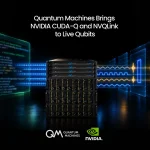
NVIDIA’s involvement extends beyond software; the company’s DGX Quantum systems integrate with Quantum Machines OPX and utilize NVIDIA H100 GPUs, providing the necessary computational power for real-time error correction, the company says. This co-design approach recognizes that achieving fault tolerance is not solely a quantum hardware problem, but requires tight integration between the QPU, control electronics, and classical computing resources. NVIDIA’s commitment to open-source tooling is further demonstrated through partnerships with companies like QuEra Computing and IQM, according to the company.
QuEra was named an NVLink launch partner, and NVIDIA NVentures invested in QuEra, while IQM collaborates on NVLink integration to enable scalable quantum error correction, making its Garnet and Emerald processors accessible via CUDA-Q. These collaborations, alongside integrations with Amazon Braket and Classiq, demonstrate a broader industry trend toward interoperability and standardization. In March 2026, the CUDA-Q framework was integrated with Classiq’s quantum software platform, further streamlining the development process.
The development of CUDA-Q Logical is not simply about enabling research; it’s about transitioning quantum computing from a purely academic exercise to an engineering discipline. As Max Haeberlein of IQM Quantum Computers noted, the goal is to provide institutions with the ability to own, operate, and build upon quantum infrastructure without needing to rebuild the entire toolchain.
This shift is essential for realizing the potential of quantum computing and making it accessible to a wider range of users, ultimately turning research results into practical applications. The platform’s open nature signifies a move away from the “black box” approach that has historically hindered progress in fault-tolerant quantum computing.
Comparable Benchmarking Resolves Black Box Error-Correction Issues
The arrival of CUDA-Q Logical signals a fundamental shift in fault-tolerant quantum computing research, moving beyond isolated performance metrics to standardized, comparable experimentation. The design facilitates fair comparisons between radically different approaches, such as high-rate qLDPC codes and surface codes, using consistent metrics and workloads. Resource estimation also benefits from this architecture.
Researchers can now assess qubit counts, decoding time, transport latency, and control bandwidth on a single compilation, providing a complete view of computational costs. This granular level of detail is further enhanced by the ability for vendors to integrate proprietary architectures into resource estimates without revealing sensitive intellectual property.
According to the source material, this capability transforms a previously slow, ad hoc research process into something resembling a structured engineering discipline, a necessary step for broadening access to quantum computing beyond a limited group of specialists. IQM is an early adopter of CUDA-Q Logical, integrating the platform with its Halocene product line. Halocene is designed to translate theoretical designs into functioning quantum hardware, providing a complete accelerated quantum compute workflow.
This workflow uses NVIDIA’s NVQLink technology, tightly coupling QPUs with GPU supercomputers, and the broader CUDA-Q open-source quantum development platform. The combination of an open fault-tolerant layer and dedicated hardware aims to accelerate the transition from research results to practical, customer-usable quantum systems.
It’s a collaborative problem spanning applications, error-correcting codes, logical architectures, physical hardware, decoding, and control. “What changes with an open logical layer is that the field can design in the open and compare approaches honestly,” Max Haeberlein stated. The platform’s open nature, therefore, is not merely a technical feature but a strategic move toward fostering a more collaborative and efficient quantum computing ecosystem. The black box is now open, and the field is poised to advance with greater clarity and comparability.



See today’s quantum computing news on Quantum Zeitgeist for the latest breakthroughs in qubits, hardware, algorithms, and industry deals.