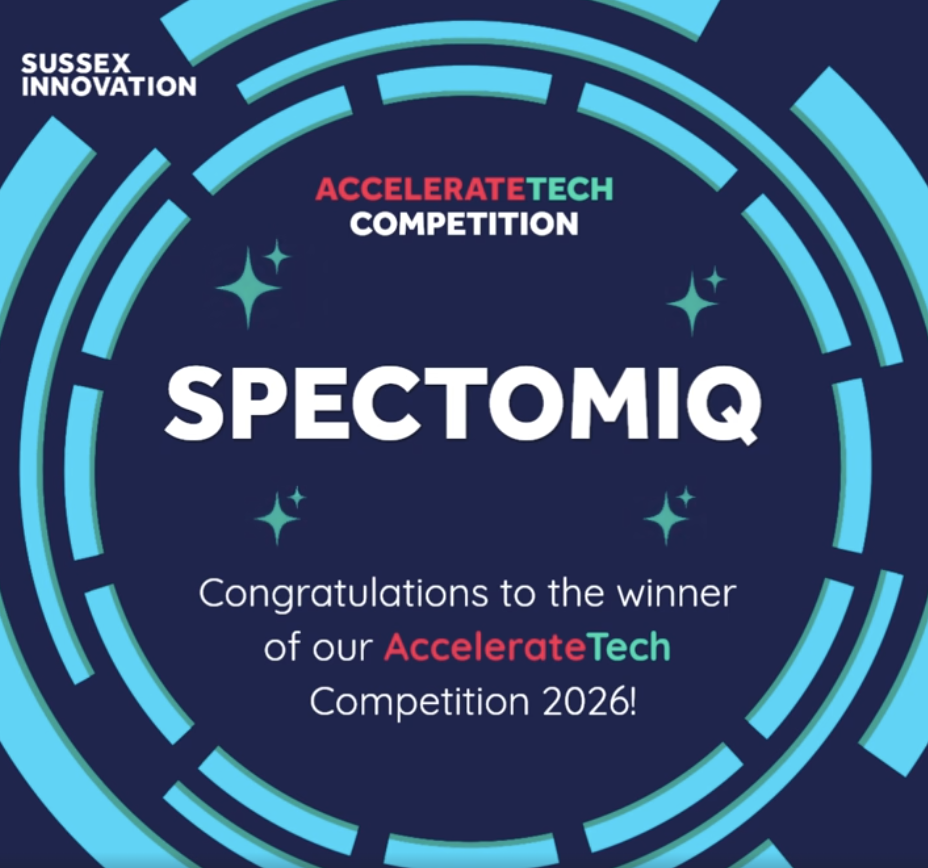
Spectomiq, founded by Thomas Coussens and Fedja Orucevic, has secured a £20,000 acceleration package as the winner of Sussex Innovation’s AccelerateTech competition. The award includes a year of free office space, expert consultancy, and access to the Tech Accelerator program, providing significant support for the pre-spin-out company originating from the University of Sussex. Spectomiq is developing quantum magnetic sensing systems specifically designed for deployment in real-world environments, a technology that impressed the judging panel; Sussex Innovation notes that the company’s approach sets it apart in a highly competitive field, signaling a move beyond theoretical quantum applications toward practical, deployable solutions.
Spectomiq Wins Sussex Innovation’s £20,000 AccelerateTech Competition
Spectomiq’s development of quantum magnetic sensing systems secured them the £20,000 acceleration package at Sussex Innovation’s recent AccelerateTech competition. The prize extends beyond funding to encompass a full year of complimentary office space and specialized consultancy services, a considerable advantage for a company still in its pre-spin-out phase. Founders Thomas Coussens and Fedja Orucevic are driving the creation of sensors designed for deployment in practical settings, moving beyond the limitations of current quantum technologies. This focus on applicability was a key factor in their victory, impressing the judging panel with both their technological innovation and clear commercial viability. Sussex Innovation launched the competition as part of its 30th anniversary, seeking to bolster an ambitious deep tech enterprise with comprehensive support, including access to their established Tech Accelerator program.
Spectomiq emerged as the winner from a highly competitive field, showcasing “innovative technology, strong commercial potential, and ambitious vision” according to the competition organizers. Sussex Innovation stated that they are committed to nurturing the company’s future development. The win represents a significant boost for a venture originating from the University of Sussex and underscores the growing momentum within the Silicon Brighton tech ecosystem; the competition also drew support from local chambers of commerce and the Business & IP Centre Sussex, demonstrating a collaborative regional effort to foster innovation. Olga Kravtsova celebrated the achievement, specifically congratulating Fedja Orucevic on the win.
Founded by Thomas Coussens and Fedja Orucevic , Spectomiq is a pre-spin-out from the University of Sussex developing quantum magnetic sensing systems that can be deployed in real-world environments.
Sussex Innovation
University of Sussex Spin-Out Develops Quantum Magnetic Sensing Systems
Spectomiq, originating from research at the University of Sussex, is translating the potential of quantum sensing into practical applications with its newly developed magnetic sensing systems. Unlike many quantum technologies still confined to laboratory settings, Spectomiq’s designs are specifically intended for deployment, suggesting a focus on robustness and scalability beyond fundamental research. Founders Thomas Coussens and Fedja Orucevic established the company to address limitations in existing magnetic field detection methods, potentially opening avenues for improved navigation, materials science, and biomedical diagnostics. The company’s success in the AccelerateTech competition secured a £20,000 package, a critical boost encompassing a year of free office space and expert consultancy services. This support is intended to accelerate Spectomiq’s progress through the Sussex Innovation Tech Accelerator program, providing resources beyond initial funding. Olga Kravtsova specifically congratulated Fedja Orucevic on the win, recognizing the team’s accomplishments and potential for future growth. Spectomiq’s development represents a move toward commercializing quantum effects, demonstrating a pathway from academic discovery to tangible products and potentially establishing a new presence within the growing quantum technology sector.



See today’s quantum computing news on Quantum Zeitgeist for the latest breakthroughs in qubits, hardware, algorithms, and industry deals.