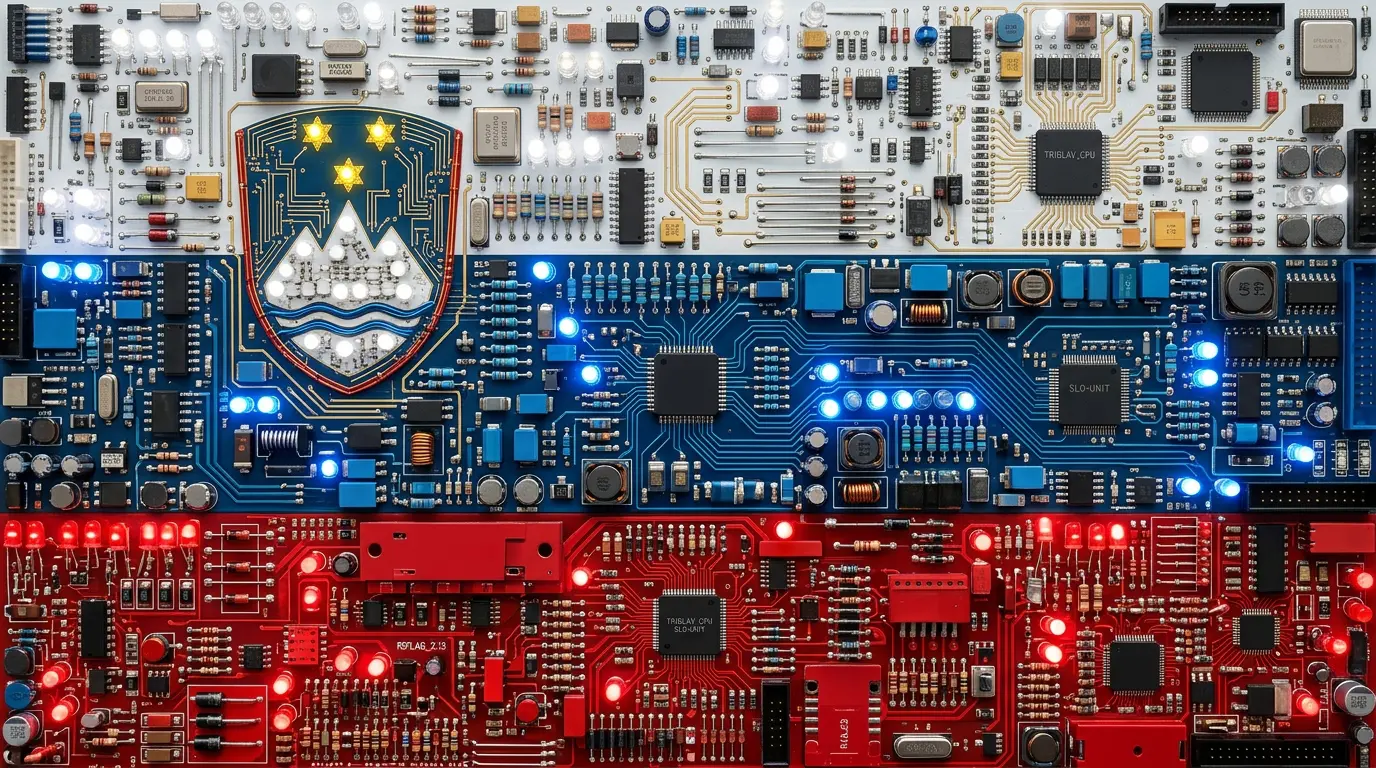
The leading slovenia quantum computing companies and institutions in 2026 form a research-led ecosystem, organised around the Jozef Stefan Institute and the University of Ljubljana, with one genuine quantum-hardware startup and a small set of deep-tech companies. Slovenia is a small country, and its quantum landscape is academic rather than commercial, but it has real research depth and a national quantum-communication programme. Ten organisations define the slovenia quantum computing companies landscape in this guide: the Jozef Stefan Institute, AtomQL, the University of Ljubljana, Cosylab, Instrumentation Technologies, the University of Nova Gorica, SiQUID, QUTES, HPC Vega, and CREAPLUS.
Why Slovenia’s quantum ecosystem is research-led
Slovenia’s quantum landscape is research-led, and it is important to be clear about that. The country does not have a deep field of venture-funded quantum startups. The slovenia quantum computing companies landscape is built mostly from research institutes and universities, with one genuine quantum-hardware startup and a few established deep-tech companies whose engineering skills carry over into quantum technology.
What Slovenia does have is real research depth concentrated in the Jozef Stefan Institute, the largest research institute in the country, and in the University of Ljubljana. The country is strong in the theory of quantum many-body systems and in quantum optics, it has a national quantum-communication programme, and it operates one of Europe’s national supercomputers. The slovenia quantum computing companies landscape is therefore a developing, research-led ecosystem with strong academic foundations and the beginnings of a commercial layer.
AtomQL and Slovenia’s quantum hardware
The most striking single organisation in the slovenia quantum computing companies ecosystem is AtomQL, also known as Atom Quantum Labs. AtomQL is a Ljubljana-based startup, founded around 2021, and it is the only genuine pure-play quantum-computing company in the country. It builds quantum computers and cold-atom systems based on neutral atoms, a hardware approach in which individual atoms are trapped and controlled with light to serve as qubits.
Neutral-atom quantum computing is one of the leading hardware platforms internationally, valued for the way large numbers of identical atomic qubits can be arranged and controlled with optical tools. AtomQL grew out of cold-atom research at the Jozef Stefan Institute, which is a good example of how a strong research institute can produce a real company. For a country of Slovenia’s size, having a quantum-hardware startup working on a serious platform is a genuine achievement, and AtomQL is the commercial centrepiece of the slovenia quantum computing companies.
The top slovenia quantum computing organisations
Ten organisations define the slovenia quantum computing companies landscape covered in this guide. The Jozef Stefan Institute and the University of Ljubljana are the research core, AtomQL is the quantum-hardware startup, and Cosylab and Instrumentation Technologies are deep-tech companies whose engineering applies to quantum systems. The University of Nova Gorica adds a quantum-optics laboratory, SiQUID is the national quantum-communication programme, QUTES coordinates the national effort, HPC Vega is the national supercomputer, and CREAPLUS works on post-quantum cryptography. The AtomQL startup anchors the quantum-hardware side of the slovenia quantum computing companies.
The profiles below cover the leading organisations in depth, from the research institutes at the core to the one quantum-hardware startup and the engineering and security companies around them. Each entry sets out what the organisation actually does and how its work connects to quantum technology.









What the landscape reveals
The first pattern is that the Jozef Stefan Institute is the centre of everything. The institute leads the country’s quantum research, coordinates a national quantum-science hub, and produced the quantum-hardware startup AtomQL. The Slovenia quantum companies landscape is, more than anything, built around one strong national research institute and the activity that radiates from it.
Deep-tech engineering carries over into quantum
The second pattern is the value of Slovenia’s deep-tech engineering companies. Cosylab and Instrumentation Technologies were not founded as quantum companies, but their expertise in control systems and high-speed electronics applies directly to the control and readout that quantum computers need. The Slovenia quantum companies landscape benefits from an engineering base that quantum hardware can draw on.
Quantum communication is the national project
The third pattern is a clear national focus on quantum communication through SiQUID. Building a national quantum-key-distribution test network is a practical, deployable use of quantum technology, and it draws the research institutes and universities together. The Slovenia quantum companies landscape has a concrete national programme to organise around.
The research base behind Slovenian quantum
Slovenia’s quantum research rests on the Jozef Stefan Institute and the University of Ljubljana, working closely together. The Jozef Stefan Institute is the largest research institute in the country, with groups working on the physics of quantum technologies, quantum materials, and ultracold atoms, and it is particularly strong in the theory of quantum many-body systems. The institute coordinates a national quantum-science hub and is recruiting dozens of postdoctoral researchers into the field.
The University of Ljubljana, through its Faculty of Mathematics and Physics, runs a quantum-optics and quantum-foundations laboratory and a joint physics-of-quantum-technologies group with the institute. The University of Nova Gorica adds a quantum-optics laboratory in the west of the country. Together these institutions give the Slovenia quantum companies a research base strong in quantum theory and quantum optics, supported by the HPC Vega supercomputer for classical and hybrid computing.
The Ljubljana and Maribor map
The Slovenia quantum companies landscape is concentrated in the capital. Ljubljana hosts the Jozef Stefan Institute, the leader of Slovenian quantum research, the University of Ljubljana with its quantum-optics laboratory, the quantum-hardware startup AtomQL, and the engineering company Cosylab. The national quantum-communication programme SiQUID and the coordinating centre QUTES are also based in Ljubljana. The capital is, in effect, the whole quantum cluster.
Beyond Ljubljana, the landscape reaches a few other places. Maribor, the second city, hosts the HPC Vega supercomputer, operated by IZUM, which gives the country its national high-performance-computing capability. Solkan, in the west, is the base of the electronics company Instrumentation Technologies, and the nearby University of Nova Gorica runs a quantum-optics laboratory. The Slovenia quantum companies landscape is therefore a compact, Ljubljana-centred ecosystem with a few important nodes elsewhere in the country.
When Slovenia matters for your quantum strategy
Neutral-atom quantum hardware
If your interest is neutral-atom quantum computing, Slovenia is worth knowing through AtomQL. The startup builds quantum computers and cold-atom systems on the neutral-atom platform, one of the leading quantum-hardware approaches internationally, and it grew out of strong cold-atom research at the Jozef Stefan Institute. Organisations following the neutral-atom platform or seeking European cold-atom partners should be aware of the Slovenia quantum companies and AtomQL.
Quantum control and readout engineering
For the engineering that quantum hardware depends on, Slovenia offers real capability. Cosylab builds control systems for complex scientific machines, and Instrumentation Technologies builds high-speed signal-acquisition electronics, both relevant to the control and readout of quantum devices. Organisations building quantum systems and needing the surrounding control-and-measurement engineering should consider the Slovenia quantum companies.
Quantum research and communication
For research collaboration and quantum communication, Slovenia has strong partners. The Jozef Stefan Institute and the University of Ljubljana are research institutions with depth in quantum theory and quantum optics, and SiQUID provides a national quantum-communication test network tied into the European effort. Organisations seeking European research partnerships or quantum-communication collaboration should consider the Slovenia quantum companies.
Frequently asked questions
Who are the leading Slovenia quantum companies in 2026?
Slovenia’s quantum landscape is research-led rather than company-led. The central organisations are the Jozef Stefan Institute, the largest research institute in the country and the leader of Slovenian quantum research, and the University of Ljubljana, which runs a quantum-optics laboratory and a joint research group with the institute. AtomQL is the one genuine quantum-hardware startup, building neutral-atom quantum computers. Cosylab and Instrumentation Technologies are deep-tech companies whose control-systems and electronics expertise applies to quantum hardware. The University of Nova Gorica adds a quantum-optics laboratory, SiQUID is the national quantum-communication programme, QUTES coordinates the national effort, HPC Vega is the national supercomputer, and CREAPLUS works on post-quantum cryptography. Together these ten organisations define the Slovenia quantum companies landscape.
What is AtomQL?
AtomQL, also known as Atom Quantum Labs, is a Ljubljana-based startup, founded around 2021, and it is the only genuine pure-play quantum-computing company in the Slovenia quantum companies ecosystem. AtomQL builds quantum computers and cold-atom systems based on neutral atoms, a hardware approach in which individual atoms are trapped and controlled with light to act as qubits. The company grew out of cold-atom research at the Jozef Stefan Institute. Neutral-atom quantum computing is one of the leading hardware platforms internationally, valued for the way large numbers of identical atomic qubits can be arranged and controlled with optical tools. For a country of Slovenia’s size, having a quantum-hardware startup working on such a serious platform is a real achievement.
Does Slovenia have a quantum computer?
Slovenia does not host a large quantum computer, and notably it is not one of the six European countries selected to host a EuroHPC quantum computer. The country operates HPC Vega in Maribor, but that is a classical supercomputer, not a quantum machine. The closest thing to a domestic quantum-computing effort is AtomQL, the Ljubljana startup building neutral-atom quantum computers and cold-atom systems. Slovenian researchers also access quantum computers through European programmes and cloud services, and the Jozef Stefan Institute has used remote access to commercial quantum machines for quantum-simulation research. The Slovenia quantum companies landscape is focused on research, on the AtomQL hardware effort, and on the SiQUID quantum-communication network rather than on hosting a large quantum computer.
What is the Jozef Stefan Institute’s role in Slovenian quantum?
The Jozef Stefan Institute, the largest research institute in Slovenia, is the centre of the Slovenia quantum companies ecosystem. It hosts research groups working on the physics of quantum technologies, quantum materials, and ultracold atoms, and it is particularly strong in the theory of quantum many-body systems and condensed matter. The institute coordinates a national quantum-science hub that is recruiting dozens of postdoctoral researchers, and its cold-atom research produced the quantum-hardware startup AtomQL. Its researchers also collaborate with leading international quantum-hardware efforts on materials. The Jozef Stefan Institute is, in effect, the engine of Slovenian quantum science, and most of the country’s quantum activity either takes place there or radiates outward from it.
What is SiQUID?
SiQUID, the Slovenian Quantum Communication Infrastructure Demonstration, is the national project building Slovenia’s quantum-communication network, the country’s contribution to the European quantum-communication infrastructure initiative. SiQUID deploys quantum-key-distribution links between state institutions and builds a test quantum network among research institutions in Ljubljana, supported by European recovery funding and coordinated through the University of Ljubljana and the Jozef Stefan Institute. Quantum key distribution protects communications against the future threat that a powerful quantum computer could break today’s encryption. SiQUID is the most concrete national quantum project among the Slovenia quantum companies, and it ties Slovenia into the continent-wide European quantum-communication effort while giving the country a real quantum-secure-communication test network.
Where is quantum technology developed in Slovenia?
The Slovenia quantum companies landscape is concentrated in the capital, Ljubljana. The city hosts the Jozef Stefan Institute, the leader of Slovenian quantum research, the University of Ljubljana with its quantum-optics laboratory, the quantum-hardware startup AtomQL, and the engineering company Cosylab, along with the national quantum-communication programme SiQUID and the coordinating centre QUTES. Beyond the capital, Maribor hosts the HPC Vega supercomputer, operated by IZUM, and Solkan in the west is the base of the electronics company Instrumentation Technologies, with the nearby University of Nova Gorica running a quantum-optics laboratory. Slovenia therefore has a compact, Ljubljana-centred quantum ecosystem with a few important nodes elsewhere in the country.
Does Slovenia have commercial quantum companies?
Slovenia has a small commercial quantum layer rather than a deep one. The clearest pure-play quantum company is AtomQL, the Ljubljana startup building neutral-atom quantum computers. Beyond AtomQL, the commercial side consists of deep-tech companies that touch quantum as an adjacent market: Cosylab builds control systems for scientific machines, including the control and readout that quantum computers need, and Instrumentation Technologies builds high-speed electronics relevant to quantum-device readout. CREAPLUS works on post-quantum cryptography. Slovenia does not yet have a wide field of quantum startups, so the commercial side of the Slovenia quantum companies is concentrated in one hardware company and a few engineering and security firms whose skills carry over into quantum technology.
How does Slovenia compare with other quantum nations?
Slovenia is an emerging, research-led quantum nation rather than an established quantum power. It does not have the venture-funded company ecosystems of countries such as the Netherlands, Finland, or Germany, and it does not host a EuroHPC quantum computer. But Slovenia has genuine strengths: the Jozef Stefan Institute is a research institute of real depth, especially in quantum theory, the University of Ljubljana is strong in quantum optics, the country has a national quantum-communication programme in SiQUID, and it has produced a real quantum-hardware startup in AtomQL. The Slovenia quantum companies landscape competes through research strength and a focused commercial effort in neutral-atom hardware. As the research base and the startup mature, Slovenia’s position among European quantum nations should strengthen.


See today’s quantum computing news on Quantum Zeitgeist for the latest breakthroughs in qubits, hardware, algorithms, and industry deals.