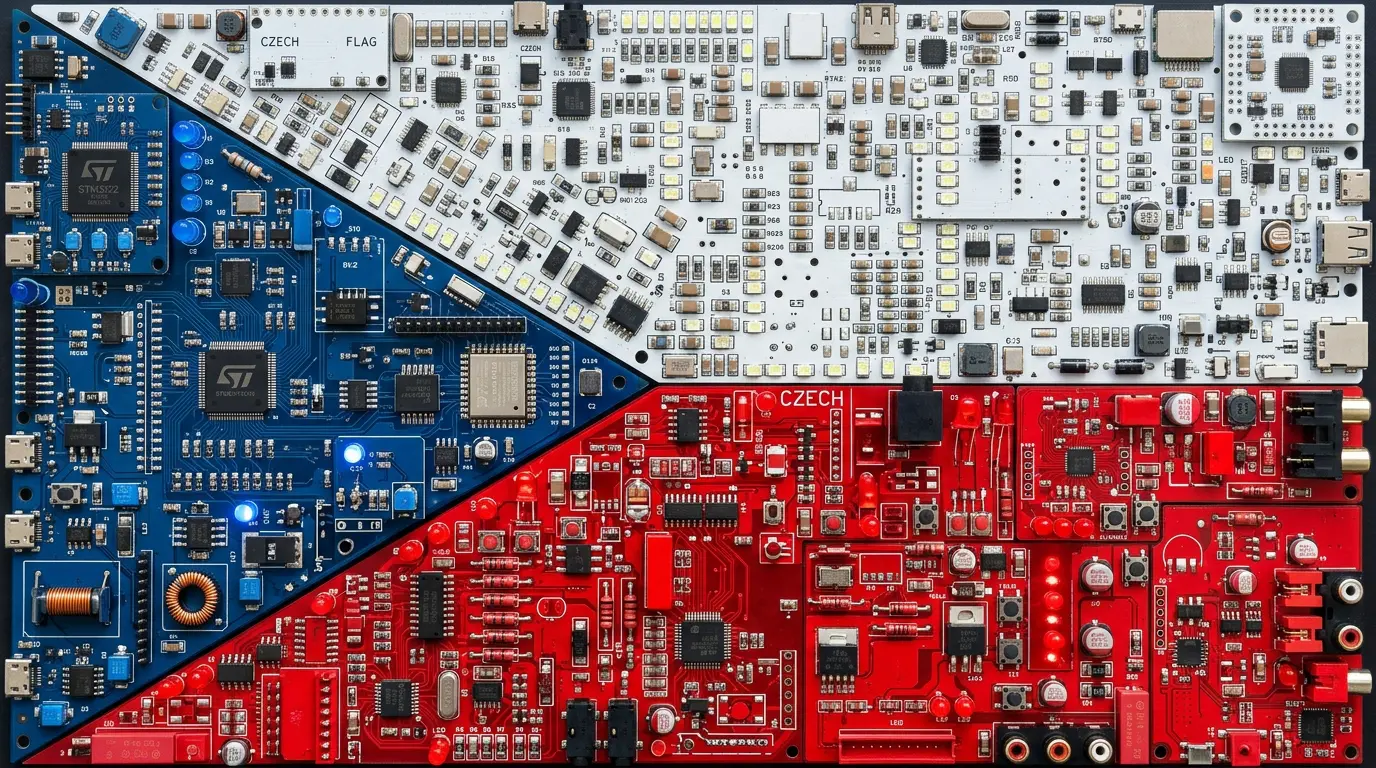
The leading czech republic quantum computing companies and institutions in 2026 form a research- and infrastructure-led ecosystem, given real weight by the VLQ quantum computer in Ostrava and by the Czech Republic’s leadership of a major European quantum consortium. Ten organisations define the czech republic quantum computing companies landscape in this guide: IT4Innovations, the LUMI-Q consortium, the Quantum Innovation Center for IBM quantum access, CZQCI for quantum communication, CESNET, the Czech Technical University in Prague, Palacky University Olomouc, Brno University of Technology, Charles University, and the QCzech community organisation.
Why the Czech ecosystem is infrastructure-led
The Czech Republic’s quantum landscape is best understood as research- and infrastructure-led rather than company-led, and it is important to be clear about that from the start. The country does not have a set of well-known venture-funded quantum-hardware or quantum-software startups in the way that Finland or the Netherlands do. Instead, the czech republic quantum computing companies landscape is built from a national supercomputing centre, university hubs, a national quantum-communication network, and the research universities behind them.
What the Czech Republic does have is genuine quantum infrastructure and a strong scientific base. It hosts one of the first quantum computers installed under the European high-performance-computing programme, it leads an eight-country European quantum consortium, and it has a long tradition of quantum-optics research, particularly in Olomouc. The country has chosen to build quantum capability through shared national and European infrastructure, and the czech republic quantum computing companies landscape reflects that choice.
The VLQ quantum computer and LUMI-Q
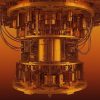
The centrepiece of Czech quantum technology is VLQ, a quantum computer inaugurated in September 2025 at the IT4Innovations national supercomputing centre in Ostrava. VLQ is a 24-physical-qubit superconducting machine supplied by the Finnish vendor IQM, and it is directly coupled to the Karolina supercomputer so the two can run hybrid classical-quantum workloads. VLQ was one of the first quantum computers inaugurated under the European high-performance-computing programme.
VLQ was procured and is operated by the LUMI-Q consortium, an eight-country European group led by the Czech Republic, with Belgium, Denmark, Finland, the Netherlands, Norway, Poland, and Sweden as the other members. The consortium shares both the cost of the machine and access to it, which is a sensible model because a quantum computer is expensive and specialised. By leading LUMI-Q, the Czech Republic placed itself at the centre of an important piece of European quantum collaboration. For the czech republic quantum computing companies and the country’s researchers, VLQ provides a real, hybrid quantum-HPC platform of European significance.
The top czech republic quantum computing organisations
Ten organisations define the czech republic quantum computing companies landscape covered in this guide. Because the ecosystem is infrastructure- and research-led, most are institutions rather than commercial vendors. IT4Innovations is the national supercomputing centre hosting the VLQ quantum computer, and the LUMI-Q consortium is the European group that operates it. The Quantum Innovation Center provides IBM quantum access, CZQCI is the national quantum-communication network, and CESNET runs the national research network. The Czech Technical University, Palacky University Olomouc, Brno University of Technology, and Charles University are the main research universities, and QCzech is the national quantum-community organisation. The IT4Innovations centre hosts the national quantum computer behind the czech republic quantum computing companies.
The ten organisations below are the ones that carry real weight in the country’s quantum work. The profiles cover each of them in depth, with a link to the organisation’s own site.








What the landscape reveals
The first pattern is that the Czech ecosystem is built on shared infrastructure. The VLQ quantum computer, the IBM quantum-access hub, and the CZQCI communication network are all shared national resources rather than the assets of individual companies. The Czech Republic quantum companies landscape is organised around giving the whole research community access to quantum capability, rather than around competing commercial vendors.
European collaboration is central
The second pattern is the importance of European collaboration. The VLQ quantum computer was procured through a European programme and is operated by an eight-country consortium that the Czech Republic leads. CZQCI is part of the pan-European quantum-communication infrastructure. For a country of the Czech Republic’s size, European collaboration is how the Czech Republic quantum companies gain access to quantum capability they could not justify building alone.
Universities and security research run deep
The third pattern is a strong, dispersed university base with particular depth in two areas. Palacky University Olomouc has a long international reputation in quantum optics, and Brno University of Technology anchors research in quantum-resistant cryptography, building on Brno’s strength as a cybersecurity hub. The Czech Republic quantum companies landscape rests on this research base, spread across several cities rather than concentrated in the capital.
CZQCI and quantum communication
Alongside the VLQ quantum computer, the Czech Republic’s other major quantum effort is in quantum communication, organised through CZQCI, the Czech Quantum Communication Infrastructure. CZQCI is building a national quantum-communication network connecting the cities of Prague, Brno, and Ostrava, and it is part of the pan-European quantum-communication infrastructure programme that aims to build a continent-wide quantum-secure network.
CZQCI is coordinated by CyberSecurityHub, an organisation founded by Masaryk University, Brno University of Technology, and the Czech Technical University in Prague, working with IT4Innovations and other partners, and it runs across the 2023 to 2027 period. The network builds a quantum-key-distribution backbone that lets Czech government bodies and critical institutions exchange encryption keys protected by the laws of physics. In April 2026 the completed backbone linking Prague, Brno, and Ostrava carried secure data across its full length, a step beyond a paper announcement. For the Czech Republic quantum companies, CZQCI provides a national quantum-secure communication capability and ties the country into the broader European quantum-network effort, complementing the quantum-computing capability that VLQ provides.
The Prague, Brno, Ostrava, and Olomouc map
The Czech Republic quantum companies landscape is spread across four cities, with no single dominant centre. Prague, the capital, hosts the Czech Technical University, which leads the IBM quantum-access hub, along with Charles University and the national research-network operator CESNET. The concentration of leading universities and national bodies makes Prague the coordination centre of Czech quantum technology.
Ostrava, in the industrial east, is the infrastructure centre, home to IT4Innovations and the VLQ quantum computer. Brno, the second-largest city, hosts Brno University of Technology and is a notable cybersecurity hub, anchoring the country’s quantum-resistant-cryptography research. Olomouc, also in the east, hosts Palacky University and its internationally respected quantum-optics research. This dispersal across four cities, each with a distinct role, is a defining feature of the Czech Republic quantum companies landscape, and the national infrastructure and European collaboration tie the centres together.
When the Czech Republic matters for your quantum strategy
Quantum-HPC access
If your quantum strategy needs access to a quantum computer integrated with a supercomputer, the Czech Republic is relevant through IT4Innovations. The VLQ quantum computer is coupled to the Karolina supercomputer for hybrid classical-quantum workloads, and access is shared through the LUMI-Q consortium. Organisations in the consortium’s member countries, or seeking European quantum-HPC access, should account for the Czech Republic quantum companies landscape and the IT4Innovations infrastructure.
Quantum-safe communication
For quantum-safe communication, the Czech Republic offers a national network and strong security research. CZQCI builds a quantum-key-distribution backbone connecting major Czech cities, and Brno University of Technology anchors research in quantum-resistant cryptography. Organisations planning quantum-safe communication, particularly those connected to Central European networks, should consider the Czech Republic quantum companies landscape and the CZQCI programme.
Research collaboration
For research and development, the Czech Republic offers a strong, dispersed university base with particular depth in quantum optics at Olomouc and in quantum-resistant cryptography at Brno, plus coordinated access to IBM quantum hardware. Organisations seeking European research partnerships in quantum optics, quantum communication, or post-quantum security should consider the Czech Republic quantum companies landscape and the country’s research universities.
Frequently asked questions
Who are the leading Czech Republic quantum companies in 2026?
The Czech quantum landscape is research- and infrastructure-led rather than company-led. The central institution is IT4Innovations, the national supercomputing centre in Ostrava that hosts the VLQ quantum computer, operated through the Czech-led LUMI-Q consortium of eight countries. The Quantum Innovation Center, led by the Czech Technical University, provides IBM quantum access, and CZQCI is the national quantum-communication network, with CESNET running the research-network backbone. The Czech Technical University, Palacky University Olomouc, Brno University of Technology, and Charles University are the main research universities, and QCzech is the national quantum-community organisation. Together these ten organisations define the Czech Republic quantum companies landscape.
Does the Czech Republic have a quantum computer?
Yes. In September 2025, the IT4Innovations national supercomputing centre in Ostrava inaugurated VLQ, a 24-physical-qubit superconducting quantum computer supplied by the Finnish vendor IQM. VLQ is directly coupled to the Karolina supercomputer so the two can run hybrid classical-quantum workloads, and it was one of the first quantum computers inaugurated under the European high-performance-computing programme. VLQ was procured and is operated by the LUMI-Q consortium, an eight-country European group led by the Czech Republic. The machine gives the Czech Republic quantum companies and the country’s researchers a real quantum-HPC platform, and it places the Czech Republic among the European countries hosting operational quantum hardware.
What is the LUMI-Q consortium?
The LUMI-Q consortium is a Czech-led group of eight European countries that together procured and operate the VLQ quantum computer at IT4Innovations in Ostrava. The members are the Czech Republic, Belgium, Denmark, Finland, the Netherlands, Norway, Poland, and Sweden. The consortium shares both the cost of the quantum computer and access to it, which is a practical model because a quantum computer is expensive and specialised, and pooling resources lets several countries support a more capable machine than any one of them could justify alone. By leading LUMI-Q, the Czech Republic placed itself at the centre of an important piece of European quantum collaboration, giving the Czech Republic quantum companies a role beyond the country’s size.
What is CZQCI?
CZQCI, the Czech Quantum Communication Infrastructure, is the national quantum-communication network of the Czech Republic, connecting the cities of Prague, Brno, and Ostrava. It is part of the pan-European quantum-communication infrastructure programme, which aims to build a continent-wide quantum-secure network. CZQCI is coordinated by CyberSecurityHub, an organisation founded by Masaryk University, Brno University of Technology, and the Czech Technical University in Prague, working with IT4Innovations and other partners, and it runs across the 2023 to 2027 period. The network builds a quantum-key-distribution backbone that lets Czech government bodies and critical institutions exchange encryption keys protected by the laws of physics. CZQCI gives the Czech Republic quantum companies a national quantum-secure communication capability and connects the country to the wider European quantum-network effort.
Does the Czech Republic have quantum computing companies?
The Czech Republic has very few dedicated commercial quantum-computing companies, and its quantum ecosystem is best understood as research- and infrastructure-led. The Czech Republic quantum companies landscape is built from a national supercomputing centre, university hubs, a national quantum-communication network, and research universities, rather than from venture-funded startups. There is some commercial activity in post-quantum cryptography and quantum-safe security, an area connected to Brno’s strength as a cybersecurity hub, but the country does not have a major quantum-hardware or quantum-software vendor. The quantum hardware in the Czech Republic, the VLQ machine, was supplied by the Finnish company IQM. The Czech approach has been to build quantum capability through shared national and European infrastructure.
Why is the Czech Republic strong in quantum optics?
The Czech Republic, and Palacky University in Olomouc in particular, has a long and internationally respected tradition in quantum optics, the science of using light to carry and process quantum information. Olomouc’s optics department and joint optics laboratory host research groups whose work on the quantum properties of light has contributed to the foundations of quantum communication and photonic quantum technology. This depth in quantum optics is a genuine national strength, because quantum optics underlies quantum key distribution, quantum sensing, and photonic approaches to quantum computing. It gives the Czech Republic quantum companies landscape a strong specialised research centre in the east of the country, complementing the infrastructure in Ostrava and the security research in Brno.
Where is quantum technology developed in the Czech Republic?
The Czech Republic quantum companies landscape is spread across four cities, with no single dominant centre. Prague, the capital, hosts the Czech Technical University, which leads the IBM quantum-access hub, along with Charles University and the research-network operator CESNET. Ostrava, in the industrial east, hosts IT4Innovations and the VLQ quantum computer. Brno, the second-largest city, hosts Brno University of Technology and is a notable cybersecurity hub anchoring quantum-resistant-cryptography research. Olomouc, also in the east, hosts Palacky University and its quantum-optics research. This dispersal across four cities, each with a distinct role, is a defining feature of the Czech quantum ecosystem, held together by national infrastructure and European collaboration.
How does the Czech Republic compare with other quantum nations?
The Czech Republic is an infrastructure-led quantum nation rather than a commercial powerhouse. It does not match the venture-funded company ecosystems of Finland, the Netherlands, or Germany, and it does not build quantum hardware domestically. But the Czech Republic has real strengths: it hosts the VLQ quantum computer, one of the first installed under the European high-performance-computing programme, it leads the eight-country LUMI-Q consortium, it has a national quantum-communication network in CZQCI, and it has deep research traditions in quantum optics and quantum-resistant cryptography. The Czech Republic quantum companies landscape competes through shared national and European infrastructure and a strong, dispersed university research base, giving the country a solid position in Central European quantum technology.




See today’s quantum computing news on Quantum Zeitgeist for the latest breakthroughs in qubits, hardware, algorithms, and industry deals.