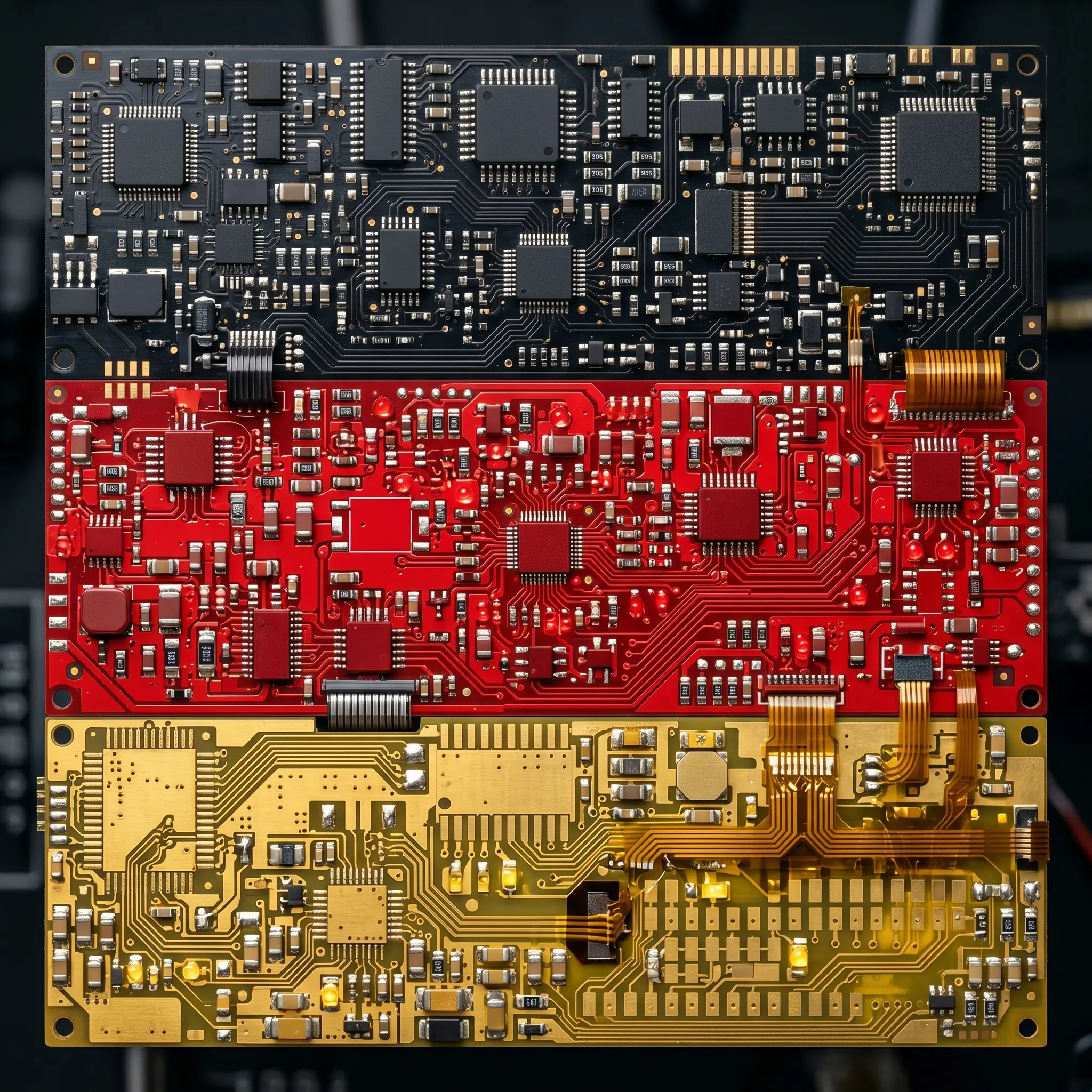
Germany runs the densest quantum-computing ecosystem in continental Europe, spanning Munich Quantum Valley, the Jülich supercomputing hub and the Stuttgart photonics cluster. This guide profiles the leading German vendors and then maps the wider field of companies tracked behind them.
The leading germany quantum computing companies in 2026 sit inside the densest national quantum-computing ecosystem in continental Europe. The ecosystem is anchored by the EUR 2B BMBF (German Federal Ministry of Education and Research) Quantum Computing Programme, the Munich Quantum Valley initiative, the EUR 5B EuroHPC quantum push, the Forschungszentrum Jülich JARA partnership, and the Leibniz Supercomputing Centre (LRZ) host of the deepest on-premise quantum deployments in Europe.
Ten commercial vendors define the germany quantum computing companies in this guide: IQM (Espoo HQ, deepest German deployment), planqc (Garching, neutral atoms), eleQtron (Siegen, MAGIC trapped-ion), Q.ANT (Stuttgart, photonic), Quantum Brilliance (Stuttgart + Canberra, NV-diamond), HQS (Karlsruhe-Munich, chemistry software), Kiutra (Munich, cryogenics), Qruise (Munich, ML-quantum control), ParityQC (Vienna AT, deep German contracts), and IBM Quantum (Ehningen on-prem Quantum System One). The roster covers every major qubit modality plus the cryogenics, control-software, and chemistry-software layers, reflecting the breadth of the German federal quantum-funding programme.
Why Germany is the densest European quantum-computing ecosystem
Germany has built the deepest national quantum-computing programme inside Europe over the past four years, with the BMBF EUR 2B Quantum Computing Programme (2021-2026 framework, extended 2026-2030) plus the Munich Quantum Valley initiative plus the EuroHPC EU-level quantum-HPC integration plus the JARA (Jülich Aachen Research Alliance) plus the Fraunhofer Quantum Computing Network plus the German Cyberagency portable-quantum-program funding. The cumulative public-sector funding inside Germany through 2026 sits at roughly EUR 3B+ across all programmes, the largest national footprint in continental Europe.
The 2025-2026 trajectory has produced the deepest on-premise commercial quantum installations in continental Europe. IQM’s 150-qubit Radiance at LRZ Munich is the largest superconducting quantum-HPC deployment on the continent, planqc’s neutral-atom MAQCS 1,000-qubit system is shipping at LRZ alongside Radiance under a EUR 20M BMBF grant, IBM Quantum System One has been operational at Fraunhofer Ehningen since 2021, eleQtron’s EPIQ trapped-ion hybrid system is under co-development with Forschungszentrum Jülich, and Q.ANT’s NPU 2 photonic processor began H1 2026 customer shipments from Stuttgart. The Germany quantum computing companies ecosystem ships more deployed quantum hardware-hours per quarter than any other European country.
Government funding and the BMBF roadmap
The BMBF Quantum Computing Programme is the single largest funding instrument inside the German quantum-computing industry, with the original EUR 2B 2021-2026 framework now extended into a EUR 3B+ 2026-2030 framework that targets utility-scale quantum-HPC deployments at LRZ Munich, Forschungszentrum Jülich, and the broader EuroHPC member-state network. The BMBF programme structure includes direct vendor grants (planqc EUR 20M LRZ deployment, eleQtron EUR 21M NRW EPIQ co-development, HQS EUR 2.5M EIC Transition Grant via the EU-level supplement), consortium funding (ATIQ EUR 37.4M with eleQtron and ParityQC, QUICHE consortium with Quantum Motion and Riverlane on the silicon-spin side), and institutional infrastructure funding for LRZ and Jülich.
The DLR (German Aerospace Centre) quantum-computing budget runs in parallel with the BMBF programme and funds the EUR 208.5M ParityQC ion-trap-quantum-computer contract with consortium partners, the EUR 29M planqc scalable-platform contract, and the broader DLR Quantum Computing Initiative that targets defence-and-aerospace quantum applications. The German Cyberagency funds the EUR 35M Quantum Brilliance + ParityQC portable-quantum partnership targeting 2027 delivery, and the broader Federal Office for Information Security (BSI) post-quantum-cryptography programme integrates with the Germany quantum computing companies ecosystem at the cryptographic-migration layer.
The top germany quantum computing companies
Ten commercial vendors define the germany quantum computing companies covered in this guide. Three are deep on-premise hardware deployments inside Germany (IQM at LRZ Munich, IBM Quantum at Ehningen, planqc at LRZ Munich), two are Germany-headquartered hardware pure-plays (eleQtron in Siegen on trapped-ion, Q.ANT in Stuttgart on photonic), one is the Australian-German diamond-NV vendor (Quantum Brilliance with deep Stuttgart operations and Fraunhofer IAF partnership), three are German quantum-software and supply-chain vendors (HQS in Karlsruhe-Munich on chemistry, Kiutra in Munich on cryogenics, Qruise in Munich on ML quantum control), and one is the Vienna-Austrian architecture vendor running the deepest German-government contracts (ParityQC). The BMBF tracks the germany quantum computing companies ecosystem with annual roadmap updates and consortium funding announcements.


What the lineup reveals
Three patterns stand out. First, the German quantum-computing ecosystem is unusually multi-modal: superconducting (IQM, IBM Ehningen), trapped-ion (eleQtron), neutral-atom (planqc), photonic (Q.ANT), and NV-diamond (Quantum Brilliance) all ship production-scale or pre-production-scale hardware inside German borders. Compare this with the UK (where Quantum Motion silicon-spin and Riverlane QEC anchor the modality-specific story) or France (where Pasqal neutral-atom, Alice & Bob cat-qubits, and Quobly silicon-spin dominate) and the German lineup is the deepest multi-modality national portfolio in continental Europe.
The supply-chain story is unique
Second, the German supply-chain story is unique. Kiutra on cryogenic cooling, Q.ANT on photonic-chip fabrication via IMS CHIPS, the broader Fraunhofer Institute network on quantum-component R&D, and TRUMPF on laser supply for trapped-ion and neutral-atom systems give Germany the deepest national quantum-hardware-supply-chain footprint outside the United States. The EUR 13M Kiutra October 2025 round and the EUR 142M Q.ANT cumulative funding are the largest quantum-supply-chain private-sector investments in Europe by an order of magnitude.
The Munich centre of gravity
Third, the Munich Quantum Valley initiative is the gravitational centre of the German quantum-computing ecosystem. The LRZ Garching hosts IQM Radiance plus planqc MAQCS plus the broader EuroHPC quantum-HPC stack, the Technical University of Munich anchors the academic talent pipeline, the Max Planck Institute for Quantum Optics in Garching spun out planqc, the Ludwig Maximilian University Munich participates in the MAQCS programme, BMW Group anchors the industrial-customer side, and the Munich Quantum Valley initiative coordinates the broader academic-industrial-government effort. HQS, Kiutra, Qruise, and the Munich offices of every major German quantum-software vendor sit inside the Munich orbit.
The Munich Quantum Valley + Jülich + Stuttgart axis
The Germany quantum computing companies ecosystem is organised around three regional centres of gravity. The Munich Quantum Valley axis (Garching, Munich proper, the Technical University of Munich and the Ludwig Maximilian University Munich) hosts IQM Radiance plus planqc plus HQS plus Kiutra plus Qruise plus the BMW Group enterprise-customer footprint. The Forschungszentrum Jülich axis (Jülich, Aachen via JARA) hosts the eleQtron EPIQ collaboration, the Qruise ML-control origin, and the broader Jülich Quantum Computing platform. The Stuttgart axis (Stuttgart proper plus the broader Baden-Württemberg cluster) hosts Q.ANT photonic, Quantum Brilliance NV-diamond Europe operations, the Fraunhofer IAF partnership, and IBM Quantum System One at Ehningen near Stuttgart.
The cross-axis integration runs through the BMBF Quantum Computing Programme funding instruments, the EuroHPC member-state network (LRZ Munich and Forschungszentrum Jülich are both EuroHPC sites), the Munich Quantum Valley coordinating organisation, and the Fraunhofer Quantum Computing Network that connects the Fraunhofer Institutes across Germany on the quantum-research side. The deepest cross-axis programme is the BMBF-funded MAQCS planqc-LRZ deployment, which combines Munich Quantum Valley host infrastructure with German-federal BMBF funding and EuroHPC member-state delivery commitments.
How EuroHPC ties LRZ and Jülich into the German quantum-HPC story
Germany operates two EuroHPC supercomputing sites that anchor the quantum-HPC integration story: the Leibniz Supercomputing Centre (LRZ) in Garching near Munich runs SuperMUC-NG plus the IQM Radiance plus the planqc MAQCS deployment, and the Jülich Supercomputing Centre at Forschungszentrum Jülich runs JUWELS plus the EuroHPC quantum-HPC integration initiative with HPE plus the eleQtron EPIQ trapped-ion-classical hybrid. The combined deployment footprint exceeds 1,200 deployed-physical-qubits across both sites by Q4 2026 once the MAQCS scale-out is fully online, the deepest single-country quantum-HPC capacity in Europe.
The German quantum-HPC integration story matters because every major quantum algorithm that ships in 2026 production hardware (variational quantum eigensolvers for chemistry, QAOA for optimisation, quantum machine learning hybrids) requires a tight loop between quantum-processor execution and classical-HPC post-processing, the architectural primitive that LRZ Munich and Jülich both expose as a native research-and-production environment. The Germany quantum computing companies that connect deepest into this story are IQM (Radiance plus Resonance plus Halocene), planqc (MAQCS plus the EUR 29M DLR contract), and eleQtron (EPIQ hybrid platform).
When Germany matters for your quantum-computing strategy
Industrial chemistry and pharmaceuticals
The German industrial-chemistry sector is the deepest enterprise customer base for the Germany quantum computing companies ecosystem, anchored by BASF (the largest chemical company in the world), Boehringer Ingelheim (pharmaceuticals), Bayer (Leverkusen, life sciences and crop science), Henkel (consumer chemicals), and Evonik (specialty chemicals). The IBM Quantum Network Germany hub at Fraunhofer Ehningen serves BASF, Boehringer Ingelheim, BMW, and Mitsubishi Chemical as enterprise members, the HQS Quantum Simulations partnership stack covers BASF and Boehringer Ingelheim directly, and the planqc + BMW Group + Infineon QIAPO project ties automotive-and-semiconductor quantum-optimisation into the same chemistry-driven quantum-application stack.
Automotive optimisation and manufacturing
BMW Group, Volkswagen Group, Daimler-Mercedes-Benz, and Audi anchor the automotive use-case footprint for the Germany quantum computing companies ecosystem. The IQM partnership stack inside Munich Quantum Valley runs BMW-aligned quantum-optimisation pipelines, the planqc QIAPO project explicitly targets automotive workloads with BMW and Infineon, and the broader BMBF-funded SeQuenC programme connects automotive optimisation to the EuroHPC quantum-HPC stack. ParityQC’s ParityOS architecture targets automotive-logistics workloads as a primary commercial application, and the Bosch Ventures, Porsche Ventures, and Trumpf Venture investment positions (across Quantum Motion, Q.ANT, Kiutra, and the broader German quantum-supply-chain ecosystem) anchor the strategic-investor side of the automotive footprint.
Defence, aerospace, and national security
The Germany quantum computing companies ecosystem has a substantial defence-and-aerospace footprint anchored by DLR (German Aerospace Centre, the deepest single-customer contract budget for German quantum-hardware vendors), the German Cyberagency (Cyberagentur), the Federal Office for Information Security (BSI), and the broader Bundeswehr R&D programme on quantum-secure communication. The EUR 208.5M ParityQC DLR ion-trap contract, the EUR 35M Cyberagency Quantum Brilliance + ParityQC portable-quantum partnership, the EUR 29M planqc DLR contract, and the broader BSI post-quantum-cryptography migration programme position Germany as the deepest European defence-and-aerospace quantum-computing customer base.
The wider German quantum ecosystem
Beyond the flagship vendors profiled above, the field of Germany quantum computing companies runs deep across hardware, software, sensing and the enabling supply chain. The Quantum Navigator tracks 86 German companies in total, and the grouping below shows how broad that bench is.
Hardware and full-stack builders
- QUDORA Technologies (Braunschweig) builds trapped-ion quantum computers using near-field microwave control.
- neQxt (Erlenbach am Main) develops full-stack trapped-ion systems as a University of Mainz spinout.
- Kipu Quantum (Munich) develops application-specific algorithms that compress circuit depth for current hardware.
- Qoro Quantum (Munich) builds middleware that orchestrates workloads across distributed quantum and HPC resources.
- QMware (Munich) operates a hybrid quantum-classical cloud for enterprise workloads.
- Arque Systems (Munich) develops CMOS-compatible silicon-spin qubit processors.
- Akhetonics (Munich) is building an all-optical general-purpose processor.
- SaxonQ (Leipzig) builds room-temperature, mobile diamond-NV quantum computers.
- Peak Quantum (Munich) is a Walther Meissner Institute spinout developing superconducting hardware.
Quantum software, chemistry and optimisation
- JoS Quantum (Frankfurt) builds quantum algorithms for finance and insurance risk.
- Anaqor (Berlin) runs PlanQK, Germany’s community quantum-software platform.
- Quantagonia (Munich) develops a hybrid quantum-classical optimisation solver.
- Quantistry (Berlin) and Molecular Quantum Solutions (Heidelberg) provide cloud quantum-chemistry simulation for drug and materials discovery.
- CreativeQuantum (Leverkusen) offers quantum-chemistry research and consulting.
- Aqarios, IntelliQ, Pioniq and CTQG build hybrid optimisation software for industry.
- Nextnano (Munich) develops semiconductor and qubit-device simulation tools, and Qrisp is an open-source high-level quantum programming framework.
Sensing, photonics and enabling hardware
- Bosch Quantum Sensing (Munich) develops compact NV-diamond sensors for mobility and medical use.
- Quantum Diamonds (Munich) builds diamond quantum sensors for semiconductor failure analysis.
- NVision (Ulm) commercialises hyperpolarisation to boost MRI sensitivity, and Diatope (Ulm) manufactures engineered NV-diamond material.
- TOPTICA Photonics, Menlo Systems, Huebner Photonics and Sacher Lasertechnik supply the precision lasers used across ion-trap and atom platforms.
- PicoQuant, Qutools, Pixel Photonics, Munich Quantum Instruments and Quantum Optics Jena build single-photon and photonic components.
Security, networking and enterprise programmes
- KEEQuant and InfiniQuant (Erlangen) develop quantum key distribution systems.
- Deutsche Telekom runs Europe’s leading carrier quantum-networking trials through its T-Labs unit.
- Utimaco (Aachen) and Adtran, formerly ADVA, provide post-quantum cybersecurity and secure optical transport.
- Deutsche Bank, Boehringer Ingelheim, HENSOLDT, Rohde & Schwarz, Siemens and Elmos run corporate quantum programmes across finance, pharma, defence and industry.
Infrastructure and research
- Research and HPC anchors include Forschungszentrum Jülich and its JUNIQ platform, the Leibniz Supercomputing Centre, the metrology institute PTB, the Helmholtz Association, the Technical University of Munich and the Fraunhofer institutes IPMS and IAF.
- Enabling supply chain spans the cryogenics and vacuum specialists Leybold, VACOM and Rosenberger, the precision-positioning makers PI Physik Instrumente and Piezosystem Jena, the instrumentation firm Spectrum Instrumentation and the quantum-HPC integrator ParTec.
- Investors active in the German quantum scene include Vsquared Ventures, Sparring Capital Partners, KGAL and Bosch Ventures.
Get the week’s most important quantum-computing developments from Germany and the wider European ecosystem, curated and sent to your inbox. It is a short, serious read for people who follow this industry closely.
Free to join, and you can unsubscribe at any time. Emails are handled by Substack; see our privacy policy.
Frequently asked questions
Who are the leading germany quantum computing companies in 2026?
Ten commercial vendors define the German quantum-computing ecosystem. IQM (Espoo HQ with 150-qubit Radiance at LRZ Munich) is the deepest superconducting deployment. planqc (Garching, 256-qubit neutral-atom platform plus the 1,000-qubit MAQCS LRZ deployment, EUR 50M Series A plus EUR 49M+ in BMBF/DLR grants) is the largest German neutral-atom vendor. eleQtron (Siegen, MAGIC microwave trapped-ion, 30Q, $50M+, EPIQ Jülich co-development) anchors the trapped-ion side. Q.ANT (Stuttgart, TFLN photonic, EUR 142M+ raised including the Druckenmiller $80M) leads photonic. Quantum Brilliance (Stuttgart + Canberra, room-temperature NV-diamond) covers the diamond-NV modality. HQS (Karlsruhe-Munich), Kiutra (Munich cryogenics), and Qruise (Munich ML control) round out the software-and-supply-chain layer. ParityQC (Vienna AT, deepest German-government contract portfolio) and IBM Quantum (Ehningen System One) complete the ecosystem.
What is the Munich Quantum Valley initiative?
Munich Quantum Valley (MQV) coordinates the German quantum-computing ecosystem in the Munich region; the Free State of Bavaria founded the initiative in 2021 with member institutions including the Technical University of Munich, the Ludwig Maximilian University Munich, the Max Planck Institute for Quantum Optics, the Leibniz Supercomputing Centre (LRZ), the Fraunhofer-Gesellschaft, and the Bavarian Academy of Sciences and Humanities. MQV anchors the LRZ Munich deployment site for IQM Radiance plus planqc MAQCS, hosts the academic talent-pipeline for the broader German quantum-industry workforce, and coordinates the BMBF Quantum Computing Programme funding instruments that flow through the Munich region. The initiative is the deepest regional quantum-computing coordination programme in continental Europe.
How much does the German government invest in quantum computing?
The cumulative German public-sector quantum-computing investment through 2026 sits at roughly EUR 3B+ across multiple federal and state-level instruments. The BMBF Quantum Computing Programme is the deepest single source at EUR 2B (2021-2026 framework, extended into a EUR 3B+ 2026-2030 framework), funding vendor grants (planqc EUR 20M LRZ, eleQtron EUR 21M NRW EPIQ, HQS EUR 2.5M EIC Transition Grant), consortium funding (ATIQ EUR 37.4M, QUICHE), and institutional infrastructure (LRZ Munich plus Jülich). DLR adds the EUR 208.5M ParityQC ion-trap contract plus the EUR 29M planqc scalable-platform contract, and the German Cyberagency funds the EUR 35M Quantum Brilliance plus ParityQC portable-quantum partnership. The state-level NRW funding adds EUR 21M+ for eleQtron, and Bavaria funds the broader Munich Quantum Valley infrastructure.
Where is IBM Quantum located in Germany?
IBM Quantum operates the IBM Quantum System One at the Fraunhofer-Gesellschaft research campus in Ehningen near Stuttgart. The Ehningen system became operational in 2021 as the first IBM Quantum System One installed outside the United States, and it remains the deepest on-premise superconducting-quantum installation in Germany. The Ehningen platform serves the Fraunhofer Quantum Computing Network plus the broader IBM Quantum Network Germany cluster, which includes BASF, Boehringer Ingelheim, BMW Group, and Mitsubishi Chemical as enterprise members, the deepest single-vendor commercial-enterprise quantum-computing footprint in Germany. The Ehningen system also participates in the EuroHPC quantum-HPC integration programme alongside the LRZ Munich and Jülich Supercomputing Centre deployments.
What is the Leibniz Supercomputing Centre quantum deployment?
LRZ in Garching near Munich is the deepest on-premise quantum-HPC deployment site in Europe, hosting the IQM Radiance 150-qubit superconducting system plus the planqc MAQCS 1,000-qubit dual-core neutral-atom platform under deployment via a EUR 20M BMBF grant. The LRZ deployment integrates with the SuperMUC-NG petascale supercomputer and the LRZ Linux Cluster for the quantum-HPC hybrid workloads that anchor every modality-agnostic quantum algorithm in 2026 production. The LRZ is also a EuroHPC member-state supercomputing site, which means the German LRZ quantum capacity is exposed to the broader EuroHPC quantum-HPC integration programme. By Q4 2026 the combined LRZ deployment footprint will exceed 1,150+ physical qubits across superconducting and neutral-atom modalities. See our quantum logical-qubit leaderboard for the cross-modality benchmark context.
Which German quantum-computing companies are publicly traded?
No purely-German quantum-computing pure-play is currently publicly traded on its own. IBM Quantum is a programme inside IBM Corporation on NYSE (the Ehningen Quantum System One is operationally German but the parent company is US-headquartered). IQM completed a $1.8B SPAC merger with Real Asset Acquisition Corp in early July 2026 and now trades on Nasdaq as IQMX, but the parent company is Espoo-Finland-headquartered with deep German deployments rather than German-incorporated.
planqc, eleQtron, Q.ANT, Quantum Brilliance, HQS, Kiutra, Qruise, and ParityQC are all currently privately held. The financing pace through 2025-2026 (Q.ANT EUR 142M+ including the Druckenmiller $80M, eleQtron $50M+, planqc EUR 50M Series A plus the EUR 49M+ BMBF/DLR grants) suggests an IPO or SPAC by one of the Germany quantum computing companies is plausible inside 2027-2028.
How does Germany compare with the UK and France on quantum computing?
Germany is the deepest national quantum-computing ecosystem inside continental Europe by total funding, deployed hardware, and vendor count, with roughly EUR 3B+ in cumulative public-sector investment through 2026 versus the UK’s GBP 2.5B National Quantum Strategy (2024-2034) and France’s EUR 1.8B Plan Quantique (2021-2025) plus the EUR 5B follow-on commitment. By modality coverage Germany is the most multi-modal (superconducting, trapped-ion, neutral-atom, photonic, NV-diamond all ship), the UK is the deepest on silicon-spin and QEC software (Quantum Motion, Riverlane), and France is the deepest on neutral-atom (Pasqal), cat-qubit (Alice & Bob), and silicon-spin (Quobly). The cross-country EuroHPC integration ties all three national programmes into a single quantum-HPC backbone.
What is the eleQtron MAGIC trapped-ion approach?
MAGIC (Microwave Addressable Gate Ions for Computing) is eleQtron’s branded approach to trapped-ion quantum computing that uses radio-frequency signals instead of lasers to control the qubits, the architectural primitive that lets eleQtron run on standard microwave electronics rather than the bespoke laser stacks used by IonQ, Quantinuum, and AQT. The advantage is significantly reduced system cost and a deeper scaling path because microwave control is standard semiconductor-foundry technology while laser systems require custom optical assemblies. eleQtron has demonstrated 30 physical qubits, and the EUR 21M 2025 NRW funding for the EPIQ hybrid quantum-classical supercomputer with Forschungszentrum Jülich anchors the production-deployment plan for the MAGIC architecture inside the German quantum-HPC stack.
Disclaimer. This article is for informational purposes only and does not constitute investment, financial or professional advice. The quantum technology industry evolves rapidly and information may become outdated. Always conduct your own research and consult qualified advisers before making investment decisions. Investing in quantum computing companies involves significant risk, including the potential loss of your entire investment, and past performance is not indicative of future results.




See today’s quantum computing news on Quantum Zeitgeist for the latest breakthroughs in qubits, hardware, algorithms, and industry deals.