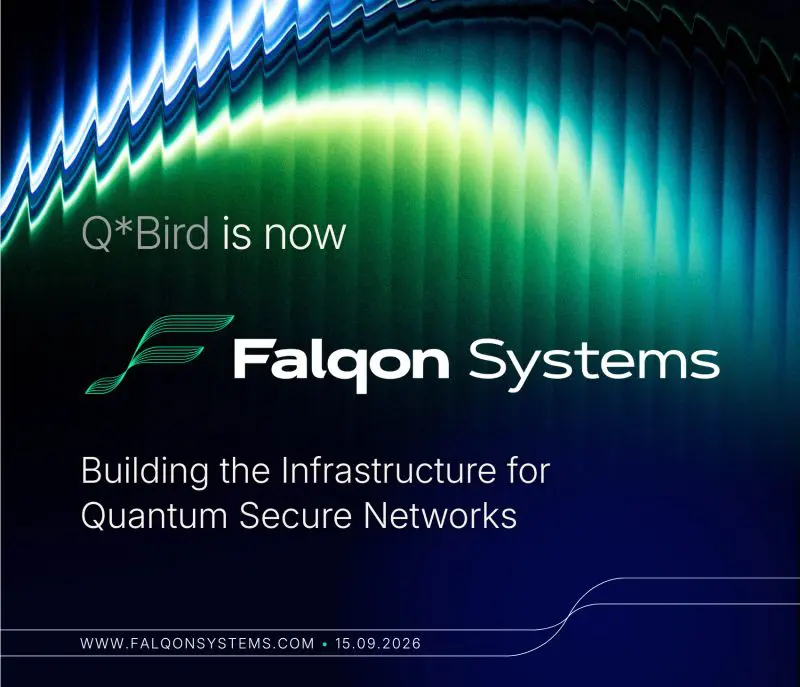
Q*Bird has rebranded as Falqon Systems, signaling a shift from developing quantum communication technologies to building the infrastructure for operational networks. This change reflects the company’s expanded focus from research and development to implementation for secure digital communications.
“The transition to Falqon Systems reflects how our vision has evolved,” says CEO and co-founder Dr. Ingrid Romijn, as the company aims to build infrastructure enabling organizations to securely communicate, collaborate, and build the digital infrastructure for the quantum era, Falqon Systems says. Despite the rebranding, ownership, leadership including Remon Berrevoets and Joshua A. Slater, PhD, customer relationships, and the technology roadmap remain unchanged.
Falqon Systems Rebrands from Q*Bird, Focusing on Network Infrastructure
Falqon Systems now focuses on building the infrastructure for quantum secure networks, a shift from its earlier work developing scalable quantum communication technologies. Falqon Systems aligns its new identity with a broadening technology portfolio, signaling a long-term commitment to trusted digital infrastructure. The company’s strategic evolution positions it to support operational Quantum Secure Networks, a foundation for trusted digital communications, according to Dr. Romijn, and represents an intention to move beyond technology sales toward comprehensive network solutions.
Quantum Secure Networks are becoming the foundation of trusted digital communications.
Source: https://www.falqonsystems.com/




See today’s quantum computing news on Quantum Zeitgeist for the latest breakthroughs in qubits, hardware, algorithms, and industry deals.