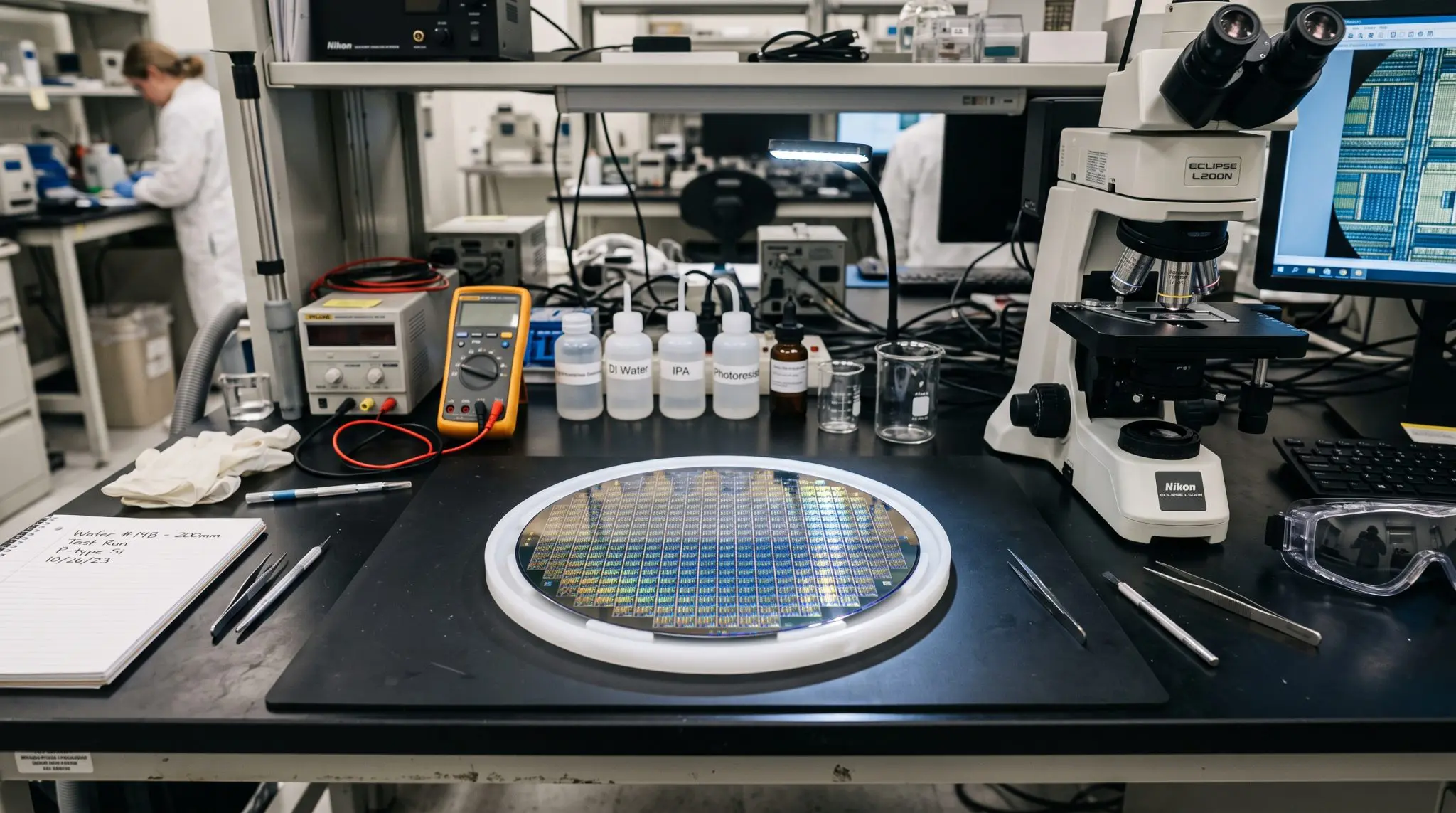
In 2016, researchers at CEA-Leti demonstrated a silicon spin qubit fabricated on a 300 mm wafer using standard industrial processes, a foundational step now bolstered by a strengthened collaboration with Quobly, the company says. The French quantum computing company, spun out from CEA-Leti and CNRS in 2022, will use the FAMES Pilot Line to refine new process flows for its QSOI architecture, which combines silicon spin qubits with FD-SOI technology and is being industrialized with STMicroelectronics. “Quobly was founded on more than 15 years of research at CEA-Leti and CNRS,” says Nicolas Daval, Quobly’s chief engineering officer, emphasizing the long-term partnership driving advances in scalable quantum processors.
2016 CEA-Leti Silicon Qubit Foundation for Quobly’s QSOI
This early achievement, using fully depleted silicon-on-insulator (FD-SOI) technology, established a critical precedent for scalable manufacturing, a key element Quobly now aims to realize. The 300 mm wafer size signaled an intention to move beyond laboratory prototypes toward production-compatible dimensions, a vision now being actively pursued.
Quobly is further solidifying its technological pathway through expanded access to the FAMES Pilot Line, a European initiative focused on advanced chip design and sustainable manufacturing. This access allows the company to test and refine new process flows and patterning techniques for future processor generations, complementing its existing industrial collaboration with STMicroelectronics.
The collaboration with Quobly builds on a long-standing research effort in silicon quantum technologies and continues to connect advanced semiconductor process development with the requirements of quantum computing. FAMES provides Quobly with access to state-of-the-art process capabilities to investigate new technology options and support the development of future generations of silicon quantum processors.
Jean-René Lequepeys, chief technology officer of CEA-Leti
FAMES Pilot Line Accelerates Quobly’s Quantum Processor Development
Quobly is using the FAMES Pilot Line to refine patterning techniques key for future processor generations. “Access to FAMES adds another capability to this ecosystem, allowing us to explore and mature technology options for the next generations of our quantum processors,” a Quobly representative stated. The company, founded in 2022 and currently employing approximately 70 people, has secured over €160 million in funding to support this development, according to Quobly.
Jean-René Lequepeys, chief technology officer of CEA-Leti, emphasized the strong relationship between the two organizations. “The collaboration with Quobly builds on a long-standing research effort in silicon quantum technologies and continues to connect advanced semiconductor process development with the requirements of quantum computing,” he said.
This partnership extends beyond mere access to facilities. It’s a combined effort to address the challenges of scaling silicon quantum processors. The company’s Alloy Forge emulator, available on Scaleway since June 2026, allows developers to test algorithms ahead of the arrival of Quobly’s first quantum computer, further solidifying its position in the emerging quantum landscape.
Quobly was founded on more than 15 years of research at CEA-Leti and CNRS to develop silicon spin-qubit technology. Our collaboration with CEA-Leti has continued since the company’s creation, while our partnership with STMicroelectronics is enabling us to industrialize QSOI on 300 mm semiconductor manufacturing infrastructure. Access to FAMES adds another capability to this ecosystem, allowing us to explore and mature technology options for the next generations of our quantum processors.
Nicolas Daval, chief engineering officer of Quobly
Quobly’s QSOI Architecture Targets One Million Qubits by 2032
This early demonstration provided the basis for Quobly’s current QSOI architecture and its path toward mass production. The company’s strategy centers on industrializing this qubit technology with STMicroelectronics, using the manufacturer’s existing 300 mm infrastructure to accelerate development and reduce costs.
This ongoing collaboration focuses on the core building blocks necessary for integrating, controlling, and scaling silicon spin qubits, essential for creating increasingly powerful quantum processors. “Our collaboration with CEA-Leti has continued since the company’s creation, while our partnership with STMicroelectronics is enabling us to industrialize QSOI on 300 mm semiconductor manufacturing infrastructure.” This co-design approach with STMicroelectronics places both quantum processors and cryogenic control electronics onto a proven manufacturing platform, allowing for scaling through semiconductor integration.
Quobly anticipates initial commercial availability of its Alloy Pioneer quantum computer by the end of 2026, with a longer-term roadmap aiming for a one million qubit system by 2032, the firm reports. This ambitious goal relies on applying VLSI principles, increasing computational capacity through semiconductor integration, a strategy mirroring the evolution of classical computing.
The company’s Alloy product family will initially offer cloud access for high-performance computing and research, before scaling to larger systems. This approach, Quobly believes, will deliver predictable system footprint, energy requirements, manufacturing economics and return on investment as quantum computing matures and expands beyond laboratory settings., the company states.



See today’s quantum computing news on Quantum Zeitgeist for the latest breakthroughs in qubits, hardware, algorithms, and industry deals.