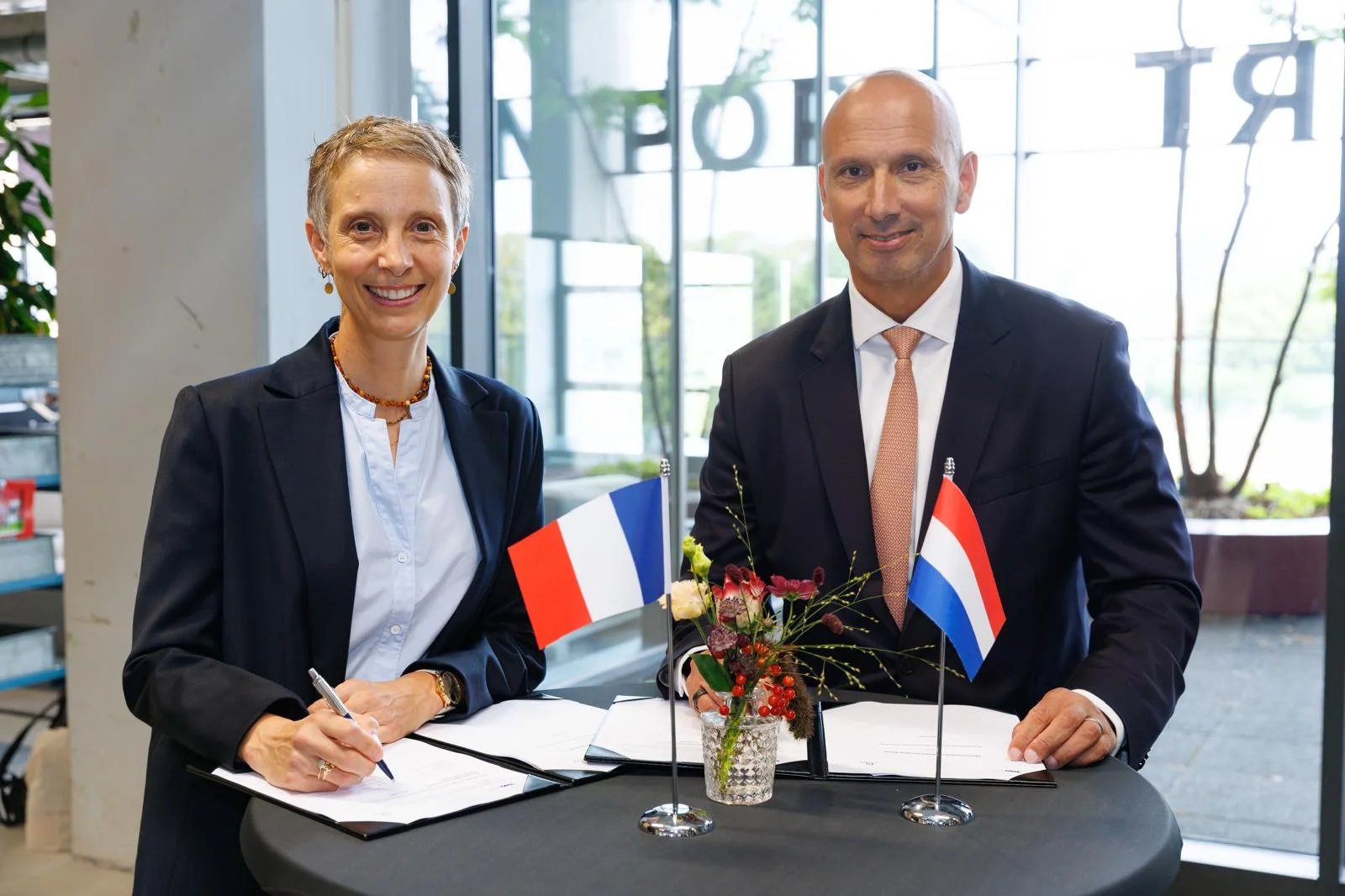
Quobly and TNO have signed a Memorandum of Understanding to accelerate the development of silicon spin qubits for industrial-scale quantum computers. The collaboration combines Quobly’s 300 mm FD-SOI platform, built on existing semiconductor manufacturing, with TNO’s expertise in device characterization and materials analysis.
This agreement expands work begun in 2025, aiming to overcome engineering hurdles in scaling qubit production and combining European strengths in semiconductor technology. “We are building quantum computers for industrial scale,” says Maud Vinet, CEO and co-founder of Quobly, “That means solving the engineering challenges behind the qubit as seriously as we solve the qubit itself.”
Quobly and TNO Advance Silicon Spin Qubit Device Characterization
TNO’s specialized infrastructure will directly support development of measurement and integration capabilities essential for large-scale quantum hardware production. This collaboration extends beyond basic research, focusing on the practical engineering needed to translate silicon spin qubits into functional devices. This new Memorandum of Understanding builds upon work initiated in 2025, initially concentrating on materials research and detailed device characterization. That prior collaboration established a foundation for accelerating the industrialization process, allowing both organizations to pool resources and knowledge.
Quobly’s 300 mm FD-SOI platform is central to this effort, offering a pathway to scalability by utilizing existing semiconductor manufacturing tools and processes. Europe’s strength in engineered substrates, advanced foundries, and metrology supports this approach, building on a pre-existing industrial base.
The combined effort aims to address key challenges in scaling silicon spin qubits, a technology that uniquely benefits from established semiconductor manufacturing techniques. “Combining European semiconductor and quantum capabilities” is a core tenet of the agreement, according to the organizations. TNO’s materials-driven research complements Quobly’s work with CEA-Leti, STMicroelectronics and Soitec, further solidifying a European approach to quantum computing hardware development.
300mm FD-SOI Platform Enables Quobly’s Industrial Quantum Scaling
Quobly’s 300 mm FD-SOI platform directly addresses a critical bottleneck in quantum scaling; the company’s co-design approach with STMicroelectronics integrates quantum processors and cryogenic control electronics onto a pre-existing manufacturing base. This strategy allows quantum computing capacity to expand using established semiconductor integration and manufacturing techniques, a departure from approaches requiring entirely new fabrication facilities. Founded in 2022 and based in Grenoble, France, Quobly anticipates offering cloud access to its high-performance computing resources by the end of 2026, with a longer-term goal of achieving one million qubits by 2032.</p, the company says.


See today’s quantum computing news on Quantum Zeitgeist for the latest breakthroughs in qubits, hardware, algorithms, and industry deals.