The U.S. Department of Commerce’s National Institute of Standards and Technology (NIST) is investing $20 million to establish the Quantum Manufacturing Engineering Center (QMEC) in partnership with SRI International, a nonprofit research and development institution. This initial financial commitment signals a shift beyond basic research toward scaling the production of vital quantum components and systems. The center will specifically focus on advancing cryostats and lasers, crucial hardware for suppressing noise and realizing functional quantum devices. “Quantum science promises to generate new knowledge and technologies that will supercharge scientific research and unlock enormous economic potential,” said Deputy Secretary of Commerce Paul Dabbar, as the partnership aims to build a robust domestic quantum industry and accelerate the transition from development to adoption.
QMEC Advances Scalable Quantum Component Manufacturing
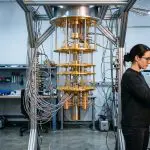
This commitment extends beyond foundational research, addressing a critical gap identified through engagement with the Quantum Economic Development Consortium (QED-C); NIST recognized quantum manufacturing engineering as essential for building a robust U.S. quantum industry. The QMEC’s focus is not solely on theoretical advancements, but on the practical hurdles of scaling production of key quantum components and systems, leveraging SRI International’s established track record of transitioning emerging technologies into commercial applications. Specifically, the center will advance technologies such as cryostats and lasers, crucial for suppressing the noise that plagues quantum systems and hinders their performance. These specialized cryogenics, vital for maintaining the extremely low temperatures required for quantum phenomena, represent a core area of development, alongside the laser systems used to control and manipulate qubits.
This targeted approach reflects a strategic shift toward addressing the physical engineering challenges that currently limit the widespread adoption of quantum technologies. “NIST is a world leader in quantum science and technology based on decades of fundamental research that helped launch the U.S. quantum industry,” said Under Secretary of Commerce for Standards and Technology and NIST Director Arvind Raman, emphasizing the institute’s existing expertise as a foundation for this new manufacturing initiative. The collaboration builds upon a successful partnership NIST and SRI initiated in 2019 to establish the QED-C, which now includes nearly all major U.S. developers of quantum technologies and a growing number of potential end-users. This existing network provides a vital conduit for identifying manufacturing barriers and accelerating the path to market adoption.
NIST is a world leader in quantum science and technology based on decades of fundamental research that helped launch the U.S. quantum industry.
NIST-SRI Partnership Supports Quantum Technology Commercialization
The transition of quantum technologies to commercially viable products faces significant hurdles, particularly in scaling manufacturing processes. While substantial progress has been made in quantum computing and sensing, translating these advances into practical devices requires overcoming engineering bottlenecks and establishing robust supply chains for specialized components. Currently, the availability of crucial hardware, like advanced cryogenic systems and high-precision lasers, remains a limiting factor for many developers and potential end-users seeking to integrate quantum capabilities. NIST plans to invest an initial $20 million in the newly established Quantum Manufacturing Engineering Center (QMEC), a commitment to move beyond fundamental research and focus on the practicalities of quantum component production. SRI International will host the QMEC, leveraging its established expertise in transitioning emerging technologies into commercial applications. Developers of quantum technologies remain at the forefront of both quantum innovation and large-scale manufacturing of quantum systems for applications ranging from secure communications to advanced biomedicine.
Quantum science promises to generate new knowledge and technologies that will supercharge scientific research and unlock enormous economic potential.




See today’s quantum computing news on Quantum Zeitgeist for the latest breakthroughs in qubits, hardware, algorithms, and industry deals.