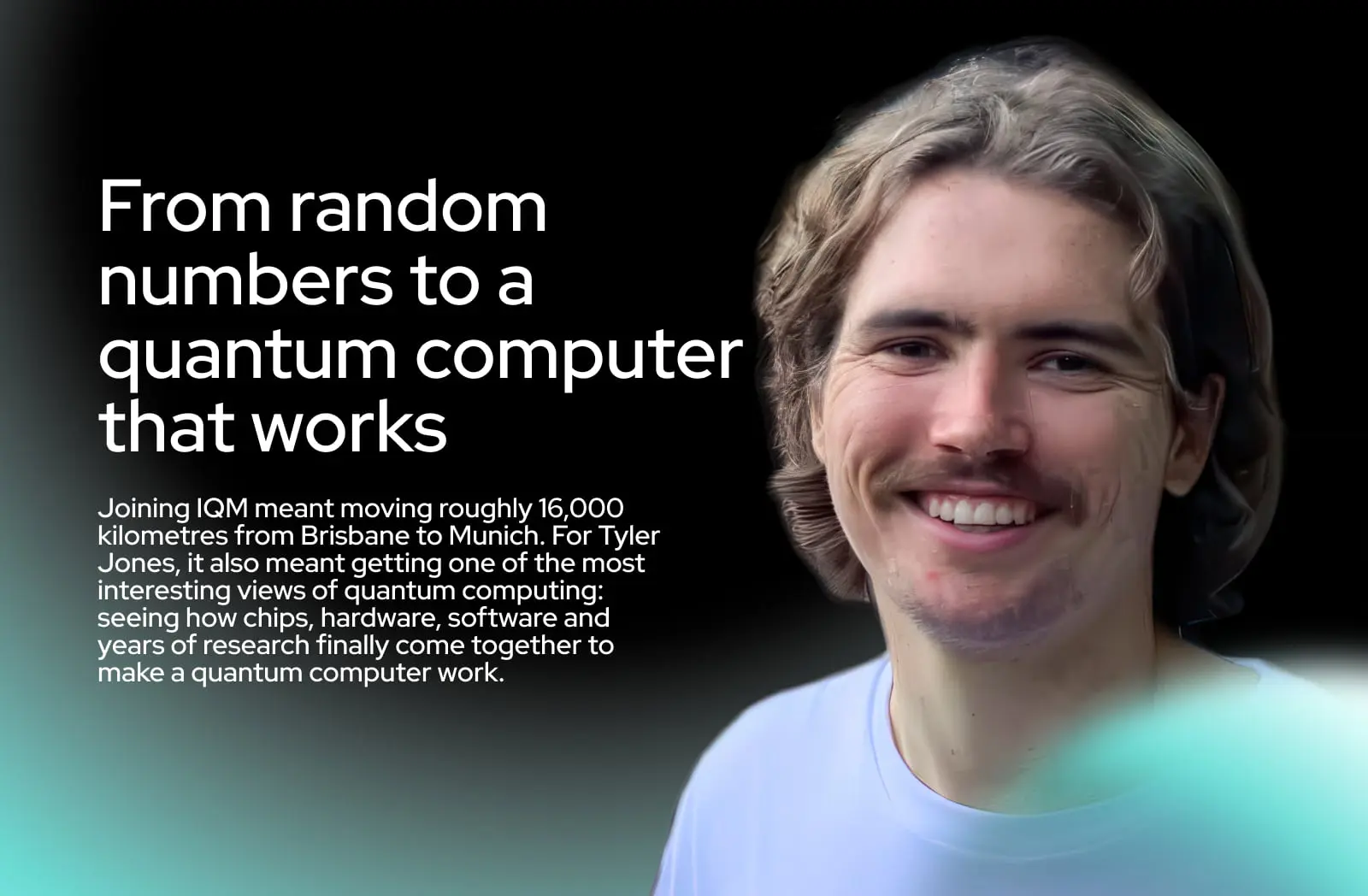
Tyler Jones relocated 16,000 kilometers from Brisbane to Munich not to simply take a job, but to witness the culmination of years of quantum research at IQM Quantum Computers, the company says. As a Senior Quantum Integration Engineer, Jones’ role is uniquely positioned to troubleshoot the complex systems customers rely on, a process that can involve weeks-long investigations into unexpected results.
“Have you seen this before?” is a common question within the team, responsible for ensuring IQM’s superconducting quantum computers, including the recently launched 150-qubit Halocene line, deliver as expected. Jones describes the satisfaction of transforming a device “spitting out random numbers” into a functioning quantum computer, a process enabled by IQM’s vertically integrated approach to building the entire quantum stack.
Quantum Integration Role Bridges Research and Functionality
Weeks-long investigations are sometimes necessary within IQM’s Quantum Integration team to pinpoint the source of unexpected behavior in quantum computers, revealing a level of diagnostic complexity beyond initial research settings. Each IQM system exhibits unique characteristics demanding individualized attention, a process honed by managing a diverse fleet of quantum computers deployed with customers and partners like Oak Ridge National Laboratory, which has integrated a 20-qubit Radiance system, named Pathfinder, with the Department of Energy’s high-performance computing resources.
These variations stem from chip peculiarities, subtle hardware differences, and even environmental factors like air conditioning cycles, requiring the team to establish a baseline of “normal” operation for each machine. IQM’s approach to quantum integration deliberately prioritizes breadth of knowledge over specialized depth, recognizing that troubleshooting requires understanding the interplay of chips, hardware, and software, a strategy supported by the company’s $833 million in total funding.
Tyler Jones, a Senior Quantum Integration Engineer, explains the team’s function is to bridge the gap between fundamental research and functional deployment, a role that demands familiarity with nearly every component of the quantum system. This comprehensive perspective allows the team to identify patterns across multiple machines, determining whether an issue is isolated or systemic, and using successful solutions from one deployment to others, a capability difficult to achieve within a single experimental setup, according to IQM.
IQM’s recent launch of the Halocene product line, a 150-qubit system focused on error correction, underscores the company’s commitment to delivering commercially viable quantum computing solutions, and the Quantum Integration team plays an important part in ensuring these systems meet customer expectations.
The team’s work extends beyond simply achieving functionality; it involves optimizing performance and reliability for specific applications, such as molecular simulation, a field IQM identifies as particularly promising for future impact. IQM’s partnership with Hewlett Packard Enterprise, contributing superconducting quantum processor technology to a new hybrid platform, further highlights the importance of integration in realizing the potential of quantum computing, the firm reports.
The company’s collaboration with Zurich Instruments and NVIDIA on a real-time quantum error correction system for enterprise data centers demonstrates a focus on building robust and scalable solutions. The deployment of an IQM system at Galaxy in Poland in April 2026 marked the first private enterprise quantum computing sale for the company, signifying a move towards broader commercial adoption and a growing need for skilled integration specialists to support these deployments.
Superconducting Qubit Expertise Drives System Development
If a problem arises, a Quantum Integration engineer can directly consult with the specialist responsible for that specific element, accelerating the troubleshooting process. This internal collaboration contrasts with Jones’ prior experience during his PhD, where assembling a functional experimental setup often required integrating equipment from numerous external vendors, leaving integration challenges to the researcher. IQM’s commitment to full-stack development is a key factor attracting talent like Jones, who initially focused on superconducting qubits during his doctoral research at the SQD Lab at the University of Brisbane.
He notes that the company’s structure facilitates a unique flow of information, with insights gleaned from deployed systems feeding back to the research and development teams. The team’s work isn’t solely focused on resolving existing issues, but also on proactively optimizing performance, IQM reports. Each quantum computer exhibits unique characteristics, requiring individualized calibration and attention.
This necessitates a deep understanding of normal operating parameters and the ability to discern subtle deviations that could impact accuracy. The deployment expands the company’s global footprint and provides additional data points for analysis. While applications like molecular simulation hold immense promise, he emphasizes the fundamental challenge of simply making these complex systems work reliably. The company, now publicly listed on Nasdaq as IQMX, is developing Europe’s first quantum computer with logical qubits as a future goal, signaling a continued investment in pushing the boundaries of quantum technology.
System Validation Ensures Expected Quantum Results
The relocation of Tyler Jones from Brisbane to Munich underscores the specialized commitment required within quantum computing, a move spanning 16,000 kilometers to join IQM’s Quantum Integration team. Jones’ role centers on bridging the gap between specialized research and functional systems, demanding a broad understanding of the entire quantum computer architecture rather than deep expertise in any single component. This breadth allows the team to efficiently pinpoint the source of anomalies when a system deviates from expected behavior, a process often requiring weeks-long investigations.
IQM’s Quantum Integration team functions as a final checkpoint, ensuring that systems meet specifications before delivery to customers, a process that extends beyond simply verifying functionality. The team collaborates extensively with researchers, designers, builders, and software developers within IQM, using their collective knowledge to diagnose and resolve issues. This collaborative approach allows for rapid problem-solving, drawing on expertise across the entire development pipeline.
Each IQM quantum computer exhibits unique characteristics necessitating individualized calibration and attention, by the company’s account. The ability to discern these subtle deviations is crucial for maintaining system stability and achieving reliable results, particularly as IQM expands its global footprint with deployments and at TOYO’s Tokyo R&D center, the company claims. The presence of multiple quantum computers in the field enables IQM’s team to identify patterns and isolate issues more effectively.
Determining whether a problem is unique to a single system or a recurring phenomenon across multiple machines is a key aspect of their validation process. This comparative analysis allows for the refinement of calibration procedures and the implementation of solutions that can be applied consistently across the entire fleet of IQM quantum computers. Jones describes the satisfaction of this process, tuning individual components until the system consistently provides accurate calculations.
This transformation is not merely a technical achievement but also a validation of the efforts of the entire IQM team, from the initial research to the final system integration. The team’s insights, gleaned from customer deployments, are then fed back into the development process, creating a continuous cycle of improvement and innovation.
IQM’s Full-Stack Approach Facilitates Collaboration
IQM’s internal structure fosters rapid problem-solving, evidenced by the weeks-long investigations sometimes required to diagnose issues with deployed quantum computers. This intensive troubleshooting isn’t solely about identifying faults, but about using the company’s vertically integrated model to accelerate solutions. Unlike many in the emerging quantum landscape, IQM maintains expertise across the entire quantum computing stack, from chip design and fabrication to software and system integration, a structure that dramatically shortens diagnostic loops.
This comprehensive approach allows IQM’s Quantum Integration team to rapidly assess whether a performance anomaly stems from hardware idiosyncrasies, calibration drift, or software interactions, the company says. The team’s ability to directly consult with colleagues responsible for each component, researchers, designers, builders, and software developers, is a key differentiator.
As Tyler Jones, Senior Quantum Integration Engineer, explains, “If something isn’t behaving as expected, I can talk to someone who researched it, designed it, built it or wrote the software behind it. We depend on that knowledge.” This internal communication streamlines the process of pinpointing root causes, reducing downtime and improving system reliability for customers. The benefits extend beyond immediate issue resolution. “Is this unique to this one?
Have we seen it somewhere else? Is there a pattern?” Jones asks, highlighting the power of this distributed network for uncovering systemic issues and refining calibration procedures.
Founded in 2018 and now a publicly listed entity trading on Nasdaq as IQMX, IQM has secured $833 million in funding, including a recent €50 million investment from BlackRock. The company’s commitment to a full-stack approach, coupled with strategic collaborations and substantial investment, positions it as a significant player in the rapidly evolving quantum computing industry, and allows for a level of responsiveness and iterative improvement difficult to achieve with a more fragmented supply chain.
Source: https://iqm.tech/story/from-random-numbers-to-a-quantum-computer-that-works/