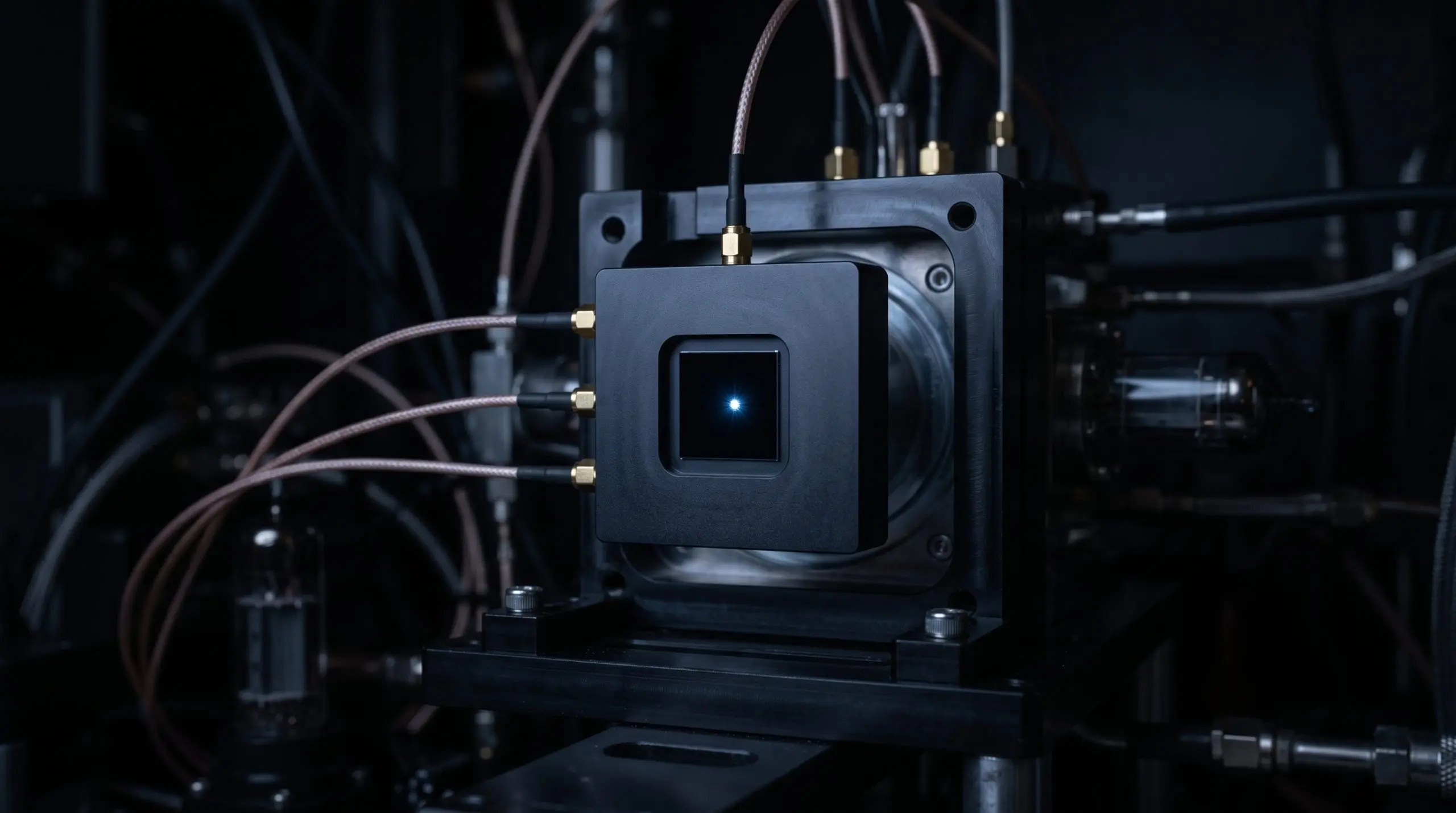
QuiX Quantum is contributing to a €50 million European initiative, Photonics for Quantum (P4Q), to establish scalable manufacturing for quantum photonic integrated circuits, the company says. The program, co-funded by the EU Chips Joint Undertaking, unites 29 partners across twelve European countries. Building on the CARINA platform delivered earlier in 2026 for the German Aerospace Center, QuiX Quantum is now developing the Dedalo architecture with plans to demonstrate loss-tolerant logical-qubit capabilities from 2028 to 2030.
Dedalo Architecture Advances Loss-Tolerant Logical Qubit Capabilities
QuiX Quantum plans to demonstrate loss-tolerant logical-qubit capabilities within its Dedalo architecture between 2028 and 2030, an important step toward realizing commercially viable fault-tolerant quantum computers beyond 2030. Dedalo’s design prioritizes modular photonic hardware, quantum error correction and protection against photon loss, alongside energy-efficient operation and integration with existing high-performance computing infrastructure. The company’s participation in the €50 million Photonics for Quantum (P4Q) initiative is integral to this advancement, translating system-level requirements into concrete manufacturing challenges addressed by the program’s pilot line, according to QuiX Quantum.
These challenges include reducing optical losses, improving high-performance phase control and enhancing the reproducibility of manufacturing processes for scalable photonic circuit fabrication and assembly. QuiX Quantum is acting as an industrial user within P4Q, helping to define the needs of advanced quantum systems and drive the development of corresponding manufacturing technologies.
According to Stefan Hengesbach, CEO of QuiX Quantum, “Europe has established a world-leading position in quantum photonics. P4Q helps establish the manufacturing foundation needed for this journey.” The P4Q program, running through March 2029, aligns with a critical phase in QuiX Quantum’s development, aiming to support the industrialization of increasingly complex photonic quantum systems. The Dedalo architecture’s progression relies on advances in areas like photon generation, switching, feed-forward control, and quantum error correction, all vital for building scalable photonic quantum computers.
By combining customer-driven development with European manufacturing partnerships and public procurement opportunities, QuiX Quantum intends to translate Europe’s scientific leadership into lasting technological sovereignty and global industrial competitiveness. The company’s long-term goal is to establish a resilient European supply chain and a competitive position within the quantum computing industry, using both public and private investment.
With CARINA delivered to DLR QCI, we are now advancing our Dedalo architecture toward logical-qubit demonstrations between 2028 and 2030 and fault-tolerant quantum computing beyond that.
P4Q Initiative Strengthens European Quantum Photonics Supply Chain
QuiX Quantum is integrating advanced photonic manufacturing with its Dedalo architecture, a progression directly following the earlier 2026 delivery of the CARINA platform to the German Aerospace Center’s Quantum Computing Initiative. This coordinated effort aims to move beyond research and build a robust industrial foundation for quantum technologies within Europe. This timeframe is critical for the company’s ambition to move beyond current capabilities and build fault-tolerant quantum computing systems.
The initiative’s structure, with the University of Twente coordinating efforts, connects scientific expertise with semiconductor manufacturing and industrial suppliers, supporting a more resilient European supply chain. QuiX Quantum’s participation also facilitates closer integration with European manufacturing partners and the development of qualified production processes. The company is actively using the initiative to address key challenges in scaling quantum photonic systems.
This includes strengthening the Netherlands and Europe’s position as a leading hub for quantum technology. By encouraging collaboration between research institutions, industrial suppliers and quantum system developers, P4Q aims to reduce critical supply-chain dependencies and establish a resilient, internationally competitive quantum photonics ecosystem. The program’s success is viewed as vital for translating European research excellence into global industrial leadership in the rapidly evolving field of quantum computing.
Europe has established a world-leading position in quantum photonics. P4Q is an important step toward turning this scientific excellence into scalable industrial capabilities.
Stefan Hengesbach, CEO of QuiX Quantum



See today’s quantum computing news on Quantum Zeitgeist for the latest breakthroughs in qubits, hardware, algorithms, and industry deals.