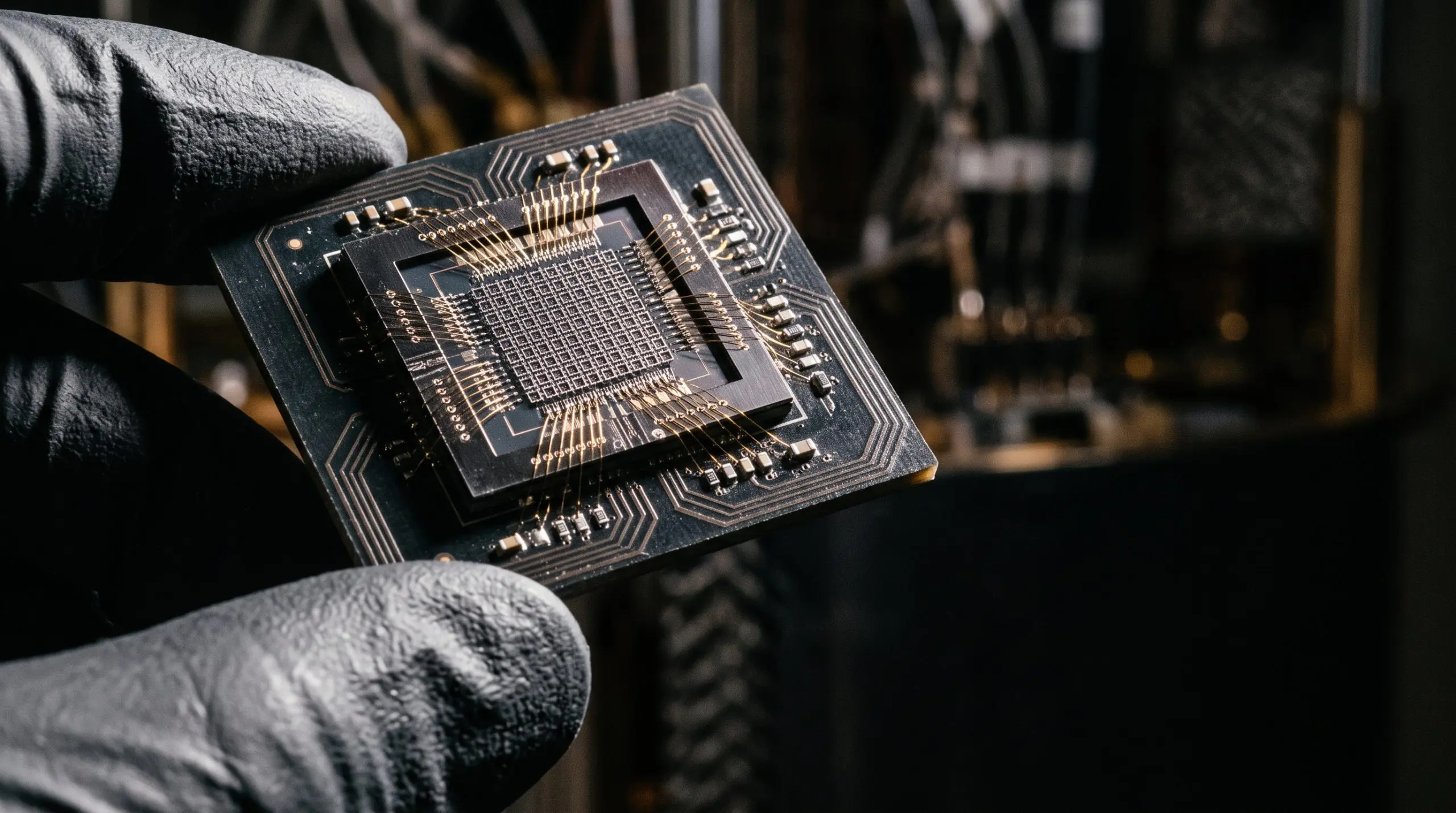
QuiX Quantum will lead a national mission to build the technological foundations for a quantum computer exceeding 100 qubits, receiving funding through the PhotonDelta National Growth Fund Integrated Photonics Programme. Running from January 2026 through December 2028, the mission, “Delivery of a 100+ Qubit Universal Quantum Computer”, brings together QuiX Quantum and nine Dutch industrial and academic partners.
Together they will develop and integrate twelve deliverables covering the quantum photonic stack, from low-loss chips and photon sources to detection, control electronics, packaging and manufacturing. “This grant is a strong vote of confidence in the Dutch photonics ecosystem and in our roadmap,” said Stefan Hengesbach, CEO of QuiX Quantum, as the consortium aims to deliver a scalable, fault-tolerant quantum computer.
PhotonDelta Funding Fuels 100+ Qubit Photonic Computer Mission
QuiX Quantum aims to reduce optical loss to 0.1 decibels per facet through collaboration with PHIX and MicroAlign, a critical improvement for scaling photonic quantum systems. This targeted reduction in loss is one of twelve specific deliverables outlined within the newly funded national mission, which runs through December 2028. The project’s scope extends beyond simple component improvement, focusing on full stack integration of quantum photonic technologies.
The mission also prioritizes advancements in photon sources, with the University of Twente developing a quasi-deterministic single-photon source. Complementing this work, researchers at Eindhoven University of Technology will focus on photon distillation, aiming to operate below the error threshold using resource-state generation. These combined efforts seek to enhance the quality and reliability of individual qubits, essential for building larger, more stable quantum processors.
Faster control electronics are also central to the mission’s objectives, with Bruco-IC designing flip-chip control ASICs targeting latencies below 10 nanoseconds. This represents an improvement over the 150 nanosecond latency of existing feed-forward control systems, enabling quicker manipulation and readout of qubits. QuiX Quantum leads the integration of these partner results at the system level, tracking progress against a shared KPI and technology-readiness framework. The consortium’s work extends to improving the manufacturability of quantum chips, with Eindhoven University of Technology exploring inverse design and post-fabrication tuning techniques.
Focusing on manufacturing will help transition prototypes to commercially viable systems, and the mission concludes with a detailed manufacturing strategy for 100+ qubit systems. The project’s timeline aligns with a critical phase in QuiX Quantum’s roadmap, as the company moves toward logical-qubit demonstrations between 2028 and 2030.
By vertically integrating expertise in scientific research, chip manufacturing, packaging and system integration, the mission seeks to build a resilient quantum photonics supply chain within the Netherlands and Europe, the company says. This localized approach aims to retain both the intellectual property and economic benefits generated by quantum research within the region. The mission’s success will not only advance quantum computing technology but also strengthen Europe’s position in the emerging quantum technology landscape.
Scalable, Fault-Tolerant Quantum Computing cannot be built by one company alone.
Stefan Hengesbach


See today’s quantum computing news on Quantum Zeitgeist for the latest breakthroughs in qubits, hardware, algorithms, and industry deals.