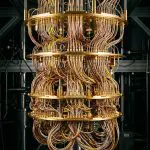
QuiX Quantum has unveiled Dedalo, a new system architecture designed to connect logical qubits, protect against photon loss, incorporate modular photonic hardware, and enable data center deployment into a single roadmap for universal photonic quantum computing. The company positions Dedalo as a complete solution, addressing not just qubit performance but the entire system-level challenge required for practical, fault-tolerant quantum systems. According to QuiX Quantum, useful quantum computing demands manufacturable, energy-efficient, and modular systems capable of operating without specialized environments; Dedalo aims to deliver precisely that. “A broader adoption of quantum computers requires systems which do not need specialized and hard-to-maintain environments,” said Dr. Stefan Hengesbach, CEO at QuiX Quantum, indicating a departure from current industry reliance on cryogenic cooling and highly controlled setups.
Dedalo Architecture Enables Fault-Tolerant Photonic Quantum Computing
Unlike many current efforts focused solely on qubit performance, Dedalo aims to address the practical hurdles of building a fault-tolerant quantum system capable of coexisting with existing classical infrastructure. The company’s approach centers on photonics, leveraging silicon nitride photonic integrated circuits produced using established semiconductor fabrication processes to minimize reliance on extensive cryogenic cooling. This emphasis on manufacturability and energy efficiency is central to QuiX Quantum’s vision for practical quantum computing; the Dedalo white paper details six priorities for scaling quantum systems, including resource efficiency and hybrid deployability alongside high-performance computing.
A core innovation within Dedalo is the use of logical qubits, which encode information across multiple physical qubits to enable error detection and correction, a necessity for reliable computation as systems grow in complexity. “Photon loss is one of the defining challenges for photonic quantum computing,” said Emlyn Stephens, Head of Quantum Science at QuiX Quantum, highlighting the architecture’s focus on loss-error tolerance and the generation of photonic logical qubits. The design prioritizes data center readiness, utilizing standard telecom components and aiming for compatibility with existing HPC and AI infrastructure. Andrew Roos, VP of R&D at QuiX Quantum, summarized the company’s philosophy.
Photon loss is one of the defining challenges for photonic quantum computing.
Emlyn Stephens, Head of Quantum Science at QuiX Quantum
Six Priorities for Scalable Quantum System Development
QuiX Quantum is articulating a comprehensive strategy for building practical quantum computers, moving beyond isolated qubit performance to address the systemic challenges of scalability and integration. The company’s recently released white paper details six core priorities for developing quantum systems capable of supporting real-world applications, emphasizing a departure from the current industry reliance on specialized infrastructure. These priorities, energy efficiency, volume manufacturability, resource efficiency, efficient error correction, modular scalability, and hybrid deployability, are not merely incremental improvements, but fundamental shifts in architectural thinking. A key focus is on enabling operation alongside existing classical high-performance computing and artificial intelligence infrastructure. This ambition is reflected in the Dedalo system architecture, designed to function within standard data center environments. Stefan Hengesbach, CEO at QuiX Quantum, highlighted the need for room-temperature operation and reduced cooling demands.
The design leverages silicon nitride photonic integrated circuits, manufactured using established semiconductor processes, and fiber-based interconnects to support distributed architectures. Central to this vision is the implementation of logical qubits, a strategy for achieving fault tolerance in photonic systems. Dedalo aims to demonstrate the generation, manipulation, and measurement of these logical qubits, protected against photon loss, which will enable reliable computation as systems scale.
Dedalo reflects our view that the path to useful quantum computing is architectural.
Andrew Roos, VP of R&D at QuiX Quantum
Logical Qubits Mitigate Photon Loss in Photonic Systems
QuiX Quantum is actively addressing a fundamental hurdle in photonic quantum computing: photon loss. The company’s newly unveiled Dedalo system architecture centers on the implementation of logical qubits as a means of achieving fault-tolerant computation, specifically designed to counteract the inherent challenges of signal degradation in photonic systems. This approach is particularly crucial for photonic systems where photon loss represents a dominant source of error. This emphasis on practical integration extends to the system’s operational environment; QuiX Quantum is prioritizing room-temperature operation and modular scaling through interconnected photonic modules, minimizing reliance on extensive cryogenic cooling. The company believes this approach is essential for co-existence with classical high-performance computing infrastructure. By concentrating on a holistic system design encompassing hardware, control systems, error correction, and deployment requirements, QuiX Quantum aims to transition quantum computing prototypes to practical, scalable computing infrastructure.
A broader adoption of quantum computers requires systems which do not need specialized and hard-to-maintain environments.
Dr. Stefan Hengesbach, CEO at QuiX Quantum

See today’s quantum computing news on Quantum Zeitgeist for the latest breakthroughs in qubits, hardware, algorithms, and industry deals.