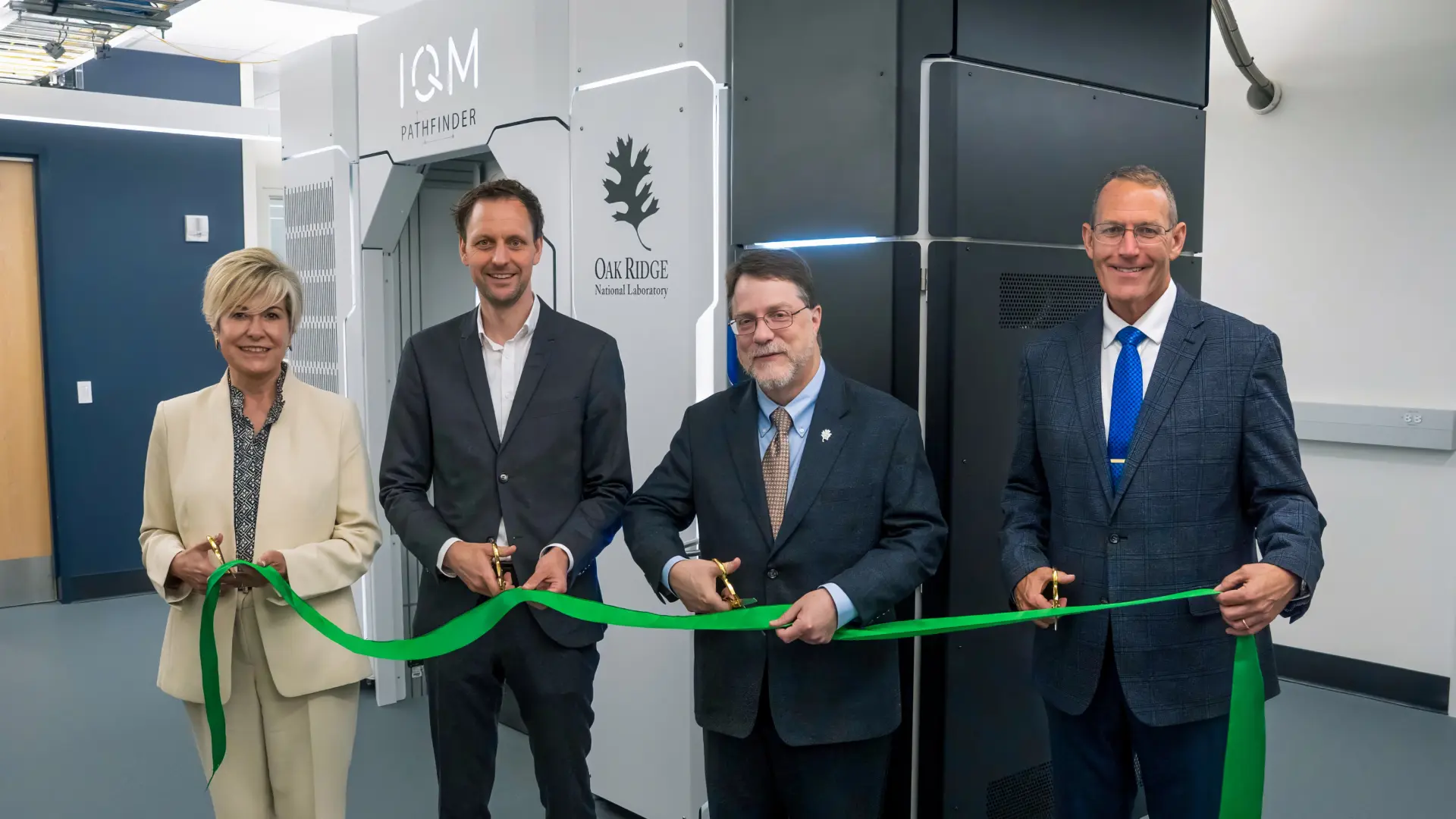
Oak Ridge National Laboratory has launched Pathfinder, a 20-qubit IQM Radiance system and the laboratory’s first commercially procured quantum computer, now directly connected to the world’s most powerful supercomputer, Frontier. This installation marks IQM Quantum Computers’ initial entry into the U. S. market and expands access to on-premises quantum infrastructure for researchers developing hybrid quantum-high performance computing ecosystems. “Quantum becomes useful when it works inside real computing infrastructure, and there is no better place to prove that,” said Jan Goetz, CEO and Co-founder of IQM. With 23 full-stack quantum systems sold globally, IQM is preparing for a Nasdaq listing through a merger with Real Asset Acquisition Corp. (Nasdaq: RAAQ).
IQM Radiance System Deployed at Oak Ridge National Laboratory
Unlike cloud-based access, ORNL maintains direct ownership and control of both the hardware and the intellectual property developed upon it, a deployment model central to IQM’s business strategy. IQM’s expansion into the U. S. market is further underscored by its recent establishment of a Quantum Technology Center in Maryland, focused on education, research, and collaboration with HPC providers. The company has already sold 23 full-stack quantum systems globally, establishing it as the manufacturer with more on-premises installations than any competitor. Travis Humble, ORNL Quantum Science Center Director, emphasized that on-premises systems “enable us to demonstrate quantum computing concepts that realize our goal of building a scalable, hybrid HPC ecosystem.” The company’s first U.S. system is expected to be completed in mid- and has garnered support from Tennessee senators who recognize the state’s growing role in quantum innovation.
The Radiance system is now connected to Frontier, the world’s most powerful supercomputer, allowing researchers to explore hybrid quantum-HPC workflows within a single, integrated environment. IQM Quantum Computers’ deployment of Pathfinder at Oak Ridge National Laboratory signifies a deliberate strategy to embed quantum processing within established high-performance computing infrastructure. This direct integration is intended to accelerate the development of hybrid quantum-HPC workflows, and represents the company’s first U.S. installation.
Source: https://iqm.tech/




See today’s quantum computing news on Quantum Zeitgeist for the latest breakthroughs in qubits, hardware, algorithms, and industry deals.